

Last Updated: October 24, 2026
Quick Summary
A good U-value for windows in the UK typically sits around 1.2-1.4 W/m²K for double glazing, which meets building regulations and delivers real energy savings. The exact requirement depends on your location, whether it's a new build or replacement, and your specific property type.
- England's building regulations require around 1.4 W/m²K for replacement windows in existing dwellings under Approved Document L
- Modern double glazing achieves 1.2-1.4 W/m²K; triple glazing reaches 0.8-1.1 W/m²K but costs 40-60% more
- Always compare whole-window U-values, not centre-pane figures, which are lower and misleading for like-for-like comparisons
- Frame material affects overall performance: timber and PVCu insulate better than bare aluminium
- Building regulations set a minimum floor, not a target; context determines whether compliance translates into comfort
Table of Contents
- Understanding U-Value and Why It Matters for Your Home
- What Building Regulations Say About Good U-Values for Replacement Windows
- Good U-Value for Double Glazing: What the Numbers Tell You
- Triple Glazing U-Value: When Higher Performance Makes Sense
- How Window Frame U-Value Affects Overall Thermal Performance
- Window Energy Ratings Explained: Moving Beyond U-Value Alone
- Verifying Quoted U-Values and Choosing Windows That Deliver
- Getting Expert Advice on the Right U-Value for Your Property
- Frequently Asked Questions
Understanding U-Value and Why It Matters for Your Home
A U-value measures how much heat escapes through a window. The lower the number, the better the insulation.
Heat loss through windows is one of the biggest energy drains in older homes.
At Arborfield Joinery, we help homeowners and builders choose windows that match both their property and their budget.
Why does this matter now? Building regulations are tightening. Current UK building standards require better thermal performance for new builds and replacements.
What Building Regulations Say About Good U-Values for Replacement Windows
Building regulations set minimum thermal standards for windows, but there is no single UK-wide figure.
The table below summarises the standards most commonly cited for replacement windows in existing dwellings. Confirm the current version with your local building control body before ordering, as the documents are amended periodically.
| Nation | Governing standard | Typical replacement-window threshold | Notes |
|---|---|---|---|
| England | Approved Document L, Volume 1 (Dwellings) | Around 1.4 W/m²K for replacement windows in existing dwellings | The document also sets a limiting fabric standard and a notional dwelling target for new builds; the replacement figure is a minimum, not an optimum |
| Wales | Approved Document L (Wales) | Broadly aligned with the English approach | Welsh building regulations are devolved; check the current Welsh version |
| Scotland | Scottish Building Standards, Section 6 (Energy) | Typically stricter than England for new builds, with replacement work assessed on a case-by-case basis | Section 6 uses a different compliance methodology, so an English figure cannot simply be carried over |
| Northern Ireland | Building Regulations (Northern Ireland), Part F | Separate thresholds and guidance | Part F is administered separately; do not assume parity with England |
Two further points matter more than the headline number:
- Replacement versus new build. New-build dwellings are assessed against a whole-dwelling target and a notional specification, not a single window figure. A new build may need windows closer to 1.2 W/m²K or lower to satisfy the overall target, even where the replacement threshold is higher.
- The limiting standard still applies. Even where a higher figure is technically permitted, the individual window must meet the limiting U-value in the approved document. Building control will check the declared whole-window figure, not the centre-pane figure.
Approved Document L, Volume 1: Dwellings sets out the technical requirements for England. Equivalent devolved guidance is published by the Scottish Government and the Northern Ireland Department of Finance.
For a practical view of what is worth installing rather than merely permitted, the next sections compare real specifications for double and triple glazing.
Good U-Value for Double Glazing: What the Numbers Tell You
Double glazing typically achieves U-values between 1.2 and 1.6 W/m²K. A good U-value for double glazing sits around 1.2-1.4 W/m²K.
Here's what affects that number:
- Glass type: Low-emissivity (low-E) glass has a coating that reflects heat back into the room, dropping the U-value by 0.3-0.5 W/m²K compared with ordinary glass.
- The air gap: A wider gap (typically 16mm) performs better than a narrow one. Some manufacturers fill it with argon gas, which is denser than air and insulates better.
- Spacer bar: Warm-edge spacers use materials with lower thermal conductivity to reduce heat loss at the edge of the window.
Modern high-performance double glazing can reach U-values around 1.2 W/m²K, a good U-value for windows and the sweet spot for most renovation projects: it meets regulations comfortably and delivers real energy savings without the cost premium of triple glazing.
Cherwell Windows specifications shows that contemporary double glazing achieves these levels consistently. For comparison of double and triple glazing energy performance, explore how the options stack up against each other.
Triple Glazing U-Value: When Higher Performance Makes Sense
Triple glazing adds a third pane, improving U-values to around 0.8-1.1 W/m²K; premium units reach 0.7 W/m²K or lower. The extra pane creates two air gaps instead of one, each acting as an insulation layer.
But triple glazing isn't the right choice for every home. Consider it when:
- Your property is in a very cold climate or exposed location
- You're building new or doing a major renovation where the cost can be justified
- You have large window areas that contribute significantly to heat loss
- You're prioritising maximum energy efficiency and willing to invest more upfront
Where triple glazing falls short:
- Higher cost, typically 40-60% more than good double glazing
- Heavier weight, requires stronger frames and hinges
- Reduced light transmission, the extra pane absorbs some daylight
- Slower payback, the energy savings take longer to offset the higher purchase price
For most replacement projects in existing homes, excellent double glazing delivers 80% of the benefit at half the cost. Explore the benefits of triple glazed timber windows and evaluate whether high-performance windows justify the investment to decide what suits your project.
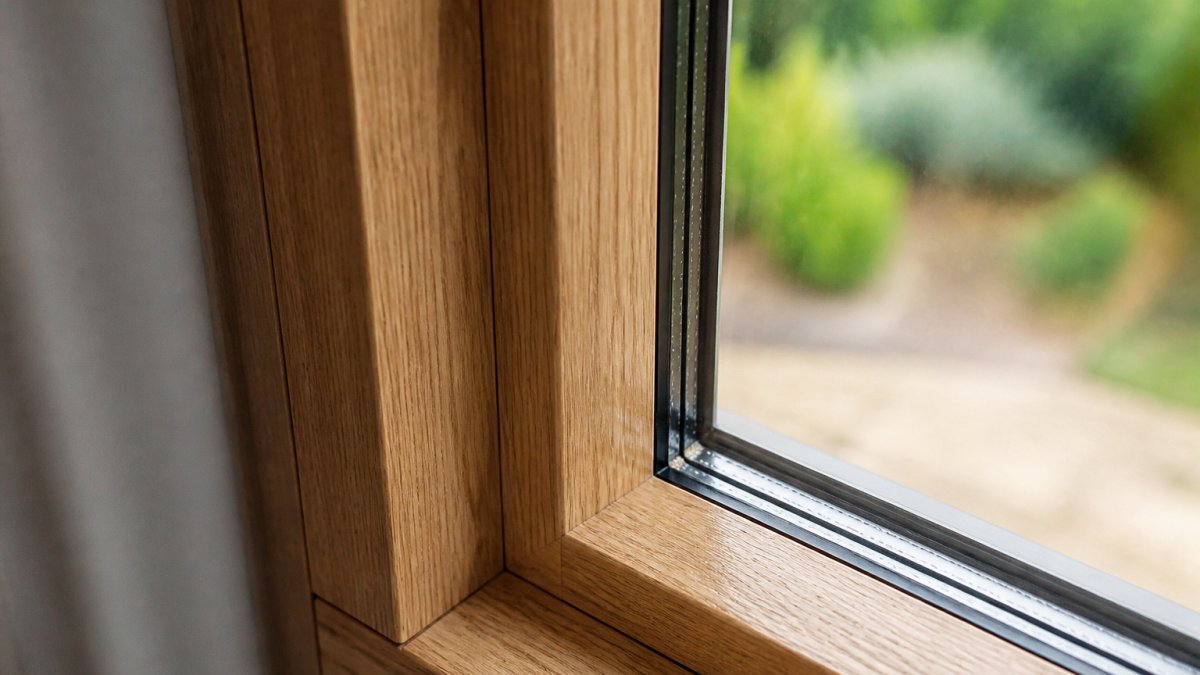
How Window Frame U-Value Affects Overall Thermal Performance
The frame and the glass each have their own U-value; the whole-window U-value is a weighted average of both.
Frame materials rank like this for thermal performance:
- Timber: Natural insulator. Conducts heat slowly. U-value typically 0.15-0.20 W/m²K for the frame alone.
- PVCu: Plastic frames. Good insulation. U-value around 0.20-0.25 W/m²K.
- Aluminium: Metal conducts heat readily. Bare aluminium frames have U-values above 5.0 W/m²K. Thermal breaks (strips of plastic inside the frame) reduce this to 1.5-2.5 W/m²K.
Condensation is a practical consequence of poor frame performance. Moisture in the air condenses on the cold surface. Learn how to prevent window condensation issues for practical solutions.
For information on sustainable window materials that deliver good thermal ratings alongside environmental benefits, explore your options.
Window Energy Ratings Explained: Moving Beyond U-Value Alone
U-value is only one part of the picture; window energy ratings combine it with other factors for a fuller view of performance.
The window energy rating scale in the UK runs from A (best) to G (worst). It accounts for:
- U-value: How much heat escapes through the window
- G-value (solar factor): How much solar heat enters through the glass. A higher G-value is beneficial in winter but can cause overheating in summer.
- Air leakage: How much draughty air passes around the frame
- Visible transmittance: How much daylight passes through
A window might have an excellent U-value but a low G-value, a disadvantage in a north-facing room where you want passive solar gain; a south-facing window benefits from higher G-values. A-rated windows are the most efficient, and most modern double-glazed windows with low-E glass and good frames achieve B or C ratings, a practical benchmark for most homes.
Verifying Quoted U-Values and Choosing Windows That Deliver
A quoted U-value is only meaningful if you know which measurement it refers to.
- Centre-pane U-value (U_g). The performance of the glazing at the centre of the glass, ignoring the frame and the edge spacer. This is always the lowest and best-looking number, and it is the one most often quoted in sales literature.
- Frame U-value (U_f). The performance of the frame profile alone. Timber and PVCu frames typically sit in the 0.15-0.25 W/m²K range; thermally broken aluminium frames are usually higher.
- Whole-window U-value (U_w). The area-weighted average of glass, frame and edge, including the spacer. This is the figure that building control, energy assessors and the Standard Assessment Procedure use, and it is the only figure that should be compared between products.
A window with a centre-pane figure of 1.0 W/m²K can easily declare a whole-window figure of 1.3-1.5 W/m²K once a wide frame and a poor spacer are included.
How to verify a declared figure
- Ask which figure is quoted. Confirm in writing whether it is U_w, U_g or U_f. A reputable supplier will state this without prompting.
- Check the test or calculation standard. Whole-window performance is typically declared under BS EN ISO 10077-1 (calculation) or BS EN ISO 10077-2 (numerical calculation of frame and edge), with hot-box testing under BS EN ISO 12567-1 where a tested rather than calculated value is claimed. The older EN 12567 reference is superseded; ask for the current standard.
- Confirm the window configuration. The declared value applies to a specific size, frame, spacer and glazing make-up. A different size or spacer changes the result. Ask for the configuration the figure refers to.
- Ask for the declaration or certificate. Look for a manufacturer's declaration of performance or a test report from a UKAS-accredited body. A figure with no supporting document is a marketing claim, not a specification.
- Check certification schemes. Windows may be certified under a scheme such as the British Fenestration Rating Council (BFRC) window energy rating, which combines U-value with solar gain and air leakage. A BFRC rating is a useful cross-check, but it is not a substitute for the declared U_w.
Why declared and calculated figures can differ
A window declared at 1.30 W/m²K may calculate closer to 1.40-1.50 W/m²K under a different approach, for example where edge effects or installation thermal bridging are treated differently.
Getting Expert Advice on the Right U-Value for Your Property
Choosing the right U-value depends on your property type, location, budget, and renovation scope.
A Victorian terrace needs a different approach than a 1970s semi. Listed buildings have constraints that new-build extensions don't.
The right U-value is the one that:
- Meets building regulations for your specific situation
- Balances energy savings against upfront cost
- Suits the age and character of your property
- Works with your frame material choice and window style
A good U-value for UK windows depends on your specific situation, but the principles are straightforward.
When you're ready to choose windows, get specifications in writing, check test certificates, and work with suppliers who understand your property's needs.
Frequently Asked Questions
What does U-value mean for windows?
U-value measures thermal transmittance in watts per square metre per degree Celsius (W/m²K). A lower U-value means less heat escapes through the window. For example, a window with a U-value of 1.2 W/m²K loses less heat than one rated at 1.6 W/m²K. This directly affects your heating bills and home comfort, particularly in winter months.
Is a lower U-value always better for windows?
Yes, a lower U-value is better because it indicates better thermal insulation and less heat loss. However, the 'best' U-value depends on your building regulations compliance needs, your home's age and construction, and your budget. Modern double glazing typically achieves around 1.2 W/m²K, whilst triple glazing can reach 0.8 W/m²K or lower. Choose based on your specific situation rather than chasing the absolute lowest number.
How do double and triple glazing compare on U-value?
Double glazing typically achieves U-values around 1.2 W/m²K with modern specifications. Triple glazing performs significantly better, often reaching 0.8 W/m²K or lower by adding an extra pane and air gap. Triple glazing costs more but delivers superior thermal performance and greater heat retention. For most UK homes, double glazing meets building regulations; triple glazing suits properties where maximum energy efficiency or noise reduction is a priority.
Do window frames affect the overall U-value?
Yes, significantly. The whole-window U-value includes both the glass and the frame. A high-performance frame with low thermal bridging can improve overall performance by 0.1-0.2 W/m²K compared to a poor frame. Timber frames with proper insulation, warm-edge spacer bars, and sealed units perform better than older aluminium designs. When comparing windows, always check the whole-window U-value, not just the centre-pane glass rating.

Share:
Internal Oak Fire Door Prices, Ratings and Fitting in the UK
How to Properly Hang a Heavy Timber Door