
Table of Contents
- Understanding the Causes of Condensation in UK Homes
- How to Improve Home Ventilation to Prevent Window Condensation
- Choosing the Best Dehumidifier for Condensation Problems
- Room Temperature, Thermal Bridges, and Cold Spots
- Window Treatments and Their Impact on Condensation Buildup
- Upgrading Your Windows: Double Glazing, Triple Glazing, and Timber Frames
- Preventing Mould and Mildew Once Window Condensation Appears
- Conclusion
Last Updated: August 9, 2026
Understanding the Causes of Condensation in UK Homes
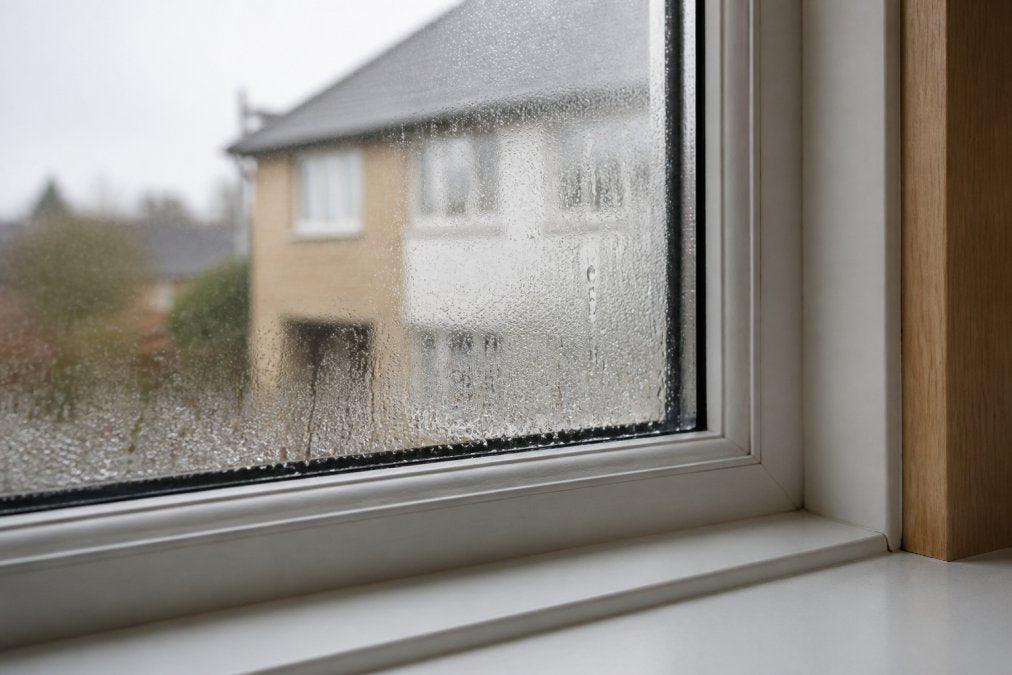
Window condensation forms when warm, moisture-laden air contacts a cold surface and releases water vapour as liquid droplets. The core issue is the dew point: the temperature at which air can no longer hold its water vapour. When internal glass panes fall below that threshold, moisture condenses on the surface. In UK homes, where damp winters and poorly ventilated rooms are common, this happens frequently.
Sources of indoor moisture include cooking, bathing, drying laundry indoors, and breathing. A household of four generates significant water vapour daily. Without adequate air circulation, humidity accumulates until it finds the coldest surface in the room, usually the window glass.
Surface Condensation vs. Structural Condensation: Why the Difference Matters
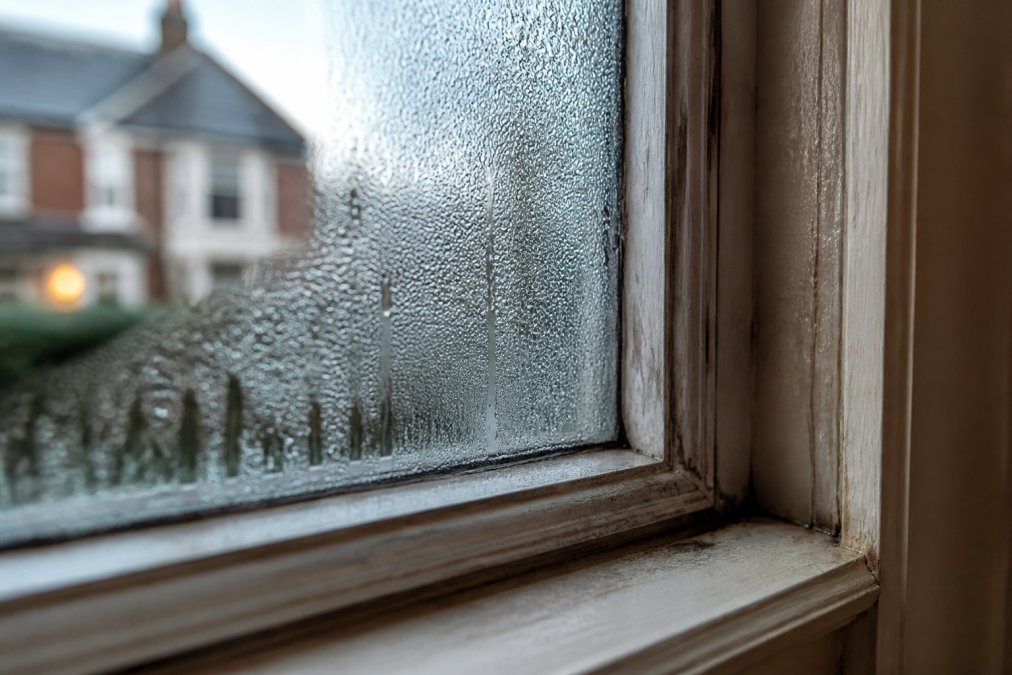
Surface condensation forms on the internal face of a window in cold weather and is almost always a ventilation or humidity problem, not a window defect. Address the moisture source and airflow, and it resolves.
Structural condensation (interstitial condensation) occurs within building fabric, inside walls, floors, or roof structures, where warm air meets a cold layer. This is more serious and can damage insulation and structural timbers, requiring professional assessment rather than DIY fixes.
Surface condensation on glass is manageable. Structural condensation showing damp patches, bubbling plaster, or persistent mould at wall-frame junctions signals a deeper issue that ventilation alone cannot cure.
When Condensation Signals Seal Failure in Double Glazing
Condensation between the panes of a double-glazed unit indicates seal failure. The hermetic seal keeping argon or dry air between the glass panes has broken, allowing moist air into the cavity and creating a cloudy, misty appearance that cleaning or ventilation cannot fix.
Seal failure is a manufacturing lifespan issue, not maintenance. Most sealed units carry a manufacturer's guarantee, so check your paperwork before paying for replacement. According to guidance from the Glass and Glazing Federation, sealed unit failure is one of the most common reasons homeowners seek window replacements, and it is entirely distinct from surface condensation management.
How to Improve Home Ventilation to Prevent Window Condensation
Poor ventilation is the single most common cause of persistent surface condensation in UK homes. Fresh air entering the home displaces humid internal air and carries moisture out. Without it, relative humidity climbs steadily, and condensation becomes inevitable on cold surfaces, particularly window glass.
Trickle Vents and Extractor Fans
Trickle vents are small, adjustable slots built into window frames that allow continuous background ventilation without opening windows fully. Many UK homes with double glazing have them fitted but leave them permanently closed, defeating their purpose.
Keep trickle vents open, especially in bedrooms and living rooms. They provide low-level background air exchange that significantly reduces condensation buildup overnight, when windows are most vulnerable due to dropping temperatures and occupants exhaling moisture for hours.
Extractor fans in kitchens and bathrooms are critical. They should run during cooking and bathing, and for at least 15 minutes afterwards. If your extractor fan is old or sluggish, replacement units are inexpensive and straightforward to install.
Daily Habits That Reduce Moisture Buildup
Small behavioural changes compound into meaningful reductions in indoor humidity:
- Dry laundry outdoors or in a tumble dryer vented outside; indoor drying is one of the highest single sources of domestic moisture.
- Cover pots and pans when cooking to reduce steam release.
- Open bedroom windows for 10-15 minutes each morning to flush overnight moisture.
- Keep internal doors closed when cooking or bathing to contain moisture at source.
- Move large furniture away from external walls to improve air circulation and prevent cold spots.
- Wipe condensation from window glass promptly rather than leaving it to pool on frames and sills.
These habits will not eliminate condensation in poorly insulated homes alone, but they meaningfully reduce the load on other measures.
Choosing the Best Dehumidifier for Condensation Problems
The best dehumidifier is matched to the space size and problem severity. A compact desiccant unit suits a small bedroom; a larger refrigerant model with continuous drain is appropriate for whole-house use.
Two main types exist:
- Refrigerant dehumidifiers draw air over cold coils, condensing moisture into a tank. They work best above 15°C, making them suitable for living areas but less effective in cold garages.
- Desiccant dehumidifiers use moisture-absorbing material to extract water from air. They work efficiently at lower temperatures and produce warmer, drier air, practical for UK winters.
For most UK homes experiencing window condensation, a desiccant dehumidifier positioned in the worst-affected room during autumn and winter offers immediate relief. Look for a model with a hygrometer display to monitor relative humidity, aiming for 40-60%, the range recommended by the NHS for healthy indoor environments.
Room Temperature, Thermal Bridges, and Cold Spots
Condensation management is partly thermal. The colder a surface, the lower the dew point before moisture condenses. Maintaining consistent room temperature rather than letting rooms go cold overnight reduces the temperature differential between air and glass.
A thermal bridge is a point where heat passes more readily than through surrounding materials, creating localised cold spots. Window frames are classic thermal bridges, particularly older timber or aluminium frames without thermal breaks. Cold spots on frames and at frame-wall junctions are where mould growth often begins first.
Practical steps to address thermal bridges:
- Ensure cavity wall and loft insulation is adequate and continuous, with no gaps around window openings.
- Check that window frames are properly sealed to surrounding walls with no infiltration gaps.
- Use a hygrometer to measure relative humidity; readings consistently above 65% indicate a ventilation or moisture problem.
- Consider thermal imaging surveys if you suspect significant cold bridging; these identify problem areas invisible to the naked eye.
Window Treatments and Their Impact on Condensation Buildup
Heavy, floor-length curtains drawn tightly across windows trap cold air against the glass overnight. That trapped air cools further, glass surface temperature drops, and condensation forms. The curtain absorbs moisture, creating damp fabric and mould growth along the bottom hem and window sill.
The fix is straightforward: leave a gap at the bottom of curtains so air circulates between curtain and glass. Alternatively, use blinds that sit closer to the glass without sealing the air gap, or thermal curtains with moisture-resistant lining.
Roman blinds and roller blinds generally perform better than heavy drapes because they do not create sealed air pockets. If window seats or deep sills restrict airflow, ensure the space beneath is not completely enclosed.
| Window Treatment | Condensation Risk | Best Approach |
|---|---|---|
| Heavy floor-length curtains | High | Leave 10cm gap at bottom; avoid wall-to-wall fitting |
| Roller or Roman blinds | Low-Medium | Keep clear of glass edge; allow air gap at sides |
| Venetian blinds | Low | Good airflow; wipe slats regularly to remove moisture |
| Plantation shutters | Medium | Open louvres overnight; avoid full closure against glass |
| Thermal curtain linings | Variable | Use moisture-resistant lining; maintain bottom air gap |
Upgrading Your Windows: Double Glazing, Triple Glazing, and Timber Frames
Upgrading windows is the most effective long-term solution to window condensation because it addresses the root cause: cold internal glass surfaces.
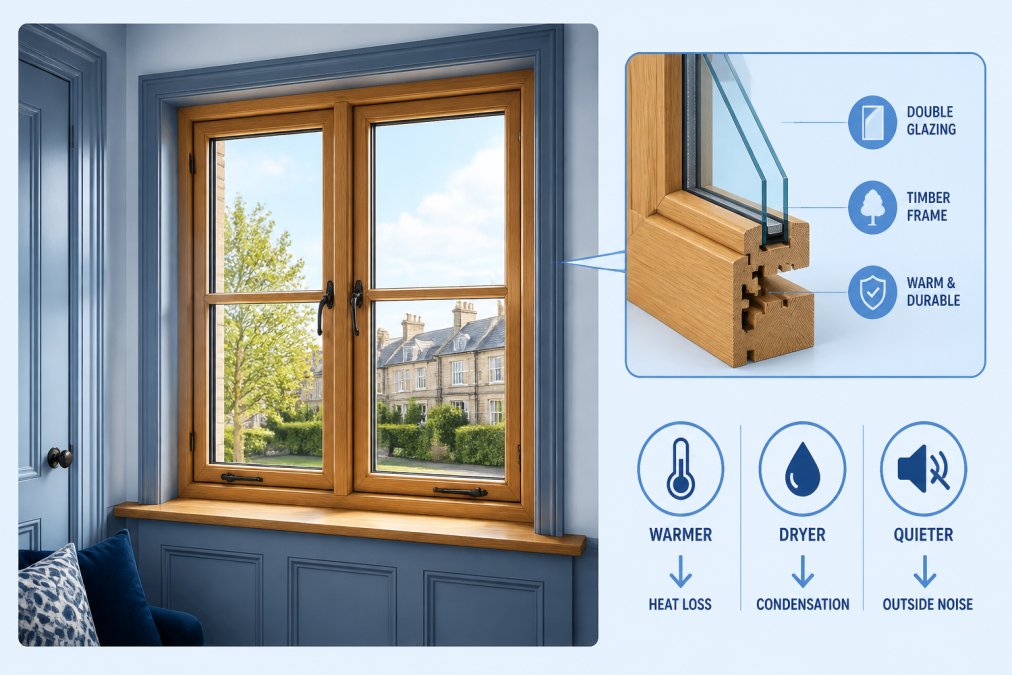
Double-glazing raises the internal glass pane temperature significantly compared to single glazing, because the insulating gas cavity reduces heat transfer. Triple-glazing adds a third pane and second cavity, pushing thermal efficiency further, particularly valuable in north-facing rooms or exposed locations.
Timber frames offer strong thermal performance and suit period properties where character matters. At Arborfield Joinery, we have supplied and manufactured timber windows since 1953, offering double-glazed oak units combining traditional craftsmanship with modern sealed unit technology. The Suffolk Oak Double Glazed External door at £489.75 exemplifies how quality oak joinery can be both thermally effective and aesthetically appropriate for heritage homes.

Cost-Benefit Analysis: When Upgrading Glazing Is Worth It
The case for upgrading is strongest when existing windows are single-glazed, sealed double-glazed units show seal failure, condensation persists despite good ventilation, or energy bills are high. The case for delaying is reasonable when windows are less than ten years old with intact sealed units, condensation appears only in specific conditions and responds to ventilation, or budget is better directed at insulation.
According to the Energy Saving Trust's guidance on home insulation and glazing, improving window thermal efficiency reduces heat loss and lowers heating costs over time, though payback periods vary considerably.
Preventing Mould and Mildew Once Window Condensation Appears
Mould is the most serious consequence of unmanaged window condensation. It establishes wherever moisture and organic material meet, window frames, sealant beads, plaster around reveals, and soft furnishings near affected windows.
The UK Health Security Agency's guidance on damp and mould identifies mould exposure as a risk factor for respiratory conditions, particularly for children, the elderly, and those with existing lung conditions.
If mould has appeared around windows, address it promptly:
- Clean affected surfaces with fungicidal wash rather than bleach alone; bleach kills surface mould but does not penetrate porous materials.
- Treat blackened window frame sealant with specialist mould remover; if deeply contaminated, remove and replace it.
- Improve ventilation immediately before redecorating.
- Monitor with a hygrometer for two to four weeks after treatment to confirm humidity has dropped.
- If mould returns within weeks, the underlying moisture problem has not been resolved and professional assessment is warranted.
Condensation on windows worsens steadily when ignored and resolves quickly when tackled systematically. Solutions range from free daily habits to full glazing upgrades, with the right combination depending on your home's specific situation. If you are considering new timber windows as part of renovation, the team at Arborfield Joinery has advised homeowners on these decisions since 1953. As the largest independent joinery stockist in the south, we offer bespoke timber windows with full double-glazing specification, expert advice on what suits your property, and free UK mainland delivery on orders over £900. Get started with Arborfield Joinery and choose windows that work for your home long-term.
Frequently Asked Questions
Is there something I can put on my windows to stop condensation?
Yes, several products help reduce window condensation. Anti-condensation window film insulates the glass surface, raising it above the dew point so moisture stops forming. A window vacuum (window vac) removes existing condensation quickly to prevent mould growth. For a longer-term fix, improving ventilation or upgrading to double or triple glazing addresses the root cause rather than just managing the symptom. These measures work best alongside daily habits like opening trickle vents and using extractor fans.
Does condensation mean my house is too cold?
Not always. Window condensation forms when warm, humid indoor air meets a cold glass surface and drops below the dew point. A cold room can make it worse, but the real driver is high relative humidity indoors. Homes that are well heated but poorly ventilated, or where cooking and bathing release a lot of water vapour without adequate air exchange, will still experience condensation even at comfortable temperatures. Monitoring humidity levels with a hygrometer and keeping them between 40-60% is a reliable guide.
What is the best way to ventilate a room to stop condensation?
Open trickle vents on your window frames daily to allow a steady air exchange without significant heat loss. In kitchens and bathrooms, run extractor fans during and for 20 minutes after cooking or bathing to expel moisture at source. Where possible, open windows briefly each morning to flush out overnight humidity. In rooms prone to damp, a whole-house mechanical ventilation system or a passive air brick can maintain consistent air circulation. These steps together significantly reduce condensation buildup on internal glass panes.
At what temperature does condensation form on windows?
Condensation forms when the glass surface temperature falls below the dew point of the indoor air. In a typical UK home with around 60% relative humidity and an indoor temperature of 20°C, condensation begins forming on surfaces below roughly 12°C. Single-glazed windows can reach near-outdoor temperatures in winter, making them very prone to condensation. Double and triple glazing keeps the internal glass pane significantly warmer, raising the surface temperature well above the dew point and dramatically reducing condensation risk.
This article was written using GrandRanker
Share:
A Homeowner’s Guide to Internal Folding Systems and Door Hardware
Woodplas vs Crawford Joinery: 2026 Comparison