
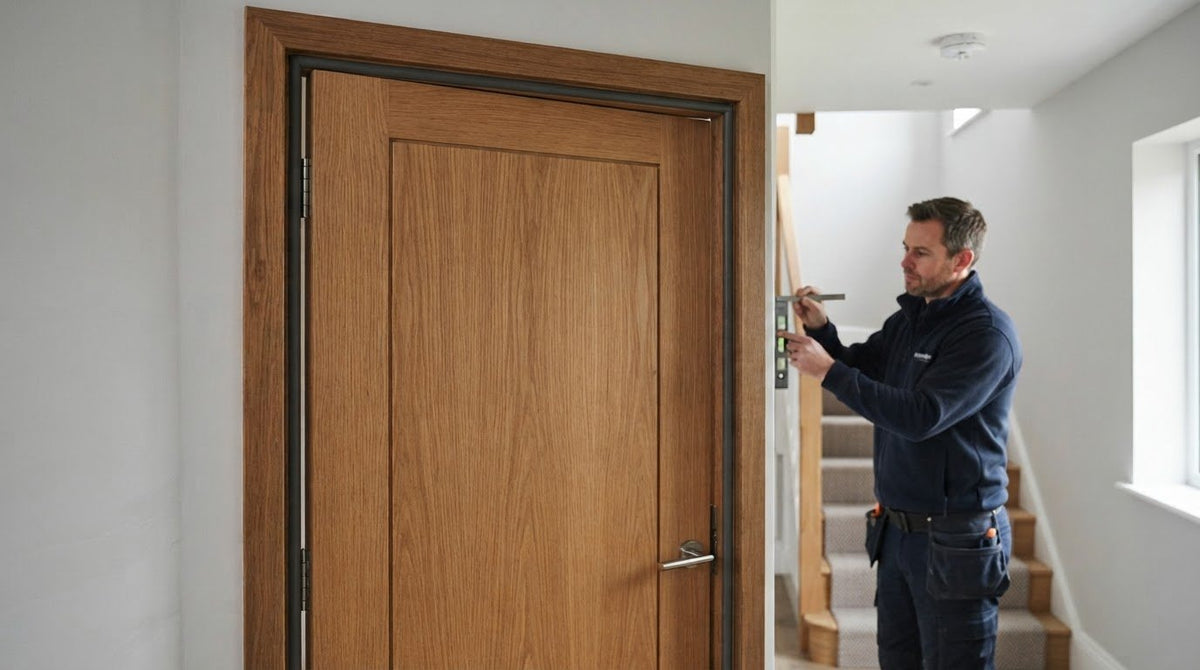
Internal oak fire doors in the UK aren’t simply a matter of choosing a door leaf and hanging it. They’re not a straightforward like-for-like swap: the fire rating applies to the tested doorset, so the frame, seals and fire-rated hardware all matter. FD60 doors are rated for up to 60 minutes of fire resistance.
It’s understandable to expect an oak door to fit much like any other internal door, especially when the finish is chosen to complement your home. But the details behind the surface are essential too. This guide explains how FD30 and FD60 ratings differ, what can affect the choice and cost of a door, and why the frame and fitting components need careful consideration.
You’ll also learn about unfinished and pre-finished options, sealing and fire-door hardware. Use these details to balance the look you want with the requirements for a correctly specified and fitted doorset.
Key Takeaways
- Compare door prices by style and finish, and remember that fire-rated hinges are part of the fitting requirements.
- Choose between FD30 and FD60 by understanding the level of fire resistance each rating represents.
- Decide whether a prefinished surface or an unfinished door for on-site lacquering better suits your project.
- Plan the door, frame, seals and hardware as a complete doorset, rather than treating the door leaf as a standalone item.
- Before installation, make sure an unfinished door is sealed on all six faces, including its lippings.
Oak fire door prices
The price of an oak fire door depends on its finish, design and dimensions. A plain flush oak FD30 door has a different appearance from a traditional four-panel style. Fully finished doors arrive with a finished surface, whilst unfinished doors need suitable treatment before use. Compare the complete specification, not just the oak veneer or panel design.
Sizes affect the choice as well as the cost. Common metric sizes include 2040 mm x 726 mm and 2040 mm x 826 mm, the latter providing a wider opening. These are overall tight dimensions, excluding fitting clearance gaps. Measure the existing opening and frame before selecting a size. Oak fire doors are supplied individually, even when pairs appear together in a display.
Can internal oak fire doors be trimmed, painted or refinished without affecting their fire rating? Only make these changes if the tested specification permits them. Alterations and coatings can affect how the door performs as part of its rated doorset.
Style is another price factor. Oak FD30 options include flush faces and panelled designs, from contemporary interiors to more traditional rooms. Decide whether the grain should remain prominent or sit within a painted scheme. A fully finished surface saves on-site finishing work; an unfinished door allows the finish to be completed at home.
Hardware is part of the complete doorset. Use fire-rated hinges, and fit a door closer where the door needs to close itself. Intumescent strips expand when hot to help block smoke and heat. The frame, seals and hardware must match the door’s specification, rather than being chosen as unrelated accessories.
Consider the room’s conditions when choosing an oak finish. Moisture and regular cleaning can affect surfaces in kitchens and bathrooms, so follow the door’s care guidance. Clean oak fire doors with a damp cloth, and avoid solvents and furniture polish on lacquer. For an unfinished door, seal all six faces, including the lippings, before relying on its fire rating.
For a fair comparison, note each door’s rating, dimensions, finish and required hardware. Then check how these details suit the existing frame and intended room. Comparing the full specification, rather than style alone, helps prevent treating an oak fire door as a standalone leaf.
What do FD30 and FD60 mean?
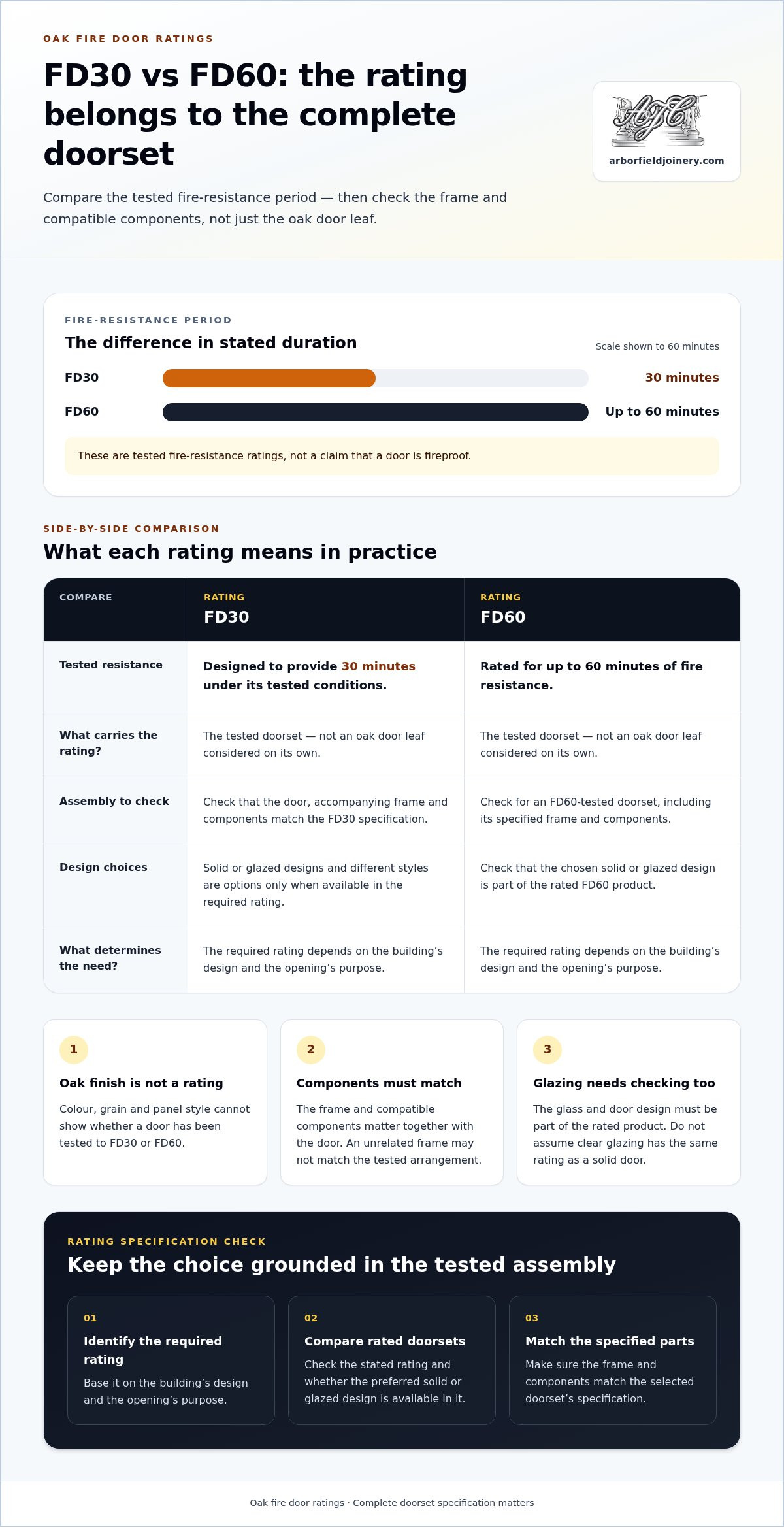
FD30 and FD60 describe different fire-resistance ratings, but neither applies to oak alone. The rating belongs to the tested doorset, so the door, frame and compatible components matter together.
FD30 fire resistance
An FD30 fire door is designed to provide 30 minutes of fire resistance under its tested conditions. That rating describes the tested doorset, not an oak door leaf considered on its own. Check that the chosen door and its accompanying frame and components match the rated specification. A decorative oak finish doesn’t establish the fire rating.
FD60 fire resistance
An FD60 door is rated for up to 60 minutes of fire resistance. That longer duration doesn’t mean any oak door can achieve FD60 by adding extra hardware. Look for a doorset tested for the FD60 rating, including the frame and components specified for that assembly. The required rating depends on the building’s design and the opening’s purpose.
For either rating, consider the complete tested assembly. A door leaf fitted into an unrelated frame may not match the tested arrangement. Check the rating label and product specification before choosing by colour, grain or panel style. An oak fire door should meet the intended rating as a complete set.
Glazing needs the same careful check. A glazed fire door can bring light into a hallway or make a room feel more open, but the glass and door design must be part of the rated product. Don’t assume clear glazing has the same rating as a solid door. Compare the stated rating and glazed configuration, not appearance alone.
Design choices can still be considered alongside performance. For example, a panelled FD30 fire door may suit a traditional interior, while a flush design can feel simpler and more contemporary. The deciding point is that the chosen design must be available in the required rating. A fire door’s appearance cannot show whether it has been tested to FD30 or FD60.
Start by identifying the required rating for the opening, then compare doorsets carrying that rating. Next, decide whether a solid or glazed design suits the room and its light needs. Finally, make sure the specified frame and components match the selected doorset. This keeps your visual choices grounded in the performance the opening needs.
Neither FD30 nor FD60 means a door is fireproof. Each describes a tested period of resistance, and the doorset’s construction and installation affect how closely the fitted assembly matches its specification. Treat the number as a performance rating, not a guarantee that every door bearing an oak finish will behave identically in a fire.
Prefinished and unfinished options
Oak fire doors are available fully finished or unfinished for lacquering on site. The choice affects the look, preparation and care involved, but it doesn’t change the need for the door to match its tested specification. Internal oak fire doors commonly have leaves around 44 to 45 mm thick, so finish the selected door without compromising its construction.
Where can you buy certified internal oak fire doors in the UK? Choose a UK door supplier whose product information identifies the fire rating and tested doorset. Don’t rely on an oak finish or sales description alone. Check that the door, frame and specified components match the stated rating.
A fully finished door arrives with its surface treated, giving the oak a complete appearance from the outset. This can suit a renovation where you want to coordinate the door with existing joinery. Follow the finish’s care instructions: clean lacquered oak with a damp cloth, and avoid solvents or furniture polish.
An unfinished door gives you more control over the final colour and sheen, but preparation is essential. Seal all six faces, including the lippings, before relying on the fire rating. Treating only the visible faces can leave edges exposed. Follow the product’s finishing instructions, and don’t alter the door beyond its tested specification.
Consider the room before choosing a finish. Kitchens and bathrooms can expose surfaces to moisture, splashes and frequent cleaning, so the finish and its care routine matter. Clean oak fire doors with a damp cloth, and avoid solvents and furniture polish on lacquer. Keep your maintenance method consistent with the finish supplied or applied.
Glazing is another visual choice, but clear glass or glazed panels must be part of the specified fire-door design. Don’t assume a glazed option has the same rating as a solid door. Fire performance applies to the tested doorset, not simply to the door leaf’s appearance or surface coating.
Collection and delivery arrangements can also affect your buying decision. A named product may have a click-and-collect price, while a separate pickup-point service may have different terms. Compare the precise collection option and full product specification before ordering. Don’t treat a displayed pair as one unit: oak fire doors are supplied individually, even when shown together.
Before choosing, note the rating, finish, dimensions and any glazing in the product details. Match these details to the intended frame and installation. This simple comparison helps you select a finished or unfinished oak design without mistaking surface appearance for fire performance.
Installation, frames and fire-rated hardware
An oak fire door is part of a complete fitted set, not just a decorative leaf. The frame, seals and hardware must match the door’s tested specification.
Non-compliant fitting may mean the opening does not provide the performance expected from its rated doorset. Risks include reduced fire and smoke protection, remedial work and potential enforcement or liability under applicable fire-safety duties.
Frames and fire-rated hardware
The frame or lining must suit the rated door, not simply fit the opening. Use fire-rated hinges, and remember that intumescent strips expand when hot to help block smoke and heat. Fit a door closer where the door must close itself. Check that each component, including the seals and frame construction, matches the doorset specification.
Installation involves more than hanging a door squarely. The opening, frame, clearances, seals and hardware all affect how the fitted set performs. A classic panelled door or contemporary oak veneer design still needs compatible components. A Mexicano-style appearance, for example, is no substitute for checking the fire rating and specification.
Certification and compliance checks
To check certification, review the product information and identification label for the stated rating and doorset details. Match these against the frame, seals, hinges and other specified hardware. A product description or oak veneer finish alone does not show that the complete fitted assembly matches its tested specification.
Before installation, compare the opening with the door and frame dimensions, then read the fitting instructions. Don’t assume an existing frame is suitable just because a new leaf fits. The rating applies to the tested doorset, so substitutions or alterations can break the match between the installed assembly and its specification.
Take particular care when preparing unfinished oak. Seal all six faces, including the lippings, before relying on its fire rating. This protects edges that may be less visible once installed. Don’t trim or make other changes unless the product instructions allow them, as alterations can affect the tested construction.
Follow a clear installation sequence: confirm the product rating, prepare a compatible frame, fit the specified hinges and seals, then check the closer if self-closing is required. Ensure the door moves and closes as intended without disturbing the seals. Oak veneer, clear finishes and classic or contemporary designs are visual choices; the complete fitted set must match the intended specification.
Oak internal fire doors and fire ratings
Oak describes the finish, not the fire performance. Start with the required rating and complete tested doorset, then consider styles such as shaker or glazed oak.
Required fire ratings
What fire ratings are required for internal oak fire doors in UK homes and buildings? The required rating depends on the building’s design and the opening’s role; oak itself does not determine it. FD30 doors provide a 30-minute fire-resistance rating, while FD60 doors are rated for up to 60 minutes. Use the rating specified for that opening, rather than assuming one option suits every internal door.
Compare the door’s documented rating with its intended use and the specified frame and components. Choose a glazed oak design as a rated product, rather than treating it as equivalent to a solid door because it looks similar. Intumescent strips expand when hot to help block smoke and heat, but must be part of the specified doorset.
UK standards and regulations
What UK standards and regulations apply to internal oak fire doors? Follow the applicable building and fire-safety requirements for the property, alongside the chosen doorset’s documented specification. Check the product’s rating and certification information, then match the door, frame, seals and hardware to it. An oak finish or shaker profile does not establish compliance.
For a home or other building, start with the fire-safety design for the specific opening. Compare its required rating with the product documentation, including glazing details. Keep the installation instructions with the product information so the fitted assembly can be checked against the tested configuration.
A fire rating applies to the tested doorset, not the door leaf alone. A replacement internal door may appear to fit an existing frame, but appearance and fit don’t show whether the parts match the tested assembly. Check the frame and specified hardware before choosing a style.
Plan delivery as part of the selection process. Confirm the opening dimensions and intended rating so the chosen set suits the project. If a pair is shown for display, remember that oak fire doors are supplied individually. For two openings, assess each door and frame as part of the planned arrangement.
Choose a finish alongside the required performance. A contemporary glazed oak design may bring more light into a hall, while a solid shaker style creates a different look. Either way, choose a product whose documented rating covers that design. Intumescent strips are functional components, not a substitute for a tested, compatible set.
Use the product documentation and the building’s design together to make a considered choice. Explore oak door designs when comparing finishes for your home.
Arborfield Joinery: Oak Doors
Arborfield Joinery sells Oak Doors for customers considering the look and finish of internal doors. Once you’ve established the fire rating and doorset requirements for your project, explore oak alongside Walnut Doors, White Primed Doors and Urban Doors. Choose a style and material that suits your home, while keeping fire performance tied to the relevant tested doorset specification.
Use this as the next step if you’re comparing finishes or coordinating doors across rooms. Explore the available designs and consider how each option will sit with your existing interior. For guidance on the door range, contact Arborfield Joinery.
Make your next door choice with confidence
Bring the practical and visual decisions together using your project notes. A considered door choice should suit the room, the wider interior and the intended specification. When choosing internal oak fire doors in the UK, keep the product’s fire performance central, then explore finishes that complement your home.
Arborfield Joinery sells Oak Doors, alongside Walnut Doors and White Primed Doors. Compare natural timber character with a different grain or clean primed surface as you plan a consistent look across rooms. Choose a style that suits your space, while keeping any fire-door requirements tied to the relevant product specification.
Ready to explore the range and find a direction for your home? Contact Arborfield Joinery about oak doors and take the next step towards a considered interior.
Frequently Asked Questions
Are oak internal fire doors easy to install?
A door can be straightforward to fit when it matches the frame and opening, but fire-rated installation requires precision. A door that catches, leaves an uneven gap or fails to close properly may not perform as intended. Before fitting, compare the product instructions with the existing frame and hardware. Don’t treat an oak fire door as a routine internal door replacement if the rated assembly needs changes.
Do I need extra parts for the door to be fire rated?
Yes. The door is one part of a rated doorset. Its compatible frame or lining, fire-rated hinges, seals and other specified hardware all contribute to the intended assembly. Intumescent strips expand when exposed to heat, helping to close gaps. If the door needs to close itself, a suitable closer may also be needed. Match components to the door’s documentation, not just their appearance.
What are the key features of fire-rated doors?
Look for a stated fire rating, product identification and documentation describing the tested doorset. The specified frame, seals and hardware should match that information. Some designs include glazing, but the glass and door construction must be part of the rated product. A clear glazed panel alone does not show that the complete door assembly has the required fire performance.
What is the difference between FD30 and FD60 oak fire doors?
FD30 indicates a 30-minute fire-resistance rating; FD60 is rated for up to 60 minutes. These ratings apply to the tested doorset, not simply the oak finish or door leaf. The right choice depends on the opening’s requirements within the building. Compare the product documentation and specified components, rather than assuming that a particular room or oak design automatically calls for one rating.
How much do internal oak fire doors cost in the UK?
The cost of internal oak fire doors in the UK depends on the design, dimensions and finish, as well as the frame and hardware required for the project. A fully finished and an unfinished door may involve different preparation. Compare like with like by checking the stated rating and specification, then consider compatible hinges, seals and any closer. This gives a more useful project comparison than judging the door leaf alone.
How should internal oak fire doors be measured and fitted?
Measure the existing opening and frame carefully. Record the width and height at several points, as well as the frame depth. Compare those measurements with the door’s stated dimensions and fitting instructions; the door dimensions don’t include fitting clearance. During installation, keep the frame square, use the specified components and ensure the door moves and closes freely without disturbing its seals.
What hinges, seals, closers and other hardware are required for oak fire doors?
Use fire-rated hinges and the seals specified for the doorset. Intumescent strips expand when hot, helping to restrict smoke and heat through gaps. Fit a door closer if the door must close itself. The frame or lining must also suit the tested assembly. Check the product instructions for compatible components instead of assuming standard hinges or decorative hardware will be suitable.
How should oak fire doors be maintained and inspected in the UK?
Keep the door’s care instructions and product identification for future reference. Clean oak surfaces with a damp cloth, and avoid solvents or furniture polish on lacquer. During routine visual checks, look for damage to the door, frame, seals and hinges, and make sure the door closes without obstruction. Any damaged or altered component must be replaced with one that suits the doorset specification.
Share:
Choosing Flush Doors for Interior Style and Lasting Use
How to Find a Good U-Value for UK Windows