
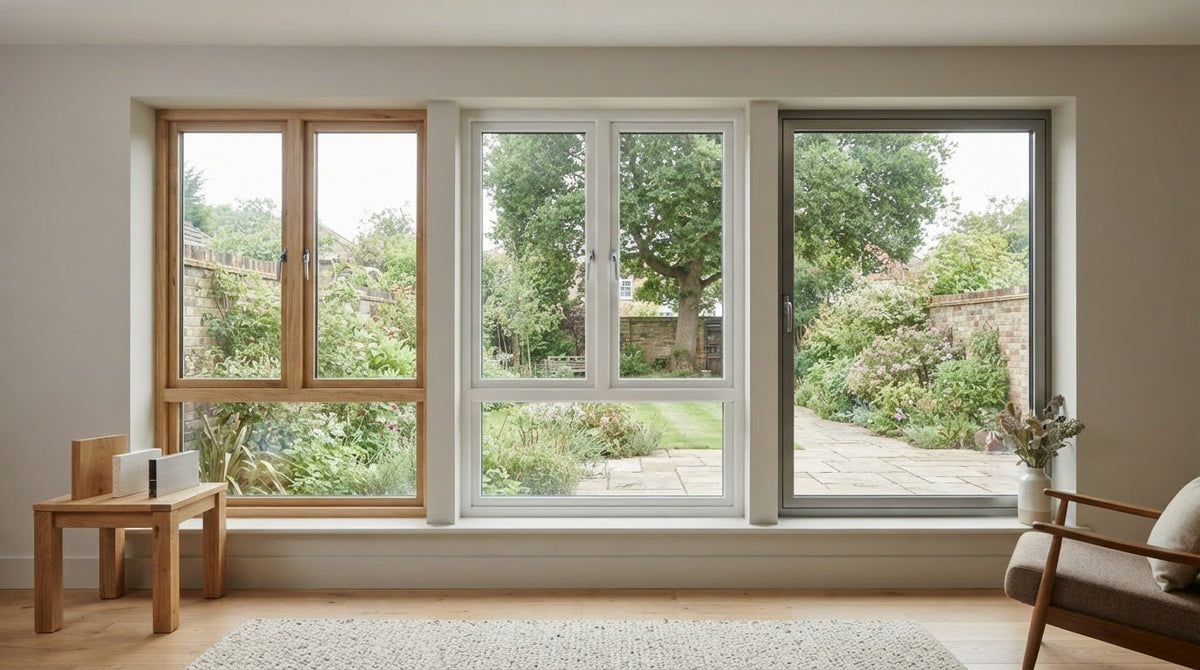
The frame that sounds greenest on paper isn’t automatically the most sustainable choice for your home. Choosing eco-friendly and sustainable window materials UK homeowners can feel confident about means looking beyond the material itself: where it comes from, how the complete window performs over time, how it can be maintained and what happens when it reaches the end of its life.
Timber, uPVC and aluminium each bring different considerations around sourcing, upkeep, appearance, lifespan and recycling. There isn’t one answer for every property. The right choice depends on the specific window, the character and needs of your home, and the environmental priorities that matter most to you.
This guide gives you a consistent way to assess those trade-offs. It explains which sourcing and product details to look for, compares the main frame materials and offers a practical checklist for weighing environmental priorities against performance and style. Timber windows are part of that comparison, without treating any one material as an automatic winner.
Key Takeaways
- Compare eco-friendly and sustainable window materials UK homeowners are considering across sourcing, service life, repair and end of life, rather than judging the frame alone.
- Look for timber sourcing evidence, including recognised certification and a clear chain of custody.
- Match timber, uPVC and aluminium to your priorities for appearance, maintenance and intended lifespan, without assuming one material suits every home.
- Use a practical buying checklist to separate product-specific evidence from broad environmental marketing claims.
- Explore bespoke timber windows from Arborfield Joinery, with customisable bar designs, ironmongery, paint and stain finishes.
What makes a window material eco-friendly and sustainable?
Choosing between timber, uPVC and aluminium is a useful starting point, but the frame alone can’t show how responsible a window is overall. The source of its materials, how it is made, how the complete window performs and whether it can be maintained or recovered at the end of its life all matter. Judge claims about eco-friendly and sustainable window materials UK homeowners encounter against consistent criteria, not a single label or material name.
Eco-friendly describes a choice that reduces relevant environmental impacts; sustainable describes a choice considered over its whole life, from sourcing to end of use. A material may have an advantage at one stage and a drawback at another. Green building principles also take a broad view, considering materials alongside energy performance and the wider building; see Green building principles and sustainable materials.
For a fair comparison, check whether information relates to the specific window rather than the material in general. Useful factors include:
- Where the raw materials come from and what evidence supports responsible sourcing.
- How the product is manufactured, transported and assembled.
- How the complete window performs in use, including its expected durability.
- What maintenance or repairs may help extend its service life.
- Whether its materials can be reused, recycled or otherwise recovered at the end of its life.
What does a window’s whole life include?
A window’s life begins with raw-material sourcing, then continues through processing, manufacture, transport and use in the home. Maintenance and repairs can affect how long it remains serviceable; removal, reuse, recycling or disposal shape what happens next. Environmental impacts can arise at every stage, not just in the frame. The balance varies by product, so don’t assume one material always has the lowest impact without product-specific evidence.
Why does window performance matter to sustainability?
Once installed, the window assembly affects heat transfer between indoors and outdoors. The frame is only one part of that assembly: glazing, seals, overall design and the quality of the fit also influence performance. Consulting regional specialists like FrameHouse can help ensure products are properly specified and fitted to maximise thermal standards. A material comparison that ignores these details can mislead. Look for whole-window performance information rather than relying only on a claim about the frame or the centre pane of the glass.
Performance also depends on the home and how the window is used. A specification may suit one property but not another, and a window’s stated performance cannot by itself promise a reduction in energy use. Compare complete products using like-for-like information, then consider how each fits the building’s design and needs.
Sustainability is a balance of impacts across a window’s full life, while eco-friendly describes reducing particular impacts. Keeping both ideas in view helps you ask better questions and compare materials without declaring a universal winner.
How timber, uPVC and aluminium affect a window’s environmental footprint
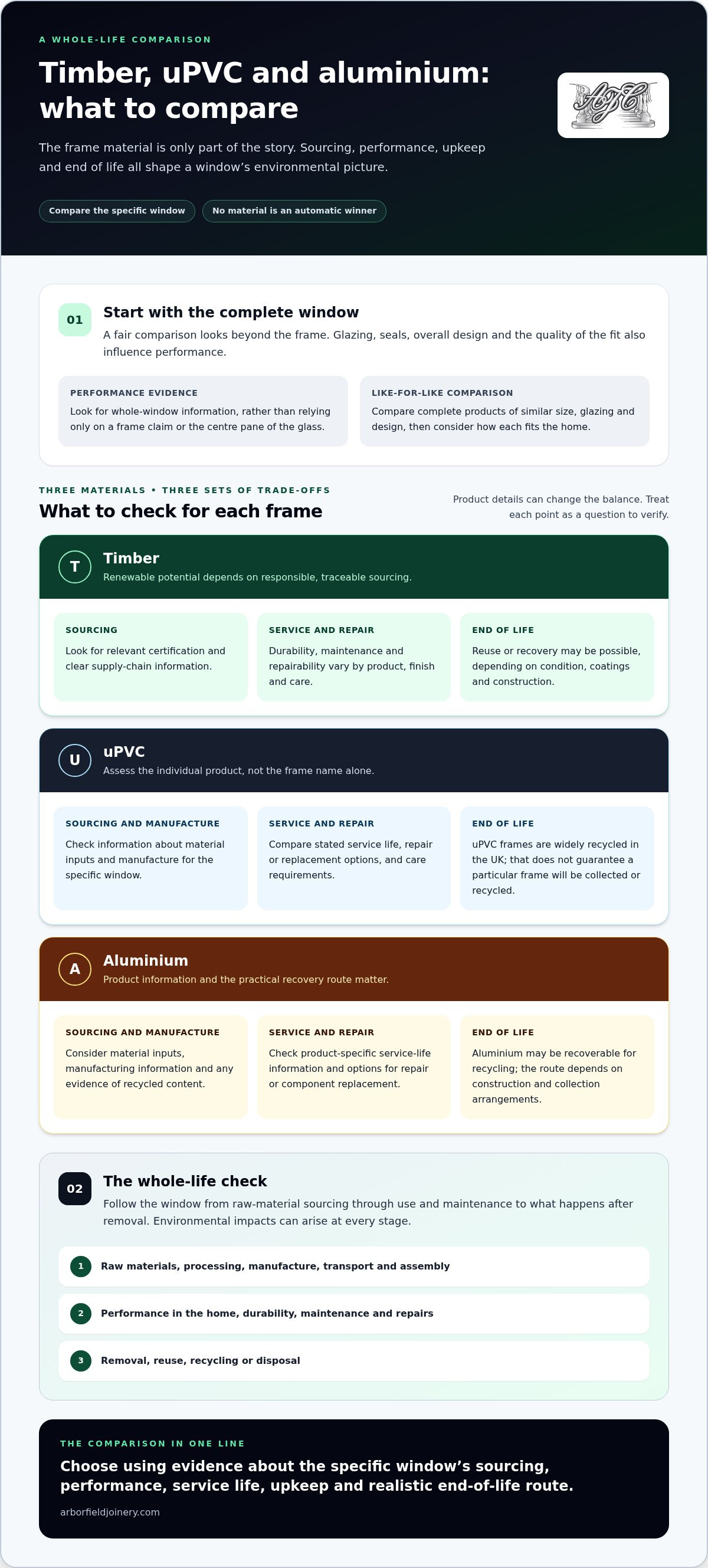
Each frame material has different environmental considerations, but the material label alone doesn’t settle the comparison. Timber is renewable when responsibly sourced; uPVC and aluminium have their own manufacturing inputs and potential end-of-life routes. For all three, the finished window’s durability, repair options and performance matter. Use the table as a starting point, not a verdict: details of a particular product can change the balance.
| Material | Sourcing and manufacture | Service life and repair | End of life |
|---|---|---|---|
| Timber | Renewable potential depends on responsible sourcing. Look for product-specific evidence, such as relevant certification and clear supply-chain information. | Durability, maintenance needs and repairability vary by product, finish and care. Consider how the window can be maintained over time. | Reuse or recovery may be possible, depending on condition, coatings and how the window is constructed. |
| uPVC | Assess information about material inputs and manufacture for the specific window, rather than assuming its impact from the frame’s name alone. | Compare the stated service life and whether components can be repaired or replaced, alongside the care the product requires. | uPVC frames are widely recycled in the UK, but recyclability doesn’t prove that a particular frame will be collected or recycled. |
| Aluminium | Consider the material inputs and manufacturing information supplied for the product, including any evidence about recycled content. | Check product-specific service-life information and what repair or component replacement may be possible. | Aluminium may be recoverable for recycling, but the actual route depends on the product’s construction and available collection arrangements. |
No frame material is automatically sustainable in every application; the better choice depends on the specific window’s sourcing, performance, service life, upkeep and realistic end-of-life route. Compare complete windows of similar size, glazing and design, using evidence that relates to the product rather than broad claims about a material category.
When can timber be a considered sustainable choice?
Timber’s renewable potential is meaningful when its origin is responsibly managed and traceable. In the UK, FSC and PEFC are recognised schemes you may encounter as evidence of forest sourcing. Certification can help assess timber provenance, but it doesn’t establish the full environmental impact of the finished window. Durability, maintenance and the practicality of repair also affect how long a timber window remains in service.
How should uPVC and aluminium be compared fairly?
Look beyond statements such as “recyclable” or “long-lasting”. Check whether the evidence describes the complete product, its expected service life, maintenance and repair options, and what may happen after removal. Recyclability is a potential route, not proof of recycled content or successful recovery. These checks make comparisons of eco-friendly and sustainable window materials UK products more meaningful.
Timber windows can be tailored to suit a home’s design, with choices such as bar designs, ironmongery, paint and stain finishes. If timber aligns with your priorities, explore timber window options as part of your comparison.
Which sustainable window material suits your home and priorities?
Start with the qualities your home needs, then weigh them against product-specific environmental evidence. A period property may call for carefully judged proportions and frame details; a contemporary design may suit a different look. In either case, consider sourcing, care, repair and intended service life alongside appearance. There’s no material that wins on every measure, so choose the window that balances your priorities without relying on assumptions about its frame.
Use this table to shape a like-for-like comparison of eco-friendly and sustainable window materials UK homeowners may be considering. These points are prompts, not universal performance claims.
| Material | Potential advantages | Trade-offs to consider | Evidence to look for |
|---|---|---|---|
| Timber | Can suit homes where natural character, adaptable detailing and a renewable material are priorities. | Sourcing, finish and maintenance affect the overall picture; requirements vary by product. | Timber origin and sourcing evidence, product-specific care guidance, repair options and whole-window performance. |
| uPVC | May suit homeowners seeking a familiar, low-maintenance frame option. | Material inputs, repairability and realistic end-of-life routes need consideration alongside service life. | Product-specific service-life and maintenance information, repair options, recycled-content evidence and recovery arrangements. |
| Aluminium | May work well where the desired appearance and design call for an aluminium frame. | Manufacturing inputs and the product’s service and recovery routes matter; recyclability alone isn’t proof of lower impact. | Information on material inputs, any recycled content, maintenance, repair and end-of-life arrangements. |
What should period and contemporary homes prioritise?
Look closely at frame proportions, sightlines, opening styles and details such as bars, then consider how they sit with the home’s existing character. A period façade may benefit from sympathetic detailing, whilst a contemporary design might favour a different frame expression. Planning or conservation considerations depend on the individual property and project, so don’t treat one rule as universal. Consider environmental aims and architectural fit together.
How do maintenance and expected service life affect the choice?
Maintenance claims are useful only when they describe the actual product and the care it needs. Compare the care instructions with your willingness to maintain the finish, and check what can be repaired or replaced rather than assuming a damaged window must be discarded. A stated service life is most useful when its basis is clear and comparable across the options you’re assessing.
Keep the frame choice distinct from glazing and whole-window performance. Two windows with the same frame material can differ in glazing, seals, design and stated performance. Compare the complete specifications against your property’s needs; don’t assume a frame material alone guarantees comfort or energy savings. This gives you a practical shortlist shaped by appearance, care, evidence and the window’s intended role.
A practical checklist for buying eco-friendly and sustainable windows in the UK
A clear comparison makes environmental claims easier to assess. Use these steps to move from broad priorities to the details of a complete window, keeping product-specific evidence separate from general marketing language.
- Define your priorities. Decide what matters most: responsible sourcing, a particular appearance, manageable maintenance, repair options or a long service life. Note any design requirements for your home too, so environmental aims stay connected to practical suitability.
- Compare complete windows. Look at the same kind of product, including frame, glazing, seals and design. Record the stated performance and material composition, rather than comparing one frame in isolation with another complete window.
- Inspect the evidence. Look for sourcing documents, product-specific environmental information, material composition, maintenance guidance, repair options and end-of-life arrangements. Treat broad claims such as “green” or “recyclable” as prompts for detail, not proof of a lower impact.
- Assess the fit. Consider whether the proposed window suits the property’s proportions, intended use and design. Weigh that practical fit alongside the evidence, and note what information is missing before reaching a decision.
Which environmental claims and documents should you examine?
For timber, FSC or PEFC references can indicate that sourcing has been assessed against a forest certification scheme. Look for information connecting the claim to the timber used in the window, including traceability through the supply chain. Certification is useful evidence about sourcing, but it isn’t a full life-cycle assessment of the finished product. For uPVC or aluminium, look for equally specific information about material inputs, any recycled content and the basis of environmental claims.
Compare like with like. A general statement about a material isn’t equivalent to evidence about a particular window, and documents covering different product boundaries may not be directly comparable. Note what each claim measures, which product it refers to and whether it covers one life stage or the full window.
What practical details belong in your final comparison?
Include design details, glazing, finish and maintenance in your notes, alongside sourcing and end-of-life information. Check that the window’s configuration suits the home and its intended use, and record what can be repaired or replaced. If timber is on your shortlist, the timber windows buying guide explores choices around quality, style and longevity.
Use this rule of thumb: compare complete, suitable windows using product-specific evidence for sourcing, composition, performance, maintenance, repair and end of life. That gives you a consistent basis for judging eco-friendly and sustainable window materials UK options without relying on a single label.
Considering timber for your home? Explore bespoke timber windows, with customisable bar designs, ironmongery, paint and stain finishes.
Explore bespoke timber windows from Arborfield Joinery
If your comparison points towards timber, consider the specific window and how it will suit your home. Timber can be a considered choice, but the material alone doesn’t establish a product’s environmental impact. Sourcing evidence, whole-window performance, maintenance, repair options and end-of-life arrangements still belong in your assessment of eco-friendly and sustainable window materials UK homeowners can choose from.
Arborfield Joinery is a family-run business supplying windows, doors and stairs since 1953. Its bespoke joinery is made to your exact specification, so you can consider the appearance and detailing that fit your property. Customisation helps shape the design, while sourcing and product performance should be assessed using relevant product information.
How can bespoke details shape your timber-window choice?
Small design decisions can affect the way a window sits within a home. Bar designs shape the glazing’s appearance, whilst ironmongery adds another considered detail. Paint and stain finishes offer different ways to complement existing colours, materials and architectural features. The aim is a window that feels at home in its setting, whether you’re matching established character or working towards a fresh, cohesive look.
Think about the proportions and details you want before settling on a specification. A clear design brief helps bring together the window’s appearance and the practical requirements of the room. These choices shape the finish and style; they aren’t evidence of lower environmental impact. Keep the material’s sourcing and the complete product’s performance in view as well.
What is the next step if timber fits your priorities?
As you explore timber windows, note the details that matter to you: bar design, ironmongery, paint or stain finish, alongside your priorities for sourcing, care and intended service life. This helps you relate an appealing design to the broader whole-life comparison, rather than making the decision on appearance alone.
Arborfield Joinery is run by three generations of the Morris family, with a bespoke approach to window details suited to your home. When comparing environmental claims, assess them using relevant product information alongside the design and specification.
For a closer look at how design, quality and longevity inform timber-window choices, explore the timber windows buying guide. Then weigh the details you prefer against the same sourcing, performance, maintenance and end-of-life criteria used for other materials. If timber feels right for your home, explore Arborfield Joinery’s timber windows and consider which bespoke details suit your design.
Make your next window choice with confidence
Before settling on a specification, turn your priorities into a short brief. Note the look you want, the evidence you need to see and the practical considerations that matter most in your home. This gives you a clear point of reference as you compare options and keeps environmental claims in perspective alongside design and performance.
The right decision doesn’t have to satisfy every sustainability measure equally. It should reflect the priorities you’ve chosen and be supported by information relevant to the window itself. If timber is on your shortlist, consider how its detailing can complement your home, then weigh that choice against the same whole-life questions you’d apply to any material.
Explore bespoke timber windows from Arborfield Joinery, with customisable bar designs, ironmongery, paint and stain finishes. A considered comparison of eco-friendly and sustainable window materials UK homeowners can choose from is a practical foundation for moving forward. Explore the available timber-window designs and consider which bespoke details suit your home.
Frequently Asked Questions
What is the most eco-friendly window material?
There isn’t one material that is most eco-friendly for every home. A responsibly sourced timber frame may appeal if renewable materials matter to you, whilst uPVC or aluminium may suit other design and maintenance priorities. Compare the complete window’s sourcing, expected service life, performance, repair options and end-of-life route. For eco-friendly and sustainable window materials UK homeowners are comparing, product-specific evidence is more useful than a broad claim about a frame type.
Are timber windows more sustainable than uPVC windows?
Not automatically. Timber has renewable potential when its source is responsibly managed, while uPVC’s environmental profile depends on its material inputs, manufacture, service life and recovery at end of use. The quality and specification of each complete window matter too. For a fair comparison, check sourcing evidence for timber and product-specific information about durability, maintenance, repair and recycling for both options. Compare windows with similar glazing and intended use rather than judging the frame alone.
Does double glazing make a window sustainable?
No. Double glazing is one aspect of a window, not a sustainability verdict. The frame, seals, design and quality of the complete assembly also affect performance, while sourcing, durability, maintenance and end of life influence its wider impact. Two double-glazed windows may differ in frame material and whole-window performance. Compare the full specifications and consider your property’s needs; glazing alone can’t establish environmental impact or guarantee reduced energy use.
What do FSC and PEFC mean for timber windows?
FSC and PEFC are forest certification schemes that can provide evidence about timber sourcing. In the UK, both are recognised as Category A evidence under the Government’s Timber Procurement Policy. Look for information linking the certification to the timber in the product and its chain of custody. A logo can help you assess provenance, but it doesn’t tell you everything about manufacture, performance, maintenance or the window’s end-of-life impact.
Can existing timber windows be repaired instead of replaced?
Often, repair is worth considering before replacement, but the answer depends on the window’s condition and the work required. Look at the frame, joints, finish, opening function and any signs of moisture damage; also consider whether individual parts can be repaired or renewed. If the window remains suitable for the home, retaining it may avoid replacing sound material. A condition assessment can help establish whether repair is practical and what issues need attention.
Are aluminium windows environmentally friendly?
How can I check whether a window’s sustainability claims are reliable?
Check whether each claim names the product and explains what it covers. A statement about responsibly sourced timber should connect to sourcing evidence; a recycling claim should clarify whether it refers to recycled content or possible recovery at end of life. Compare equivalent windows and note the glazing, material composition, performance, maintenance and repair information. Be cautious of broad terms such as “green” if there’s no supporting detail or clear explanation of the claim.
Share:
What to Look for When Buying Internal Doors
Charcoal Grey Internal Doors for Your Home