
Table of Contents
- What to Look for in Timber Window Suppliers
- Cost of Timber Windows 2026: Pricing Guide
- Timber Window Styles: Casement vs Sash
- Energy Efficiency and U-Values Explained
- Timber Window Maintenance Guide
- Bespoke vs Standard Sizing
- Sustainability and FSC Certification
- Why Choose Arborfield Joinery
- Frequently Asked Questions
What to Look for in Timber Window Suppliers
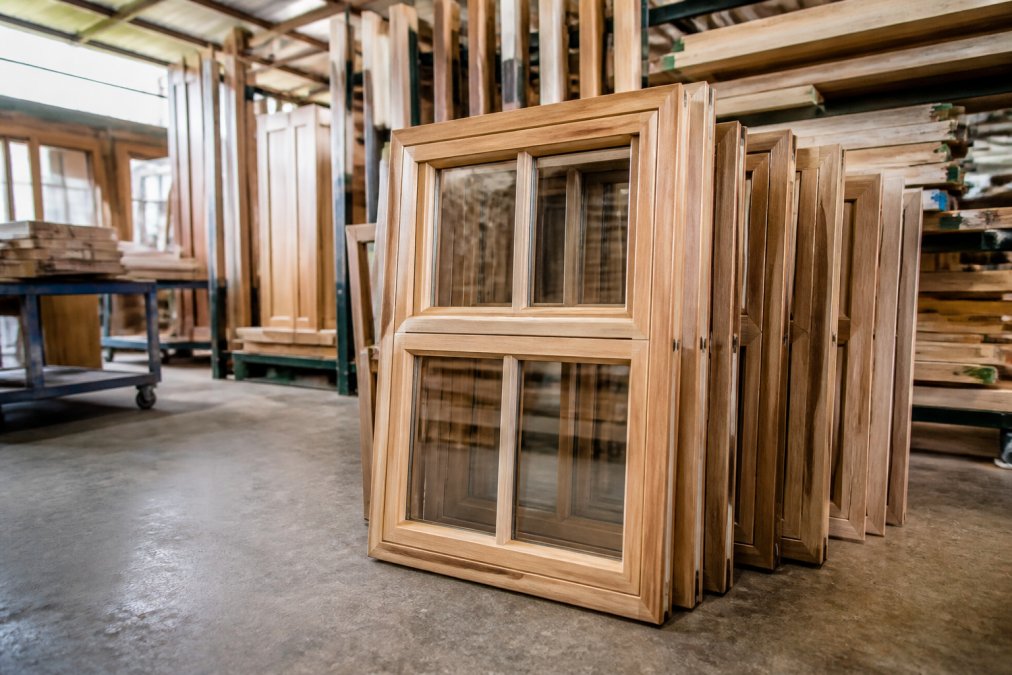
When selecting timber window suppliers, the quality of craftsmanship, material sourcing, and bespoke capabilities matter far more than price alone. A supplier worth your investment combines traditional joinery expertise with modern precision engineering, offers genuine customisation for non-standard openings, and backs their work with transparent advice about durability and maintenance.
The best timber window suppliers understand that every property is different. A Victorian terrace with odd-sized openings needs a manufacturer who can deliver bespoke joinery without compromise, not a company forcing stock sizes into gaps. Look for suppliers who ask detailed questions about your property's age, exposure, and architectural style before quoting. This signals they're thinking about long-term performance, not just the sale.
Key criteria include: proven track record in your region, ability to manufacture bespoke joinery in-house, knowledge of building regulations and conservation area requirements, and honest discussion of maintenance cycles. A supplier who glosses over the upkeep involved in timber windows is hiding something. Quality timber requires regular attention, and transparency about this separates serious manufacturers from those chasing quick sales.
Arborfield Joinery exemplifies this approach. As the largest independent stockist in the south with full manufacturing facilities since 1953, they combine a vast range of premium products from leading brands with bespoke capabilities for non-standard requirements. Their team provides expert advice on suitability, ensuring you get windows matched to your property, not just your budget.
Cost of Timber Windows 2026: Pricing Guide
Timber window costs vary significantly based on size, glazing specification, timber type, and bespoke manufacturing requirements. There's no single "timber window price", what you'll pay depends entirely on your project scope.
Standard timber casement windows typically start lower than bespoke equivalents, with costs rising as you specify hardwoods, triple glazing, or factory-finished treatments. A modest timber window replacement for a semi-detached property might cost less than a bespoke solution for a listed building with conservation area restrictions.
Key cost drivers include:
- Timber type: Softwood is more affordable than hardwood; engineered timber offers a middle ground with superior stability
- Glazing specification: Double glazing costs less than triple; thermal performance improvements justify the premium for energy efficiency gains
- Bespoke sizing: Non-standard openings require custom manufacturing, adding labour and material costs
- Finish and hardware: Factory-finished options (wood stain, paint) cost more than raw timber; brass fittings and multi-point locking systems add to the total
- Installation complexity: Listed buildings, conservation areas, or difficult access increase labour time
A practical approach: obtain quotes from multiple suppliers specifying your exact requirements, don't ask for generic "timber window pricing." Suppliers like Arborfield Joinery offer free UK mainland shipping on orders over £900, which can offset some costs for larger projects. Their team can help you understand where to invest (structural performance, durability) versus where to economise (finish details, hardware finishes).
| Cost Factor | Budget Range | Impact on Performance |
|---|---|---|
| Softwood vs Hardwood | £100-300 difference per window | Hardwood offers superior longevity and weather resistance |
| Double vs Triple Glazing | £200-500 premium | Triple reduces heat loss by 20-30% vs double |
| Bespoke Manufacturing | 40-80% premium vs stock | Essential for non-standard openings; prevents drafts and gaps |
| Factory Finish | £50-150 per window | Extends maintenance intervals; improves initial appearance |
| Hardware Upgrades | £20-100 per window | Multi-point locking improves security and thermal seal |
Timber Window Styles: Casement vs Sash
The choice between casement and sash windows affects both aesthetics and performance. Casement windows swing outward on hinges like a door; sash windows slide vertically within the frame. Each suits different properties and use cases.
Casement windows dominate modern timber installations. They open fully, offering unobstructed ventilation and easier cleaning from inside. Their simple mechanism, a handle and multi-point locking system, is reliable and requires less maintenance than sash hardware. Casement windows work well in contemporary extensions and modern properties. They're also more airtight when closed, improving thermal performance.
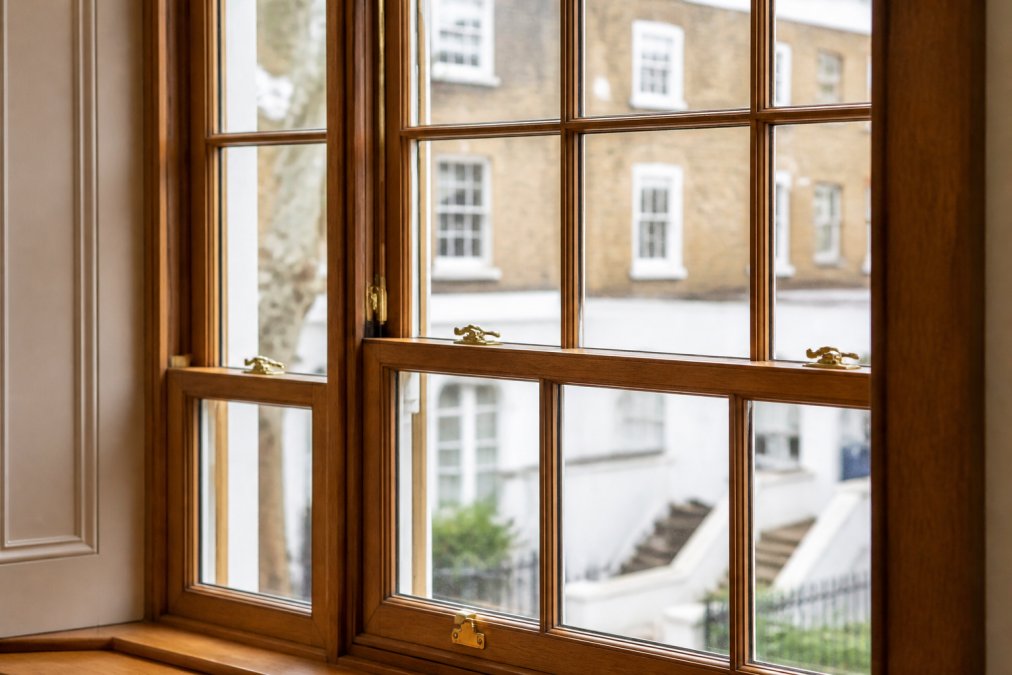
Sash windows define period properties, particularly Victorian and Georgian terraces. They slide vertically, creating a traditional aesthetic that conservation officers expect in listed buildings. However, sash windows demand more maintenance. The sash cords or springs wear over time, and the meeting rails require regular attention to prevent drafts. That said, a well-maintained sash window performs excellently and adds significant character value to period properties.
In conservation areas, your choice may be dictated by planning requirements. Listed buildings often require sash windows to preserve authenticity. Modern properties have freedom to choose based on preference and performance.
Arborfield Joinery manufactures both styles in bespoke configurations, meaning you're not limited to stock dimensions. Whether you need sash windows to match a Victorian terrace's exact opening or casement windows for a contemporary renovation, their in-house manufacturing ensures precision fit without gaps or drafts.
Energy Efficiency and U-Values Explained
U-value measures how effectively a window resists heat loss. Lower U-values indicate better thermal performance. Building regulations set minimum standards; exceeding them reduces heating costs and carbon footprint.
Current building regulations require windows to achieve a U-value of 1.4 W/m²K or better (gov.uk). Double-glazed timber windows typically achieve 1.2-1.4 W/m²K; triple-glazed units reach 0.7-0.9 W/m²K (peer-reviewed research). The difference is substantial: triple-glazed windows reduce heat loss by 40-50% compared to double glazing.
The gap between glass panes (filled with argon gas) and the frame material determine U-value. Timber frames perform well because wood conducts heat slowly, reducing thermal bridging, the pathway heat takes through the frame itself. Hardwoods perform better than softwoods due to denser cellular structure.
For properties in conservation areas, thermal performance must be balanced against aesthetic requirements. Listed buildings may restrict you to double glazing to preserve original proportions and appearance. In these cases, focus on draught-proofing and weather stripping to improve performance without altering the window's visual character.
Condensation resistance correlates with U-value. Better-insulated windows stay warmer on the inside surface, reducing the temperature differential that causes condensation. This matters in kitchens and bathrooms where moisture is high.
Timber Window Maintenance Guide
Timber windows require regular maintenance to sustain performance and appearance. This isn't a drawback, it's the price of durability and authenticity. A well-maintained timber window outlasts uPVC alternatives by decades.
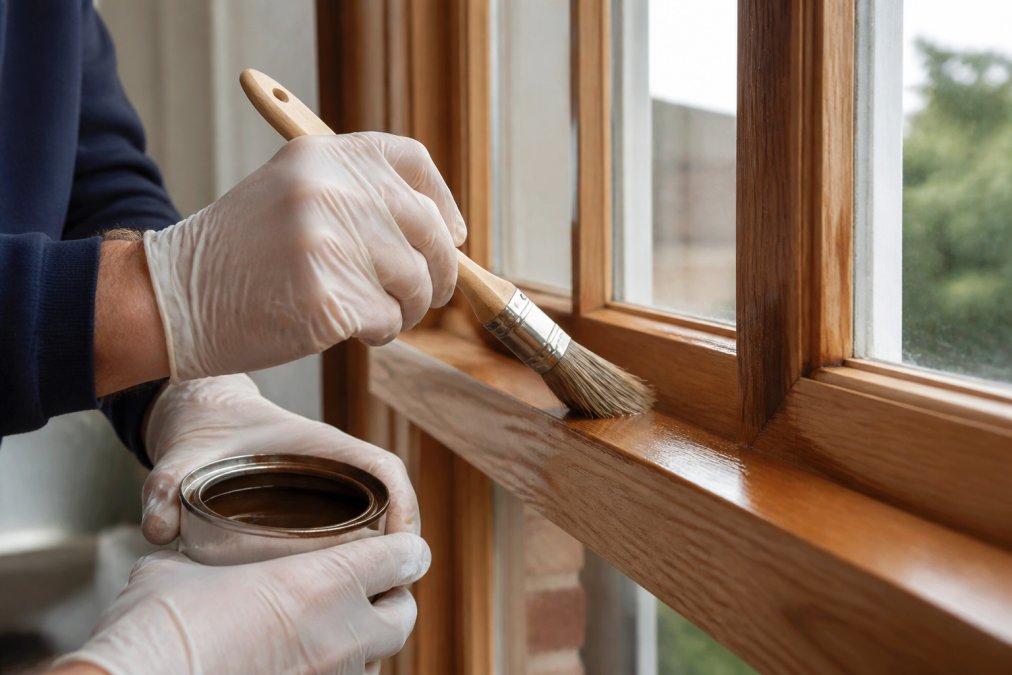
Establish a maintenance cycle aligned to your climate and window exposure. Coastal properties, north-facing windows, and exposed locations demand more frequent attention than sheltered suburban homes.
Annual maintenance (every 12 months):
- Inspect glazing seals and weather stripping for deterioration
- Check sash cords or spring mechanisms for wear (sash windows only)
- Clean frames and hardware to remove dirt and salt deposits
- Ensure drainage holes in sills remain clear
- Lubricate hinges and locking mechanisms
Every 3-5 years:
- Inspect and refresh exterior wood stain or paint finish
- Check for signs of rot, particularly at sill joints and corners
- Tighten any loose hardware or fittings
- Assess weather stripping and consider replacement if compressed or cracked construction product alternatives.
Every 7-10 years:
- Full professional inspection and refurbishment
- Reglaze if seals have failed
- Replace worn sash cords or springs
- Deep clean and refinish exterior
This schedule is not arbitrary. Timber exposed to weather degrades predictably. The protective finish, whether stain or paint, breaks down under UV exposure and moisture. Refreshing it before failure prevents water penetration into the wood itself, which causes swelling, warping, and eventual rot.
Factory-finished windows from quality suppliers come pre-treated, extending the interval before first maintenance. Arborfield Joinery offers factory-finished options that reduce on-site preparation and accelerate installation while providing superior initial protection.
Weather stripping deserves special attention. As it compresses over years, it loses its seal. Replacing weather stripping is inexpensive and dramatically improves thermal performance and draught resistance. Don't delay this maintenance, the cost of replacement is trivial compared to the heating loss from a degraded seal.
Bespoke vs Standard Sizing
Standard timber windows fit common opening dimensions. Bespoke windows are manufactured to your exact specifications, accommodating non-standard openings, unusual proportions, or conservation requirements.
For most new-build properties with regular rectangular openings, standard sizing works fine and costs less. You're buying from existing tooling and stock inventory. However, the moment your opening deviates, a sloped roofline, a listed building's irregular frame, or an architectural feature requiring specific proportions, standard windows create problems.
Forcing standard windows into non-standard openings results in gaps, drafts, and visible filler strips. This looks poor and compromises thermal performance. Bespoke manufacturing eliminates these compromises. You get windows that fit perfectly, perform as designed, and look intentional rather than forced.
Conservation areas and listed buildings almost always require bespoke joinery. Planning officers review applications based on visual character and heritage preservation. Standard windows rarely pass scrutiny in these contexts. Bespoke manufacturing lets you match existing window styles, timber types, and proportions, ensuring approval.
The premium for bespoke manufacturing, typically 40-80% above standard pricing, is justified when it prevents installation problems, ensures regulatory compliance, or preserves architectural integrity. For a Victorian terrace with oddly-sized openings, bespoke is not optional; it's the only sensible choice.
Arborfield Joinery's full manufacturing facilities enable rapid bespoke production. Rather than waiting months for custom orders from distant manufacturers, their in-house team can turn around bespoke windows in weeks. This speed, combined with their ability to handle non-standard openings without compromise, explains why architects and builders specify them for complex projects.
Sustainability and FSC Certification
Timber sourcing matters. Responsibly harvested timber from managed forests is sustainable; timber from clearcut operations is not. FSC (Forest Stewardship Council) certification verifies that timber comes from forests managed for long-term productivity and environmental health (fsc.org).
FSC-certified timber costs slightly more but represents genuine environmental responsibility. The certification chain tracks timber from forest through manufacture, ensuring no substitution or mixing with uncertified material. For homeowners concerned about environmental impact, FSC certification is the meaningful standard to verify.
Timber windows have a lower lifecycle carbon footprint than uPVC alternatives when timber comes from responsibly managed forests. Wood stores carbon throughout its life; manufacturing timber requires far less energy than synthesising plastic. At end-of-life, timber biodegrades or burns for energy recovery; uPVC persists in landfills for centuries.
However, lifecycle carbon analysis depends on timber source, transport distance, and manufacturing efficiency. Locally-sourced timber from regional suppliers carries lower embodied carbon than timber shipped internationally. This favours suppliers with established regional supply chains, another advantage of family businesses like Arborfield Joinery, which source from established UK and European timber merchants.
Engineered timber, laminated softwood or plywood cores with hardwood veneers, offers sustainability advantages. It uses lower-grade timber efficiently, reducing waste, and delivers superior stability compared to solid timber. Engineered timber windows perform excellently and represent responsible forestry practice.
When evaluating timber window suppliers, ask about their timber sourcing. Do they prioritise FSC-certified material? Do they source regionally or import from distant suppliers? These questions reveal genuine commitment to sustainability versus greenwashing.
Why Choose Arborfield Joinery
Arborfield Joinery stands apart because they've combined family-business values with professional expertise over seven decades. Established in 1953, they're the largest independent stockist in the south, a position earned through consistent quality, fair pricing, and genuine customer relationships.
Their approach addresses every concern homeowners raise. You've got a Victorian terrace with non-standard openings? They manufacture bespoke windows in-house, eliminating the risk of gaps and drafts. Worried about durability? Their decades of local reputation mean you can visit properties they've worked on years ago and see how windows have performed. Concerned about cost? Free UK mainland shipping on orders over £900 reduces the total investment, and their team helps you understand where to invest versus economise.
The customer feedback speaks clearly: "Fantastic, professional service. Measured everything accurately and gave great advice on what would suit our property best." This isn't marketing copy, it's what clients experience when they work with a business that prioritises getting the job right over maximising turnover.
Arborfield Joinery's product range includes premium window fittings that complete bespoke installations. Their Brighton Fastener Polished Brass (£12.21) and Casement Fastener Antique Brass (£13.32) represent the hardware quality you'd expect from a serious joinery supplier. These aren't generic fittings; they're selected for durability, aesthetic appropriateness, and reliable performance.


Their full manufacturing facilities mean you're not reliant on external suppliers for bespoke work. Lead times are measured in weeks, not months. This matters when you're managing a renovation timeline. It also means quality control stays in-house, no intermediaries, no surprises.
For homeowners undertaking renovation projects, architects designing residential spaces, and builders sourcing premium joinery, Arborfield Joinery delivers what matters: quality products, honest advice, and reliable service. That combination is harder to find than it should be.
Frequently Asked Questions
How much do timber windows cost compared to uPVC in 2026?
Timber windows typically cost more than uPVC alternatives, reflecting their superior aesthetics, longevity, and craftsmanship. The investment pays dividends through durability, thermal performance, and property value. Arborfield Joinery offers competitive pricing with free shipping on orders over £900, making quality timber more accessible.
What certifications should I look for in a timber window supplier?
Look for FSC (Forest Stewardship Council) certification, which guarantees sustainable forestry practices. Suppliers should also be knowledgeable about Building Regulations approval. Arborfield Joinery, established since 1953, combines traditional craftsmanship with modern standards.
Do timber windows require more maintenance than modern alternatives?
Timber windows need regular maintenance, typically repainting or resealing every 5-7 years, but this is straightforward and cost-effective. Modern factory-finished coatings have extended maintenance intervals significantly. Hardwood options like oak and meranti require less upkeep than softwood. The maintenance cycle protects your investment and preserves the window's thermal performance. Proper weather stripping and condensation management prevent most common issues. Many homeowners view maintenance as part of the window's character and longevity appeal.
Can timber window suppliers make bespoke windows for non-standard openings?
Yes. Reputable suppliers like Arborfield Joinery specialise in bespoke joinery for Victorian terraces, listed properties, and unusual openings. Bespoke manufacturing ensures perfect fit, eliminating gaps and drafts that plague standard-size replacements. Precision engineering and traditional craftsmanship mean your windows will perform as intended. Bespoke options cost more but deliver superior results for period properties and conservation areas where standard sizing simply won't work.
What timber options offer the best durability for external windows?
Engineered timber and sustainably harvested hardwoods like oak, meranti, and accoya offer excellent durability for external windows. Hardwood naturally resists rot and weathering better than softwood, lasting 40+ years with proper maintenance. FSC-certified options ensure environmental responsibility. Accoya, a modified softwood, combines durability with sustainability. Your supplier should advise on species suited to your climate and maintenance capacity. Arborfield Joinery stocks premium timber from leading manufacturers, balancing performance, aesthetics, and environmental impact.
Choosing the right timber window supplier determines whether your renovation delivers lasting quality or becomes a source of regret. Arborfield Joinery's combination of manufacturing capability, product range, and professional guidance makes them the logical choice for anyone serious about getting windows right. Shop now and experience the difference that seven decades of family expertise delivers to your home.
This article was written using GrandRanker
Share:
Guide to Internal Doors and Frames for Your Home
Internal Oak Fire Doors: The Homeowner’s Guide to Safety and Style in 2026