
Table of Contents
- What Makes High Performance Timber Windows Different
- Energy Efficiency and U-Values Explained
- How to Prevent Window Condensation Issues
- Part L Building Regulations Windows: What You Need to Know
- Timber Window Maintenance Guide for Long-Term Durability
- Bespoke Design and Customisation for Non-Standard Openings
- Security Features and Multi-Point Locking Systems
- Hardwood vs Softwood: Which Timber Performs Best
Last Updated: August 23, 2026
What Makes High Performance Timber Windows Different
High performance timber windows integrate advanced materials, precision engineering, and superior insulation to dramatically reduce heat loss and improve acoustic performance compared to standard timber windows. They typically feature triple-glazed units with low-emissivity coatings, warm-edge spacers, and frames manufactured to exacting tolerances, achieving U-values of 0.8-1.2 W/m²K compared to the standard requirement of 1.6 W/m²K.
Timber's natural insulating properties mean the frame itself resists heat transfer better than metal frames, even with thermal breaks. This is why heritage properties and conservation areas frequently specify timber, it performs thermally whilst maintaining aesthetic compatibility.
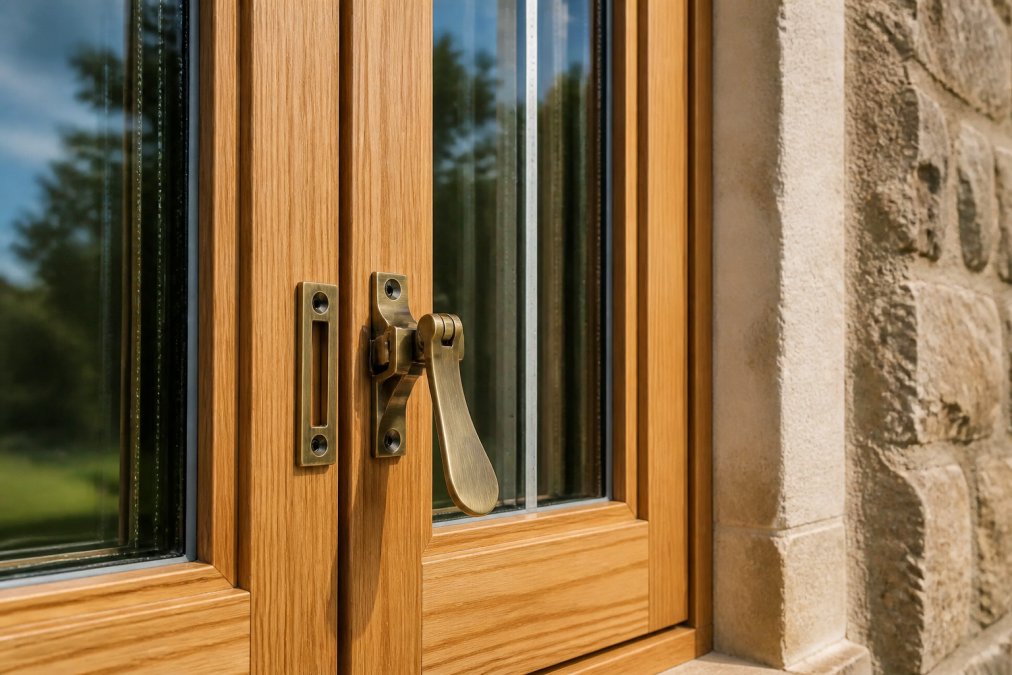
Arborfield Joinery has supplied high performance timber windows to architects and builders across the south for decades, combining factory-finished timber with premium glazing solutions. Bespoke manufacturing capability means non-standard openings don't require compromise on thermal performance.
Energy Efficiency and U-Values Explained
U-value measures thermal transmittance, how much heat escapes through a window assembly. The lower the U-value, the better the insulation. Current Building Regulations Part L requires replacement windows to achieve no worse than 1.6 W/m²K; high performance timber windows typically achieve 0.8-1.2 W/m²K (gov.uk).
The improvement comes from triple glazing with argon or krypton gas fill, low-emissivity coatings that reflect radiant heat back into the room, and warm-edge spacers that prevent the frame-to-glass junction becoming a cold bridge. Timber frames contribute significantly, a timber casement frame typically delivers U-values 15-20% better than an equivalent aluminium frame because wood conducts heat roughly one-tenth as fast as aluminium.
The practical impact: homes with high performance timber windows experience fewer draughts, less condensation, and noticeably warmer rooms during winter. Energy bills typically fall 10-15% compared to single-glazed originals, though actual savings depend on the property's overall thermal envelope. Passive House standards, increasingly adopted in retrofit projects, demand U-values around 0.8 W/m²K, high performance timber windows meet this threshold.
How to Prevent Window Condensation Issues
Condensation appears when warm, moist interior air contacts a cold surface. High performance timber windows reduce condensation risk substantially because the interior glass surface stays warmer. A 1.6 U-value window on a 0°C external day will have an interior glass temperature around 10-12°C; a 0.8 U-value window reaches 14-16°C (peer-reviewed research). That 4-6°C difference often prevents condensation forming altogether.
Preventing condensation requires three actions: reduce indoor humidity by ventilating kitchens and bathrooms through trickle vents or extract fans; ensure adequate air circulation by not blocking radiators with curtains; and specify windows with high thermal performance to remove the cold-surface problem entirely.
Common mistakes include closing trickle vents to save energy (which traps moisture), installing windows without adequate ventilation strategy, and assuming condensation indicates a faulty window (it usually indicates moisture management failure). High performance timber windows reduce the risk, but they don't eliminate the need for sensible ventilation.
| Condensation Cause | Prevention Method | Effectiveness |
|---|---|---|
| Cold interior glass surface | Specify high-performance windows (U ≤ 1.0) | Very high |
| Excess indoor humidity | Extract fans, trickle vents, brief window opening | High |
| Poor air circulation | Remove obstructions, ensure radiator access | Medium |
| Thermal bridging at frame edge | Warm-edge spacers in glazing unit | High |
Part L Building Regulations Windows: What You Need to Know
Part L of the Building Regulations (Conservation of fuel and power) requires replacement windows to achieve a U-value no worse than 1.6 W/m²K. For new buildings or major renovations where more than 25% of the surface area is replaced, the standard is more stringent at 1.4 W/m²K or better (gov.uk). This is why new-build projects almost always specify high performance timber windows, standard windows simply don't comply.
The regulations also address air tightness and require windows to be installed with proper sealing to prevent draughts. Compliance documentation is required; when replacing windows, the installer must provide a Building Regulations Completion Certificate referencing the specific U-value achieved.
Conservation areas have additional requirements. Listed buildings and properties in conservation areas may require planning permission before window replacement, typically specifying timber windows where the original was timber. Modern high performance timber windows can meet both the thermal standard and the conservation requirement, which is why they're the preferred solution in heritage properties.
Timber Window Maintenance Guide for Long-Term Durability
Timber windows require regular maintenance, but the effort is modest compared to the lifespan benefit. A well-maintained timber window lasts 50+ years; neglected windows deteriorate within 15-20 years.
Exterior surfaces should be inspected annually for paint or finish breakdown, particularly around the sill where water pools. Ensure the sill slopes away from the building, a flat or inward-sloping sill traps water and accelerates rot. Repainting is typically required every 5-7 years. Factory-finished windows last longer between recoats because the finish is applied under controlled conditions.
Interior maintenance is minimal: clean glass regularly, ensure trickle vents aren't blocked, and check that glazing beads and weather stripping remain secure and pliable. The most common failure mode is sill rot from water penetration. Prevention is straightforward: keep the exterior finish intact, ensure proper drainage, and recoat before paint failure reaches bare timber.
Seasonal checks matter. Before winter, test that opening lights close properly and latches engage fully. In spring, inspect the sill and frame for winter damage. This takes minutes per window and prevents small problems becoming expensive ones.
| Maintenance Task | Frequency | Time Required | Impact |
|---|---|---|---|
| Visual inspection (exterior) | Annual | 5 minutes per window | Catches problems early |
| Paint/finish recoat | 5-7 years | Professional application | Prevents water ingress |
| Weather stripping check | Annual | 2 minutes per window | Maintains air tightness |
| Sill drainage verification | Annual | 3 minutes per window | Prevents rot |
| Glazing bead inspection | Annual | 2 minutes per window | Maintains glass security |
Bespoke Design and Customisation for Non-Standard Openings
Victorian terraces, period properties, and older buildings rarely have standard window openings. Off-the-shelf windows don't fit, and forcing them creates gaps, draughts, and poor aesthetics. Bespoke timber windows solve this entirely by being manufactured to exact dimensions.
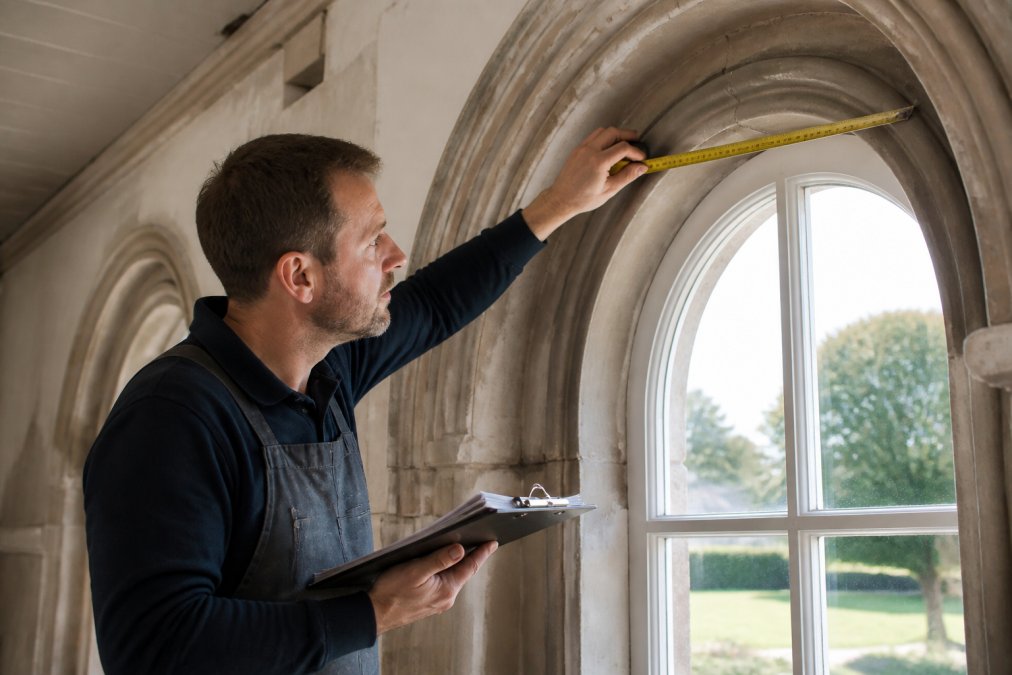
The design process starts with accurate site measurement. A surveyor records dimensions, checks for plumb and level, and identifies structural movement. The joinery is then manufactured to fit within a tolerance of ±2mm, tight enough to ensure proper sealing and operation.
Customisation extends beyond size. Glazing bars can match the original window pattern. Hardware can be period-appropriate or custom-made. Timber species can be chosen for aesthetic or performance reasons. Conservation area requirements often mandate bespoke work, as listed building consent typically specifies that new windows must match the original in appearance.
Bespoke windows cost more upfront than off-the-shelf alternatives, but forcing a standard window into a non-standard opening creates permanent problems: draughts, water ingress, and difficulty operating the window. Arborfield Joinery's manufacturing facilities handle complex openings, arched tops, octagonal shapes, and angled frames routinely.
Security Features and Multi-Point Locking Systems
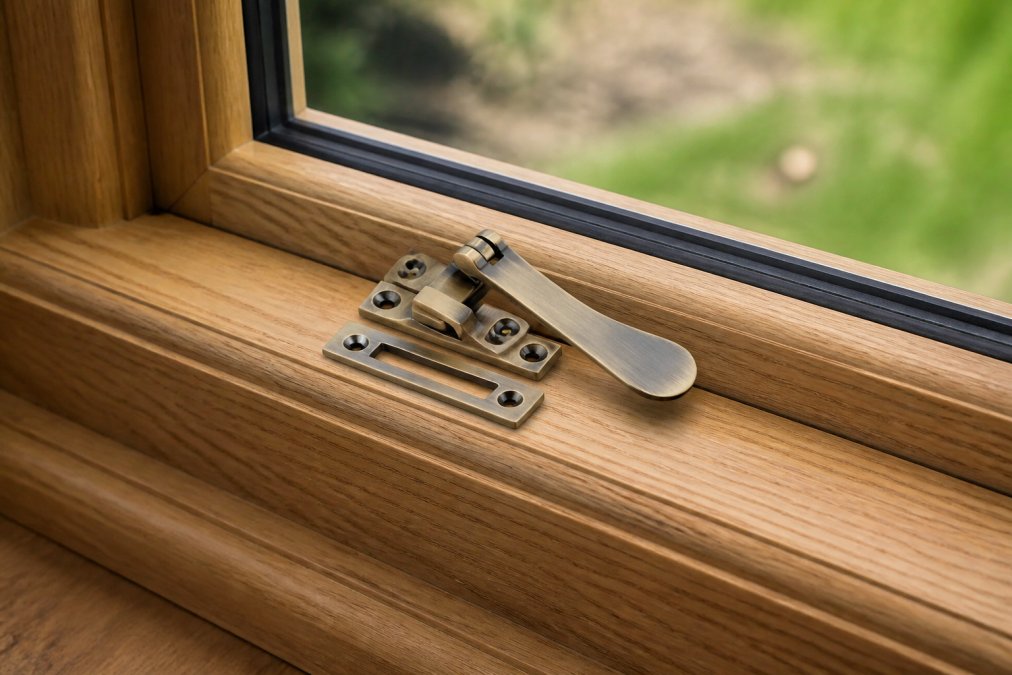
Modern timber windows combine traditional aesthetics with contemporary security hardware. Multi-point locking systems engage locks at multiple points along the frame, providing security that single-point locks cannot match. Espagnolette bolts run the full height of the sash, engaging into the frame at multiple points when a central handle is turned, distributing the force required to open the window and making forced entry substantially harder.
Arborfield Joinery stocks a range of traditional and contemporary hardware. The Casement Fastener Polished Brass (£12.21) is a classic choice for period properties. For sliding sash windows, the Brighton Fastener Polished Chrome (£13.32) offers traditional security hardware that complements heritage properties.


Laminated or toughened glass is now standard in high performance windows, adding a security layer. Laminated glass doesn't shatter into sharp fragments and resists penetration better than annealed glass. Building Regulations require opening lights to have locks; high performance timber windows exceed this by default.
Hardwood vs Softwood: Which Timber Performs Best
Both hardwood and softwood can deliver high performance thermally, but they differ in durability and maintenance requirements. Softwood (typically pine or spruce) is lighter, easier to machine, and less expensive, but more susceptible to moisture absorption and fungal decay. A softwood window requires regular maintenance, repainting every 5-7 years.
Hardwood (oak, ash, or modified timbers like Accoya) is denser and naturally more resistant to moisture ingress, tolerating longer intervals between recoating, up to 10 years in some cases. Accoya, a thermally modified softwood, combines the workability of softwood with the durability of hardwood and performs exceptionally well in high-moisture environments.
The performance difference in thermal terms is negligible; both deliver the same U-values when properly glazed and sealed. The difference is in longevity and maintenance burden. For conservation areas, the choice may be specified by listed building requirements. For contemporary properties, softwood with high-quality finish is entirely adequate if maintenance is planned.
| Timber Type | Cost | Durability | Maintenance Interval | Best For | | --- | --- | --- | --- | | Softwood (pine) | Lower | 40-50 years | 5-7 years | Budget-conscious, well-maintained properties | | Hardwood (oak) | Higher | 50-70 years | 8-10 years | Heritage properties, premium specifications | | Accoya (modified) | Medium-high | 50+ years | 7-9 years | High-moisture environments, balance of cost and durability |
High performance timber windows represent the convergence of heritage aesthetics and modern energy efficiency. They're not a compromise, they're the best-performing option for period properties and increasingly the standard for new construction. The maintenance requirement is modest, the lifespan is long, and the thermal performance exceeds most alternatives.
Arborfield Joinery provides bespoke manufacturing, expert specification advice, and a range of traditional hardware to ensure your windows perform as designed. Whether you're replacing windows in a Victorian terrace or specifying new timber windows for a contemporary extension, our team delivers solutions tailored to your property's specific requirements. Shop now and discover how high performance timber windows can enhance your home's comfort, security, and value.
Frequently Asked Questions
What are the thermal performance benefits of high-performance timber windows?
High performance timber windows achieve superior thermal insulation through multi-pane glazing (double or triple-glazed), low U-values, and timber's natural insulating properties. This reduces heat loss, lowering heating costs and improving comfort. Timber frames also minimise thermal bridging when properly constructed, maintaining consistent internal temperatures.
Are timber windows suitable for conservation areas?
Yes. Timber windows are often the preferred choice for conservation areas because they maintain heritage aesthetics and comply with conservation standards. Most planning authorities require timber frames in listed properties or conservation areas to preserve architectural character. Bespoke timber windows can replicate period designs, sash or casement styles, while meeting modern energy efficiency standards, offering the best of both heritage and performance.
How do I know timber windows will actually last, or will they warp like cheaper alternatives?
Quality timber windows last 40-60 years or longer when made from durable species (Accoya, oak, or European redwood) and properly maintained. Durability depends on wood selection, factory-finishing standards, and regular maintenance (repainting every 5-7 years). Warping occurs in poorly kiln-dried timber or when moisture content isn't controlled. Reputable suppliers use sustainably sourced timber with precise moisture content specifications to prevent movement and ensure lasting performance.
What maintenance is required for high-performance timber windows?
Timber windows need repainting or resealing every 5-7 years to protect against weather. Annual checks should include inspecting weather stripping, cleaning drainage channels, and checking sealants. Interior maintenance is minimal, occasional cleaning and lubrication of hardware. Factory-finished windows with protective coatings require less frequent maintenance. This regular care prevents rot, maintains thermal performance, and extends window life significantly.
This article was written using GrandRanker
Share:
Pre-finished Oak Doors: A Guide to Quality and Style
Internal Doors with Black Handles: A Guide to Modern Styling in 2026