
Table of Contents
- What Architects Need From Bespoke Joinery Suppliers
- Bespoke Joinery Specification Guide for Architects
- Top Bespoke Joinery Solutions for Modern and Heritage Projects
- Bespoke Joinery Lead Times and Project Management
- Woodplas vs Crawford Joinery: Comparing Bespoke Suppliers
- Why Independent Joinery Specialists Deliver Better Value
- Durability, Warranty, and Long-Term Maintenance
- Conclusion
Last Updated: August 27, 2026
What Architects Need From Bespoke Joinery Suppliers
Sourcing bespoke joinery demands precision, reliability, and a supplier who understands both design intent and technical constraint. The best bespoke joinery combines three essentials: exact dimensional accuracy, compliance with building regulations, and delivery predictability. Without all three, even beautifully designed joinery becomes a site problem, gaps that won't close, doors that bind, or timelines that slip.
This guide from Arborfield Joinery covers what architects evaluate when selecting a bespoke joinery partner. We've worked with architects on non-standard openings, heritage restoration, and contemporary builds long enough to know where gaps appear in typical supplier relationships. The best suppliers focus on specification certainty, not just aesthetics or speed.
Architects need suppliers who deliver reliably: technical drawings that comply with current Building Regulations, material consistency that survives site conditions, and locked lead times. When those three align, the joinery works, fits, and arrives as promised.
Bespoke Joinery Specification Guide for Architects
Creating a specification that a joinery workshop can manufacture without revision requires clarity on four fronts: material grade, dimensional tolerance, finish standard, and installation detail. A precise specification moves work through the workshop faster and arrives on site ready to install.
Material Selection and Timber Grading
Timber selection determines durability, workability, and final appearance. Architects must specify both the timber species and the grading standard to prevent substitution or quality drift.
Hardwoods like oak, walnut, and ash deliver superior durability for high-traffic internal doors and fitted interiors. Oak offers natural rot resistance and develops character over time. Softwoods like pine cost less and work well for primed finishes, but show damage more readily. FSC-certified timber is now standard; verify this in your specification.
Grading matters as much as species. European Grading Standard EN 942 defines four grades: A (clear, minimal knots), B (small knots, minor colour variation), C, and D (larger defects) (European Commission Access to Markets). For visible joinery in luxury residential projects, specify Grade A or B. For painted joinery, Grade C is acceptable. For structural elements like staircase stringers, specify Grade B minimum.
Timber should be kiln-dried to 12-15% moisture content for internal use, 10-12% for external applications (Peer-reviewed research on wood moisture content). Joinery workshops control this; verify it in the specification.
Technical Drawings and Building Regulation Compliance
Technical drawings bridge design intent and manufacturing reality. Architects must provide drawings that specify not just appearance, but how joinery performs within the building envelope and complies with regulations.
Building Regulations Part L (Conservation of fuel and power) governs U-values for windows and doors. Part M (Access to and use of buildings) sets door opening widths and threshold heights. Part B (Fire Safety) requires fire-rated doors in specific locations. A joinery specification must call out these requirements explicitly.
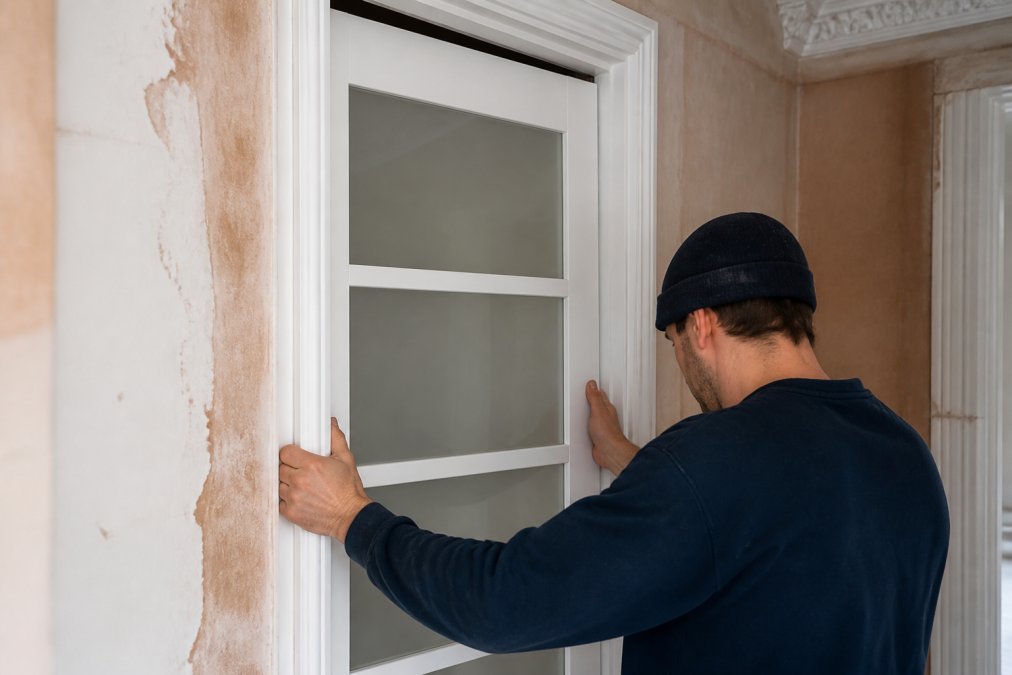
Dimensional tolerances need stating. Standard tolerance for bespoke joinery is ±3mm on width and height, ±2mm on thickness. For heritage properties with out-of-square openings, specify how the joinery will be shimmed or fitted on site.
Glazing specification matters. Specify the glass type (toughened, laminated, double-glazed units), thickness, and cavity width. For heritage properties, specify whether heritage glass (with slight distortion and colour) is required or modern clear glass acceptable. Specify the putty or glazing bead detail.

Detail drawings for junctions are essential. How does the joinery meet the wall? What's the reveal? Is there an architrave? How does it handle building movement? Architects who provide these details get joinery that installs cleanly.
Top Bespoke Joinery Solutions for Modern and Heritage Projects
Arborfield Joinery stocks contemporary and period-style internal doors, alongside full bespoke manufacturing for non-standard openings.
Contemporary Internal Doors: Shoreditch, Dalston, and Camden Ranges
Modern architectural interiors demand clean lines, minimal detailing, and consistency across multiple openings. The Shoreditch, Dalston, and Camden ranges deliver this through industrial-influenced design and solid softwood cores.
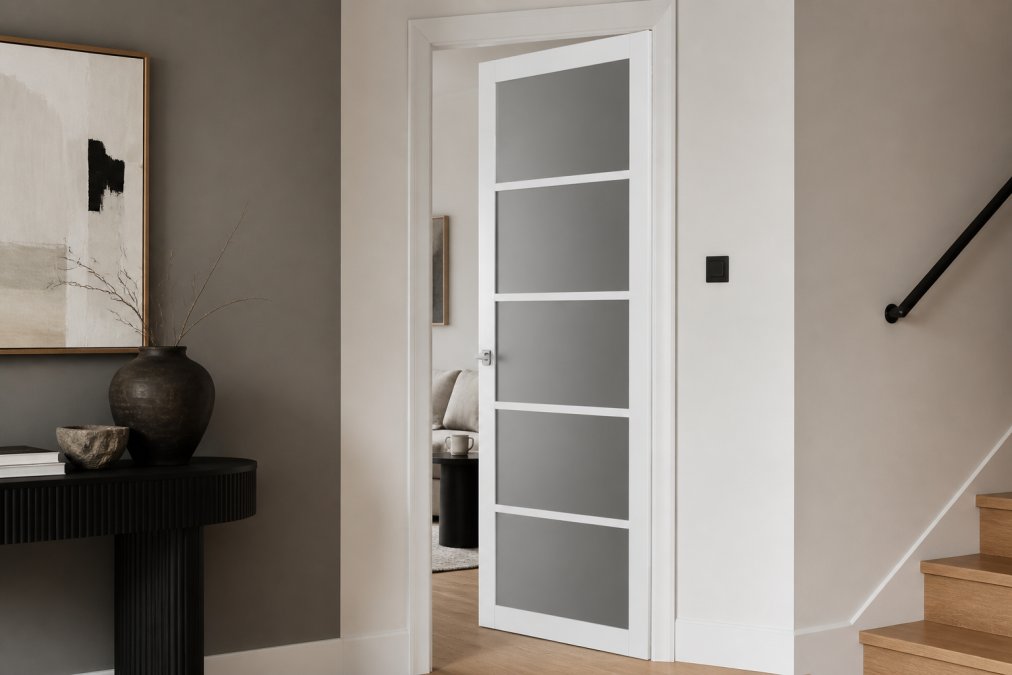
The Shoreditch White Primed Tinted Glass Urban Internal Door (£330.00) features a five-panel profile with tinted glass, ideal for contemporary homes where light control matters. The solid softwood core provides strength, and the white priming allows site-applied colour finishes. Lead time is 12-14 weeks for bespoke sizing.

The Dalston White Primed Urban Door Tinted Glass (£330.00) takes a minimalist approach with straight lines and geometric simplicity. For open-plan spaces where visual connection matters but acoustic separation is required, the tinted glass diffuses sightlines without blocking light.
The Camden White Urban Primed Door Clear Glass (£294.00) offers bold geometric styling with clear glazing. Architects often specify this where visual transparency is essential, between kitchens and dining areas, or between living spaces and hallways.
The Brixton Urban White Primed Tinted Glass (£330.00) bridges minimalism and luxury through asymmetrical panelling. This door suits contemporary residential projects where design-led interiors demand something beyond standard profiles.
All four doors come white-primed and ready to hang, paired with Deanta Urban handles for architectural consistency.
Oak Glazed Door Pairs for Period Properties
Heritage properties rarely have standard door openings. Period room proportions and original architraves demand joinery that respects existing character whilst providing modern performance.
The Chiswick Rebated Pairs of Oak Internal Glazed Doors (£635.00) deliver traditional joinery detailing in a pair format. With 40mm solid oak cores, clear bevelled glazing, and pre-finished satin lacquer, these doors are ready to install. The rebated design means they hang as a pair without requiring a central mullion, ideal for connecting two rooms. Bespoke sizing is available for non-standard openings.
The Orient Oak Rebated Bevelled Glazed Internal Pair of Doors (£617.50) offers similar specification with subtle detailing differences. The bevelled glass edge adds visual depth and catches light, suiting period properties where traditional glazing detail matters.
The Hampstead Oak Bevelled Glazed Rebated Pair of Internal Doors (£657.40) represents the top of the range. With the same 40mm solid oak core and clear bevelled glazing, this profile suits Grade I and Grade II listed properties where authentic joinery detail is essential.
For period properties, oak door pairs are often the only option that respects existing character. Lead times can stretch to 14-16 weeks for bespoke sizing.
External Heritage and Modern Bi-fold Solutions
The AluVu External Heritage Bi-fold (2.4-metre configuration) (£2,495.00) bridges traditional aesthetics with modern performance. This configuration includes three doors with one traffic door. The distinctive grid pattern creates a heritage appearance suited to period properties and conservation areas. The system is available in multiple colours and configurations, with full bespoke options for non-standard widths and heights.
For architects, key specification points are: configuration (which panels fold, which are fixed), colour, glazing type (single or double-glazed units), and threshold detail.
Bespoke Joinery Lead Times and Project Management
Lead times are where many joinery relationships fail. Architects specify joinery in month 8 of a 12-month project, then discover the supplier needs 14-16 weeks.
Understanding lead time drivers prevents this. Bespoke joinery manufacturing starts with material procurement; timber must be sourced, kiln-dried, and stored. This takes 4-6 weeks. Manufacturing then requires cutting, shaping, finishing, and glazing. Quality control and packing add another 2-3 weeks. Standard lead times range from 12-16 weeks from order confirmation to delivery.
Arborfield Joinery carries significant stock of contemporary doors and period ranges, meaning shorter lead times for standard sizes, often 6-8 weeks. For non-standard sizes or custom finishes, lead times extend to 14 weeks.
Project planning must account for this. If joinery is critical to the construction sequence, specify and order it early. Build a 2-week buffer into your schedule.
Communication with the supplier is essential. Confirm order details in writing. Request progress updates at week 6 and week 10. Arrange delivery logistics and clarify whether doors will be delivered flat-packed or pre-hung.
Woodplas vs Crawford Joinery: Comparing Bespoke Suppliers
Architects often compare suppliers based on price, range, and reputation. Woodplas focuses on budget-conscious buyers and volume builders, delivering quickly at lower cost. However, their specification support is limited for complex or heritage projects.
Crawford Joinery positions itself as a premium supplier with heritage expertise. Lead times are longer (16-20 weeks), and pricing reflects bespoke craftsmanship. For listed buildings and conservation areas, Crawford's experience is valuable.
Arborfield Joinery occupies the middle ground. As a family business established in 1953, we combine traditional craftsmanship with fast product availability. We stock both contemporary and heritage ranges, meaning architects can source standard sizes quickly whilst accessing bespoke manufacturing for non-standard openings. Our pricing sits between Woodplas and premium makers.
The key difference: Arborfield Joinery provides architect-level technical support. We review specifications, flag compliance issues, and work with architects on detail solutions. We're not just a supplier; we're a project partner.
Why Independent Joinery Specialists Deliver Better Value
Large building supply chains prioritise volume and margin. Independent joinery specialists prioritise relationships and reputation.

Independent specialists carry deep knowledge of local building conditions. We understand regional timber preferences, local climate effects on wood movement, and how heritage properties in the south differ from elsewhere. This local expertise translates into better specification advice and fewer site problems.
Independents also offer flexibility that chains cannot. If your specification requires modification mid-project, an independent workshop can often accommodate it. Large manufacturers have fixed production schedules; changes mean delays or refusals.
Cost transparency is another advantage. Independent suppliers quote honestly. You see material costs, manufacturing time, and margin. With an independent, you know what you're paying for.
Finally, independents invest in relationships. When you order from Arborfield Joinery, you're dealing with people who've been in the business for decades. We take responsibility for outcomes, not just transactions.
Durability, Warranty, and Long-Term Maintenance
Bespoke joinery is an investment. Architects need confidence that doors and windows will perform for decades.
Durability depends on three factors: timber species, finish quality, and installation detail. Hardwoods like oak last longer than softwoods. A properly applied finish (lacquer, paint, or oil) protects timber from moisture and UV damage. Correct installation, with proper sealing and flashing, prevents water ingress that causes rot.
Arborfield Joinery products come with 10-year manufacturer's guarantees covering manufacturing defects, finish failure, and hardware performance. The guarantee does not cover damage from poor installation, neglect, or extreme conditions.
Maintenance extends life significantly. Painted doors require repainting every 5-7 years. Lacquered doors need refreshing every 3-4 years if exposed to sunlight. Oil-finished timber needs annual or bi-annual oiling.
For external joinery, maintenance is more frequent. Oak doors exposed to weather need annual inspection for water ingress, particularly around glazing beads and at the base. Bi-fold doors require regular cleaning of tracks and lubrication of hinges.
Heritage properties demand special care. Period timber is often softer and more susceptible to movement. Finishes must be breathable; modern impermeable paints trap moisture and cause failure. When specifying joinery for listed buildings, confirm that finishes are appropriate to the property age and construction method.
Sourcing the best bespoke joinery for architects requires understanding what separates reliable suppliers from those who simply quote low prices. Arborfield Joinery combines 70 years of family business experience with full manufacturing facilities, making us the largest independent stockist in the south. We deliver both stock ranges for quick turnaround and bespoke solutions for complex specifications. Our architect-level technical support means your specifications are reviewed for compliance and constructability before manufacturing begins. With free UK mainland shipping on orders over £900 and expert advice on property suitability, we ensure every project succeeds. Shop now and experience the difference that specialist joinery expertise makes.
Frequently Asked Questions
Q: What should architects look for when selecting a bespoke joinery partner?
A: Architects should verify that suppliers offer full technical specification support, can provide Building Regulation-compliant drawings, and have demonstrable experience with non-standard openings. Check for FSC-certified timber sourcing, a 10-year manufacturer's warranty, and realistic lead times. Established specialists like Arborfield Joinery, operating since 1953, combine precision engineering with heritage craftsmanship and can handle everything from contemporary urban doors to heritage restoration joinery.
Q: How do bespoke joinery lead times affect project scheduling?
A: Bespoke joinery typically requires 12-14 weeks for custom manufacturing, depending on complexity and timber selection. Plan your project timeline accordingly: finalise specifications 16 weeks before installation, allowing buffer for revisions. Suppliers offering stock alternatives, such as pre-finished ranges like the Camden or Dalston doors (£294-£330), can reduce lead time if standard sizes suit your design. Always confirm lead times in writing before committing to site deadlines.
Q: What is the difference between bespoke joinery and mass-market alternatives?
A: Bespoke joinery is custom-manufactured to your exact specifications, using premium timber grades and precision engineering. Mass-market suppliers offer limited sizes and finishes, often with lower-grade materials. Independent specialists deliver design-led solutions tailored to heritage properties, non-standard openings, and architectural detail requirements. The investment in bespoke craftsmanship typically results in superior durability, aesthetic cohesion, and property value enhancement that justifies the cost.
Q: How do I ensure technical accuracy in bespoke joinery specifications?
A: Work with suppliers who provide detailed technical drawings, material schedules, and Building Regulation compliance documentation. Specify timber type, moisture content, glazing performance (U-values), and finish standards. Request sample finishes and mock-ups for critical details. Suppliers should offer on-site measurement and fit consultation to verify opening dimensions and building fabric compatibility before manufacturing begins.
This article was written using GrandRanker
Share:
Cottage Style Internal Doors: A Complete Guide to Rustic Elegance
The Homeowner’s Guide to Trimmable Doors: Achieving the Perfect Fit