
Table of Contents
- Timber Doors: Traditional Craftsmanship and Aesthetic Appeal
- uPVC Doors: Durability, Thermal Efficiency and Low Maintenance
- Composite vs Timber Front Door: Weighing Performance and Style
- Aluminium and Glass-Reinforced Plastic: Modern Performance Options
- Front Door Security Standards and PAS 24 Compliance
- Energy Efficient Front Door Materials and Thermal Performance
- Making Your Final Choice: Material Comparison and Budget
- Frequently Asked Questions
Your front door is more than an entry point; it is the first line of defence against weather and intruders, a major contributor to thermal efficiency, and a defining element of your property's curb appeal. Choosing the right front door material affects everything from your energy bills to your home's resale value, so it is a decision worth getting right the first time. The choice involves balancing several factors: durability, insulation, security, aesthetics, maintenance, and budget. Getting this balance wrong often means an expensive replacement within a decade, which is why a considered approach matters.
The front door material you select must suit your home's architectural style, your local climate, and your willingness to perform upkeep. A period cottage has different requirements than a modern new-build, and a coastal property faces different weather challenges than an inland one. This guide from Arborfield Joinery, a family-run business established in 1953, breaks down the strengths and weaknesses of each material so you can make an informed, confident choice. Below, we'll walk through timber, uPVC, composite, aluminium, and GRP options, covering security standards, thermal performance, and the practical maintenance each demands.
Timber Doors: Traditional Craftsmanship and Aesthetic Appeal
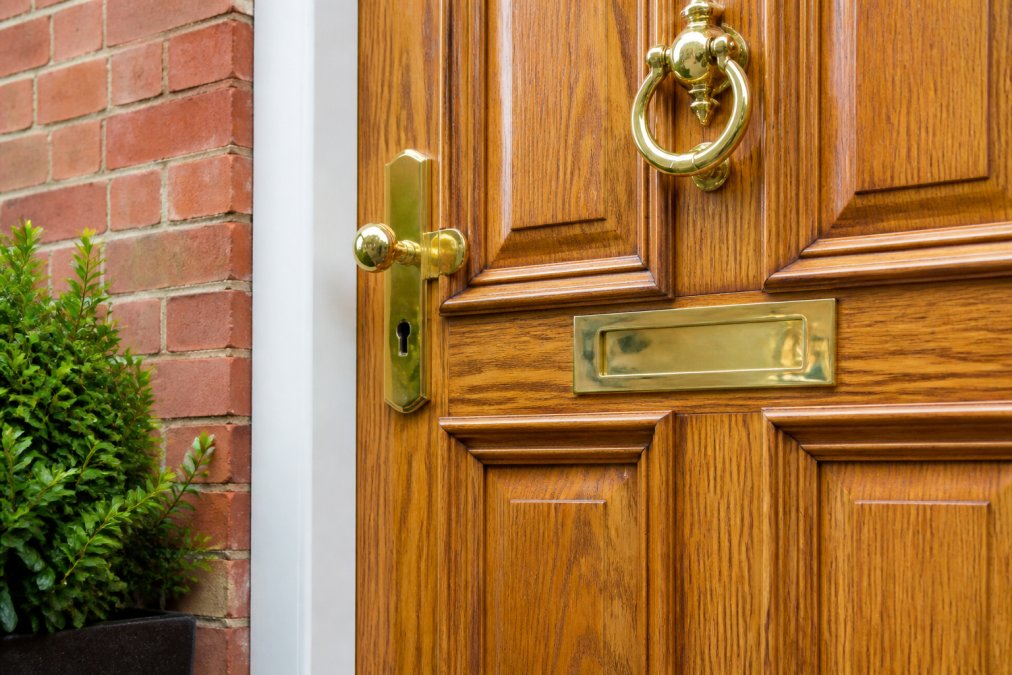
Timber remains the benchmark for traditional aesthetics, offering a warmth and character that synthetic materials struggle to replicate. However, not all timber doors perform equally. The species you choose directly affects durability, maintenance burden, and suitability for your local climate.
Hardwood vs Softwood Performance
Hardwood species such as oak, mahogany, and walnut are significantly more durable than softwoods like pine or fir. Oak, for example, contains natural tannins that resist rot and insect damage, making it ideal for properties in damp or coastal regions where moisture exposure is high (peer-reviewed research). Mahogany offers similar durability with a richer aesthetic, though at a higher cost. Softwoods are more affordable and easier to work with for bespoke designs, but they require more frequent maintenance and are more susceptible to warping in fluctuating humidity. If your property is exposed to salt spray (within 1 km of the coast) or sits in a high-rainfall area, hardwood is the more practical choice despite the upfront premium (the CDC).
Maintenance Schedule and Real-World Demands
A well-made timber door can last decades, and it can be repaired, sanded, and re-finished, a significant advantage over materials that must be replaced entirely when damaged. However, "low maintenance" is a misleading claim for timber. A realistic maintenance calendar includes:
- Annual inspection: Check for signs of water ingress, particularly around the frame seal and bottom edge. Look for soft spots or discolouration that indicate early rot.
- Every 2-3 years: Re-coat or re-stain exterior surfaces. This is the critical task that prevents moisture penetration. Skipping this cycle dramatically shortens the door's lifespan.
- Every 5 years: Sand and fully refinish if the coating has worn through in high-traffic areas or weather-exposed edges.
- As needed: Tighten hinges, replace weather-stripping, and address any gaps between the door and frame that allow water to pool.
For homeowners in high-rainfall regions or those unwilling to commit to this schedule, timber is not a practical choice. For those who value bespoke design and architectural authenticity, the character of timber is often worth the effort. If you are looking for a door that can be tailored to non-standard openings, timber offers the flexibility that mass-produced alternatives cannot.
uPVC Doors: Durability, Thermal Efficiency and Low Maintenance
uPVC doors have become the most common choice for replacement doors across the UK, and for good reason: they offer excellent value and require almost no maintenance. The material is inherently weatherproof, does not rot, warp, or corrode, and only needs an occasional wipe down to keep it looking clean. Modern uPVC doors also deliver strong thermal efficiency, with multi-chambered profiles and double glazing helping to keep heat inside your home.
The main drawback of uPVC is aesthetic. While finishes have improved, uPVC can still look less premium than timber or composite, and it offers limited colour options compared to other materials. It is also less rigid than metal or composite, which can be a consideration for very wide openings. For homeowners on a budget who want a durable, energy-efficient door with minimal fuss, uPVC is a sensible and reliable option. Its long lifespan and low upkeep make it a cost-effective choice over the long term, even if the upfront appearance is less distinctive.
Composite vs Timber Front Door: Weighing Performance and Style
The composite vs timber front door debate is a common one because both materials offer distinct advantages. A composite door typically features a solid timber or engineered core encased in a glass reinforced plastic (GRP) skin, combining the insulating properties of wood with the weatherproof durability of plastic. Composite doors are highly secure, thermally efficient, and require little maintenance, making them a top choice for modern homes. They also resist warping and fading, and they can be manufactured to mimic the look of timber convincingly.
Timber, by contrast, offers an authenticity that composite can only imitate. Real wood grain, the ability to be re-finished, and the traditional craftsmanship appeal to homeowners with period properties or those seeking a bespoke design. The trade-off is that timber demands more care and is generally more susceptible to the elements over time. If you want the look of a traditional door without the maintenance burden, composite is the practical winner. If authenticity and the ability to repair over decades are your priorities, timber is the better investment.
Aluminium and Glass-Reinforced Plastic: Modern Performance Options
Aluminium doors offer a slim, modern profile and exceptional structural strength, making them ideal for contemporary architecture and large glazed panels. The material is powder-coated to provide a durable, fade-resistant finish, and it is extremely long-lasting with minimal upkeep. Aluminium is also highly recyclable, which appeals to environmentally conscious homeowners. Its thermal performance is strong, though modern designs use a thermal break to prevent heat loss through the frame.
Glass reinforced plastic, or GRP, is another high-performance option that is worth considering. A GRP door is lightweight yet incredibly strong, and it offers excellent impact resistance and weatherproofing. The Arborfield Joinery GRP Colonial 6P, priced at £329.99, exemplifies the benefits of this material. It features a solid engineered core for strength, a fully finished surface ready for installation, and a 10-year manufacturer's warranty, providing real peace of mind. GRP doors are available in a range of styles and colours, and they deliver the look of a traditional panelled door with the low maintenance of a modern material.

Front Door Security Standards and PAS 24 Compliance
Security is a primary function of your front door, and the material you choose plays a significant role in how well it protects your home. The key benchmark for front door security standards PAS 24 is the UK standard that tests doors against forced entry, simulating the tools and techniques used by burglars (bsigroup.com). A door that meets PAS 24 demonstrates that its construction, locks, and hinges have passed rigorous attack testing.
When selecting a door, look for a multi-point locking system as a minimum, which secures the door at several points along the frame rather than just at the handle. This feature is standard on most composite, aluminium, and high-quality uPVC doors, and it is a critical deterrent. The material itself matters too: a solid composite or timber door is harder to breach than a hollow one. For maximum protection, ensure your door also has secure hinges and a quality cylinder lock that meets British Standard requirements. A door is only as secure as its weakest point, so consider the entire system, not just the material.
Energy Efficient Front Door Materials and Thermal Performance
The thermal performance of your front door is measured by its u-value, which indicates how quickly heat is lost through the structure. A lower u-value means better insulation, and energy efficient front door materials are those that keep the heat in and the cold out. Well-insulated doors reduce draughts and lower your heating bills, contributing to a more comfortable home and a better Energy Performance Certificate rating.
Composite and uPVC doors generally offer the best thermal efficiency due to their insulated cores and multi-chambered profiles. Timber is a naturally insulating material, but its performance depends on the thickness and the quality of the seals. Aluminium doors, once poor insulators, now feature thermal breaks that significantly reduce heat transfer. When comparing options, check the stated u-value and pay attention to the quality of the weather-stripping around the frame, as this prevents cold air from seeping in around the edges. A door that fits its frame precisely is essential for thermal performance, which is where professional installation or accurate bespoke manufacturing makes a real difference.
Making Your Final Choice: Material Comparison and Budget
| Material | Thermal Efficiency | Maintenance | Security | Aesthetic | Typical Cost |
|---|---|---|---|---|---|
| Timber | Good | High (re-coat every few years) | Good (with multi-point locks) | Traditional, bespoke | High |
| uPVC | Excellent | Very Low | Good | Limited colours | Low |
| Composite | Excellent | Low | High (PAS 24 options) | Mimics timber | Mid-High |
| Aluminium | Excellent | Low | High | Slim, modern | High |
| GRP | Excellent | Low | High | Variety of styles | Mid |
Installation Complexity and Total Cost of Ownership
The purchase price of a door is only part of the equation. Installation cost and complexity vary significantly by material and can add to your total investment, depending on whether you hire a professional and the condition of your existing frame.
uPVC doors are often fitted by installers with basic carpentry skills. The frame is typically lightweight, and standard sizes fit most openings without modification. DIY installation is possible for confident homeowners, though poor fitting will compromise thermal performance and weather resistance.
Composite doors are heavier than uPVC (typically 40-50 kg) and require precise frame preparation to ensure the multi-point locking system functions correctly. Professional installation is strongly recommended. Incorrect installation can void the warranty and lead to draughts or locking issues. DIY is not advisable unless you have experience with carpentry and frame adjustment.
Timber doors, especially bespoke ones, often require frame modification or rebuilding to fit non-standard openings. A joiner may need to plane the door on-site or adjust the frame. Professional installation is essential; poor fitting will cause warping and weather damage. Bespoke timber doors are rarely a DIY project.
Aluminium and GRP doors are structurally rigid and require precise frame alignment. Professional installation is recommended because the frame must be perfectly square and level. These materials are not suitable for DIY installation.
When calculating total cost of ownership over 20 years, factor in:
- Purchase price
- Installation labour
- Maintenance costs (timber re-coating, sealant replacement, hinge servicing)
- Energy savings from thermal efficiency
- Potential replacement costs if the door fails prematurely
A cheap uPVC door installed poorly may cost less upfront but require replacement in 15 years, whereas a well-fitted composite door may serve for 30+ years with minimal maintenance. A bespoke timber door requires ongoing investment in maintenance but can be repaired indefinitely, making it cost-effective for homeowners committed to upkeep.
Regional Suitability and Climate Factors
Choose the material that suits your specific location:
- Coastal properties: Composite, GRP, or aluminium are superior to timber because they resist salt spray corrosion. Timber requires more frequent re-coating (every 1-2 years instead of 2-3) and is prone to accelerated rot in salt-laden air.
- High-rainfall regions: Hardwood timber or composite doors are preferable to uPVC, which can develop condensation issues if the frame seal fails. Composite doors shed water more effectively than uPVC in persistent wet conditions.
- Urban areas with pollution: Aluminium and composite doors resist soiling better than timber, which can absorb airborne grime and require more frequent cleaning.
- Rural or exposed locations: Composite or GRP doors withstand wind-driven rain better than timber, which can develop gaps as it shrinks and swells with seasonal humidity changes.
Consider the specific requirements of your home, including its architectural style and your local weather conditions. The security and thermal performance of your door are also directly tied to how well it fits its opening. A poorly fitted door, regardless of material, will let in draughts and be easier to compromise. For non-standard openings, bespoke manufacturing is often necessary to achieve a proper fit. At Arborfield Joinery, we combine traditional craftsmanship with full manufacturing facilities to create tailored solutions that fit your property perfectly. Our team offers expert advice on the best front door material for your home, backed by a huge range of external doors on display and free UK mainland shipping on orders over £900.
Frequently Asked Questions
What type of front door material is best for my home?
The best front door material depends on your priorities. Timber offers aesthetic appeal and architectural authenticity but requires regular maintenance. uPVC provides durability and low maintenance with good thermal efficiency. Composite doors balance timber's appearance with superior weather resistance. Aluminium suits modern properties and offers excellent thermal performance. Consider your climate, maintenance tolerance, security needs, and budget when choosing front door material for your specific situation.
Is composite or timber front door better for durability?
Composite doors typically outperform timber for durability in harsh climates. Composite materials resist warping, cracking, and rotting without the maintenance timber requires. However, quality timber doors with proper maintenance can last 40+ years. The choice between composite vs timber front door depends on whether you prefer the authentic look of wood and are willing to maintain it, or prefer a low-maintenance alternative that mimics timber's appearance whilst offering superior weather resistance.
What front door security standards should I look for?
Look for doors meeting PAS 24:2016, the UK's standard for enhanced security performance. Front door security standards PAS 24 require multi-point locking systems, reinforced frames, and impact-resistant construction. This standard is particularly important for ground-floor doors and properties in high-risk areas. Many insurers recognise PAS 24 certification and may offer better premiums for compliant doors. Check manufacturer specifications to confirm certification before purchase.
Which energy efficient front door materials save the most on heating costs?
Energy efficient front door materials with low U-values (below 1.4 W/m²K) minimise heat loss. uPVC and composite doors with thermal breaks perform well, whilst timber with modern glazing and weather-stripping also achieves good ratings. Triple glazing and insulated cores improve thermal efficiency further. Energy efficient front door materials also reduce condensation and improve comfort. Check the energy performance certificate and U-value ratings to compare thermal performance before selecting.
How often do different front door materials need maintenance?
Timber doors require annual maintenance: sanding, repainting or resealing to prevent weather damage and warping. uPVC needs occasional cleaning but no painting or sealing. Composite doors require minimal upkeep, typically just cleaning with mild soap. Aluminium requires occasional cleaning and checks on moving parts. GRP (glass-reinforced plastic) doors like the GRP Colonial 6P are fully finished and maintenance-free, making them ideal for homeowners seeking durability without ongoing work.
Can I fit a front door myself, or do I need a professional?
Installation complexity varies by material. Standard-sized doors can be fitted by experienced DIY enthusiasts, but professional installation ensures proper weatherproofing, security, and warranty compliance. Non-standard openings, bespoke doors, or complex frames require professional expertise to avoid gaps, drafts, and structural issues. Professional installers also handle threshold adjustment, frame preparation, and finishing work. For Victorian terraces or period properties with irregular openings, professional measurement and installation is strongly recommended to ensure proper fit and performance.
What's the price range for quality front door materials?
Front door material prices vary significantly. Standard uPVC doors start around £200-400, timber doors £400-800, composite doors £500-1200, and aluminium £600-1500. GRP doors like the GRP Colonial 6P offer excellent value at £329.99 with solid engineered cores and 10-year warranties. Bespoke doors cost more but fit non-standard openings perfectly. Professional installation adds to the total cost. Budget for your chosen material, installation, and any frame adjustments needed for your property.
This article was written using GrandRanker
Share:
The Homeowner’s Guide to Hand Forged Hardware: Style, Quality, and Selection in 2026
External Doors: The Complete Homeowner’s Guide to Quality Timber Entrances