
Table of Contents
- What to Expect When You Buy Custom Timber Doors Online
- How to Measure for a New Front Door
- Best Timber for Exterior Doors: Material Selection Guide
- Customisation Options: Glazing, Hardware, and Design
- Building Regulations for Replacement Doors
- DIY vs Professional Installation
- Sustainability and FSC Certification
- Long-Term Maintenance and Durability
Last Updated: August 12, 2026
What to Expect When You Buy Custom Timber Doors Online
Buying custom timber doors online lets you specify exact dimensions, materials, glazing options, and hardware before ordering, eliminating the compromises of standard sizes. Manufacturers hold your specifications, produce to exact measurements, and ship or arrange collection within 4-12 weeks depending on complexity. This precision addresses non-standard openings, period properties, and aesthetic requirements that off-the-shelf doors cannot match.
Arborfield Joinery, established in 1953 and the largest independent stockist in the south, combines online convenience with expert guidance through both bespoke manufacturing and curated premium products. A custom timber door manufactured to your exact specifications eliminates draughts, poor weatherproofing, and structural issues that plague ill-fitting standard doors. Understanding timber type, glazing performance, security features, and building regulations ensures your investment performs for decades.
How to Measure for a New Front Door
Accurate measurements prevent costly errors. Measure the opening width at three points (top, middle, bottom) and record the smallest figure. Repeat for height at left, centre, and right. Use a steel tape measure, not fabric.
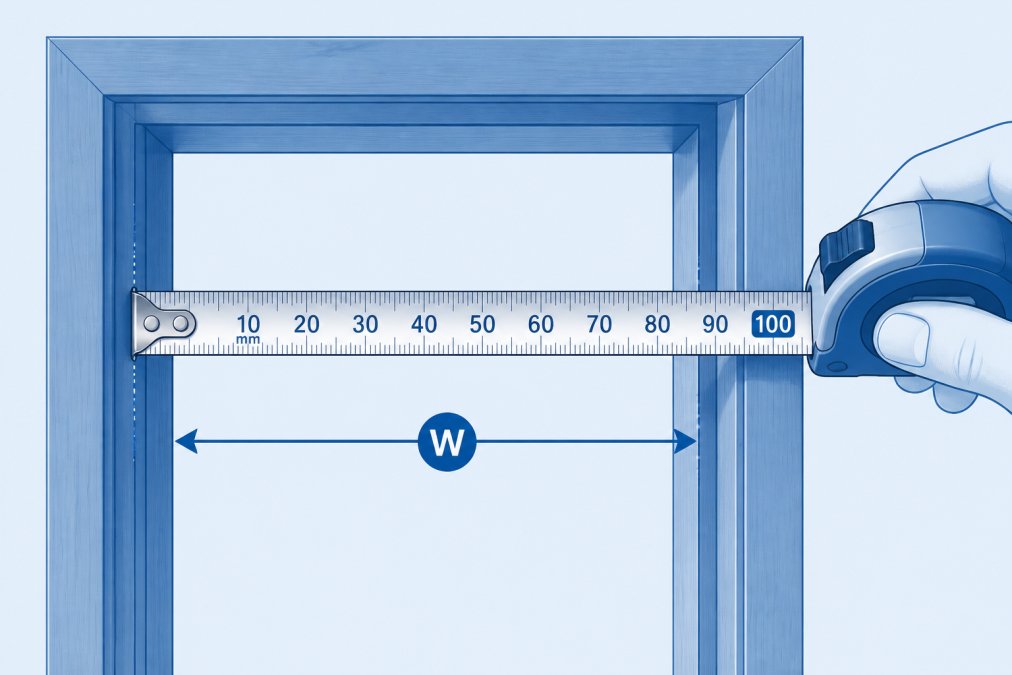
Measure frame depth from the outer edge to where the door currently sits. Check if your opening is square by measuring diagonals corner to corner; if they differ by more than 6mm, your opening isn't square, common in older properties and worth professional assessment. Many online suppliers offer free measured surveys, removing guesswork.
Note the door swing direction (left or right when viewed from outside) and record the cill height. Photograph existing doors and surrounding architectural features. These details help suppliers ensure your new door complements your property's character.
Best Timber for Exterior Doors: Material Selection Guide
The timber you choose determines performance across decades. Different species offer varying durability, stability, and aesthetic appeal.
Engineered Timber and Accoya
Accoya has become the preferred choice for high-performance external doors. This engineered timber undergoes proprietary acetylation, dramatically increasing stability and resistance to rot, decay, and dimensional movement. Unlike solid timber that warps as moisture fluctuates, Accoya remains stable in challenging climates.
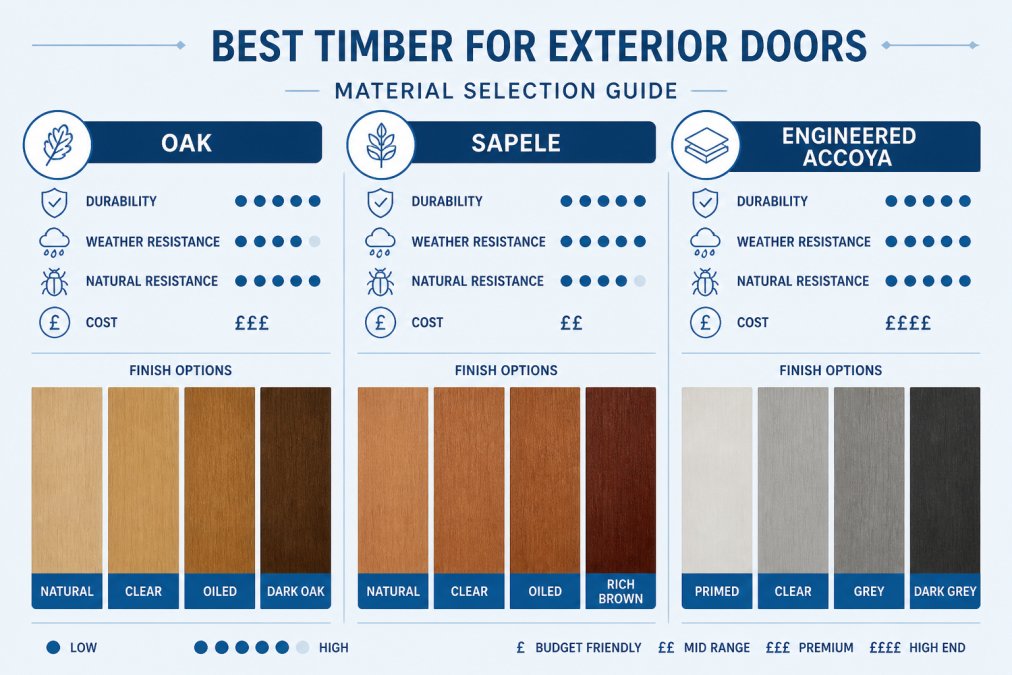
Accoya resists rot for 50+ years with minimal degradation, even in exposed positions. It accepts stain and paint beautifully. The premium cost is justified by longevity, doors that won't need replacing within a decade.
Engineered timber combines solid timber veneer with a stable core, offering aesthetic appeal with improved dimensional stability. These work particularly well for glazed doors where movement could compromise seals.
Hardwood vs Softwood Performance
Hardwood doors (European Oak, Sapele, Idigbo) offer natural beauty and durability. Oak is exceptionally dense and resists wear. Sapele provides rich colour and moderate durability. Idigbo offers good stability at lower cost.
Softwood doors (pine, spruce) are lighter and less expensive but require more maintenance. They're prone to warping and typically need repainting every 5-7 years. For low-maintenance solutions, hardwood or Accoya justifies the investment.
Tight-grained timbers like oak resist moisture better than loose-grained species. Consider your climate and exposure: south-facing doors experience more movement than north-facing ones. Coastal properties face salt spray corrosion. These factors should influence whether you choose premium engineered timber or accept higher maintenance.
Customisation Options: Glazing, Hardware, and Design
Double Glazing and U-Values
Double glazing is essential for thermal performance and condensation prevention. Modern units achieve U-values between 1.4 and 1.8 W/m²K, losing significantly less heat than single glazing. Lower U-values indicate better insulation.
Glazing options include obscured glass for privacy, tinted or reflective glass for solar control, and laminated glass for security. The frame contributes to overall thermal performance; the junction between glass and frame is a critical thermal weak point where quality gaskets minimise heat loss.
Door Furniture and Ironmongery
Door furniture encompasses handles, letterboxes, knockers, and hardware. These elements serve practical functions and define visual character. Period properties demand period-appropriate ironmongery; contemporary homes benefit from minimalist hardware.
Handles range from traditional lever handles to modern pieces in stainless steel, brass, bronze, or cast iron. Stainless steel resists coastal corrosion. Brass develops natural patina. Cast iron suits period properties but requires maintenance.
Hinges are structural components. Heavy doors require strong hinges positioned correctly to prevent sagging. Quality hinges are typically concealed. Letterboxes, knockers, and external furniture should complement the door's style.
Security Features and Multi-Point Locking
External doors require multi-point locking systems that engage bolts at multiple positions along the frame, preventing forced entry. Quality systems include bolts at top, bottom, and middle, all operated by a single handle or key. Look for PAS 24 standard compliance.
Deadbolts that extend fully into the frame provide better security than spring-operated latches. Keyed locks on both sides prevent breaking glass and operating the handle from inside. Frame security is equally important; the frame must be securely anchored to surrounding structure.
Building Regulations for Replacement Doors
Replacement doors must comply with current Building Regulations covering thermal performance, safety, and accessibility. Doors in England must achieve maximum U-value of 1.8 W/m²K; Scotland requires 1.6 W/m²K. These apply to replacements as well as new construction.
Fire safety regulations require certain doors to be fire-rated. Doors opening onto escape routes or in buildings over certain heights may require 30-minute or 60-minute fire ratings. Accessibility standards apply to public-facing doors and some residential properties.
Building control approval is typically required before installation. Confirm that your chosen door's technical specifications align with local requirements before ordering.
DIY vs Professional Installation
DIY installation works if you're experienced with carpentry and have necessary tools. The process involves removing the old door and frame, preparing the opening, positioning the new frame, shimming it level and plumb, and securing it with fixing bolts.
The challenge emerges when openings aren't square or walls aren't plumb. A frame that isn't perfectly level causes the door to swing open or closed on its own. Sealing the frame properly against weather is critical; poor sealing leads to water ingress, condensation, and rot.
Professional installers have experience with unusual openings and period properties where walls may be out of square. They have correct tools and materials to ensure proper frame security and sealing. Most professional installations include warranties covering labour and materials.
For straightforward replacements in modern properties, DIY might save £300-600. For complex installations in period properties, professional installation prevents thousands in remedial costs.
Sustainability and FSC Certification
FSC (Forest Stewardship Council) certification confirms timber comes from responsibly managed forests. FSC-certified forests maintain biodiversity, protect worker rights, and ensure long-term viability.
Accoya, despite being engineered, is often FSC-certified. The acetylation process extends lifespan, meaning fewer replacements over time. A door lasting 50 years has lower environmental impact than one replaced every 15 years.
Traditional hardwoods should be FSC-certified or from verified sustainable sources. Uncertified tropical hardwoods often come from forests facing deforestation.
Longevity is the most important sustainability factor. A door lasting 40 years is more sustainable than one requiring replacement every 15 years. Choosing quality timber, proper finishing, and professional installation extends lifespan, making sustainability a practical investment.
Long-Term Maintenance and Durability
The initial purchase price is only one component of true cost. Maintenance requirements and performance over decades determine real value.
Timber doors require annual inspection for deterioration. Paint or stain should refresh every 5-7 years depending on exposure. Glazing seals should be checked for degradation.
Accoya and quality hardwoods resist rot far better than softwoods, extending maintenance intervals. Premium exterior paint systems last longer than basic finishes. Proper installation with quality seals prevents water ingress.
Hardware durability matters too. Stainless-steel components resist corrosion longer than painted steel. Hinges should be checked periodically. Locks should operate smoothly.
Climate and exposure influence durability significantly. South-facing doors experience more UV exposure and thermal cycling. Coastal properties face salt spray corrosion. Regular inspection catches problems early, small gaps in seals are inexpensive to repair immediately but costly if water infiltrates and causes rot.
| Timber Type | Durability | Maintenance Frequency | Cost Position | Best For |
|---|---|---|---|---|
| Softwood | 15-20 years | Every 5-7 years | Budget option | Low-traffic doors, short-term use |
| Hardwood (Oak, Sapele) | 30-40 years | Every 7-10 years | Mid-range | Period properties, aesthetic priority |
| Accoya | 50+ years | Every 10-15 years | Premium | Long-term investment, minimal maintenance |
| Engineered Timber | 25-35 years | Every 6-8 years | Mid-to-premium | Glazed doors, dimensional stability needed |
Buying custom timber doors online puts you in control of specifications, materials, and design. The process requires accurate measurements, understanding timber performance, selecting appropriate glazing and hardware, and ensuring building regulation compliance. Combined with professional installation and maintenance commitment, you invest in a door that performs beautifully for decades.
Arborfield Joinery brings expertise together with convenient online ordering. As the largest independent stockist in the south with full bespoke manufacturing capabilities, they source premium stock doors or manufacture custom solutions for non-standard openings. Their team provides expert advice on material selection, building regulation compliance, and installation approaches. Get started with Arborfield Joinery and discover how a properly specified, professionally installed custom timber door transforms your home's performance and character.
Frequently Asked Questions
How do I measure for a custom timber door?
Measure the width at the top, middle, and bottom of the opening, recording the smallest measurement. Measure the height at the left, centre, and right, again using the smallest figure. Measure the depth of the door frame to confirm thickness. Take photos of the opening and any unusual features. Many suppliers offer free measured surveys to verify dimensions and ensure your bespoke door fits perfectly without gaps or drafts.
Do custom timber doors meet current building regulations?
Yes, when manufactured to specification. Building Regulations Approved Document L requires replacement doors to meet minimum thermal performance (U-value of 1.4 W/m²K for most applications). Your custom timber door should include double glazing and proper weatherproofing to comply. Check that your supplier confirms compliance with current Building Regulations before ordering, and request certification with your finished door.
What is the best timber for exterior doors?
Hardwoods like European Oak and Sapele offer excellent durability and natural weather resistance. Accoya engineered timber provides superior stability and longevity without the cost of premium hardwoods. Softwoods require more maintenance but remain a traditional choice. The best choice depends on your climate, maintenance commitment, and aesthetic preference. Discuss timber options with your supplier to match durability requirements with your budget.
Are bespoke timber doors worth the investment?
Yes. Bespoke doors solve non-standard openings where off-the-shelf options fail, ensuring perfect fit and eliminating drafts and gaps. Quality timber doors last 20+ years with proper maintenance, whereas cheaper alternatives may warp or deteriorate within 5 years. Custom doors add significant aesthetic and functional value to your property, particularly important for period properties or unique architectural features.
What lead time should I expect for custom timber doors?
Lead times typically range from 6 to 12 weeks depending on complexity and current order volumes. Simple made-to-measure doors from stock may be quicker, whilst highly bespoke designs with custom joinery or architectural details take longer. Confirm lead times with your supplier when requesting a quotation, especially if your renovation project has a fixed deadline.
This article was written using GrandRanker
Share:
Laminate Internal Doors: The Definitive Homeowner’s Reference Guide for 2026
Wooden Front Doors: UK Homeowner’s Buying Guide 2026