
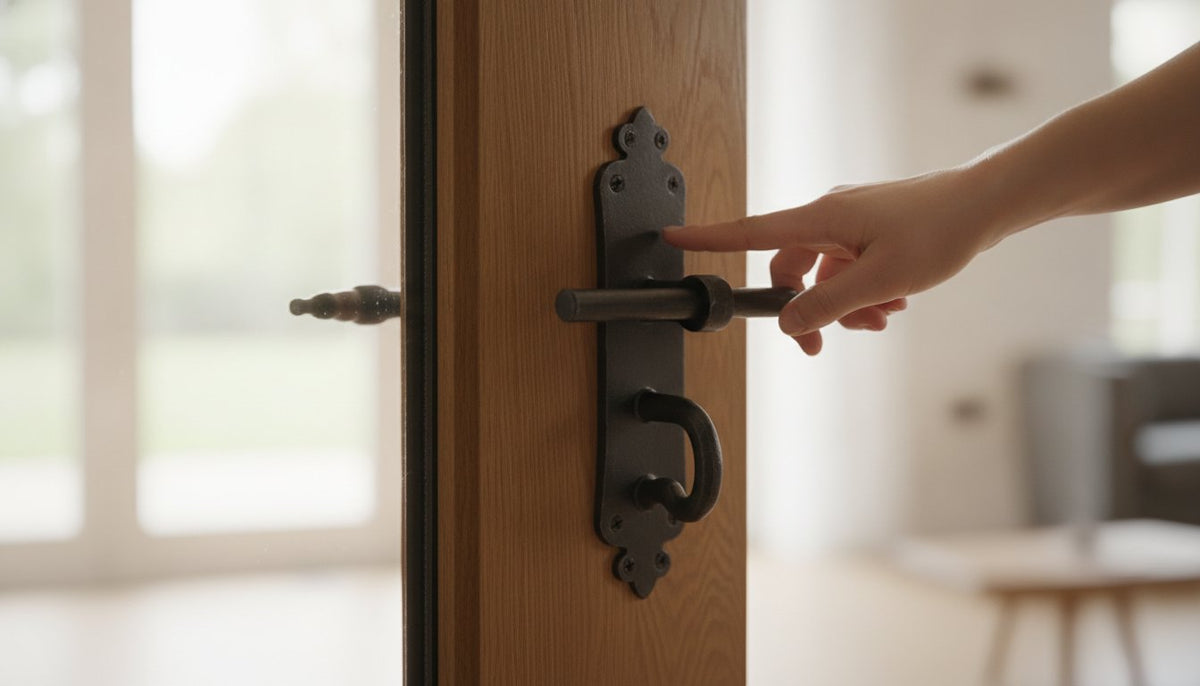
Why does a beautifully crafted oak door often feel incomplete the moment you reach for the handle? You have likely experienced that jarring sensation when a solid timber door is paired with hardware that feels hollow, lightweight, or smothered in a thin, plastic-like coating. It is a common frustration for those seeking an authentic finish that stands the test of time. Choosing genuine hand forged hardware is about more than simple utility; it is about anchoring your home's aesthetic in a tradition of craftsmanship whilst avoiding the flimsy feel of mass-produced alternatives.
We know how difficult it is to find matching sets of hinges and latches that won't succumb to rust or lose their charm after a few months. You want a home that feels substantial and curated, not one filled with "rustic" imitations that lack soul. This guide will teach you how to select traditionally crafted ironmongery that offers both tactile quality and lifelong durability. We will look at how to identify authentic pieces, explore the benefits of the classic beeswax finish, and show you how to create a cohesive look across your property using the Spira and Ferro collections.
Key Takeaways
- Distinguish between genuine blacksmith-crafted items and mass-produced imitations by identifying the unique hammer marks and "living finishes" that develop character over time.
- Learn how to select the correct hand forged hardware for specific door styles, such as pairing traditional T-hinges and latches with ledge and brace doors.
- Understand the application and maintenance of traditional beeswax finishes to achieve a deep, matt lustre that protects your ironmongery whilst enhancing its tactile appeal.
- Discover the functional and visual differences between arrow-end and penny-end Suffolk latches to ensure your hardware perfectly matches your home's period character.
- Explore how specialist ranges like Spira and Ferro provide a cohesive, high-quality aesthetic that complements the structural integrity of premium timber doors and windows.
What is Hand Forged Hardware and Why Does Authenticity Matter?
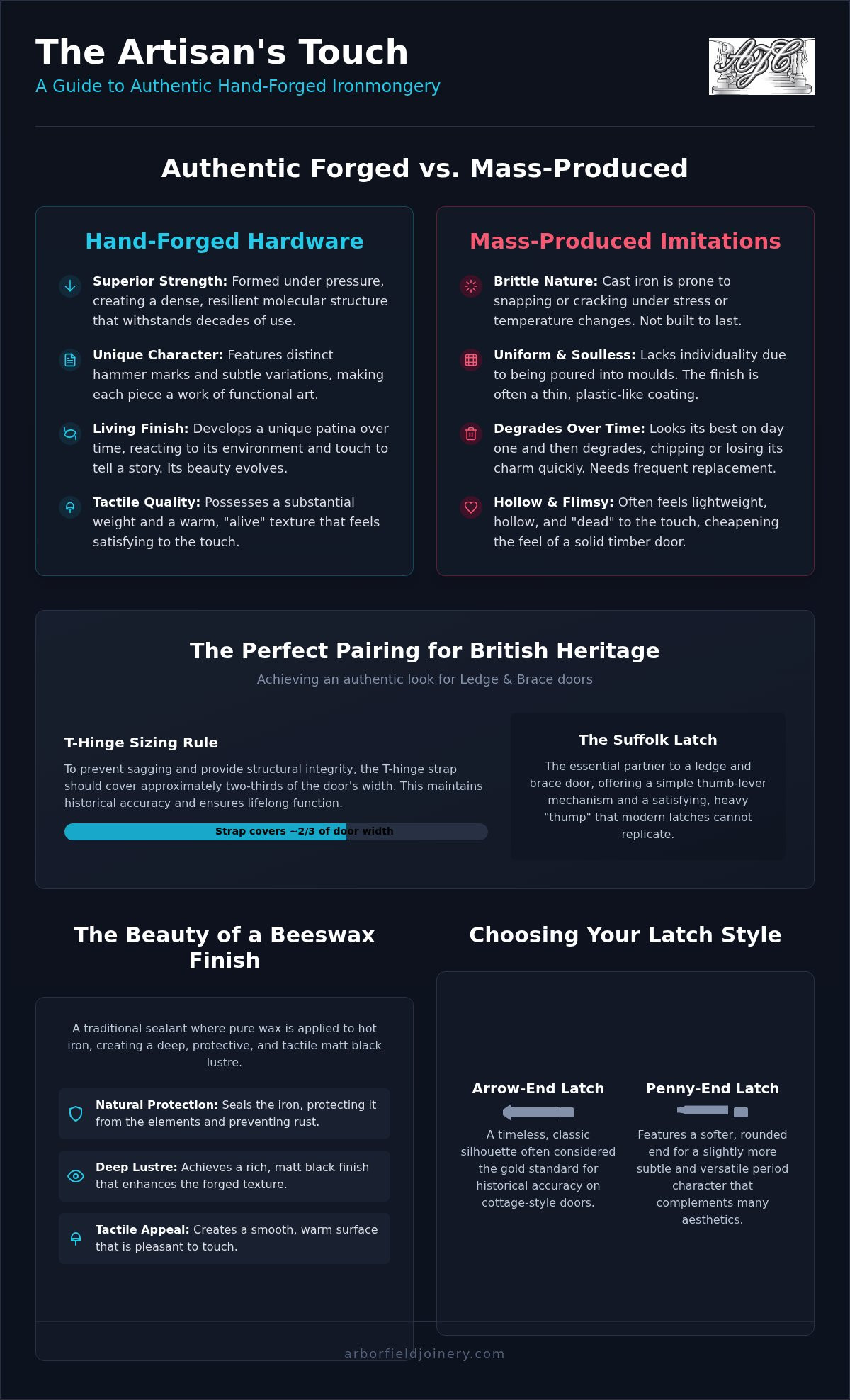
To understand the appeal of hand forged hardware, one must look past the surface and consider the process. Unlike mass-produced items that are poured into moulds, authentic ironmongery is born from fire and force. A blacksmith heats the steel until it is red-hot, then uses an anvil and hammer to shape the metal into functional art. The history of blacksmithing shows that this method creates a molecular structure far denser and more resilient than modern alternatives. This "peaceful strength" is exactly why forged steel is the superior choice for high-traffic doors; it doesn't just look robust, it possesses an inherent durability that withstands decades of daily use.
Authenticity also brings the concept of a "living finish." While plastic-coated hardware looks its best on the day it's installed and degrades thereafter, hand-forged pieces develop character. Over time, the metal reacts to its environment and the touch of your hand, creating a unique patina that tells the story of your home. It's a subtle evolution that adds depth and soul to your interior spaces.
The Blacksmith’s Art: Traditional Methods vs. Modern Casting
The most visible difference between forged and cast hardware lies in the texture. Genuine forged steel carries unique hammer marks, slight variations in thickness, and a tactile surface that feels alive. In contrast, cast iron is often too uniform and can feel "cold" or "dead" to the touch. Beyond aesthetics, there's a vital structural distinction. Cast iron is notoriously brittle; it's prone to snapping or cracking under sudden stress or temperature changes. Hand-forging draws out the steel, making it flexible yet incredibly tough. Choosing these durable materials is also an environmental win, as you're investing in hardware that won't need replacing for generations.
Why Period Homes and Barn Conversions Demand Forged Iron
If you're restoring a British cottage or a farmhouse, the hardware acts as the final stitch in the architectural fabric. Standard, shiny chrome or flimsy alloys look out of place against the grain of an oak door or the uneven plaster of a period wall. There's a psychological impact to the weight of a heavy latch or a thick pull handle; it provides a sense of security and permanence that defines the home experience. A beeswax finish is a natural sealant created by applying pure wax to the iron whilst it's still hot, resulting in a deep, matt black lustre that protects the metal from the elements. This traditional treatment ensures your ironmongery looks as though it has always belonged amongst the timber and stone of a heritage property.
Choosing the Right Hardware for Your Interior and External Doors
Selecting the right hardware requires a balance of engineering and aesthetic intuition. It's not just about the finish; it's about the weight. When dealing with heavy external entrance doors, a dainty pull handle will feel inadequate and may fail under the strain of a solid timber slab. Conversely, kitchen cabinet pulls need to be tactile and scaled for frequent use. Scale is particularly vital for hinges. High-quality hand forged hardware provides the structural integrity needed for larger doors. A general rule for T-hinges is that the strap should cover approximately two-thirds of the door's width to prevent sagging. This technical precision is championed by organisations like the National Heritage Ironwork Group (NHIG), who advocate for the preservation of these functional standards.
The Ledge and Brace Aesthetic: A Classic British Pairing
For many, the quintessential British cottage look is defined by the ledge and brace door. To maintain historical accuracy, arrow-end T-hinges are the gold standard. They provide the necessary structural spread across the horizontal ledges whilst offering a timeless silhouette. No pairing is complete without a Suffolk latch. Its simple thumb-lever mechanism produces a satisfying, heavy "thump" that modern tubular latches simply can't replicate. It's about bringing that rustic charm into a modern renovation without sacrificing the smooth operation we expect today.
Urban and Contemporary: Forged Iron in Modern Settings
Hand forged hardware isn't reserved solely for centuries-old farmhouses. We've seen a significant shift towards "Industrial Chic," where the raw texture of iron creates a striking contrast against the clean grain of internal oak doors. This look works exceptionally well amongst modern apartments or barn conversions. For a crisp, monochrome palette, try pairing matt black handles with white primed doors. Our Ferro collection is specifically curated for these minimalist environments, offering sleek lever handles that suit industrial-style glazed doors perfectly. You can explore how these finishes complement our range of internal oak doors to find the perfect match for your home.
Understanding Finishes: The Beauty of Beeswax and Iron
The finish of your hand forged hardware is what defines its final character and determines how it will interact with your home's atmosphere. Unlike modern mass-produced items that often rely on thick, synthetic lacquers, traditional ironmongery uses finishes that work with the metal rather than simply sitting on top of it. This creates a depth of colour and a tactile quality that is impossible to replicate with industrial sprays. Within our Spira collection, we maintain a strict commitment to finish consistency across all 48 products, ensuring that your hinges, latches, and bolts provide a perfectly matched aesthetic throughout your property.
The most iconic of these treatments is the beeswax finish. This process involves heating the forged steel until it reaches a specific temperature before hand-applying a coating of natural wax. The heat draws the wax into the grain of the metal, resulting in a deep, matt black lustre. It's a method that has remained largely unchanged for centuries because it offers a unique, organic appearance that feels warm to the touch. For those who prefer a lighter, more metallic look that highlights the raw texture of the forge, a pewter finish provides an excellent alternative, offering a soft grey tone that sits beautifully against darker timber.
Beeswax: The Traditional Choice for Internal Joinery
Beeswax is a firm favourite amongst renovators because it doesn't feel like a cold, hard barrier; instead, it has a soft, almost velvety texture. However, it's important to remember that beeswax is a "living finish" and is generally recommended for internal use only. If used on external doors, it requires regular maintenance to prevent moisture from reaching the iron. To keep your hardware looking its best, simply re-wax the pieces occasionally using a soft cloth and a high-quality furniture wax, which restores the protective barrier and maintains the rich, dark colour. Genuine beeswax finish contains no harmful chemicals or synthetic lacquers, making it a sustainable and traditional choice for the home.
Durability and Longevity: How Forged Iron Ages
One of the most rewarding aspects of high-quality hand forged hardware is the way it ages. In high-traffic areas, such as the handle of a frequently used Suffolk latch, the finish will eventually wear slightly to reveal "burnished" highlights. This isn't a defect; it's a mark of quality that shows the metal's natural character. When you compare this to modern electroplated finishes, which tend to chip, flake, or peel away once the surface is breached, the longevity of forged iron becomes clear. Whilst a cheap plated handle might look tired after five years, a hand-forged piece is only just beginning to develop the patina that will make it a cherished feature of your home for decades.
Essential Hardware Components: From Suffolk Latches to Forged Nails
Building a cohesive aesthetic requires attention to the smallest details. Whilst a handle or a hinge might be the most obvious addition to a door, the supporting cast of bolts, latches, and even nails plays a crucial role in both function and style. Selecting hand forged hardware means every component, no matter how small, has been considered by a craftsman. This ensures that the structural integrity of your joinery is matched by its visual appeal. Understanding the subtle differences between hinge types is the first step in this process.
- T-Hinges: These are the most common choice for cottage doors, combining a vertical knuckle with a long decorative strap that supports the door's weight.
- Strap Hinges: Lacking the vertical butt of a T-hinge, these are often used for heavy gates or barn doors where the hinge is mounted directly to a post or frame.
- Butterfly Hinges: Named for their distinct wing-like shape, these are ideal for smaller cabinet doors or lightweight internal shutters where space is limited.
Latches and Bolts: Blending Security with Craftsmanship
The Suffolk latch remains the gold standard for traditional timber doors because its simple thumb-operated mechanism is both reliable and satisfying to use. When choosing your latch, pay close attention to the backplate ends. Arrow ends offer a sharp, historically accurate look for early period properties, whilst penny ends provide a softer, rounded finish that suits Victorian or Edwardian styles. For internal privacy in bathrooms or bedrooms, you don't always need a modern lock. A traditional sliding bolt provides a sturdy, tactile alternative. Positioning these bolts vertically at the top of a door can also offer extra security for windows or inward-opening external doors without disrupting the room's visual lines.
The Detail in the Nails: Decorative vs. Structural Use
Nails are often overlooked, yet they are essential for authentic construction. Hand-forged rose head nails, with their distinct four-sided heads, are perfect for decorative use on cabinet doors or for "clenching" a ledge and brace door. This traditional technique involves driving the nail through the boards and ledges, then bending the protruding tip back into the timber to create an incredibly strong mechanical bond. For varied textures, you might choose square diamond, round spike, or square dotted heads to add character to furniture and cabinetry. These small details are what separate a standard renovation from a truly bespoke home. You can explore these essential components in our curated hardware collection, where we prioritise the quality and weight that only traditional forging can provide.
Elevate Your Home with the Arborfield Joinery Collection
At Arborfield Joinery, we believe that the finishing touches are just as important as the doors themselves. Our curated selection of hand forged hardware is designed to complement our premium timber products, ensuring that every latch, bolt, and hinge meets the same exacting standards as our joinery. Within our range, you'll find the Spira and Ferro collections, which have been specifically chosen for their exceptional weight, tactile quality, and authentic finishes. Whether you are looking for the traditional charm of the 12-inch Beeswax Arrow End T-Hinge or the classic operation of a Penny End Suffolk Latch, our collection offers the durability and style required for a high-end home renovation. You can browse our full hand forged hardware collection online to find pieces that resonate with your home's unique character.
Why Buy from a Joinery Expert?
There is a distinct advantage to sourcing your ironmongery from a team that understands the weight and movement of timber. As joinery specialists, we can provide professional advice on which pieces of hardware are best suited to your specific external oak doors. Since 1953, our family-run business has acted as a steady hand for homeowners, offering a convenient one-stop-shop where you can select your doors, frames, and ironmongery in a single, cohesive process. This holistic approach ensures that your hinges are rated for the weight of your chosen door and that the finish perfectly matches the architectural period of your property. We take pride in being more than just a retailer; we are knowledgeable consultants dedicated to helping you curate your ideal living space.
Ordering and Delivery for Your Renovation Project
We understand that a renovation project requires reliability and clear communication. That is why we offer free mainland UK shipping on all orders over £900, making it easier to coordinate the hand forged hardware for your entire property. Whilst our online store provides a comprehensive view of our products, nothing quite compares to feeling the cool, heavy steel in person. We invite you to visit our Berkshire showroom, where we have over 120 doors on display, allowing you to visualise exactly how the Spira range will look and feel once installed. It is an opportunity to experience the quality and service that has defined our reputation for over seven decades.
Explore our hand-forged old-world beauties today and discover how traditionally crafted ironmongery can transform the character of your home.
Secure Your Home’s Architectural Heritage
Investing in your home's character starts with the details you touch every day. Choosing authentic hand forged hardware ensures that your doors possess a weight and durability that mass-produced alternatives simply cannot match. By understanding the importance of traditional beeswax finishes and selecting the correct scale for your hinges and latches, you create a space that feels both established and expertly curated. These small choices anchor your interior design in a tradition of quality that transcends passing trends.
As a trusted UK supplier since 1953, Arborfield Joinery remains dedicated to providing ironmongery that is expertly crafted by master blacksmiths. Whether you are restoring a period cottage whilst maintaining historical accuracy or adding industrial texture to a modern space, our Spira and Ferro collections offer the durable beeswax finish needed for an authentic style. We take pride in helping you find the perfect match for your timber joinery, ensuring every component performs as beautifully as it looks.
Browse our full Hand Forged Hardware collection today and discover the perfect finishing touches for your renovation. Your property deserves the lifelong quality and unique soul that only traditional craftsmanship can provide.
Frequently Asked Questions
Is hand forged hardware suitable for outdoor use?
Yes, but the finish dictates the level of maintenance required. Beeswax is best suited for interiors or sheltered spots, as moisture can lead to surface rust if the wax isn't regularly replenished. For exposed outdoor areas, we recommend choosing a pewter finish or a black powder-coated alternative that offers greater weather resistance. Regular application of a maintenance wax will significantly extend the life of any forged ironmongery in external environments.
What is the difference between a Suffolk latch and a Norfolk latch?
The primary difference lies in the backplate design. A Suffolk latch has no backplate behind the handle, which allows your thumb to press the lever directly against the timber of the door. A Norfolk latch features a full backplate that the handle is mounted onto. Whilst the internal mechanism is similar, the Suffolk latch is generally favoured for a more minimalist, traditional cottage aesthetic that highlights the door's natural grain.
How do I maintain a beeswax finish on my door handles?
Maintaining a beeswax finish is a simple process that involves applying a fresh layer of high-quality furniture wax. Use a soft, lint-free cloth to buff the wax onto the surface, which restores the deep, matt black lustre and reinforces the protective barrier against moisture. If you notice any light surface rust, gently remove it with fine wire wool before re-waxing. This routine care ensures your hardware remains tactile and beautiful for decades.
Can I use hand forged hinges on a standard modern internal door?
You can certainly use hand forged hardware on modern internal doors, provided the door is of solid construction. Hollow-core doors may not have enough internal timber to support the weight of heavy T-hinges or strap hinges. If you're fitting hardware to our white primed or laminate doors, ensure you're screwing into the solid stiles. This combination of traditional ironmongery and modern door styles creates a popular contemporary-industrial look that adds instant character.
Do I need special screws for hand forged hinges and latches?
We recommend using matching slotted wood screws rather than modern cross-head or Pozidriv versions. Most of our Spira and Ferro sets include these traditional screws, which are finished to match the ironmongery. Using modern, shiny screws can ruin the authentic period aesthetic you've worked hard to achieve. Pre-drilling pilot holes is essential, especially when working with hardwoods like oak, to prevent the screw heads from shearing off during the installation process.
What size T-hinge do I need for a standard 762mm wide door?
For a standard 762mm wide door, you should ideally use 15-inch or 18-inch T-hinges. The general rule of thumb is that the hinge strap should cover approximately half to two-thirds of the door's width. This ensures the weight is distributed evenly across the door's structure, preventing sagging over time. For particularly heavy external oak doors, always opt for the longer 18-inch version to provide the maximum amount of support and stability.
Why does my hand forged hardware have slight variations in shape and colour?
These variations are the hallmarks of genuine craftsmanship and are what distinguish forged pieces from mass-produced castings. Because each item is shaped by a blacksmith using an anvil and hammer, no two pieces are identical. You might notice subtle differences in the hammer marks or slight shifts in the tone of the beeswax finish. These unique characteristics add soul to your home, proving that your hardware was made by hand rather than a machine.
Is hand forged hardware compatible with fire-rated doors?
Most traditional hand-forged hinges and latches are not automatically fire-rated. Fire doors require specific hardware that has been tested to withstand high temperatures for 30 or 60 minutes. If you're installing ironmongery on a fire door, you must ensure the hinges are CE-marked and fitted with appropriate intumescent pads. We suggest consulting with our team at the Berkshire showroom to identify which pieces from our collection meet current UK building regulations for fire safety.
Share:
Bespoke Staircase Design for Small Hallways
How to Choose Front Door Material: A 2026 Guide