
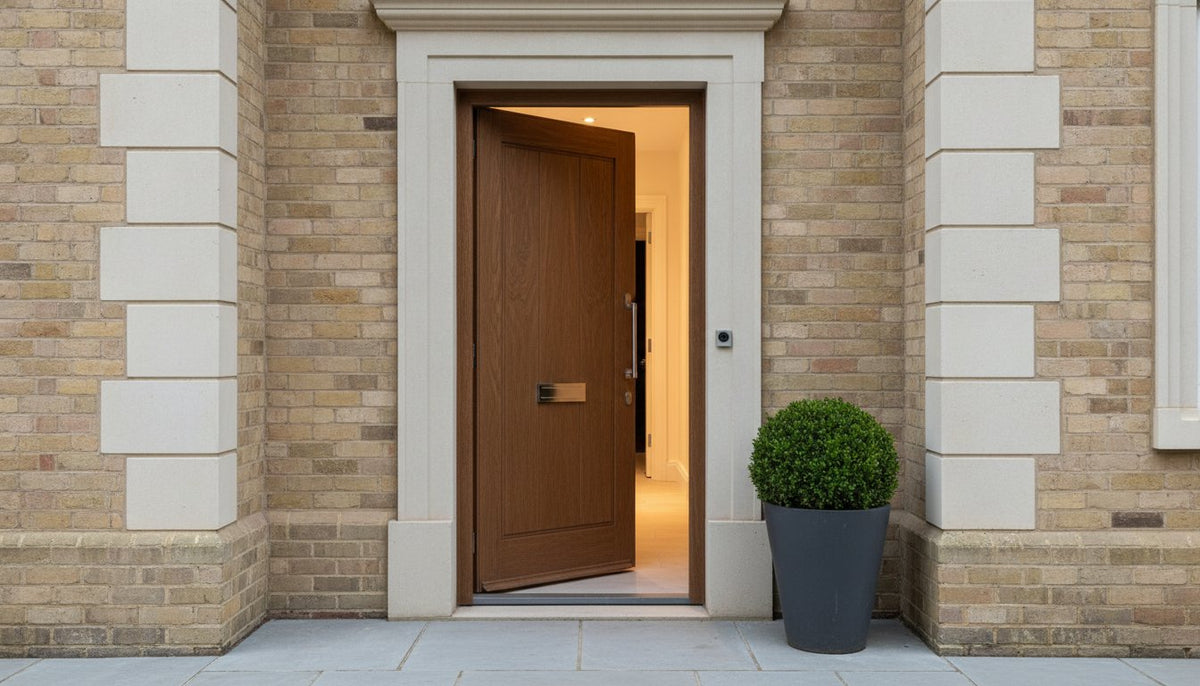
Your front door is more than just an entrance; it is your home's primary handshake and the first impression you offer to the world. Choosing the right external doors often feels like a battle between aesthetic charm and the harsh reality of the British weather. You want the timeless warmth of oak or walnut, yet you worry about draughts rattling the frame or timber warping after a single wet winter. Is it possible to find a balance between traditional craftsmanship and modern performance?
We understand that you're looking for a door that performs as well as it looks, whilst keeping your home secure and energy efficient. This guide will show you how to select, measure, and maintain timber entrances that don't just look beautiful, but also meet the latest thermal standards and security regulations. We'll explore the best materials for longevity and explain how to achieve a cohesive look that boosts your kerb appeal for decades to come.
Key Takeaways
- Understand the performance differences between Oak and Walnut to select a timber that provides both timeless character and structural resilience.
- Learn the professional three-point measurement method to guarantee a precise fit and eliminate draughts caused by structural settling.
- Discover how to choose between solid panels for ultimate privacy and glazed external doors that invite natural light into your hallway.
- Identify the specific frame requirements and weatherproofing techniques needed to ensure your timber entrance lasts for decades, not just years.
- Experience the benefit of seeing quality in person at a dedicated showroom whilst exploring how to coordinate doors with matching timber windows and stairs.
The Homeowner’s Guide to External Doors: Balancing Style and Security
An Door serves as the most hardworking component of your home's exterior. It is a vital barrier against the elements, a shield for your family's safety, and a defining statement of your property's character. In the UK housing market, first impressions are inextricably linked to property valuation; a premium entrance suggests a well-maintained interior, immediately elevating market appeal. Beyond mere aesthetics, external doors must provide robust weather resistance and superior acoustic insulation whilst acting as a formidable physical protector. When you invest in an entrance built with genuine joinery heritage, you are choosing a product designed for longevity and structural integrity that synthetic alternatives often lack.
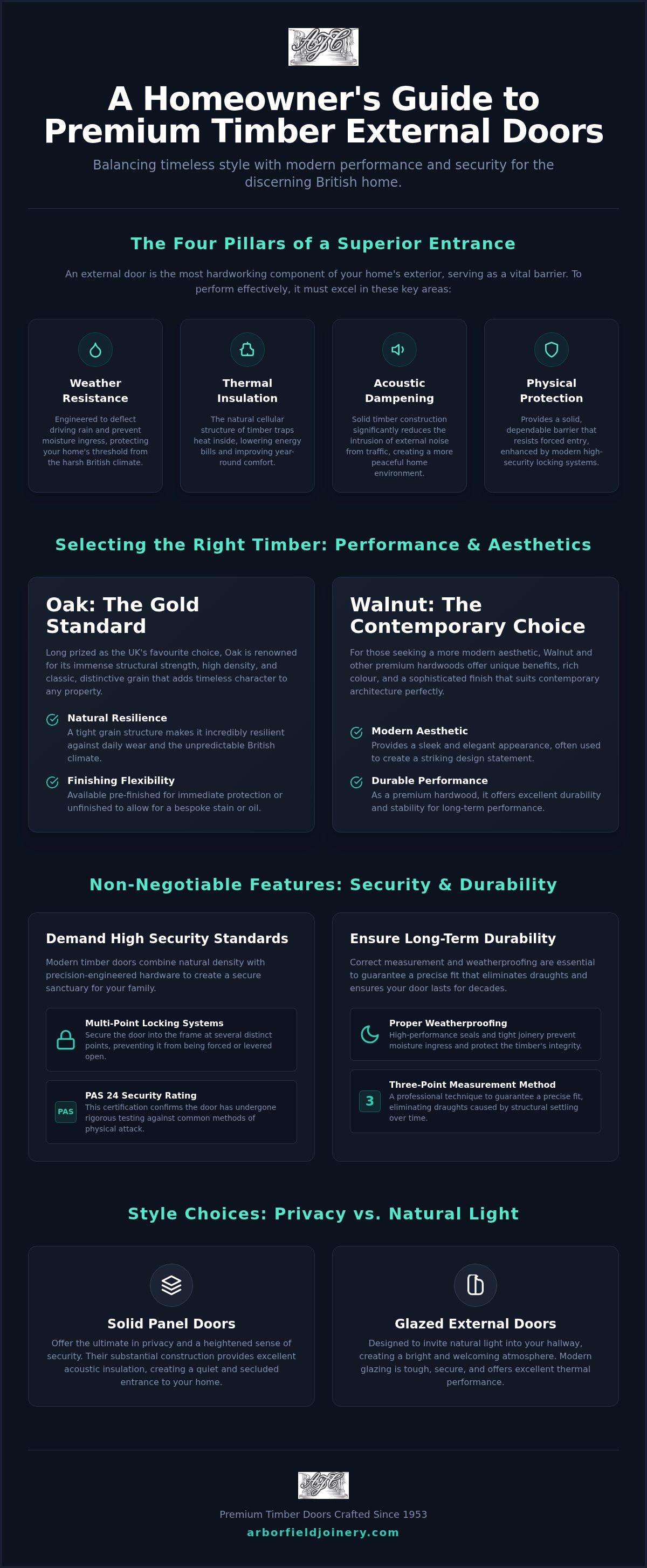
A door's primary functions are diverse and demanding. To perform effectively, it must excel in the following areas:
- Weather Resistance: Deflecting driving rain and preventing moisture ingress into the threshold.
- Thermal Insulation: Keeping heat trapped inside to lower energy bills and improve comfort.
- Acoustic Dampening: Reducing the intrusion of external noise from traffic or neighbours.
- Physical Protection: Providing a solid, dependable barrier that resists forced entry.
Joinery heritage is a marker of true quality. It refers to the traditional methods of construction that allow timber to move naturally with temperature changes without losing its shape. This expertise ensures that joints remain tight and the door stays hung correctly in its frame for decades.
Why Timber Remains the Premium Choice for 2026
Timber offers environmental credentials and aesthetic depth that uPVC or composite materials struggle to replicate. As a natural, renewable resource, wood provides excellent thermal performance through its inherent cellular structure and "breathability." This natural insulation helps maintain a stable internal climate, keeping your hallway warm in winter and cool in summer. One of the greatest advantages of timber is its repairability. Whilst a cracked plastic door usually requires a total replacement, a timber door can be sanded, filled, or repainted. This makes it a sustainable, long-term investment that ages gracefully alongside your home.
The Security Standards You Should Demand
Safety is a non-negotiable priority for any homeowner. Modern timber construction is incredibly dense and heavy, which serves as a natural physical deterrent to potential intruders. To maximise this protection, high-quality external doors are typically fitted with multi-point locking systems that secure the leaf into the frame at several distinct points. This prevents the door from being easily forced or levered open. For total peace of mind, ensure your chosen entrance meets PAS 24 or equivalent security ratings, as this confirms the door has undergone rigorous testing against common methods of physical attack. By combining the natural mass of solid wood with precision-engineered hardware, you create a secure sanctuary for your family.
Selecting the Right Timber: Oak, Walnut, and Hardwood Performance
Selecting the specific species for your external doors is a decision that dictates your home's thermal efficiency, physical security, and long-term maintenance schedule. Whilst many retailers simply provide a list of materials as a filter, understanding the performance characteristics behind timber selection is essential for a lasting investment. Oak has long been the UK's favourite choice, prized for its distinctive grain and immense structural strength. However, for those seeking a more contemporary aesthetic or a specific colour finish, Walnut and White Primed options offer unique benefits that suit modern architecture.
The Enduring Appeal of External Oak Doors
Oak remains the gold standard for British homes due to its high density and natural resistance to the elements. Its tight grain structure makes it incredibly resilient against the daily wear and tear of a busy household, ensuring the door remains straight and true even in our unpredictable climate. For a deeper dive into why this material is so highly regarded, you can read The Ultimate Guide to External Oak Doors. When selecting oak, you'll need to choose between unfinished and pre-finished options. Pre-finished doors come factory-sealed with high-performance coatings, providing immediate protection against moisture ingress. Conversely, unfinished doors offer the flexibility to apply a bespoke stain or oil that perfectly matches your home's existing joinery.
Hardwood and Walnut: Premium Alternatives
Walnut is rapidly becoming a staple for homeowners desiring a sophisticated, minimalist entrance. Often utilised in "Urban Door" designs, its rich, dark tones and smooth texture provide a luxurious feel that contrasts beautifully with modern stonework or industrial render. Beyond Walnut, "Hardwood" serves as a broad category for species like Meranti, which are celebrated for their exceptional stability and rot resistance in high-moisture environments. According to the Wood Handbook, the natural extractives in many hardwoods provide an inherent defence against decay, making them ideal for exposed frontages. These premium materials can be colour-matched to your timber windows to create a unified, high-end exterior.
For those who prefer a specific colour palette without sacrificing wood quality, White Primed Doors offer a smooth surface ready for a custom paint finish. This allows you to achieve a heritage look in shades like sage green or slate grey whilst retaining the weight and insulation of a solid timber core. If you're unsure which grain best suits your property, you can browse our full collection of timber doors to find your perfect match.
Glazed vs. Solid: Choosing a Style for Front and Back Entrances
The choice between a solid timber leaf and a glazed alternative is often a trade-off between absolute privacy and the desire for natural light. Solid external doors are the definitive choice for those seeking a traditional "manor" or "cottage" aesthetic. They provide a sense of total seclusion and are particularly effective at dampening street noise. Conversely, glazed external doors are transformative for properties with dark, windowless hallways. By inviting light into the heart of the home, they create a more welcoming atmosphere whilst maintaining the structural strength of a timber frame.
Homeowners often worry about the security of glass panels in an entrance. However, modern external joinery utilises toughened double or triple glazing that is remarkably difficult to penetrate. These units are factory-sealed into the door leaf, ensuring they meet the same rigorous thermal and security standards as solid wood panels. This means you don't have to sacrifice safety to enjoy a brighter home.
Glazing Styles: From Victorian to Contemporary
Privacy doesn't have to mean a dark hallway. Obscured, frosted, or etched glass allows you to benefit from daylight without compromising your privacy from the street. For wider entrances, integrating sidelights or transoms (glass panels above the door) creates a grand architectural statement that floods the interior with light. We are also seeing a significant rise in "Urban" styles. These feature minimalist black frames and expansive glass panels that lean into a modern industrial look, perfect for contemporary renovations.
Stable Doors and Bi-folds: Functional Entrances
Rear entrances often require a more versatile approach. Stable doors have become a firm favourite for kitchens and utility rooms due to their unique split-opening mechanism. This design allows the top half to remain open for ventilation whilst the bottom half stays securely shut to keep pets or small children safe inside. It is vital to ensure these doors feature high-quality weather-sealing along the horizontal split to prevent draughts. Meanwhile, timber bifold doors are the ultimate solution for merging your living space with the garden. They offer wide, unobstructed views and effortless access, making them a premium alternative to standard sliding systems. This versatility ensures your back entrance is as functional as it is beautiful.
Measuring and Weatherproofing: Ensuring Long-Term Durability
Precise measurement is the foundation of a high-performance entrance. Without a perfect fit, even the finest external doors will succumb to draughts and moisture ingress. To account for structural settling in your property, always measure the opening at three points: top, middle, and bottom for width, and left, centre, and right for height. Use the smallest of these three measurements to ensure the door can be fitted without excessive force. This precision prevents the gaps that lead to heat loss and rattling frames.
Selecting a compatible external door frame is the next critical step. It should match the timber species of the leaf to ensure uniform expansion and contraction throughout the seasons. Look for "rebated" edges, which provide a physical overlap between the door and frame to significantly improve weather sealing. Additionally, plan your threshold carefully; it must allow for efficient water runoff whilst maintaining a low profile for accessibility. Finally, invest in high-quality ironmongery. Stainless steel or solid brass components prevent rust and ensure the mechanism operates smoothly for years.
The Critical Role of the External Door Frame
A door is only as good as the frame it sits in. If the frame is poorly constructed or incorrectly installed, it will eventually shift, causing the door to stick or drag. Many homeowners wrongly blame "timber warping" for these issues when the culprit is actually a failing frame. We recommend using hardwood sills at the base of the frame. These are specifically designed to withstand the pooling water and damp conditions that often cause softwoods to rot. A robust frame acts as the structural anchor for your entrance, maintaining the alignment of your locks and hinges.
Maintenance: Keeping Timber Beautiful
Whilst laminate internal doors offer a "wipe-clean" simplicity, external natural wood requires a more hands-on approach to preserve its lustre. The frequency of re-oiling or re-varnishing depends on the door's exposure to sun and rain. You can easily check the health of your finish with the "beading" test. Simply flick a few drops of water onto the timber surface. If the water beads and rolls off, the finish is intact. If it soaks into the grain, it's time to apply a fresh protective coat. For expert advice on selecting the right protective finishes for your home, view our full range of timber solutions.
Arborfield Joinery: Premium Timber Doors Crafted Since 1953
Arborfield Joinery has stood as a steady hand in the timber industry since its establishment in 1953. As a family-run business with over seven decades of proven expertise, we've evolved into a national supplier whilst retaining the personal, consultative approach that only a heritage enterprise can provide. When you choose our external doors, you aren't just buying a functional barrier; you're investing in a piece of precision joinery designed to last for generations. This commitment to a quality-first narrative ensures that every entrance we curate meets our exacting standards for security, thermal performance, and aesthetic elegance.
The Showroom Experience vs. Online Convenience
Whilst digital shopping offers unmatched ease, there is an undeniable value in seeing quality in person. Our flagship showroom features over 120 doors on display, allowing you to feel the dense weight of the timber and inspect the intricate grain patterns of oak and walnut before making a final decision. This tactile experience is vital for understanding the true scale and colour of your chosen entrance amongst its peers. For those further afield, our online storefront provides the same expert-curated range to the entire UK, including specialists in Deanta and bespoke timber solutions. Every customer, whether retail or trade, receives the same personalised service and technical guidance that has defined our brand for 70 years. To support your project, we also offer free mainland UK shipping on all orders over £900, ensuring your premium joinery arrives safely at your doorstep.
Completing Your Home’s Look
Achieving a cohesive aesthetic requires a discerning eye for detail across all your home’s timber elements. The "Arborfield Standard" of quality remains unchanged since 1953, extending beyond the front entrance to every corner of your property. We provide the ability to match your external doors with high-quality timber windows and staircase components, ensuring a unified architectural flow. This holistic approach to home improvement allows you to curate a living space where every element complements the next, from the first handshake at the door to the heart of the home. By viewing your joinery as a lifetime investment rather than a temporary fix, you're enhancing both the kerb appeal and the long-term structural value of your home.
Explore our full range of external doors and enhance your home today.
Investing in a Timeless Entrance for Your Home
Your property deserves an entrance that balances sophisticated style with the uncompromising security of traditional joinery. By selecting high-quality timber species like oak or walnut, you're choosing a material that offers superior thermal performance and a lifespan that far outlasts synthetic alternatives. Remember that a door is only as good as its frame. Taking precise measurements and ensuring professional weather-sealing are the final steps in securing your home’s long-term energy efficiency and kerb appeal.
Whether you're drawn to the privacy of a solid panel or the light-filled charm of glazed designs, we're here to help you select the perfect external doors. Arborfield Joinery has been a family-run business since 1953, and we pride ourselves on being knowledgeable consultants for every homeowner. You can visit our showroom to see over 120 doors on display or browse our curated range online from anywhere in the UK. We also provide free mainland UK shipping on orders over £900 to ensure your investment arrives safely.
Browse our premium collection of external doors and discover the perfect handshake for your property. We look forward to helping you curate a beautiful, secure home that lasts for decades.
Frequently Asked Questions
What is the best wood for an external door in the UK?
Oak is the definitive choice for UK homes due to its natural density and resistance to decay. Hardwoods like Meranti are also exceptional for high-moisture environments, whilst Walnut offers a premium, modern aesthetic. Selecting a timber that suits your property's specific exposure ensures your entrance remains structurally sound and durable against the unpredictable British weather for decades to come.
Do external timber doors require a specific type of frame?
Yes, timber entrances should always be hung in a matching timber frame to ensure uniform expansion and contraction throughout the seasons. We recommend frames with rebated edges for superior weather sealing and hardwood sills to prevent moisture damage at the threshold. A robust, correctly fitted frame is vital for maintaining the alignment of your security locks and preventing the door from sticking.
How do I stop my wooden front door from warping?
To prevent warping, you must seal all six sides of the timber leaf immediately upon delivery to block moisture ingress. It's also essential to ensure the door is fitted into a perfectly square frame. Regular maintenance of the protective finish, such as re-oiling or re-varnishing when the surface appears dull, will keep the timber stable and prevent the wood fibres from absorbing water.
Are glazed external doors as secure as solid ones?
Modern glazed external doors are just as secure as solid timber designs when they are constructed with toughened double or triple glazing. These glass units are factory-sealed into the leaf, making them extremely difficult to penetrate. When combined with a solid timber core and multi-point locking systems, a glazed entrance provides a formidable level of physical protection whilst significantly brightening a dark hallway.
Can I install an external door myself or do I need a professional?
Whilst a highly skilled DIY enthusiast can fit a door, we recommend hiring a professional joiner for the best results. Precision is critical for weatherproofing and security; even a tiny misalignment can lead to draughts or lock failure. Please note that Arborfield Joinery doesn't provide installation services, so you should source a qualified local craftsman to ensure your new entrance is fitted perfectly.
What is the difference between a pre-finished and an unfinished door?
A pre-finished door arrives factory-sealed with high-performance coatings, providing immediate protection and a consistent, professional appearance. An unfinished door is supplied as raw timber, offering the flexibility to apply a bespoke stain or paint colour that matches your home's existing joinery. Both options offer the same structural quality, but unfinished doors must be sealed on all sides before they're exposed to any moisture.
How often should I maintain my timber external door?
You should inspect your timber external doors annually, though the actual maintenance frequency depends on their exposure to the elements. A simple way to check the finish is the "beading" test: flick water onto the surface, and if it fails to bead, it's time for a fresh coat. Doors in sheltered positions may only need attention every few years, whilst exposed frontages require more regular care.
Do you offer bespoke sizes for non-standard door openings?
Yes, we specialise in bespoke timber solutions for properties with non-standard door openings. Whether you own a heritage home with unique dimensions or a contemporary project requiring a statement entrance, we can provide doors tailored to your exact measurements. You can discuss your specific requirements with our expert team at our showroom, where we have over 120 doors on display to help inspire your choice.
Share:
How to Choose Front Door Material: A 2026 Guide
Bespoke Joinery for Modern Homes: A 2026 Guide