
Table of Contents
- Timber Door Installation Cost Breakdown
- Average Timber Door Installation Costs
- Carpenter Day Rate for Door Hanging
- Cost of Replacing External Door Frame
- Material Costs: Timber Types and Pricing
- Hidden Costs and Additional Expenses
- Internal vs External Door Installation Costs
- DIY vs Professional Installation: Cost and Trade-offs
Last Updated: August 22, 2026
Timber Door Installation Cost Breakdown
Understanding the true cost of timber door installation extends far beyond the door price itself. At Arborfield Joinery, we've helped thousands of homeowners navigate this process, and the most common surprise isn't the door, it's everything else that gets added along the way.
A typical timber door installation in the UK ranges significantly depending on your choices, but most homeowners should budget for materials, labour, frame replacement, hardware, and finishing work. This guide breaks down every element so you can plan accurately and avoid budget shock.
Average Timber Door Installation Costs
The total cost for installing a timber door typically falls between £800 and £3,500, heavily influenced by whether you're replacing an internal or external door, and whether the existing frame can be reused.
For a straightforward internal timber door installation with an existing frame in good condition, expect £400-£800 total. This includes a mid-range timber door blank (£150-£300), basic hardware (£30-£80), and labour for hanging and finishing.

External door installations are more expensive. A new external timber door with frame replacement, weatherproofing, and proper finishing typically costs £1,500-£3,500. The Seville Pre-finished Oak FD30 Doorset from Arborfield Joinery, for example, starts at £1,047.50 for the complete set, and when you add professional installation labour and frame work, the total easily reaches £2,000-£2,500.
The biggest variable is whether you're keeping the existing frame. If the frame is damaged, rotted, or doesn't meet current building regulations, frame replacement becomes necessary, and that's where costs escalate significantly. A new external door frame costs £200-£600 in materials alone, plus £300-£500 in labour to fit it properly.

Internal doors are more forgiving. Most internal frames are in decent condition, and if they are, you're simply hanging a new door and fitting hardware.
Carpenter Day Rate for Door Hanging
A qualified carpenter's day rate in the UK typically ranges from £150-£300 per day, depending on experience, location, and whether you're hiring independently or through a registered company. For door hanging specifically, most carpenters charge £30-£60 per hour.
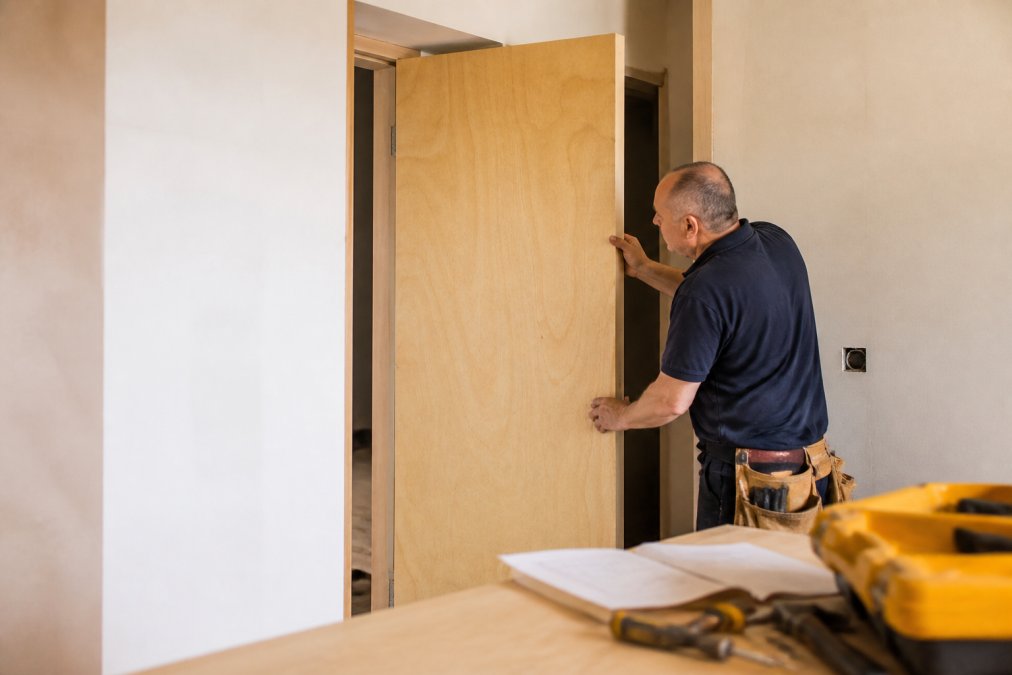
A straightforward internal door hanging takes 2-3 hours if the frame is in good condition and the door is standard size, translating to roughly £60-£180 in labour. Adding architrave fitting or hinge adjustment and mortise lock installation adds another hour or two.
External door installation is more labour-intensive. A carpenter fitting a new external door with frame replacement, weatherproofing, and proper sealing typically needs 6-10 hours of work, costing £180-£600 in labour alone. If structural work is needed, the hours multiply quickly.
Many carpenters offer fixed quotes for standard jobs. A typical fixed quote for hanging a pre-hung door might be £150-£250. Fitting a door blank into an existing frame runs £100-£200. Full frame replacement with a new door installation typically costs £400-£800 in labour.
Cost of Replacing External Door Frame
An external door frame replacement typically costs £500-£1,200 in total, including both materials and labour. The frame itself costs £200-£600 depending on timber type and whether you choose solid wood, composite, or uPVC. Oak frames cost more than softwood frames. Fire-rated frames (FD30) add cost but are required for certain building regulation compliance.
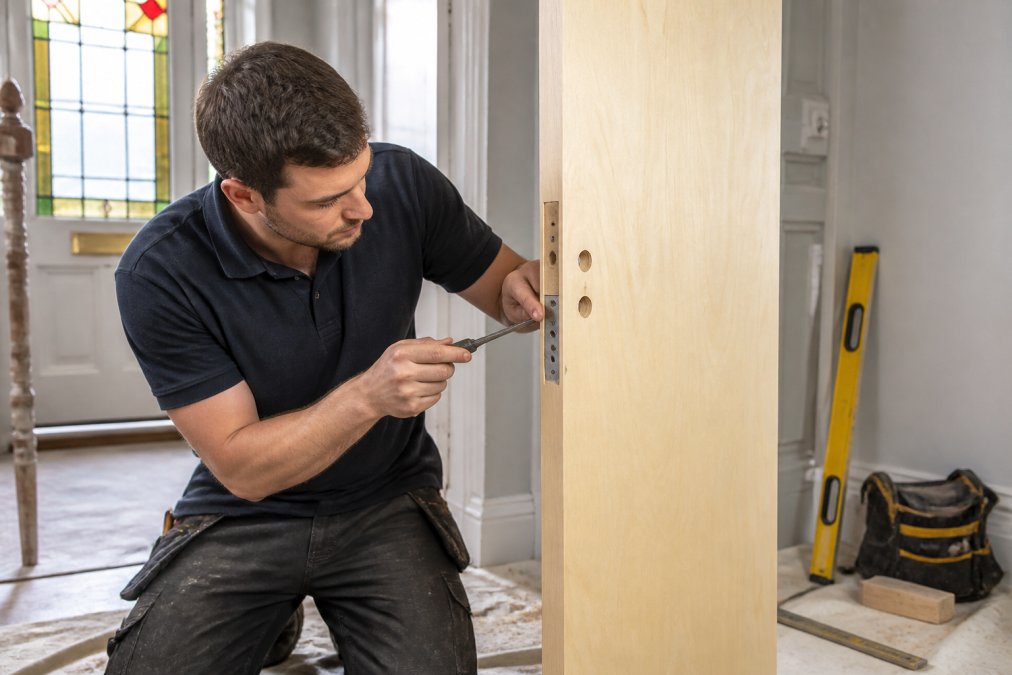
Labour for frame replacement is substantial because the work involves removing the old frame, checking the structural integrity of the opening, treating any damp or rot, fitting the new frame, ensuring it's square and level, and sealing it properly against weather. This typically requires 8-12 hours of skilled carpentry work, translating to £240-£720 in labour at standard day rates.
The structural opening itself sometimes needs attention. If the lintel has failed, if there's settlement around the opening, or if the opening isn't quite square, remedial work adds time and cost. Checking and potentially repairing a lintel can add £300-£800 to the project.
External door frames must meet thermal performance standards (U-values), security standards, and weather resistance requirements. A frame that meets current building regulations costs more than an older, non-compliant frame. If you're replacing a frame in a listed property or period home, you may need to match the original frame style, which limits your options and increases cost.
Material Costs: Timber Types and Pricing
The timber you choose for your door has the biggest impact on material costs and long-term durability.
Solid wood doors (oak, pine, ash, or other hardwoods) are the most expensive option but offer authentic aesthetics and longevity. A solid oak door blank costs £250-£400. Solid softwood doors (pine or fir) are cheaper at £150-£250 but are softer and more prone to denting. Hardwood doors, once finished and sealed, last 30+ years with proper maintenance (peer-reviewed research).
Composite doors (timber-effect engineered boards) cost £200-£350 and offer a middle ground. They're more stable than solid wood, less prone to warping, and require less maintenance. Many are pre-finished, which saves on painting or varnishing costs. avoiding hidden installation costs.
uPVC doors are the cheapest option at £100-£200 for the door itself, but they fall outside the scope of timber door installation.
For a pre-finished doorset (door already fitted to a frame), expect to pay £800-£1,500 for solid wood, £600-£1,000 for composite, and £400-£600 for uPVC. The Seville Pre-finished Oak FD30 Doorset from Arborfield Joinery costs £1,047.50, a premium option that includes fire-rating compliance and a finished frame ready for installation.

Hardware costs vary by style and quality. Basic hinges, a mortise lock, and handles cost £30-£80. Period-style hardware, handforged fixtures, or high-security locks cost more. Arborfield Joinery stocks handforged hardware kits starting from £32.19 for the Standard Handforged Kit (12") with beeswax finish, up to £52.17 for the Heavy Duty Handforged Kit.
Finishing costs (painting, varnishing, or staining) add £100-£300 depending on whether you do it yourself or hire a professional. A professional finish is worth the cost because poor finishing leads to moisture ingress and timber degradation.
Hidden Costs and Additional Expenses
Most homeowners underestimate the "hidden" costs that appear once work starts.
Waste disposal and site clearance typically costs £50-£150. Old frames, packaging, and offcuts need to be removed responsibly. If asbestos is present in old materials (common in properties built before the 1990s), disposal costs rise significantly.
Architrave and door casing, the decorative trim around the door frame, costs £30-£150 depending on material and style. Matching period architrave in older properties can be expensive.
Weatherproofing and sealing for external doors includes threshold installation (£20-£80), weather stripping (£10-£30), and sealant (£5-£15). These are essential for preventing draughts and water ingress.
Building regulation approval and inspection may be required for external door installation. Local authority inspection fees typically run £100-£200, though some work is exempt depending on your local council's requirements.
Fixing and securing, if the opening needs adjustment, lintels need support, or the structural surround needs reinforcement, costs escalate. A simple opening adjustment might cost £100-£300. Structural work involving a new lintel can cost £500-£1,500.
Damp treatment and timber preservation becomes necessary if the existing frame or opening shows signs of moisture damage. Treating rot or applying preservative costs £100-£400 depending on extent.
Contingency costs should always be budgeted. Discovering rot, damp, or structural issues once work starts is common. A 10-15% contingency buffer (£100-£500 depending on project size) prevents budget shock.
| Hidden Cost Item | Typical Cost | Notes |
|---|---|---|
| Waste disposal | £50-£150 | Essential for responsible removal |
| Architrave replacement | £30-£150 | Depends on period style matching |
| Weatherproofing (threshold, seals) | £35-£125 | Critical for external doors |
| Building regulation inspection | £100-£200 | May be required; check locally |
| Structural adjustment/lintel work | £100-£1,500 | Varies widely; assess early |
| Damp treatment and preservation | £100-£400 | Only if moisture damage present |
| Contingency buffer (10-15%) | £100-£500 | Protects against surprises |
Internal vs External Door Installation Costs
Internal door installation is straightforward because the frame is protected from weather and rarely involves structural work. An internal timber door installation typically costs £400-£900 total. The door itself costs £150-£300, hardware £30-£80, and labour £200-£400. If the existing frame is sound, you're simply hanging a new door, fitting hinges, and installing a mortise lock and handle.
External door installation is more complex and expensive because the frame must be weatherproof, thermally efficient, and structurally sound. An external timber door installation typically costs £1,500-£3,500 total. The door itself costs £250-£600, hardware £40-£150, frame (if needed) £200-£600, weatherproofing £35-£125, and labour £300-£800.
External doors must meet building regulations for thermal performance (U-values), security, and weather resistance (gov.uk). Many external doors are now required to be fire-rated (FD30), which adds cost but improves safety (gov.uk). The Seville Pre-finished Oak FD30 Doorset meets these compliance requirements.
External frames are more expensive because they must withstand weather exposure, resist rot, and provide proper thermal performance. The labour difference is significant: an internal door hang takes 2-3 hours, while an external door installation with frame work takes 8-12 hours.
DIY vs Professional Installation: Cost and Trade-offs
DIY door installation saves labour costs but introduces risk. For internal doors in good frames, DIY is reasonable if you're patient and methodical. You'll need a chisel set, a mortise lock jig, a cordless drill, a spirit level, and measuring tools. Expect your first door to take 4-5 hours.
External door installation is not a DIY project. Weatherproofing, frame fitting, and structural considerations require professional expertise. A poorly fitted external door frame leads to water ingress, damp, and structural damage costing thousands to repair.
Professional installation costs more upfront (£200-£800 in labour for internal doors, £300-£800 for external) but guarantees proper fitting, compliance with building regulations, and warranty protection. A carpenter's guarantee means if the door fails due to poor installation, they'll fix it.
The real cost comparison: DIY internal door installation saves £200-£400 but risks £500-£2,000 in corrections if something goes wrong. External door DIY is rarely worth the risk.
Installing a timber door properly means understanding every cost component and planning accordingly. Internal doors are straightforward and relatively affordable, while external doors require investment in quality frames, weatherproofing, and skilled labour. Hidden costs, waste disposal, structural work, building regulation compliance, often surprise homeowners who focus only on the door price itself.
At Arborfield Joinery, we supply premium timber doors, frames, and hardware designed for durability and proper installation. Whether you're replacing a single internal door or undertaking a complete external door renovation, planning your budget with realistic cost components ensures your project stays on track.
Frequently Asked Questions
How much do carpenters charge for fitting a timber door?
Carpenter day rates for door hanging typically range from £150 to £300 per day, though rates vary based on experience and location. A single internal door fitting usually takes 2-4 hours, while external doors with frame replacement can take a full day or more. Always request a detailed quote that breaks down labour costs separately from materials and any additional work like architrave fitting or weatherproofing.
What factors affect the total cost of timber door installation?
Several factors influence timber door installation costs: the type of timber (solid wood costs more than hollow core or composite), whether you're replacing just the door leaf or the entire door frame, labour rates in your area, the complexity of the opening (standard sizes cost less than bespoke installations), and additional work like painting, varnishing, or threshold installation. Hidden costs such as waste disposal, structural adjustments, and hardware also add up quickly.
Is it cheaper to replace just the door or the entire frame?
Replacing only the door leaf is cheaper upfront, typically costing £200-£800 for materials plus labour. However, if your existing frame is damaged, warped, or doesn't meet building regulations, replacing the entire frame is often more cost-effective long-term. A full frame replacement (£500-£2,000+ depending on materials) prevents drafts, improves structural integrity, and eliminates future repair costs. Pre-hung door sets, which include both door and frame, simplify installation and reduce labour time.
What hidden costs should I budget for in a timber door installation?
Common hidden costs include disposal and waste removal fees (£50-£150), architrave and door casing (£100-£400), hardware such as mortise locks, hinges, and latches (£30-£150), weatherproofing and threshold installation (£80-£200), and finishing work like painting or varnishing (£100-£300). If structural work is needed or the opening requires adjustment to meet building regulations, costs can increase significantly. Always request an itemised quote to avoid surprises.
How long does a professional joiner take to hang a timber door?
A standard internal timber door typically takes 2-3 hours to hang, including fitting the door leaf, adjusting hinges, and installing the handle. External doors with frame replacement take 6-8 hours or a full day. Bespoke installations or doors requiring structural adjustments may take longer. The time required depends on the condition of the opening, whether the frame needs replacing, and the complexity of the joinery work involved.
What's the difference in cost between internal and external timber door installation?
Internal timber door installation typically costs £200-£600 (materials and labour combined) for a standard pre-hung door. External door installation costs £800-£2,500+ because external doors require fire-rated or weather-resistant timber, more robust hardware, and careful weatherproofing and threshold installation. External doors also often need frame replacement, which adds £500-£1,500 to the total. Labour costs are higher for external work due to the additional complexity and building regulation compliance required.
Should I choose solid wood, composite, or uPVC for cost savings?
Solid wood (oak, pine) costs more initially (£300-£1,200 per door) but offers durability and aesthetic appeal, with lower long-term maintenance if properly finished. Composite doors cost £400-£900 and require minimal maintenance, making them cost-effective over time. uPVC is the cheapest option (£200-£600) but offers less character and may need replacement sooner. Consider long-term maintenance costs: solid wood requires periodic varnishing or painting, while composite and uPVC need only occasional cleaning. For bespoke installations, solid wood is often the only option that fits non-standard openings perfectly.
This article was written using GrandRanker
Share:
Internal Doors with Glass: A Complete Guide to Light, Style, and Privacy
Pre-finished Oak Doors: A Guide to Quality and Style