
Table of Contents
- Why Woodplas Isn't Always the Right Choice for Bespoke Joinery
- Accoya vs MDF for Joinery: Performance and Longevity
- Best Materials for Bespoke External Joinery
- Maintenance Requirements for Timber Alternatives
- Cost-Effectiveness and Life-Cycle Analysis
- Environmental Impact and Sustainable Sourcing
- Which Material Should You Choose for Your Project?
- Conclusion
Last Updated: August 14, 2026
Why Woodplas Isn't Always the Right Choice for Bespoke Joinery
Many homeowners and designers automatically turn to composite materials like Woodplas for bespoke joinery projects. The appeal is straightforward: low maintenance, consistent appearance, and weather resistance. But woodplas alternatives for bespoke joinery often deliver superior results when you account for durability, aesthetic authenticity, and long-term performance. At Arborfield Joinery, we've worked with hundreds of clients who discovered that the right material choice depends far more on project context than on picking the most popular option.
Woodplas and similar composites excel in high-moisture environments where traditional timber would fail. But they introduce compromises that don't suit every project: the material lacks the dimensional stability of engineered wood for certain joinery applications, is heavier than expected (affecting installation complexity), and cannot replicate the grain authenticity that defines artisanal craftsmanship. The real question isn't whether Woodplas is good or bad, but whether it's the right fit for your specific requirements.
Accoya vs MDF for Joinery: Performance and Longevity
Accoya: Engineered Durability for External Applications
Accoya represents a fundamentally different approach to material engineering. This acetylated timber combines the aesthetic qualities of natural wood with engineered durability that rivals synthetic composites. The acetylation process chemically modifies the timber's cellular structure, creating dimensional stability that prevents warping, cupping, and movement, the primary failure modes in traditional joinery.
For external applications, Accoya delivers performance that composite alternatives struggle to match. The material maintains structural integrity across extreme temperature and humidity cycles, resists rot and fungal decay without chemical treatments, and accepts traditional joinery techniques without modification. Mortise and tenon joints, dovetails, and complex mouldings perform exactly as they would in conventional timber. Unlike Woodplas, Accoya can be worked with hand tools, preserving the artisanal quality that defines bespoke craftsmanship.
The trade-off is cost. Accoya commands a premium over standard timber, but when investing in bespoke joinery designed to last decades, the longevity justifies the investment. The material doesn't require the surface preparation and finishing protocols that composite boards demand.
MDF: Cost-Effective Interior Solutions
Medium density fibreboard is engineered from wood fibres compressed with resin binders, creating a stable, uniform substrate that machines beautifully and accepts paint finishes with exceptional quality. For interior joinery, built-in cabinetry, internal doors, and architectural mouldings, MDF offers genuine advantages over solid timber.
The material's consistency eliminates grain variation and movement that plague natural wood, making it ideal for painted finishes where grain visibility is undesirable. The uniform density allows precision machining of complex profiles that would be difficult in solid timber.
However, MDF's weaknesses are significant for external applications. The material absorbs moisture readily, causing swelling, delamination, and loss of structural integrity. It cannot support traditional joinery methods, mortises fail and joints weaken. MDF also requires careful surface preparation and priming before finishing, adding labour costs that offset material savings. For bespoke joinery, MDF works best when paired with structural backing and careful environmental control. In high-moisture environments or external applications, it's unsuitable.
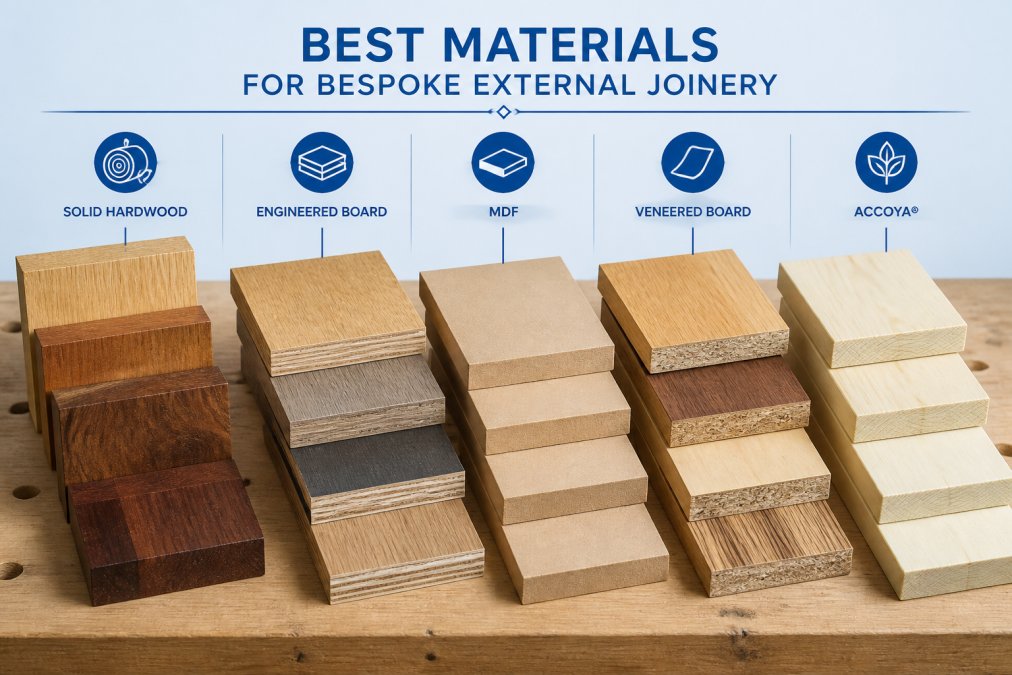
Best Materials for Bespoke External Joinery
Hardwood and Softwood: Traditional Craftsmanship
Solid timber remains the gold standard for bespoke external joinery. Hardwoods like oak, walnut, and mahogany bring aesthetic richness that engineered materials cannot replicate. The grain patterns, colour variation, and natural aging characteristics create visual depth and authenticity. Softwoods like pine and cedar offer their own advantages: they're lighter, more workable, and often more sustainable when sourced responsibly.
Solid timber demands understanding. Different species have different movement characteristics, durability profiles, and finishing requirements. Oak is exceptionally durable and weathers beautifully, but its tannins can react with ferrous metals. Cedar is naturally rot-resistant but softer and requires protective finishes. Moisture resistance varies dramatically across species, some harden and improve with age when exposed to weather; others deteriorate without proper maintenance.
For external applications, the best timber choices pair natural durability with proven finishing systems. Accoya represents engineered timber that combines these qualities, but traditional hardwoods like iroko, teak, or European oak, when properly finished, outperform composites in longevity and aesthetic value.
Melamine-Faced Chipboard and Veneered Boards
Melamine-faced chipboard offers an economical middle ground between solid timber and pure composites. The material consists of chipboard faced with melamine or veneer, providing the visual appearance of timber at a fraction of the cost of solid wood. For interior applications, melamine-faced boards work effectively in fitted joinery, shelving, and cabinetry.
Veneered boards offer more aesthetic flexibility, with real timber veneers applied to chipboard or MDF cores. These materials work well for interior joinery where moisture exposure is minimal and aesthetic consistency is valued over grain authenticity.
However, both are fundamentally interior materials. Moisture causes the chipboard core to swell and delaminate, and the veneer separates from the core in humid conditions. For external applications or high-moisture environments, these materials fail relatively quickly without expensive protective systems.
Maintenance Requirements for Timber Alternatives
The maintenance burden varies dramatically across materials and often becomes the deciding factor in material selection.
Solid timber demands regular maintenance. External timber joinery requires periodic inspection, recoating of protective finishes, and attention to damage or movement. For painted timber, this typically means repainting every 5-7 years; for stained or oiled finishes, every 2-3 years. This is the nature of natural material, timber moves with moisture and temperature changes, and protective finishes wear.
Accoya simplifies this considerably. The material's dimensional stability means joints don't open and close with seasonal moisture changes. The acetylation process eliminates the need for chemical preservatives, so maintenance focuses on aesthetic finishes rather than structural protection. Many Accoya installations require only initial finishing followed by occasional touch-up.
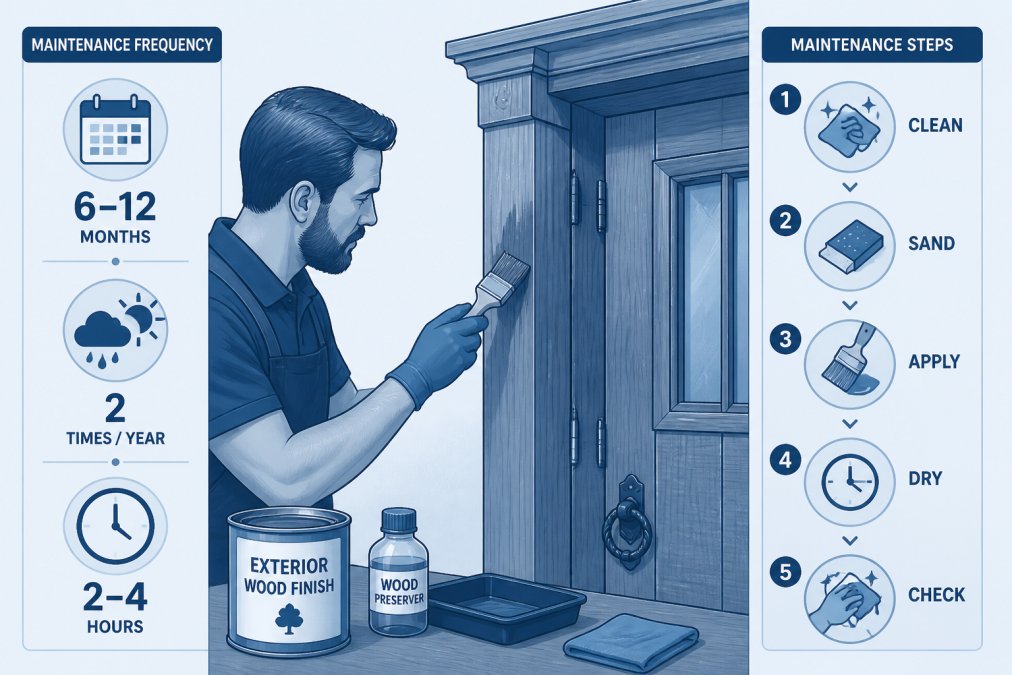
MDF requires careful handling to prevent moisture damage. Once the material absorbs water, the damage is typically permanent, making it unsuitable for external applications or high-moisture interior spaces. For protected interior applications, MDF maintenance is minimal, mainly cleaning and occasional touch-up of painted surfaces.
Melamine-faced chipboard and veneered boards fall between these extremes. They're more moisture-resistant than raw MDF but vulnerable to sustained humidity. Maintenance involves protecting edges from moisture exposure and repairing any damage to facing materials before the core becomes compromised.
Composite materials like Woodplas require minimal traditional maintenance, they don't need repainting or refinishing. However, they do require cleaning and periodic inspection. Staining, mould growth, and surface degradation can occur, particularly in shaded or poorly ventilated locations.
Cost-Effectiveness and Life-Cycle Analysis
A true cost-effectiveness assessment requires considering material cost, installation labour, maintenance expenses, and longevity, not just initial purchase price.
Solid timber typically carries the highest initial material cost, particularly for premium species. However, when properly maintained, quality timber can last 50+ years in external applications. A timber window costing more initially but lasting 60 years delivers better value than a composite window costing less upfront but requiring replacement after 25 years.
MDF represents the lowest initial cost but worst long-term value for external applications. Its short lifespan and moisture vulnerability mean replacement becomes necessary within 10-15 years. For interior applications where moisture exposure is controlled, MDF offers genuine value.
Accoya commands a premium over standard timber but delivers superior longevity with lower maintenance. For external joinery, Accoya's cost-per-year-of-service often beats traditional timber because maintenance costs are lower.
Composite materials like Woodplas occupy a middle position. The initial cost is moderate and maintenance is minimal, but the material's lifespan is typically 20-30 years, and replacement involves removing the entire assembly rather than simply refinishing.
Environmental Impact and Sustainable Sourcing
Material selection increasingly reflects environmental values. The environmental impact spans timber sourcing, manufacturing processes, transportation, maintenance requirements, and end-of-life disposal.
Solid timber sourced from responsibly managed forests carries the lowest environmental impact per unit of material. Timber is renewable, sequesters carbon, and requires minimal processing compared to engineered alternatives. Look for FSC or PEFC certification to ensure sustainable sourcing.
Accoya is manufactured from sustainably sourced timber through a chemical acetylation process that requires energy but produces no toxic byproducts. The environmental benefit comes from the material's longevity, a 60-year lifespan means fewer replacement cycles and lower cumulative environmental cost.
MDF manufacturing uses wood residues that would otherwise become waste, which is environmentally positive. However, resin binders typically contain formaldehyde, and the manufacturing process is energy-intensive. End-of-life disposal is problematic because MDF cannot be easily recycled or safely burned.
Composite materials like Woodplas are often marketed as sustainable because they incorporate recycled plastic. However, the environmental benefit is debatable. The material's moderate lifespan means replacement cycles generate additional waste. True sustainability requires considering the entire product lifecycle.
For environmentally conscious projects, combine timber from certified sustainable sources with finishes and joinery methods that maximise lifespan. A bespoke door made from FSC-certified timber, properly finished and maintained, delivers superior environmental performance compared to a composite alternative requiring replacement sooner.
Which Material Should You Choose for Your Project?
The right choice depends on five key factors: application (internal vs. external), moisture exposure, aesthetic requirements, longevity expectations, and maintenance tolerance.
For external applications with high durability requirements: Accoya or premium hardwoods (oak, iroko, teak) represent the best choices. Both deliver structural integrity, aesthetic authenticity, and proven longevity. Accoya requires less maintenance; traditional hardwoods offer superior grain character.
For interior joinery in dry environments: MDF or melamine-faced chipboard offer excellent value. The material consistency, machinability, and cost-effectiveness make them ideal for fitted cabinetry, internal doors, and architectural details where moisture exposure is minimal and painted finishes are acceptable.
For bespoke projects where aesthetic authenticity matters: Solid timber with proper finishing systems outperforms engineered alternatives. The grain variation, colour depth, and natural aging characteristics cannot be replicated by composites.
For projects with extreme moisture exposure or minimal maintenance tolerance: Composite materials like Woodplas serve a legitimate purpose. They perform reliably in conditions where timber would fail, though you're trading aesthetic authenticity and long-term value for convenience.
For Victorian or period properties: Timber, ideally matching the original species and finishing methods, is almost always correct. Accoya offers a compromise: it performs like traditional timber with superior stability and lower maintenance.
At Arborfield Joinery, we guide clients through this decision by understanding their specific requirements rather than defaulting to a single material. The best material is always the one that balances performance, aesthetics, and maintenance across your specific project's lifespan.
Selecting the right material for bespoke joinery determines whether your investment delivers lasting value or becomes a maintenance burden. Arborfield Joinery combines traditional craftsmanship with deep material knowledge to help you make the right choice. Whether you're replacing Victorian windows, creating custom cabinetry, or building bespoke staircases, our team provides expert advice on material suitability and delivers precision manufacturing across timber, Accoya, and engineered alternatives. Get started with Arborfield Joinery and ensure your bespoke joinery performs beautifully for decades.
| Material | Best For | Maintenance | Longevity | Initial Cost |
|---|---|---|---|---|
| Accoya | External joinery, high durability | Low to moderate | 50+ years | High |
| Premium hardwood | Aesthetic priority, external use | Moderate to high | 40-60 years | High |
| MDF | Interior cabinetry, painted finishes | Minimal | 10-15 years | Low |
| Melamine chipboard | Interior joinery, budget-conscious | Low | 15-20 years | Low |
| Composite (Woodplas) | High-moisture exposure, minimal maintenance | Low | 20-30 years | Moderate |
Frequently Asked Questions
What are the main benefits of using Accoya over wood-plastic composites like Woodplas?
Accoya offers superior dimensional stability and moisture resistance compared to composite materials, making it ideal for external bespoke joinery exposed to weather. It retains authentic wood aesthetics and grain, allowing for traditional finishes and spray-painted surfaces that composites cannot achieve. Accoya also provides better structural integrity for load-bearing applications and requires less frequent maintenance than some composites, though it does need periodic protective treatment.
Is MDF a suitable alternative to Woodplas for interior bespoke joinery?
Yes, MDF works well for interior applications where moisture exposure is minimal. It offers excellent dimensional stability, accepts finishes beautifully, and costs significantly less than Woodplas. However, MDF is not suitable for external joinery or high-moisture environments as it swells when exposed to water. For internal doors, fitted furniture, and decorative elements, MDF provides good value and reliable performance when properly sealed and finished.
How do timber alternatives compare to solid timber in terms of longevity and maintenance?
Solid hardwood and softwood offer superior longevity (50+ years with proper care) compared to engineered alternatives, though they require regular maintenance including resealing and protective treatments. Engineered boards like Accoya last 20-40 years with moderate maintenance, while MDF typically lasts 15-25 years indoors. Composite materials like Woodplas require minimal maintenance but may show surface wear or colour fading over 15-20 years. Your choice depends on whether you prioritise longevity, maintenance effort, or initial cost.
Which joinery materials work best for bespoke external doors and windows?
Accoya, hardwood, and softwood are the top choices for external bespoke joinery. Accoya combines durability with modern reliability, hardwood offers traditional aesthetics and longevity, and softwood provides good value when properly treated. Melamine-faced chipboard and veneered boards are less suitable for external use due to moisture vulnerability. All external materials need weatherproofing, proper installation, and periodic maintenance to ensure thermal efficiency and structural integrity.
Are there sustainable alternatives to Woodplas for high-end bespoke joinery?
Yes. FSC-certified hardwood and softwood from responsibly managed forests offer genuine sustainability credentials. Accoya is made from sustainably sourced softwood and modified through a non-toxic acetylation process, making it both durable and environmentally sound. Reclaimed timber salvaged from old buildings provides authenticity and zero additional environmental impact. When specifying materials, look for FSC or PEFC certification to ensure sustainable sourcing, and consider life-cycle cost analysis, longer-lasting materials often prove more sustainable despite higher upfront costs.
This article was written using GrandRanker
Share:
The Homeowner’s Guide to Timber Windows: Quality, Style, and Longevity in 2026
Bespoke Staircase Design for Extensions: A 2026 Guide