
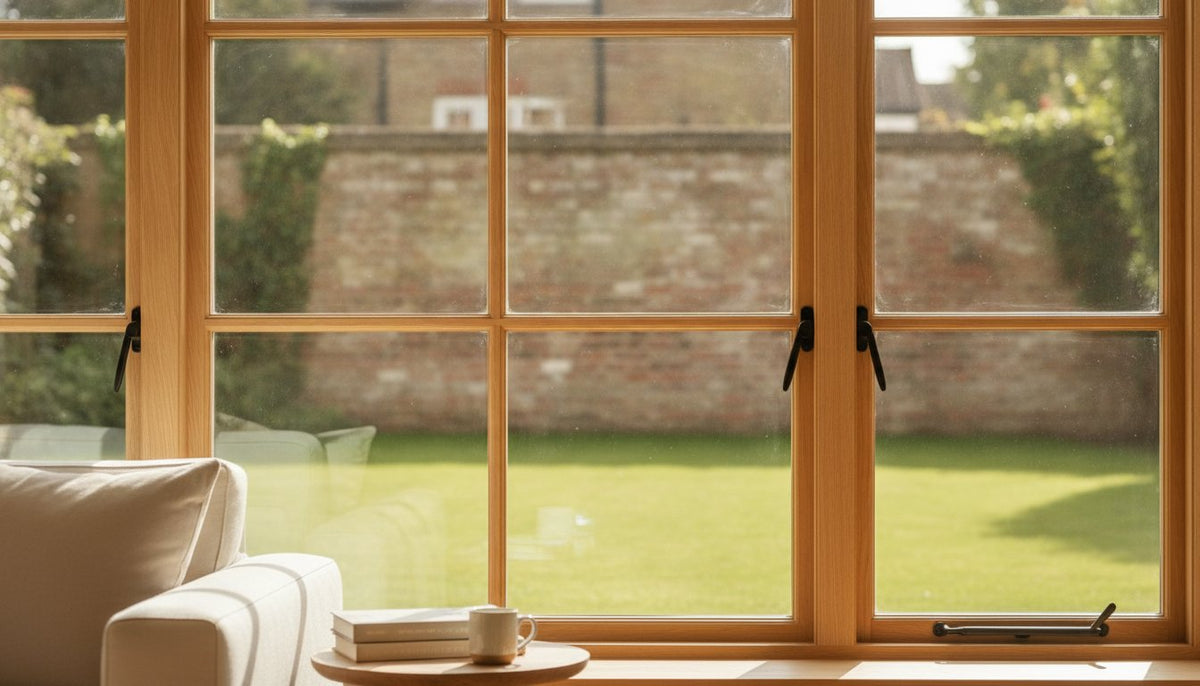
The most sustainable and cost-effective window for your home isn't the one with the lowest price tag today, but the one you'll never have to replace in your lifetime. It's perfectly natural to feel a sense of hesitation when considering timber windows. You might worry about the traditional bugbears of wood rot and high maintenance, or perhaps you're confused by the technical jargon surrounding different timber species. You aren't alone in wanting a home that stays warm and draught-free without the constant fear of rising energy bills.
This guide will show you exactly how high-quality timber windows can transform your property's thermal performance whilst providing a lifetime of durability. At Arborfield Joinery, we've spent over 70 years perfecting the balance between heritage craftsmanship and modern engineering. We'll walk you through the latest 2026 building regulations, the secrets to achieving a 60-year lifespan, and how to choose the right materials to ensure your home remains a beautiful, high-performance sanctuary. From understanding U-values to selecting the perfect finish, you'll discover why traditional joinery remains the gold standard for the discerning homeowner who values quality that lasts.
Key Takeaways
- Understand how modern engineering has transformed timber windows into high-performance, carbon-neutral solutions that meet strict 2026 thermal regulations.
- Discover why engineered timber is the essential choice for the British climate to prevent warping and ensure your windows operate smoothly for decades.
- Learn about the latest security standards and glazing options that protect your home whilst significantly reducing your annual energy expenditure.
- Explore how to customise sash or casement styles to perfectly complement your property's architectural heritage or modern aesthetic.
- Gain practical insights into the bespoke ordering process, from accurate measurements to understanding lead times for handcrafted joinery.
Why Choose Timber Windows for Your Home in 2026?
Choosing timber windows in 2026 is a decision that balances sophisticated engineering with an appreciation for natural beauty. While the history of window designs reveals that wood has been the trusted material for centuries, today's joinery is worlds apart from the draughty frames of the past. Modern versions are engineering marvels, designed to meet the rigorous demands of the 2026 Future Homes Standard. They offer a level of precision and performance that synthetic alternatives simply cannot replicate, providing a premium feel that enhances the living experience from the moment they are installed.
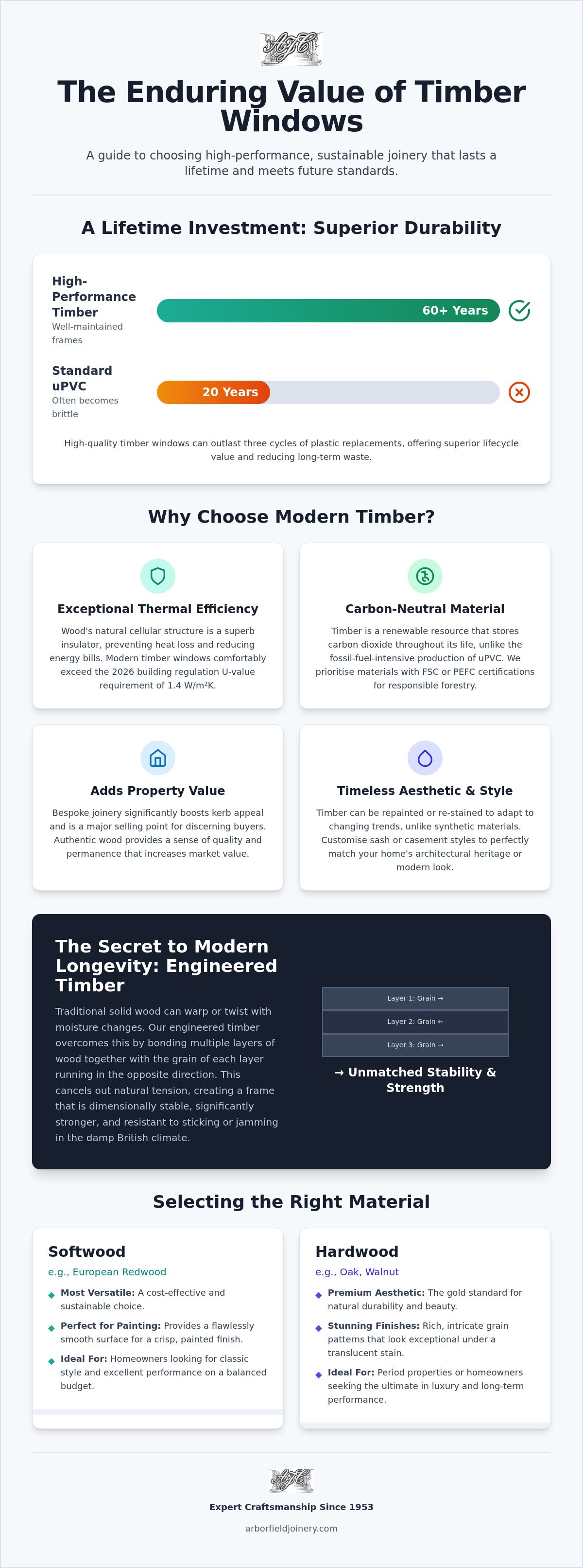
The environmental argument for wood is more compelling than ever. Timber is a carbon-neutral material that actually stores CO2 throughout its life. In contrast, the production of uPVC is energy-intensive and relies heavily on fossil fuels. Beyond the green credentials, the longevity of high-quality joinery offers superior lifecycle value. A well-maintained timber frame can last 60 years or more. This easily outlasts three cycles of plastic windows, which often become brittle or discoloured within two decades. There is also an inherent versatility to wood; you have the freedom to repolish or repaint your frames. This allows you to update your home's aesthetic as trends change without the massive cost of a full replacement.
The Thermal Efficiency Advantage
Wood's cellular structure acts as a natural insulator, containing millions of microscopic air pockets that effectively block heat transfer. This makes timber frames far more efficient at preventing thermal bridging than standard aluminium. Under current building regulations, replacement windows must achieve a U-value of 1.4 W/m²K or better. High-performance timber windows comfortably exceed these requirements, especially when paired with modern weather-stripping. These advanced seals eliminate the traditional draughts associated with older properties, ensuring your home remains a consistent, comfortable temperature throughout the British winter.
Adding Value to Your Property
Investing in bespoke joinery is a strategic move for any homeowner looking to increase their property's market value. Estate agents and discerning buyers frequently view authentic wood as a significant selling point, particularly in period homes or premium new builds. It's about more than just function; it's about kerb appeal. The character and warmth of timber define a facade, giving it a sense of permanence and quality that plastic can't mimic. At Arborfield Joinery, we've seen since 1953 how the right windows act as a long-term asset, protecting the architectural integrity of a building whilst proving to be a much wiser investment than a temporary, low-cost fix. This commitment to quality often extends to external boundaries, where suppliers like Romford Fencing Ltd offer timber solutions that match the durability and aesthetic of professional joinery.
Selecting the Right Wood: Softwood, Hardwood, and Engineered Timber
Choosing the right material is the most critical step in your home improvement journey. It isn't just about the final colour; it's about how the wood behaves when the British weather turns. We categorise timber into two main groups based on the tree's reproduction: softwoods from coniferous trees and hardwoods from deciduous ones. While hardwoods are naturally denser and more durable, modern engineering has closed the performance gap, allowing for high-quality timber windows that suit various budgets and styles. At Arborfield Joinery, we prioritise materials with FSC or PEFC certifications to ensure your project supports responsible forest management.
The secret to modern longevity lies in "engineered timber." Traditional solid wood frames can warp or twist as they absorb moisture; however, engineered sections are created by bonding multiple layers of wood together. By ensuring the grain of each layer runs in an opposing direction, we cancel out the natural tension in the fibres. This creates a frame that is significantly stronger and more stable than a single solid piece. It's the primary reason why contemporary windows don't stick or jam during a damp UK winter. If you'd like to feel the difference in quality, you can view over 120 joinery examples at our dedicated showroom.
Softwood vs Hardwood Windows
European Redwood is our most versatile softwood. It's cost-effective, sustainable, and provides a smooth surface that's perfect for a crisp, painted finish. For homeowners seeking a premium aesthetic, Oak and Walnut remain the gold standard. These hardwoods offer immense natural durability and a rich, intricate grain that looks stunning under a translucent stain. If you're balancing a budget, you might choose hardwood for prominent front-facing elevations whilst opting for high-quality softwood for the rest of the property.
The Rise of Accoya and Modified Timbers
Accoya is a genuine game-changer for the British homeowner. This is "acetylated" wood, a process that alters the wood's chemical structure so it no longer absorbs water. The result is a material that is virtually rot-proof and carries a 50-year above-ground guarantee. Because it's so dimensionally stable, timber windows made from Accoya won't swell or shrink. This stability has a secondary benefit; your paint or stain finish can last up to three times longer than it would on standard timber, drastically reducing your long-term maintenance schedule.
Technical Excellence: Glazing, Security, and Weatherproofing
While the choice of wood provides the structural foundation, the technical components of a window determine how it actually performs in your daily life. Modern timber windows are no longer just pieces of joinery; they are integrated systems designed to provide an impermeable barrier against the elements. In 2026, the industry has moved far beyond the draughty, single-glazed units of the last century. Every component, from the microscopic coatings on the glass to the precision-machined drip grooves in the sill, works in harmony to ensure your home remains warm, quiet, and secure.
Rainwater management is a critical aspect of heritage-style joinery that often goes unnoticed. High-quality frames feature "drip grooves" on the underside of sills and casements. These clever channels use surface tension to guide water away from the face of the timber and the delicate seals, preventing moisture from pooling. This attention to detail, combined with wood's natural ability to dampen sound vibrations, creates a serene indoor environment. Unlike hollow synthetic frames that can echo, the sheer density of timber naturally absorbs street noise, making it the superior choice for homes in bustling town centres.
High-Performance Glazing Options
To meet the 2026 Building Regulations (Part L) requirement of 1.4 W/m²K for replacements, high-performance glazing is essential. We utilise Low-E (low emissivity) coatings and argon gas filling between panes to reflect heat back into your rooms. If your home has large, south-facing apertures, solar control glass can prevent "greenhouse" overheating during the summer months. For those living near busy roads or flight paths, acoustic laminates offer an extra layer of protection, significantly reducing decibel levels compared to standard double glazing.
Modern Security Standards
Security is a primary concern for any homeowner. Our windows are built to meet or exceed PAS 24:2022 standards, which is the current benchmark for enhanced security performance in the UK. This involves a combination of robust multi-point locking systems and toughened safety glass. We also employ internal glazing beads as a standard feature. By securing the glass from the inside, we ensure that intruders cannot simply remove the panes from the exterior of the property. When selecting your ironmongery, look for handles and stays that offer both aesthetic charm and the mechanical strength to support these advanced locking mechanisms.
Design and Style: Customising Your Timber Windows
The aesthetic choices you make for your timber windows define the architectural soul of your property. It’s about finding the perfect harmony between the building’s heritage and your personal taste. Whether you're restoring a Victorian terrace or finishing a bespoke new build, the opening mechanism is your first major decision. Traditional sliding sash windows provide that iconic vertical movement essential for period accuracy, while casement windows offer a versatile, side-hung alternative that suits almost any British home style. It isn't just about how they look; it's about how they interact with your living space every day.
Character is often found in the finer details. Glazing bars and leaded lights allow you to replicate historic patterns without sacrificing the 21st-century thermal efficiency we discussed earlier. By using internal spacers and external 'plant-on' bars, we can create the illusion of multiple small panes whilst maintaining a single, high-performance glazing unit. This design flexibility ensures your home looks authentic from the kerb but remains incredibly warm inside. To achieve a truly unified exterior, many homeowners choose to match their window frames with high-quality external oak doors, creating a cohesive visual narrative across the entire facade.
Traditional vs Contemporary Profiles
Modern joinery techniques allow us to offer profiles that cater to every architectural era. Flush casements are increasingly popular for their sleek, level finish where the window sits flat within the frame. This creates a clean line that works beautifully in contemporary renovations. For those with Georgian or Victorian properties, we provide sliding sash windows equipped with hidden spring balances. These offer the traditional look without the maintenance of old-fashioned weights and pulleys. We can also manufacture bespoke shapes, including arched tops and complex bay configurations, to ensure every opening is perfectly catered for.
Factory Finishes and Colour Palettes
The final finish is what protects your investment. We use advanced micro-porous paints that allow the wood to breathe naturally whilst blocking liquid moisture. This prevents the peeling and cracking associated with older, oil-based glosses. While heritage whites and creams remain timeless, we’ve seen a significant rise in modern anthracite greys and earthy greens. If you prefer to showcase the timber's natural character, translucent stains are an excellent choice, particularly when coordinated with internal oak doors for a consistent feel throughout your living space. We also offer dual-colour options, allowing you to meet strict conservation area rules on the outside whilst matching your interior decor on the inside.
If you're ready to explore these styles in person, you can browse our full range of styles at our showroom to see how bespoke joinery can elevate your project.
Buying and Maintaining Your Timber Windows
Investing in timber windows is a commitment to quality that spans generations. However, the success of your project begins with precision. When measuring your openings, always record the width and height in at least three different places. Brickwork is rarely perfectly square, so taking the smallest measurement ensures your new frames will fit without compromising the structural integrity of the aperture. It’s also wise to measure the diagonals; if they differ significantly, your opening is out of square and may require additional trim or adjustment during installation. Accurate measurements are the foundation of a draught-free home.
Understanding lead times is equally important for your project timeline. Whilst stock items can be dispatched relatively quickly, bespoke joinery is a handcrafted process that typically takes several weeks. This patience is rewarded with a product that fits your home’s character perfectly and meets the specific thermal requirements of your property. Modern timber isn’t the high-maintenance material it once was. Thanks to the advanced factory finishes we've discussed, the days of stripping and sanding every few years are long gone. A simple, proactive care routine is all that's required to keep your windows looking as fresh as the day they were installed.
The Simple Maintenance Schedule
We recommend a quick annual inspection to ensure the protective paint film remains intact. Focus your attention on the joints and the lower sections of the frame where water naturally sheds. If you spot any minor chips or scratches from ladders or garden tools, a small touch-up will prevent moisture from reaching the wood fibres. When it comes to cleaning, avoid harsh chemical sprays or abrasive creams. Mild soapy water and a soft cloth are much better for the finish. For a deeper refresh, modern "wipe-on" renovation products can be applied every few years to nourish the coating and restore its original lustre without any need for sanding.
Ordering from Arborfield Joinery
Choosing a heritage supplier like Arborfield Joinery brings the peace of mind that only seven decades of experience can provide. Since 1953, our family-run business has remained a steady hand for UK homeowners, acting as knowledgeable consultants through every stage of the purchase. We understand the logistics of home improvement, which is why we offer national UK shipping on orders over £900, ensuring your joinery arrives safely and on time. We encourage you to visit our showroom to see our craftsmanship first-hand. It’s the perfect opportunity to see how our timber windows coordinate with our bespoke stairs and doors, helping you curate a truly cohesive and high-performance living space.
Investing in Your Home’s Future
Selecting high-quality timber windows is more than a simple aesthetic choice; it’s a strategic investment in your property’s thermal efficiency and long-term value. We’ve explored how modern engineered timber and advanced glazing systems have redefined what’s possible, offering a 60-year lifespan that far outstrips synthetic alternatives. By choosing materials like Accoya or European Redwood, you ensure your home remains draught-free and beautiful for decades to come.
At Arborfield Joinery, we’ve been perfecting our craft as a family-run business since 1953. Our expert UK craftsmanship ensures every piece of joinery meets the highest standards of precision and style. We even offer free mainland shipping on orders over £900 to make your home improvement journey as smooth as possible. We pride ourselves on being a steady hand for our customers, valuing long-term relationships and quality above all else.
Explore our range of premium timber windows and joinery today and take the first step towards a warmer, more elegant home. Your heritage-quality renovation is within reach.
Frequently Asked Questions
How long do modern timber windows actually last?
Modern timber windows can last 60 years or more with basic care. This longevity is nearly double the typical lifespan of uPVC alternatives. By choosing durable species like Accoya or high-quality European Redwood, you're investing in a product that serves your home for generations. This long-term durability makes wood a far more sustainable and cost-effective choice when viewed over the full lifecycle of the building.
Do timber windows require a lot of maintenance?
Modern joinery is remarkably low-maintenance thanks to advanced factory coatings. You won't need to strip or sand your frames every few years. Instead, a simple annual wash with mild soapy water and a quick inspection of the seals is usually sufficient. Most high-quality finishes only require a fresh coat of paint or stain every 8 to 10 years to maintain their protective barrier and keep them looking pristine.
Are timber windows more energy-efficient than uPVC?
Wood is a natural insulator with a cellular structure that effectively blocks heat transfer. When combined with modern double or triple glazing, timber frames provide exceptional thermal performance. They naturally outperform standard aluminium and plastic in preventing thermal bridging. Because timber doesn't conduct cold, it helps eliminate internal condensation and keeps your home's energy bills consistently lower throughout the year.
Can I install timber windows in a conservation area?
Timber is often the only material permitted for properties in conservation areas or listed buildings. Local planning authorities typically require replacements to match the original architectural style, including specific glazing bar details and opening mechanisms. We recommend consulting your local planning officer before starting work. In many cases, bespoke timber windows are the ideal solution for maintaining historical integrity whilst upgrading your home’s security and warmth.
What is the difference between engineered timber and solid wood?
Engineered timber is created by bonding multiple layers of wood together. This process cancels out the natural tension that causes solid wood to warp or twist over time. The result is a much more stable frame that won't stick or jam during seasonal changes. While solid wood is beautiful, engineered sections provide the structural reliability needed to support modern, heavy high-performance glazing units without compromising the window's operation.
How do I prevent my wooden windows from rotting?
Prevention starts with choosing the right material and design. Using modified timbers like Accoya, which doesn't absorb water, virtually eliminates the risk of rot. From a design perspective, ensuring your frames have effective weather-stripping and drip grooves allows rainwater to shed away from the wood. Maintaining the paint film is also vital; a simple touch-up of any minor chips prevents moisture from penetrating the wood fibres and causing damage.
Are timber windows more expensive than aluminium?
The initial investment for timber windows is often comparable to high-end aluminium systems. However, wood offers better long-term value because it is easier to repair and can be repainted to suit changing tastes. Aluminium frames can be difficult to fix if scratched or dented. When you consider that timber can last over 60 years, the cost per year of service is frequently lower than almost any other window material.
Can I get timber windows in custom colours?
You have total creative freedom with wood. We can finish your frames in almost any RAL colour, ranging from traditional heritage creams to contemporary anthracite greys. Dual-colour options are also popular, allowing you to have a bold colour on the exterior to suit your home's facade whilst keeping a neutral white or natural stain on the interior. This flexibility ensures your new joinery perfectly complements your existing decor and architectural style.
Share:
How to Measure Non-Standard Window Openings
Woodplas Alternatives for Bespoke Joinery