
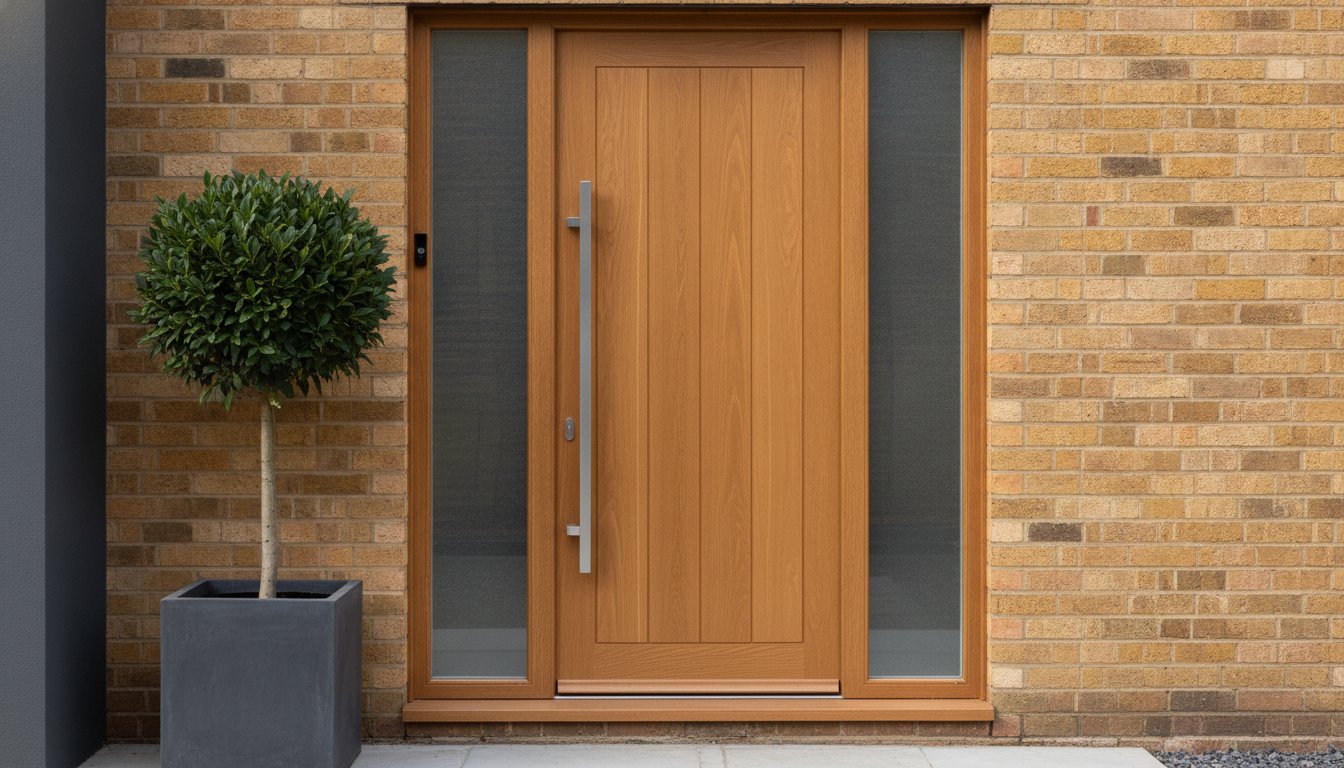
Did you know that properties built to Secured by Design standards experience up to a 53% lower rate of burglary? It is a powerful reminder that your home's first line of defence should never be a compromise. You likely appreciate the tactile warmth and kerb appeal that only wooden front doors can provide, yet you might hesitate because of the British weather. It's natural to worry about timber warping in the rain or failing to keep the heat in during a damp January.
We understand those concerns because we've been helping homeowners master this balance since 1953. You don't have to choose between a beautiful, traditional aesthetic and modern peace of mind. This guide promises to clarify the confusion between solid and engineered wood, ensuring your new entrance adds genuine value to your property whilst lowering energy bills through superior insulation.
We will walk you through the essential 2026 building regulations, including the 1.4 W/m²K U-value requirements for replacement doors and the latest PAS 24 security standards. From understanding thermal efficiency to choosing finishes that resist the elements, you'll gain the expertise needed to curate an entrance that's as durable as it is elegant.
Key Takeaways
- Learn why natural timber remains the gold standard for kerb appeal and how a well-chosen entrance can significantly boost your property's market value.
- Understand the differences between solid oak, hardwood, and engineered timber to ensure your door offers maximum resistance to warping and the British weather.
- Discover how modern wooden front doors combine heritage aesthetics with 2026 security standards, including multi-point locking and toughened safety glass.
- Explore a range of styles from traditional cottage designs to contemporary urban looks, ensuring a perfect match for your home's unique character.
- Gain insights into the benefits of experiencing timber quality firsthand in a showroom and how to arrange reliable national delivery for your project.
Why Wooden Front Doors Remain the Premium Choice for UK Homes
Choosing a front door is a decision that defines the character of your home. Whilst synthetic materials like uPVC or composite offer convenience, they often lack the soul and architectural integrity found in natural timber. High-quality wooden front doors provide an incomparable sensory experience, from the intricate patterns of the grain to the solid, reassuring sound they make when they close. This isn't just about a functional barrier; it's about making a statement that respects the long-standing heritage of British joinery.
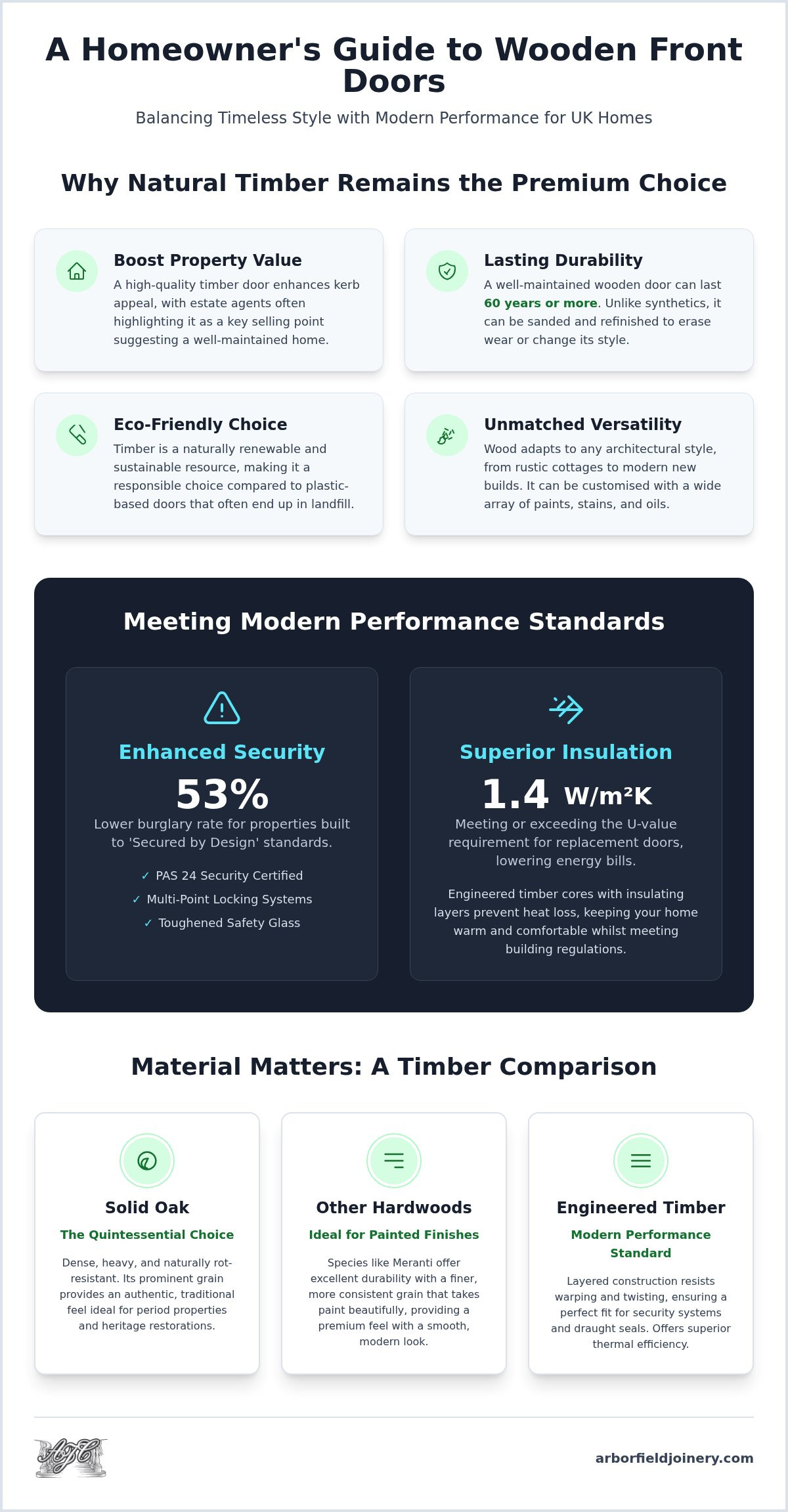
Timber is a naturally renewable resource, making it a responsible choice for the environmentally conscious homeowner. Unlike plastic-based doors that eventually end up in landfill, a well-maintained timber door can easily last sixty years or more. This longevity is a result of advanced Door construction and materials, where modern techniques prevent the structural issues of the past. If a wooden door gets scratched or you simply fancy a change of style, you can sand it down and refinish it. You don't have that luxury with a composite or plastic alternative.
The Aesthetic Advantage: From Traditional to Contemporary
Timber is incredibly versatile. Whether you own a Victorian terrace, a rustic cottage, or a minimalist new build, wood adapts to its surroundings with ease. You have total control over the final look through a wide array of paints, stains, and oils. This customisation allows you to highlight the natural character of the wood or create a bold, modern focal point. The sheer weight and substance of timber feel premium in a way that hollow-sounding synthetic materials simply cannot replicate. It's a tactile quality you notice every time you turn the key.
An Investment in Property Value
First impressions are everything in property valuation. Estate agents often highlight high-end joinery as a key selling point because it suggests the rest of the house has been maintained with similar care. For those living in period properties or conservation areas, wooden front doors are often a legal requirement to preserve the local character. Investing in quality timber is a proven way to boost kerb appeal and potentially increase the final sale price of your home. It's a choice that pays dividends in both daily enjoyment and long-term financial return for your most significant asset.
Material Selection: Comparing Oak, Hardwood, and Engineered Timber
Selecting the right material for your entrance is a balance of physics and personal taste. Whilst aesthetics draw you in, it's the timber's cellular structure that keeps the door functioning through decades of British rain. High-quality wooden front doors rely on species that can handle moisture fluctuations without compromising their structural integrity.
Solid Oak remains the quintessential choice for many UK homeowners. It's dense, heavy, and naturally rich in tannins, which offer a high degree of rot resistance. If you're restoring a period property, nothing replicates the authentic weight and grain of oak. However, other hardwoods like Meranti or Walnut offer excellent durability and a finer grain that takes paint beautifully. These alternatives provide the same premium feel whilst offering a different aesthetic character for your home's exterior.
Engineered timber has become the modern standard for high-performance joinery. By layering wood sections with the grain running in opposing directions, manufacturers create a core that resists the natural urge to twist or warp. This stability is vital for meeting UK building regulations for security, as a warped door can leave gaps that compromise multi-point locking systems and draught seals.
Solid vs. Engineered Timber: Which is Best?
The choice often depends on your home's specific needs. Engineered cores are typically more thermally efficient because they incorporate layers that slow heat transfer. This helps homeowners meet the 1.4 W/m²K U-value requirement for replacement doors. Solid wood is often preferred for heritage restorations where a continuous grain is essential, but for most modern applications, the stability of engineered timber is superior.
Choosing the Right Wood Species for Your Climate
The UK's weather varies from salty coastal winds to humid inland valleys. If your home is in an exposed area, dense hardwoods are your best ally. Oak is naturally resilient, but it does "breathe" more than some alternatives. Consider the timber grade; "Prime" or "Select" grades feature fewer knots, which is vital for a smooth finish if you plan to use a translucent stain.
If you're unsure which species suits your home's orientation, you can view our curated range of wooden front doors to see how different timbers look in person and feel the quality of the craftsmanship for yourself.
Design and Style: Finding the Right Look for Your Entrance
The design of your entrance serves as the architectural handshake of your property. It’s the first detail guests touch and the last thing they see when they leave. Whilst material choice provides the foundation, the style of your wooden front doors determines how well they harmonise with your home's era. A mismatched door can feel like a jarring footnote on an otherwise beautiful facade, so choosing a design that respects the original proportions of your building is essential.
Whether you’re drawn to the geometric symmetry of a Georgian 6-panel door or the minimalist appeal of a contemporary flush design, the choice often comes down to the balance of light and privacy. Glazed panels invite natural light into dark hallways, but they require careful consideration of glass type to maintain seclusion. The external door frame also plays a vital role; it should be treated as part of the furniture, providing a seamless transition between the masonry and the timber itself.
Heritage Styles for Period Properties
Authenticity is the priority for Victorian, Edwardian, or Georgian homes. These eras often favour deeper mouldings and raised panels that create a play of light and shadow across the timber surface. For rural dwellings or barn conversions, a traditional ledge and brace door offers a rugged, timeless aesthetic that feels rooted in the countryside. Pairing these with period-accurate ironmongery, such as hand-forged black sandum handles or brass rim locks, ensures the heritage feel remains intact from the first glance to the final click of the latch.
Modern and Urban Door Trends
In city environments and new builds, the "Urban Door" has seen a significant rise in popularity. These designs often feature horizontal or vertical grain directions and sleek, recessed glazing. Vertical glass panels are particularly effective at creating a sense of height in smaller entryways. To achieve a cohesive look for your home's exterior, many homeowners now pair their contemporary wooden front doors with matching timber windows. This creates a unified visual language that suggests a bespoke, architect-led approach to the entire renovation.
Even the most minimalist modern designs must adhere to strict UK security standards for new doors. This ensures that whilst your entrance looks effortless and sleek, it remains a formidable barrier. By choosing high-quality hardware and toughened safety glass, you can enjoy the clean lines of modern design without compromising on the safety of your household.
Practical Considerations: Security, Efficiency, and Maintenance
Many homeowners worry that choosing timber means sacrificing security or spending every weekend with a paintbrush. This is a misconception. Modern wooden front doors are engineered to be as robust as any synthetic alternative. By combining the natural density of hardwood with advanced hardware, you can create an entrance that protects your home whilst maintaining its historic soul. The secret lies in the integration of technology that didn't exist a generation ago.
Thermal efficiency is another area where timber excels. Because wood is a natural insulator, it doesn't conduct cold in the way metal-framed doors can. To meet 2026 building regulations, replacement doors must achieve a maximum U-value of 1.4 W/m²K. We achieve this through precision-engineered weather stripping and high-performance draught-proofing that seals the gap between the door and the frame. This ensures your hallway remains warm during the harshest British winters, directly contributing to lower energy bills.
Security and Hardware Essentials
Security is paramount. Properties built to Secured by Design standards experience a 53% lower rate of burglary, which is why we prioritise hardware that meets PAS 24:2022 requirements. Your door should feature a multi-point locking system with at least three locking points and a cylinder protected to a TS007 three-star rating. High-quality mortice locks and deadbolts provide a physical and psychological barrier against intrusion. When selecting your handles and letterplates, look for PVD-coated finishes; these are specifically designed to resist corrosion in the damp UK climate.
A Simple Maintenance Checklist for Timber
Modern finishes have drastically reduced the upkeep required for timber. A quick annual inspection is usually all that is needed to keep your investment in top condition. Look for the following signs during your check:
- Surface Cracks: Small hairline fractures in the paint or stain that could allow moisture to seep in.
- Peeling or Flaking: Areas where the UV protection has broken down, leaving the raw timber exposed.
- Swelling: If the door starts to stick in the frame, it may indicate that the bottom edge hasn't been properly sealed.
To check the integrity of your door's finish, perform a "tap test" by tapping the surface with a coin; a sharp, bright "clack" indicates a healthy, hard finish, whilst a dull thud suggests moisture may have begun to penetrate the fibres. Using high-quality micro-porous oils or stains allows the wood to breathe whilst repelling liquid water. This simple routine ensures your door remains a beautiful asset for decades.
If you want to see how these security features and finishes look in person, visit our showroom to explore our range of high-performance wooden front doors and speak with our expert consultants.
Ordering and Delivery: The Arborfield Joinery Experience
Selecting wooden front doors is a significant investment, and the journey shouldn't end once you've picked a style. Many retailers treat these as standalone units, but we believe your entrance is the starting point for your home's entire narrative. Since 1953, our family-run business has focused on providing a cohesive experience that ensures your external joinery complements your interior spaces. For instance, pairing your entrance with internal oak doors creates a seamless transition that elevates the entire property's aesthetic and value.
We've spent decades refining our curated range to ensure every piece meets our strict standards for craftsmanship and durability. Whether you're looking for a single statement piece or a full suite of timber windows and doors, our goal is to act as your "Trustworthy Veteran" in the joinery industry. We value long-term relationships over quick transactions, which is why we prioritise transparency throughout the ordering process.
Expert Advice and Personalised Service
With over 70 years of expertise, we've seen the industry evolve from simple timber slabs to the high-performance systems required by modern building regulations. Our consultants don't just sell products; they help you navigate the complex technical specifications we've discussed, such as U-values and security ratings. This consultative approach is equally valuable for retail customers looking for their dream home and trade professionals managing large-scale renovations. We're here to ensure the technical details don't overwhelm your creative vision.
Nationwide Shipping and Showroom Access
Whilst digital catalogues are convenient, nothing replaces the tactile experience of seeing timber in person. Our showroom features over 120 doors, allowing you to feel the weight of the oak and inspect the precision of the joinery before making a commitment. It's a space designed for inspiration, where you can compare different species and hardware finishes under one roof. Seeing the grain patterns and feeling the finish helps you curate a living space that feels truly bespoke.
Once you've made your selection, our national delivery service ensures your wooden front doors arrive in pristine condition. We understand that timber is a heavy, premium material that requires specialised handling during transit. To support your project budget, we offer free mainland shipping on all orders over £900. Every item is securely packaged and tracked, giving you peace of mind that your new entrance will arrive ready for installation without the stress of logistical hurdles.
Transform Your Home with Timeless Timber Craftsmanship
Investing in wooden front doors is about more than just security; it's about choosing a legacy piece for your property. We have explored how modern engineered timber provides the stability needed for the British climate whilst meeting 2026 thermal efficiency standards. By selecting a design that respects your home’s architectural heritage, you create a lasting first impression that adds genuine value to your asset.
At Arborfield Joinery, we've been a family-run specialist since 1953. We invite you to visit our showroom to see over 120 doors in person, allowing you to experience the quality of the materials firsthand. Whether you're seeking a traditional cottage style or a sleek urban aesthetic, our consultants are ready to guide you through every technical specification and design choice. You can also take advantage of our free mainland shipping on all orders over £900 to ensure your premium joinery arrives safely at your doorstep.
Browse our full range of premium wooden front doors today and take the first step toward a more beautiful, secure home. We look forward to helping you curate your perfect entrance with the care and expertise your project deserves.
Frequently Asked Questions
Are wooden front doors as secure as composite doors?
Timber entrances offer exceptional security when paired with modern multi-point locking systems and toughened safety glass. While composite doors are often marketed for their strength, the natural density of a hardwood door provides a formidable physical barrier. Ensuring your hardware meets the latest PAS 24 standards provides a level of protection that rivals any synthetic alternative on the market today.
How often do I need to paint or stain my wooden front door?
A fresh coat of paint or stain is typically required every few years, though the exact timing depends on the level of shelter your entrance has. Doors exposed to harsh south-facing sunlight or driving rain will require more frequent attention than those tucked under a porch. Regularly checking the finish for any signs of dullness or micro-cracks will help you maintain the timber's integrity before any moisture can penetrate the surface.
What is the best type of wood for an external front door?
Oak is widely regarded as the premier choice due to its incredible durability and classic grain patterns. Other dense hardwoods like Meranti or Walnut also offer excellent performance and a distinct aesthetic for contemporary homes. For those prioritising stability and thermal efficiency, engineered timber provides a high-performance alternative that resists the natural movement often found in solid wood slabs.
Do wooden front doors warp in the British rain?
High-quality wooden front doors are designed to withstand the UK's damp climate without twisting or warping. This is achieved through engineered construction, where multiple layers of timber are bonded with grains running in different directions to cancel out natural movement. When combined with a professional factory finish that seals the wood on all sides, the door remains stable regardless of the humidity levels outside.
Can I install a wooden front door myself?
While a competent DIY enthusiast can hang a door, professional installation is recommended to ensure the frame is perfectly square and the seals are airtight. Accurate fitting is essential for the smooth operation of multi-point locks and to prevent draughts that could compromise your home's thermal performance. Professional fitters also ensure that the installation complies with current building control requirements for safety and accessibility.
Is an engineered timber door better than a solid oak door?
The choice usually depends on whether you prioritise modern performance or traditional authenticity. Engineered timber is generally more stable and offers better insulation, making it easier to meet strict energy efficiency targets. Solid oak is often preferred for heritage projects where a single, continuous piece of timber is required to match original features. Both options provide the premium feel and longevity that homeowners expect from high-end joinery.
How do I measure for a new external door and frame?
To get an accurate size, measure the width and height of the brickwork opening in three different places and use the smallest dimensions. It is also important to measure the diagonals to ensure the opening is square. These measurements allow for a small fitting gap around the frame, which is then sealed to ensure a weather-tight finish. Accurate sizing is the first step in ensuring your new entrance operates flawlessly for years.
What maintenance is required for glazed wooden doors?
Glazed wooden front doors require a simple check of the seals around the glass units once a year to ensure no water is pooling in the rebates. Keeping the glass clean and inspecting the timber beads for any signs of movement will help preserve the door's lifespan. Most modern glazed units feature safety glass with a permanent British Standards stamp, which should be kept clear of paint or heavy stains during any maintenance work.
Share:
Buy Custom Timber Doors Online: A 2026 Guide
How to Measure Non-Standard Window Openings