
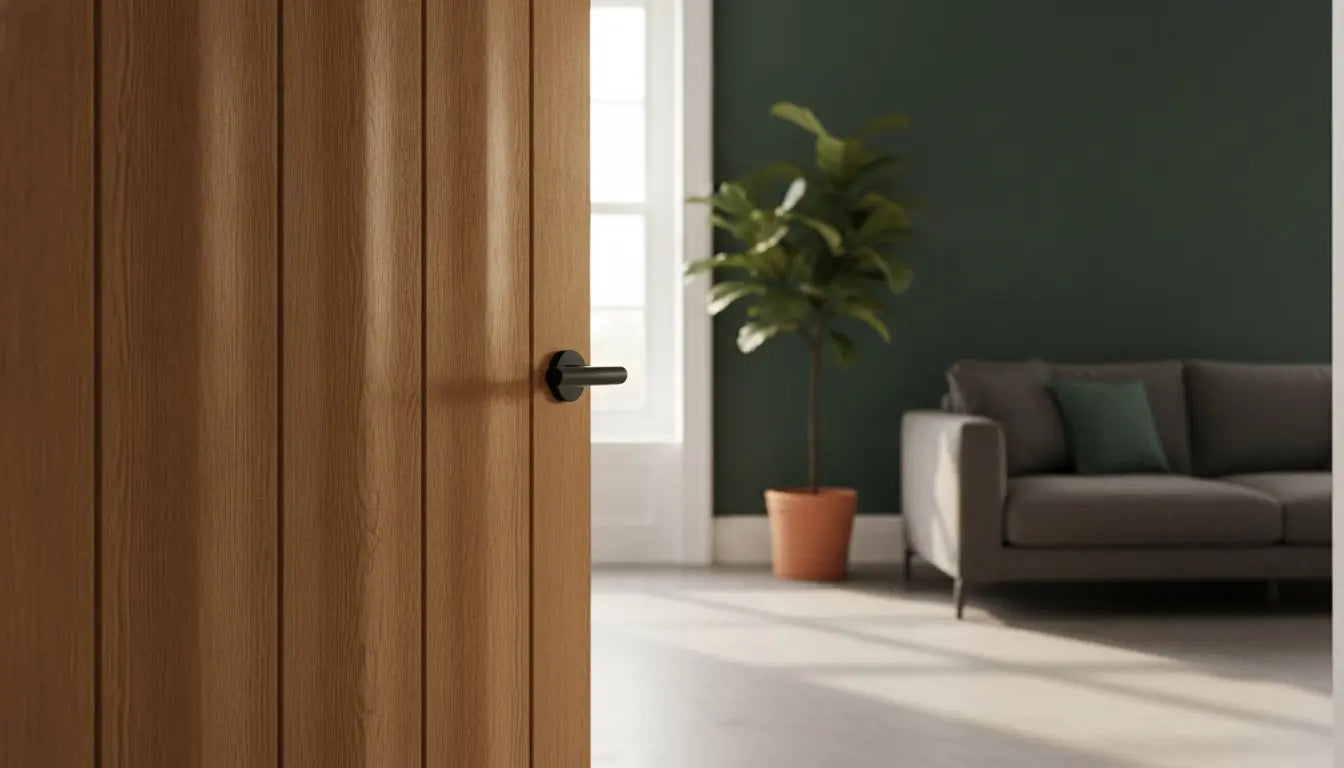
Why do two internal oak doors that look identical in a brochure often carry price tags that are hundreds of pounds apart? It's a common source of frustration for homeowners who want a premium finish but don't want to overpay for invisible features. You likely want your home to feel warm and inviting, yet you're probably worried about whether your new doors will warp in a centrally heated room or if they can be trimmed enough to fit those slightly uneven older frames.
We believe that choosing the right joinery is about more than just a quick aesthetic fix; it's about investing in architectural furniture that stands the test of time. This guide will show you how to select, install, and maintain the perfect internal oak doors to enhance your home’s character and value. We will explain the real differences behind those varying price points, clarify the technical limits of trimming, and provide the expert advice you need to ensure your investment remains beautiful and functional for decades to come.
Key Takeaways
- Understand the structural differences between solid, veneer, and engineered cores to choose the most stable option for centrally heated environments.
- Learn how to select internal oak doors that complement your home's architectural language, from traditional ledge and brace to contemporary Mexicano designs.
- Master the correct way to measure irregular frames and understand trimming "lippings" to ensure a perfect fit without compromising the door’s integrity.
- Identify when fire-rated doors are a legal requirement and how to maintain a consistent aesthetic while meeting essential safety regulations.
- Discover why visiting a specialist joinery showroom offers a superior experience for evaluating grain quality and weight compared to "big box" retailers.
The Enduring Appeal of Internal Oak Doors for British Interiors
Internal oak doors are often regarded as the gold standard in British residential design. Their enduring popularity isn't merely a fleeting trend; it's a reflection of the material's inherent strength and the intricate grain patterns that make every installation unique. When you run your hand across a well-finished oak surface, you feel a tactile connection to nature that synthetic materials or cheaper alternatives simply cannot replicate. This premium joinery choice represents a marriage of functional durability and undeniable visual character.
Beyond the aesthetic appeal, there's a psychological weight to oak. It carries an air of prestige that instantly elevates a hallway or living space. Guests notice the solid, reassuring "thud" of a closing door, which signals quality and stability throughout the home. This density serves a practical purpose too; the dense cellular structure of oak provides superior natural sound insulation between rooms. It creates a quieter, more private home environment by dampening the noise of television sets, home offices, or kitchen activity. From a financial perspective, high-quality joinery offers a reliable return on investment. Much like a premium kitchen, selecting internal oak doors provides a tangible sense of "internal kerb appeal" for potential buyers, suggesting a property that's been maintained with an eye for quality.
A Heritage of Craftsmanship Since 1953
The evolution of oak joinery in the UK has transformed significantly over the last seven decades. A foundational knowledge of understanding joinery helps explain why these doors remain so sought after. Since 1953, we've seen a shift where traditional aesthetics are preserved whilst manufacturing techniques have vastly improved. We focus on "joinery-grade" timber, which is carefully selected for its structural integrity and minimal defects. This contrasts sharply with mass-produced alternatives that often lack the soul and longevity of a door crafted with heritage techniques in mind.
Why Oak Outperforms Other Timber Species
Oak sits high on the Janka hardness scale, significantly outperforming softer woods like pine or hemlock. This makes internal oak doors far more resistant to the daily knocks and scrapes of a busy family home. One of the most distinctive features of this wood is the presence of medullary rays. These are the cellular structures that transport nutrients through the tree, appearing as beautiful, silvery, ribbon-like patterns in the grain. To ensure these natural wonders are available for future generations, modern sourcing relies on FSC or PEFC certified forests, ensuring your home improvement choices remain environmentally responsible.
The journey from the forest to your home involves more than just sourcing; you can find out more about the specialist sawmilling and vacuum kiln drying processes that ensure premium timber is perfectly conditioned for long-term stability.
Understanding Oak Door Construction: Solid, Veneer, and Engineered Cores
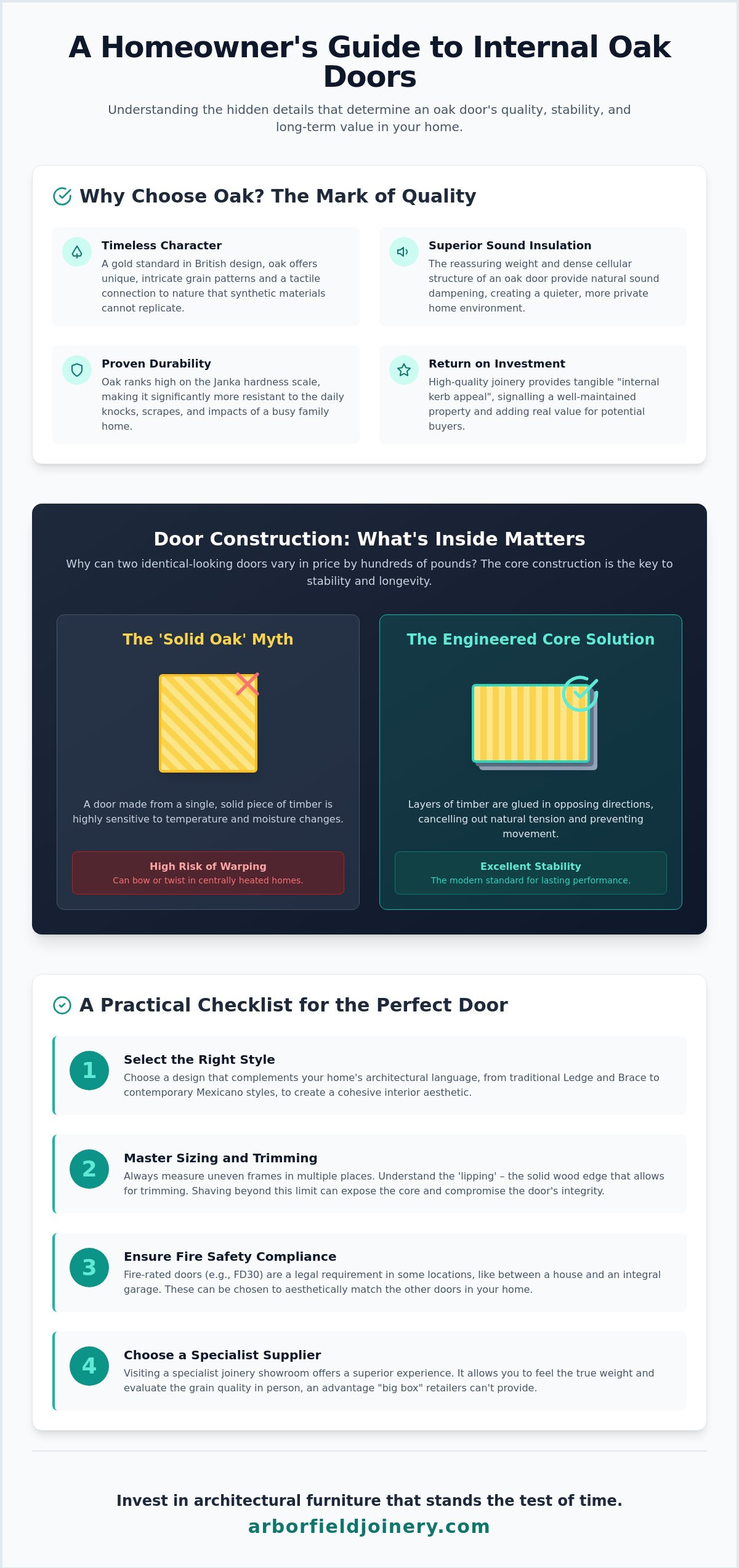
Why do some doors cost £80 while others reach £400? The answer lies beneath the surface. Whilst they might look identical in a showroom, the internal architecture determines how the door will perform over the next twenty years. You'll generally find three types of construction on the UK market: solid timber, veneer-on-composite, and the industry-standard engineered core. Each has its place, but choosing the wrong one for your specific room environment can lead to sticking, bowing, or unsightly gaps.
The "Solid Oak" myth suggests that a door made from a single piece of timber is always superior. In reality, a 100% solid door is highly sensitive to moisture and temperature. In a modern UK home with constant central heating, a solid slab can bow or twist as it dries out. This is where modern engineering provides a more reliable solution for internal oak doors. We use high-quality veneers, often several millimetres thick, to wrap these cores. These veneers are sliced from the finest logs and applied using heat-activated adhesives. This creates a seamless finish that's indistinguishable from a solid piece of wood but offers far better longevity in a typical domestic environment.
The Science of the Engineered Oak Core
Modern engineered cores use layers of timber or high-density particleboard glued in opposing directions. This cross-lamination cancels out the natural tension in the wood, meaning the door won't warp when you switch the radiators on. It's a sophisticated way to manage the properties of white oak whilst maintaining a premium aesthetic. An engineered core provides the structural stability required to withstand the variable climates of a centrally heated British home.
Solid Oak Doors: The Traditionalist’s Choice
There are still times when 100% solid timber is the right call. If you're restoring a period cottage or an unheated heritage building, solid oak offers an authenticity that's hard to match. These doors possess a unique weight and a resonant "thud" that only full-thickness timber can provide. However, they require consistent maintenance; you'll need to ensure all six sides are perfectly sealed to prevent the wood from absorbing atmospheric moisture. You must be prepared to re-oil or re-wax the timber if the environment becomes too dry or too damp. If you aren't sure which build suits your property, you can view our full range of oak doors to compare the specifications of each style.
Selecting the Right Style: From Traditional Ledge and Brace to Modern Mexicano
How do you choose a door that doesn't just fill a gap, but actually completes a room? The style of your internal oak doors acts as the architectural language of your home. It's often the first thing people see when entering a hallway, setting the tone for the entire interior. Consistency is vital; mixing a 1930s style on one side of a landing with a minimalist Shaker door on the other creates visual noise that can make a home feel disjointed. For darker British hallways, glazed oak doors are a superb way to organise light flow, pulling natural brightness from sun-drenched rooms into windowless corridors. We've also seen a significant rise in "Urban" or industrial styles, where traditional oak is paired with bold black feature beads to create a striking, high-contrast look that bridges the gap between heritage material and modern design.
Period-Appropriate Choices: Victorian to 1930s
If you're renovating a Victorian or Edwardian terrace, four-panel and six-panel designs are the essential staples. These styles respect the proportions of high ceilings and ornate skirting boards. For those working on inter-war properties, the 1930s "DX" style remains a favourite, featuring a distinctive three-panel bottom section with a large top panel. Using oak in these settings adds a sense of "weight" and permanence that's often lost when original timber is stripped back. When planning these upgrades, remember to check UK fire safety regulations if your project involves loft conversions or doors leading to integral garages, as you may require matching FD30 rated versions.
Contemporary Classics: Shaker and Mexicano
Modern interiors often benefit from the clean, square edges of Shaker-style internal oak doors. Their minimalist recessed panels suit homes where the focus is on simplicity and light. If you're looking for more texture, Mexicano and Cottage styles are excellent choices. These designs use vertical lines to create a sense of height, which is particularly effective in new-build homes with standard ceiling heights. To complete the look, pair these modern oak styles with contemporary hardware. Matt black handles offer a bold industrial edge, whilst satin nickel provides a softer, more sophisticated finish that complements the natural warmth of the wood grain.
Essential Practicalities: Sizing, Trimming, and Fire Safety Compliance
Even the most exquisite door will fail to impress if it sticks against the carpet or leaves significant gaps at the frame. Before you commit to a purchase, you must ensure your measurements are as precise as the joinery itself. In many older British properties, door frames are rarely perfectly square. We recommend measuring the width at three distinct points: the top, middle, and bottom. Use the largest of these three measurements to determine which standard door size is the best starting point. Similarly, measure the height on both the left and right sides. If your frames are significantly out of alignment or warped beyond a few millimetres, a "door and frame kit" might be a wiser investment than a standalone leaf. These kits allow you to replace the entire aperture, ensuring a plumb fit from the outset.
Every quality door features a "lipping", which is a solid timber edge that allows for minor adjustments during the hanging process. Trimming internal oak doors beyond the manufacturer’s specified limits is a common mistake that can lead to structural failure. If you cut too deep, you risk exposing the engineered core we discussed earlier. Once the core is exposed, the door loses its moisture resistance and the edge will look unfinished, regardless of how much oil you apply. If your frame is an unusual size, bespoke doors are a far better solution than over-trimming a standard leaf and compromising its integrity.
The Trimming Rulebook: How Much is Too Much?
As a general guideline, standard UK oak doors typically allow for 6mm to 10mm of trimming per side. This is usually sufficient to account for slightly "out of true" frames in most homes. However, you must always check the specific technical data for your chosen model. Exceeding these limits can ruin the door's balance and void your warranty. When faced with a particularly awkward opening, remember that bespoke sizes are often better than "over-trimming" a standard door, as they preserve the aesthetic proportions of the panels and rails.
Fire Rated Oak Doors: Safety Without Compromising Style
UK building regulations frequently mandate the use of fire-rated doors in specific locations, such as between a house and an integral garage or in loft conversions. An FD30 rating signifies that the door has been tested to withstand fire for at least 30 minutes. These internal oak doors are typically 44mm thick, whilst standard doors are 35mm. This extra thickness requires deeper frames and more robust hinges to handle the increased weight. The good news is that safety no longer requires a compromise on design; most of our popular styles, including Mexicano and Shaker designs, are available in fully compliant fire-rated versions.
If you are unsure which size or safety rating is required for your project, view our extensive range of oak doors to compare technical specifications and find the perfect match for your home.
Investing in Quality: Why Your Choice of Joinery Supplier Matters
Buying a door from a massive retail chain often feels like a transaction for a mere commodity. You might find a stack of timber in a warehouse, but you won't find the nuanced advice of a master joiner. Specialist suppliers view internal oak doors as architectural investments rather than just building materials. A specialist understands how the grain will take a specific oil and how the weight of the leaf requires specific hinge ratings. This expertise ensures that your doors don't just look good on the day they're hung; they continue to operate smoothly for decades. When chosen correctly, these doors are a once-in-a-generation purchase that adds permanent value to your property.
A physical showroom is an invaluable resource for this kind of investment. Digital photos rarely capture the subtle shimmer of medullary rays or the heavy, reassuring feel of a well-constructed core. By visiting a specialist, you can compare the tactile differences between finishes and styles in person. When combined with national shipping, this local expertise becomes accessible to homeowners across the country. It provides the reassurance of human-led customer service that a generic call centre simply cannot match. You aren't just buying a product; you're gaining a knowledgeable consultant to guide your home improvement journey.
The Arborfield Difference: Expertise Since 1953
Our heritage as a family-run business stretches back to 1953. This longevity has allowed us to witness every shift in the industry, from traditional solid timber to the modern engineered cores used in today's internal oak doors. We act as quality curators, selecting only the finest joinery-grade timber for our collections. Our showroom features over 120 doors, providing a tactile library of inspiration for your project. View our full range of internal oak doors to see how decades of expertise translate into beautiful, durable products for your home.
Protecting Your Investment: Finishing and Maintenance
The secret to a door that lasts for generations lies in the finishing process. You must seal all six edges of the door, including the top and bottom edges that are often overlooked. This prevents moisture ingress from the air, which is the primary cause of warping or sticking. For high-traffic areas like kitchens or hallways, a hard-wearing lacquer provides a robust barrier against scuffs. In living rooms or bedrooms, a natural oil can enhance the depth of the grain whilst allowing the wood to breathe. Finally, don't forget the hardware. Pairing premium oak with high-quality handles and hinges ensures the entire installation feels as luxurious as the timber itself.
To complement your new joinery with high-quality home furnishings, you can learn more about Sheepbridge Sofas & Beds and their extensive range of sofas and bedroom furniture designed to enhance any interior.
Elevate Your Home with Timeless Joinery
Selecting the right internal oak doors is an investment that bridges the gap between functional necessity and architectural beauty. By prioritising the stability of engineered cores and selecting styles that respect your home's heritage, you'll create a space that feels both premium and cohesive. Precision in measurement and adherence to fire safety standards remain the final, essential steps in ensuring your new joinery performs perfectly for decades to come.
As a family-run business established in 1953, we're dedicated to helping you find the perfect match for your property. You can explore over 120 designs by visiting our comprehensive showroom or enjoy the convenience of free mainland UK shipping on orders over £900. Our team is ready to provide the professional guidance you need to make an informed, confident choice. Browse Our Premium Internal Oak Doors Collection and start your home’s transformation today.
Frequently Asked Questions
Do internal oak doors need to be treated?
Yes, all unfinished internal oak doors must be sealed to protect the timber from atmospheric moisture and staining. It is essential to treat all six sides, including the often-overlooked top and bottom edges, before the door is hung. This prevents the wood from drying out or absorbing dampness, which can lead to warping. We recommend using a specialist door oil or lacquer that penetrates the grain for long-lasting protection.
Can I trim an oak veneer door to fit my frame?
You can trim most oak veneer doors, but you must stay within the manufacturer's specified "lipping" limits. Most standard UK doors allow for approximately 6mm to 10mm of adjustment on each side. Exceeding this limit risks cutting into the engineered core, which compromises the door's structural integrity and aesthetic finish. Always measure your frame at the top, middle, and bottom before you begin any trimming.
What is the difference between pre-finished and unfinished oak doors?
Pre-finished doors arrive factory-coated with a professional lacquer, meaning they are ready to hang immediately upon delivery. Unfinished doors are supplied as raw timber, giving you the flexibility to apply your own choice of stain, oil, or wax to match existing furniture. Whilst unfinished options offer more bespoke control, pre-finished internal oak doors save significant time and ensure a perfectly consistent, durable finish across every room.
Are oak doors suitable for bathrooms?
Oak doors are perfectly suitable for bathrooms provided they are thoroughly sealed on all edges with a moisture-resistant finish. High humidity can cause natural timber to expand, so it is vital to use a high-quality lacquer or oil that prevents dampness from penetrating the wood. Ensure the room is well-ventilated to reduce the risk of surface damage or movement over time, especially in smaller, steamier en-suites.
How do I clean and maintain my internal oak doors?
Routine maintenance involves dusting with a soft, lint-free cloth to prevent grit from scratching the finish. For more stubborn marks, use a slightly damp cloth with a mild soap solution, but avoid saturating the wood. If your doors are oiled rather than lacquered, they may require a fresh coat of oil every few years to maintain their lustre and protective barrier. Never use harsh chemical cleaners or abrasive pads.
Why are some oak doors significantly cheaper than others?
Price differences usually reflect the quality of the internal construction and the thickness of the oak veneer. Cheaper doors often utilise a lightweight honeycomb core or very thin veneers that offer limited trimming potential and poorer sound insulation. Premium internal oak doors feature high-density engineered cores and thicker lippings, providing the weight, durability, and "thud" factor associated with high-end joinery. Investing more upfront ensures a door that lasts for decades.
Do I need special hinges for heavy solid oak doors?
Yes, heavy oak doors require robust, ball-bearing hinges to prevent sagging and ensure smooth operation. We recommend using at least three 3-inch or 4-inch grade 11 hinges per door leaf, depending on the total weight. Using standard lightweight hinges on a dense oak door will lead to premature wear and may cause the door to bind against the frame. Always check the hinge weight rating against the door's technical specifications.
Can I get glazed oak doors that match my solid ones?
Most popular oak door styles are designed as part of a coordinated range, allowing you to pair solid versions with matching glazed counterparts. This ensures a consistent aesthetic throughout your landing or hallway whilst allowing natural light to flow into darker areas. Whether you choose a Shaker or Mexicano design, you can typically find options with clear or frosted glass that share the exact same rail and stile dimensions for a seamless look.
Share:
The Complete Guide to Choosing Interior Doors for Your Home in 2026
The Complete Guide to Choosing Interior Doors for Your Home in 2026