
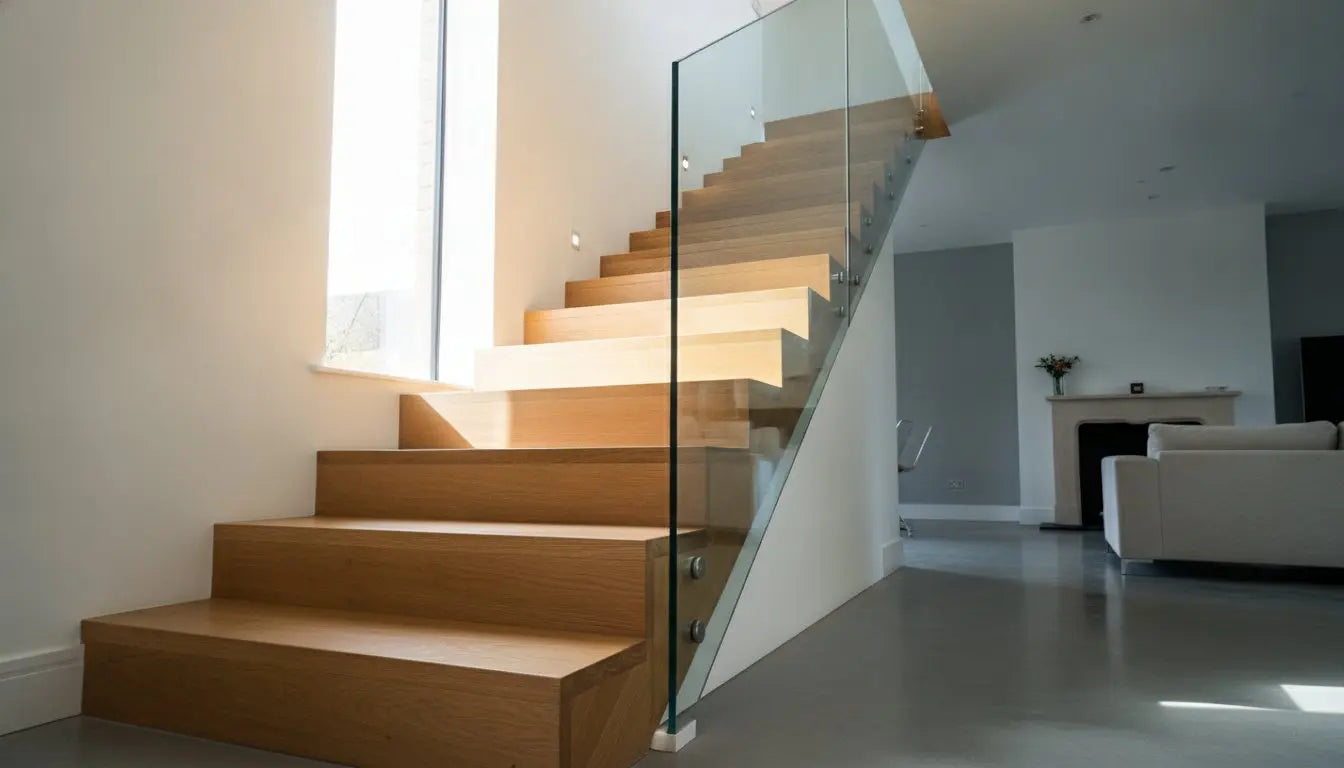
Is your staircase a forgotten thoroughfare or the stunning architectural centrepiece your home deserves? Many homeowners view their stairs as a purely functional necessity, yet a well-crafted timber installation provides the structural soul of a property. It's entirely common to feel a sense of hesitation when faced with technical terms like nosing, newels, and spindles, particularly whilst trying to ensure every detail aligns with UK building regulations.
We believe that home improvement should be a journey of pride rather than one of confusion. This guide promises to help you choose, design, and maintain high-quality timber stairs that serve as a lasting investment in your living space. We will explore the distinct characteristics of different timber species, explain how to match new components with your existing oak doors, and provide a clear summary of the standards set out in Approved Document K, published on January 3, 2013. By the end of this article, you will have the confidence to select a reliable UK supplier and create a safe, elegant feature for your home.
Key Takeaways
- Learn how to transform a functional staircase into a striking architectural centrepiece that defines your home's character and style.
- Understand how to select the finest timber species and coordinate your stairs with internal doors to create a unified, elegant aesthetic.
- Demystify technical joinery terminology to help you confidently choose the right spindles, newels, and balustrade components for your project.
- Gain a clear overview of UK Building Regulations Part K to ensure your design meets essential safety standards for pitch, rise, and going.
- Discover why heritage-grade craftsmanship and professional components provide a superior, long-lasting alternative to standard flat-pack kits.
The Architectural Role of Stairs in the Modern British Home
For many, the journey through a home begins at the hallway. It's here that the staircase makes its first impression. Rather than seeing your stairs as a simple utility for moving between floors, consider them the architectural handshake of your property. In a well-designed British home, the staircase is a primary design feature that communicates the house's character before a guest even enters the living room. It sets a silent yet powerful expectation for the quality and style found throughout the rest of the interior.
Historically, grand entrances were reserved for manor houses, whilst smaller cottages utilised steep, narrow steps tucked behind doors. If you are intrigued by the concept of secret rooms or hidden storage, click here to discover how a handcrafted bookcase door can add character to your home. Today, the trend has shifted towards making the staircase a visible, celebrated element of the home's layout. Investing in high-quality timber joinery isn't just about aesthetics; it's a strategic move for long-term property value. A solid oak or walnut installation feels substantial underfoot and sounds quiet, providing a sensory cue of quality that flat-pack alternatives simply cannot replicate.
Stairs as the Spine of Your Interior Design
Consistency is the secret to a cohesive home environment. By using consistent timber finishes, you create a visual flow that leads the eye naturally from the ground floor to the upper levels. If you have already installed premium oak doors, matching your staircase components to that specific grain and tone prevents the interior from feeling disjointed. The placement of the staircase also dictates how natural light moves through your hallway. Open treads or slimline spindles can transform a dark, cramped corridor into a bright, inviting space that feels significantly larger than its footprint suggests.
A staircase acts as the home’s vertical anchor, providing a structural through-line that grounds the property's design whilst facilitating the essential flow of movement between levels.
Heritage vs. Modern Staircase Styles
Choosing a style often depends on the age of your property and your personal taste. Traditional designs remain incredibly popular in the UK, leaning on the enduring appeal of heavy oak newels and intricately turned spindles. These elements evoke a sense of permanence and heritage, making them ideal for Victorian or Edwardian renovations where period features are being preserved. They offer a warmth and tactile quality that modern materials often struggle to match.
In contrast, modern minimalist stairs often favour clean lines and a reduction of visual clutter. This style frequently incorporates glazed elements or steel wires to create a sense of weightlessness. Balancing these period features with modern functionality is a common challenge in UK renovations. By Understanding Staircase Anatomy, you can better appreciate how individual components like the handrail or the stringer can be tweaked to bridge the gap between old and new. Whether you prefer the robust presence of traditional timber or the airy feel of a contemporary design, the quality of the joinery remains the deciding factor in the staircase's success.
Choosing the Right Timber: Oak, Walnut, and Beyond
Selecting the material for your staircase is perhaps the most significant decision you'll make in the design process. Solid timber remains the premier choice for British homeowners, offering a structural integrity and tactile warmth that synthetic alternatives cannot match. Unlike metal or stone, wood has a natural elasticity that makes stairs more comfortable to use daily, providing a gentle "give" that is kinder to joints whilst dampening the sound of footfall. The choice of species should reflect both the architectural era of your property and the practical demands of your household.
A well-chosen timber doesn't just support the weight of the house; it serves as a canvas for your interior style. Whether you're aiming for the rustic charm of a country cottage or the sharp precision of a city penthouse, the grain and tone of the wood will dictate the atmosphere of your hallway. If you're unsure which species best suits your space, you might find inspiration by browsing our range of hand-finished timber components to see how different textures interact with light.
Internal Oak Stairs: Durability and Timelessness
Oak has long been considered the "gold standard" for joinery in the United Kingdom. Its enduring popularity stems from its incredible resilience in high-traffic areas. The dense, interlocking grain of European oak is remarkably hard-wearing, easily resisting the knocks and scrapes of a busy family home. One of the greatest aesthetic advantages of oak is its ability to hide daily wear and tear; the complex patterns of the grain mask small scuffs that would be glaringly obvious on a painted surface. To achieve a truly sophisticated finish, many homeowners choose to match their new staircase components with internal oak doors UK, creating a seamless visual transition between floors.
Walnut and Luxury Timber Options
For those seeking a more contemporary or high-contrast look, American Black Walnut offers a sophisticated alternative. Known for its rich, chocolatey tones and flowing grain patterns, walnut creates an immediate architectural statement. It's often used in modern builds to provide a sense of luxury and depth, particularly when paired with glass balustrades or white-primed spindles. Whilst walnut is a premium timber that requires careful selection to ensure colour consistency, the result is an opulent feature that anchors the entire home. It does require slightly more regular dusting than lighter woods to keep the dark surface looking its best, but the visual impact is well worth the additional care.
Sustainability and Timber Sourcing
Choosing timber is also a vote for the environment. Wood is a renewable resource with a significantly lower carbon footprint than steel or concrete. At Arborfield Joinery, our heritage as a family-run business since 1953 means we take a long-term view of craftsmanship. We are committed to sourcing our timber from sustainably managed forests, ensuring that every tread and riser is as responsible as it is beautiful. Even when focusing on aesthetics, safety remains paramount. All timber selections must be capable of meeting the structural requirements detailed in the UK Building Regulations (Part K), ensuring your beautiful new staircase is as safe as it is stylish.
Understanding Staircase Anatomy: Essential Components
Entering the world of bespoke joinery often feels like learning a new language. Terms like "nosing" or "stringer" might sound technical, but understanding these components is the first step toward a successful renovation. Every element of a staircase serves a dual purpose, providing the structural integrity required for safety whilst contributing to the overall aesthetic of your hallway. When you understand how these parts interact, you can make informed decisions that elevate your home's design from standard to exceptional.
Treads, Risers, and the Walking Surface
The treads and risers form the fundamental "steps" of your installation. A closed-riser design offers a classic, solid appearance that is perfect for creating storage space underneath. In contrast, open-riser stairs allow light to filter through the treads, creating a sense of weightlessness that works beautifully in smaller or darker hallways. The nosing, which is the overhanging edge of the tread, is a small detail with a big impact; it should be chosen to provide both a secure footing and a refined finish. Ensuring every riser is exactly the same height is critical for human gait, as even a few millimetres of variation can lead to trips or a feeling of instability.
The Balustrade System: Spindles and Handrails
The balustrade is where safety meets style. Spindles, or balusters, come in various forms to suit your home's era. Square spindles offer a clean, minimalist look, whilst turned designs provide a decorated sense of heritage and tradition. Chamfered options offer a subtle middle ground, providing a touch of detail without becoming overwhelming. The handrail is the most tactile part of the system. It needs to feel substantial and smooth under the palm. Choosing a handrail profile that complements the mouldings on your internal doors ensures your hallway joinery feels like a single, considered installation rather than a collection of mismatched parts.
Newel Posts and Caps: Structural Elegance
Newel posts are the structural foundation of the stairs, anchoring the entire system into the floor and the upper landing. A heavy, solid timber newel provides a sense of permanence and stability that flimsy, hollow alternatives simply cannot replicate. These posts are typically finished with decorative caps to suit the interior theme. Simple flat caps are ideal for modern homes, whilst ornate finials or "acorn" designs add a traditional flourish to period properties. Integrating these posts into broader hallway joinery, such as matching skirting or wall panelling, helps the staircase blend perfectly into the property's unique architecture.
Planning and UK Building Regulations (Part K)
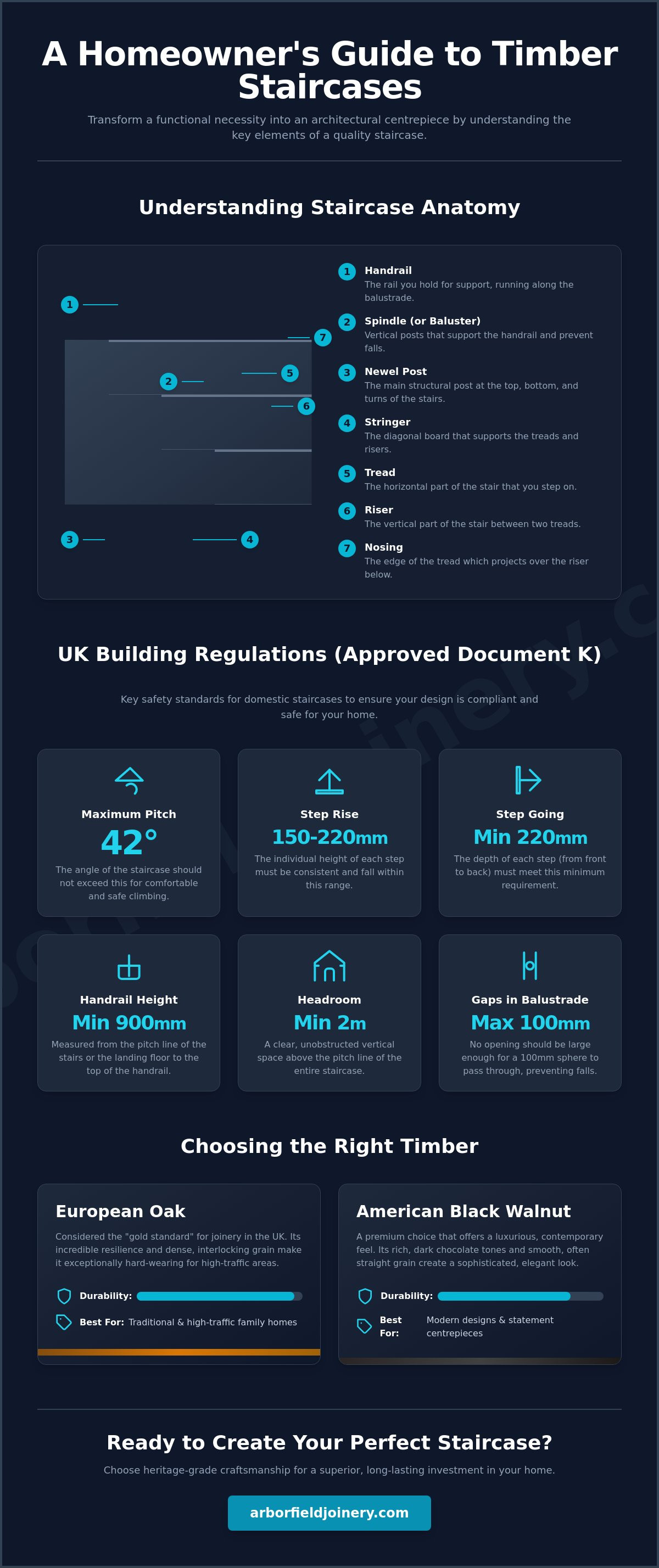
Designing stairs for a British home is a balancing act between creative vision and strict legal compliance. Approved Document K, published on January 3, 2013, remains the definitive guide for protection from falling, collision, and impact in England. Failing to meet these standards isn't just a safety risk; it can prevent you from obtaining a completion certificate for your renovation or loft conversion. Understanding the basic geometry of your staircase is the first step toward a successful building inspection. Every measurement matters, from the individual step to the overall angle of the climb.
There are three core measurements you'll need to discuss with your joiner. The "rise" is the vertical distance from the top of one tread to the top of the next. The "going" is the horizontal distance from the face of one riser to the face of the next. Finally, the "pitch" is the angle of the staircase. For a standard domestic dwelling, the maximum pitch is 42 degrees. Getting these ratios right ensures that the climb feels natural and safe for everyone in the household, from young children to elderly relatives.
The 100mm Rule and Other Safety Essentials
Safety is paramount, especially in households with inquisitive toddlers. One of the most critical requirements in the regulations is the "100mm rule." This dictates that no gap anywhere on the staircase, whether between spindles or under the bottom rail, should allow a 100mm sphere to pass through. This prevents small children from becoming trapped or falling through the balustrade. Additionally, handrails must be positioned between 900mm and 1000mm above the pitch line of the steps and the floor of the landing. If you're currently planning a project, you can explore our range of compliant staircase components to ensure your design meets every safety threshold without sacrificing style.
Space-Saving Solutions and Loft Conversions
Not every home has the luxury of a wide, straight hallway. When space is at a premium, winder treads are an excellent solution. These are triangular steps that allow the staircase to turn through 90 or 180 degrees within a compact footprint. However, even these must maintain a minimum "going" at the centre of the tread to remain legal and safe. For very tight loft access where a traditional flight won't fit, alternating tread stairs are sometimes permitted. These are strictly regulated and usually only allowed as a last resort for access to a single room. Balancing these space-saving needs with comfortable ergonomics is where professional joinery expertise becomes invaluable. It's about making the climb feel effortless, even when the available space is limited.
The Arborfield Joinery Difference: Quality Since 1953
Arborfield Joinery has stood as a hallmark of British craftsmanship since 1953. As a family-run business with seven decades of expertise, we've seen trends come and go, but our commitment to quality remains unchanged. Whilst modern flat-pack kits might seem convenient, they often lack the structural integrity and aesthetic depth of professional-grade components. Mass-produced alternatives frequently rely on thinner materials that don't offer the same longevity or tactile satisfaction as solid timber. Choosing high-quality components for your stairs ensures that the architectural spine of your home remains robust and silent for generations.
We take immense pride in being a "Quality Curator" for our customers. We encourage homeowners to visit a physical showroom whenever possible, as nothing quite compares to feeling the grain of solid oak or walnut in person. This tactile experience helps you appreciate the precision of our joinery and the substantial weight of our newel posts and handrails. If you share this passion for precision engineering in other areas, such as high-quality die-cast collectibles, click here to read a definitive guide on specialist model vehicles. Whether you're looking for standard components to refresh an existing flight or require bespoke solutions for a unique architectural design, our team provides the expert guidance needed to bring your vision to life.
Expert Guidance for Trade and Retail Customers
Our service is designed to be as personal and helpful as a local workshop, backed by the reliability of a national supplier. We don't just sell parts; we act as knowledgeable consultants for both trade professionals and retail customers. If you're struggling to match your new staircase with existing timber windows or internal oak doors, we can help you select the exact species and finish to create a unified look. This holistic approach to home improvement ensures that every element of your interior joinery works in harmony, reflecting a consistent standard of excellence across your entire property.
Ordering and Mainland UK Shipping
Organising your order is a straightforward process designed to move you efficiently from inspiration to action. We've refined our logistics to ensure that your premium components arrive in perfect condition, handled with the care that heritage-grade timber deserves. For larger renovation projects, we offer free mainland UK shipping on all orders over £900. This value-added service makes it even easier to invest in high-end materials for your home without worrying about additional transport costs. If you're ready to begin your journey, you can Explore our full range of timber stairs and components today and discover the difference that seven decades of joinery expertise can make to your living space.
Elevate Your Home with Heritage Craftsmanship
Transforming your hallway requires more than just picking a design; it's about selecting materials that stand the test of time whilst meeting strict safety standards. By understanding the anatomy of your stairs and the nuances of UK Building Regulations, you can create a feature that is as secure as it is beautiful. Whether you opt for the classic resilience of oak or the rich, dark tones of walnut, ensure your choice reflects the architectural soul of your property and provides a seamless transition between floors.
At Arborfield Joinery, we've been a family-run business since 1953, helping homeowners curate their ideal living spaces with expert guidance and proven reliability. We invite you to visit our showroom to inspect over 120 doors and various staircase components in person, ensuring you feel the quality before you commit to your project. For larger renovations, we provide free mainland UK shipping on all orders over £900, bringing premium joinery directly to your doorstep.
View our premium staircase components and timber doors to take the first step toward a stunning home transformation. Your perfect interior is well within reach, and we're here to help you every step of the way.
Frequently Asked Questions
What are the main components of a staircase?
The main components of a staircase include the treads, risers, newel posts, spindles, and handrails. These elements work in harmony to provide structural stability whilst defining the visual character of your hallway. Understanding how these parts interact helps you choose a design that balances safety with your personal aesthetic preferences, ensuring a high-quality finish that lasts for generations.
Do stairs have to meet specific UK building regulations?
All domestic stairs in England must comply with the standards set out in Approved Document K of the Building Regulations. These rules, last updated on January 3, 2013, govern everything from the maximum pitch of 42 degrees to the minimum headroom required. Following these legal requirements is essential for passing building inspections and ensuring the long-term safety of everyone in your household.
Is oak or walnut better for a high-traffic staircase?
Oak is generally the better choice for high-traffic areas due to its remarkable density and hard-wearing nature. Whilst walnut provides a sophisticated luxury finish, oak’s interlocking grain makes it more resilient to the daily scuffs and knocks of a busy home. It's also exceptionally good at masking wear and tear, making it a practical yet elegant investment for any property.
Can I replace just the spindles and handrails on my existing stairs?
You can replace just the spindles and handrails without installing an entirely new flight. This renovation, often referred to as a balustrade refurbishment, is an excellent way to update your home's interior without the disruption of a full structural change. By upgrading to premium timber components, you can significantly enhance the aesthetic appeal of your hallway whilst retaining your existing treads and strings.
What is the "100mm rule" in UK stair design?
The 100mm rule is a safety regulation stating that no gap in a staircase balustrade should allow a 100mm sphere to pass through. This mandatory standard is designed to prevent small children from falling through or getting their heads trapped between spindles. It applies to every part of the installation, including the gaps between treads on open-riser designs and the spaces between balusters.
How do I match my stairs to my internal oak doors?
Matching your stairs to internal oak doors is best achieved by using the same timber species and a consistent finishing product. We recommend selecting European oak for all components to ensure the grain patterns and natural tones are harmonious. Applying the same oil or lacquer to both your doors and staircase elements will create a cohesive, professional look that unifies your entire hallway design.
What is the difference between a tread and a riser?
The tread is the horizontal surface you step on, whilst the riser is the vertical section between each step. In a closed-riser design, the vertical space is filled with a solid timber panel for a traditional look. Open-riser designs leave this area clear to encourage the flow of natural light, though they must still comply with safety rules regarding gap sizes.
Do you offer bespoke staircase components for unique home layouts?
We offer a comprehensive range of bespoke components to suit unique home layouts and specific design visions. Our expertise, rooted in seven decades of joinery tradition, allows us to create custom-sized parts that standard flat-pack kits simply cannot provide. Whether you need a unique newel post or a specific spindle profile, we work closely with you to ensure every piece fits your home perfectly.
Share:
A Guide to Traditional Ledge and Brace Doors: Heritage Style for Modern Homes
A Guide to Traditional Ledge and Brace Doors: Heritage Style for Modern Homes