
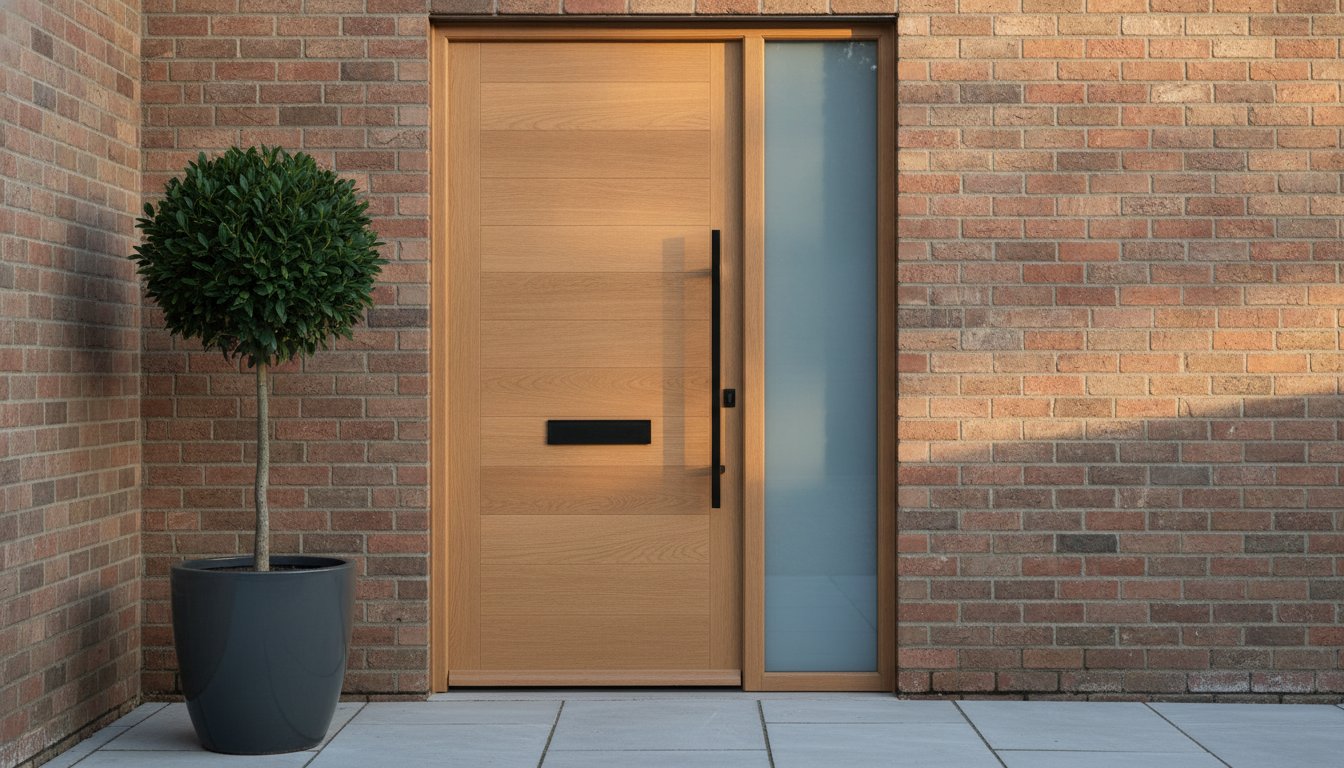
Is it possible for a front door to be both a heritage statement and a high-tech thermal barrier? While many modern materials promise a quick fix, they often lack the character and longevity that only natural timber provides. We understand that selecting external oak doors involves more than just picking a pretty finish. You might worry about the wood warping in the damp British climate or feel confused by the choice between solid and engineered cores. It is a significant decision for any homeowner who values both craftsmanship and performance.
This guide will help you navigate these choices with confidence. You will discover how to select a door that enhances your home’s security, thermal efficiency, and kerb appeal. We will break down the latest building regulations, including the 1.8 W/m²K U-value requirements for replacements, and explain why engineered oak is often the secret to long-lasting durability. By the end, you will have the knowledge needed to curate a high-quality entrance that provides a warm welcome and improved insulation for decades to come.
Key Takeaways
- Learn why oak remains the premier hardwood choice for British homes and how a quality timber entrance significantly boosts your property's kerb appeal.
- Understand the vital differences between solid and engineered external oak doors to ensure you choose the right balance of traditional craftsmanship and modern stability.
- Identify the essential security and weatherproofing features, such as multi-point locking systems and robust weather bars, required to protect your home.
- Discover how to match your home’s architecture by exploring diverse styles, from rustic cottage designs to minimalist urban aesthetics.
- Benefit from over 70 years of joinery expertise to ensure your new entrance meets the latest thermal efficiency standards and safety regulations.
Why Choose External Oak Doors for Your Home?
Oak has long been the backbone of British architecture; it is a timber synonymous with strength and heritage. Choosing external oak doors is an investment that goes beyond simple utility. As a premier hardwood, oak possesses a natural density that makes it incredibly resilient against the elements. This isn't just about a sturdy entrance. It is about selecting a material that has proven its worth over centuries of building tradition. To understand the history and construction of doors, one must look at how timber has remained the gold standard for structural integrity and longevity.
A high-quality entrance acts as your home's handshake. The psychological impact of a solid timber door on kerb appeal is profound; it signals quality, security, and a certain timeless elegance to every visitor. Unlike synthetic alternatives that can look tired after a few seasons, a well-maintained oak door actually gains character over time. It's a lasting legacy for your property. Furthermore, oak is a sustainable choice. When sourced from responsibly managed forests, timber is a renewable resource that traps carbon, making it a much kinder option for the environment than energy-intensive uPVC or steel production.
The Aesthetic Versatility of Oak
The natural grain patterns of oak are truly unique. No two doors are identical, which adds a bespoke feel to even the most standard designs. This material is remarkably adaptable; it complements the weathered brickwork of a period cottage just as effectively as the clean lines of a modern glass-fronted extension. You can easily customise the look with various stains, oils, or specialist paints. These treatments allow you to change the colour whilst retaining the beautiful tactile texture of the wood. For a truly cohesive exterior, many homeowners find success in matching their entrance with timber windows. This creates a unified aesthetic that significantly boosts property value.
Natural Thermal and Acoustic Insulation
Oak is a natural insulator. Its dense cellular structure is far more efficient at retaining heat than thin metal skins or hollow plastic frames. By installing external oak doors, you create a robust thermal barrier that helps reduce heat loss through your entrance hall. This translates into a more comfortable home and potentially lower energy bills during the colder months. The benefits aren't just thermal; they're acoustic too. The sheer mass of the wood helps dampen street noise, from passing cars to neighbourhood chatter. It creates a quieter, more peaceful sanctuary inside your home, ensuring your living space feels as calm as it looks.
Understanding Construction: Solid vs. Engineered Oak
When you picture a premium entrance, you likely imagine a heavy, single piece of timber. This is solid oak construction. It is the traditional method, where every component of the door is cut from a single, continuous plank of wood. Whilst this offers undeniable prestige and a weight that feels incredibly substantial, solid wood is naturally 'alive'. It breathes, moves, and reacts to the atmosphere around it. In contrast, modern engineered external oak doors utilize a sophisticated multi-layered approach. The core consists of stable timber components, such as spruce or laminated blocks, which are then encapsulated in a thick, high-quality oak veneer. This method provides the visual beauty of oak with a structural heart that refuses to quit.
Moisture content is the hidden factor in any door's performance. In the UK, humidity levels fluctuate wildly between a damp November and a dry July. If a door hasn't been dried to the correct moisture level, typically between 12% and 15% for external use, it will inevitably twist or bow. Engineered construction solves this by using layers with grain running in opposing directions. This cancels out the internal stresses that cause warping, ensuring your door stays straight and true regardless of the season.
Stability in the British Climate
British weather is notoriously fickle. One side of your door might be facing a driving rainstorm whilst the other is heated by a hallway radiator. This temperature differential is exactly why solid timber can struggle to maintain its shape. Engineered cores are designed specifically to resist these forces. There is a common misconception that engineered means 'imitation' or 'cheap'. In reality, high-end external oak doors use thick architectural veneers that look and feel identical to solid wood. While some retailers focus solely on 'Grade A' labels, these grades don't address the structural behaviour of the wood. Solid oak remains the correct choice for specific heritage projects or listed buildings where strict historical accuracy is required, but for most modern homes, the engineered route is vastly superior.
Durability and Resistance to Warping
The engineering behind these doors is impressive. By using multi-directional grain layers and modern, moisture-resistant resins, manufacturers can ensure the door remains perfectly plumb in its frame for years. This precision is vital for maintaining a tight seal against draughts. It also ensures that your locking mechanisms continue to align correctly, which is a key part of meeting UK building regulations for security. Engineered oak is the industry standard for stability in 2026. If you want a door that opens smoothly every single morning, this is the technology you need.
You can explore our full range of expertly crafted oak doors to see how these construction methods translate into beautiful, lasting designs for your home.
Popular Styles and Glazing Options
Selecting a style for your external oak doors is where your property’s architectural personality truly comes to life. While we have already established the technical stability of engineered cores, the visual impact depends on how the timber is shaped and finished. Oak is a remarkably versatile medium for joinery. This is due in part to the physical and mechanical properties of oak, which allow it to be machined into intricate panels or kept as bold, simple planks without losing its structural integrity.
For those owning a period property or a rural retreat, classic cottage styles remain a firm favourite. Ledge and brace designs offer a rugged, farmhouse aesthetic that feels grounded and secure. Alternatively, traditional panelled doors provide a more formal look, often seen in Georgian or Victorian-inspired homes. These styles lean into the heritage of the material, celebrating the dense grain patterns that make oak so desirable. They provide a sense of permanence that synthetic materials simply cannot replicate.
Modern architecture often calls for contemporary urban designs. These typically feature minimalist lines, such as flush surfaces with horizontal grooves or long, vertical glazed apertures. For rear entrances or kitchen exits, stable doors offer a unique blend of functional beauty. They allow you to open the top half for ventilation and light whilst keeping the bottom half closed to secure pets or small children. To create a seamless transition throughout your home, consider how your entrance choice pairs with your internal doors and door frames. A consistent design language from the front porch to the living room elevates the entire interior environment.
Glazed External Oak Doors
Natural light transfer is a primary goal for many homeowners, yet it must be balanced with the need for privacy. Glazed external oak doors are an excellent solution for dark hallways that lack windows. Safety is paramount here; all external glazing should utilise toughened or laminated glass to withstand impact and provide a secure barrier. You can customise the level of obscuration with decorative options, ranging from contemporary frosted glass to traditional leaded lights that mimic historical stained glass designs.
Traditional vs. Modern Silhouettes
The 1930s style remains a timeless middle ground for many UK semi-detached homes. It offers a three-panel design that feels both established and approachable. If you prefer a sleeker look, flush doors with horizontal grooves provide a minimalist silhouette that suits new-build properties perfectly. Finally, do not overlook your hardware. The choice of handles and letterplates acts as the jewellery for your door; brushed steel works beautifully for modern units, whilst antique brass or black ironmongery complements a rustic cottage entrance.

Performance: Security, Weathering, and Maintenance
A door must do more than look the part; it has to perform under pressure. When investing in external oak doors, security is often the primary concern for homeowners. Modern oak units are inherently robust due to their dense grain and solid or engineered cores, making them much harder to breach than hollow alternatives. However, the timber is only one part of the equation. To meet modern safety expectations, you should look for doors compatible with multi-point locking systems. These mechanisms bolt the door into the frame at several points, providing a level of security that traditional single-point locks cannot match.
To complement these high-security systems, you can explore Euro Cylinders at Door-Tech Services, where you will find a variety of specialist hardware designed to keep your property safe and secure.
Weather protection is the next vital hurdle. British rain and wind require more than just a sturdy slab of wood. High-quality draught excluders and weather bars are essential components that prevent water ingress at the threshold. There is a common misconception that timber doors are prone to rotting. While this was a risk in decades past, modern preservative treatments and advanced joinery techniques have changed the landscape. These treatments penetrate deep into the wood fibres, creating a barrier against fungal decay and moisture. With the right care, your door will remain structural and beautiful for a lifetime.
Finishing Your Oak Door
Deciding between a pre-finished or unfinished door depends on your project timeline. Pre-finished external oak doors arrive factory-sealed, meaning they are ready for immediate hanging. However, even "ready to hang" doors often require a final check to ensure the seal hasn't been compromised during transit. If you choose an unfinished door, you have the freedom to select specific oils or varnishes that offer high UV protection. This is crucial for preventing the oak from "silvering" in direct sunlight. A critical rule often missed by DIY installers is the need to seal all six sides of the door. Failing to treat the top and bottom edges allows moisture to seep into the end grain, which is the most common cause of internal rot and swelling.
Thermal Efficiency and U-Values
Energy efficiency is no longer optional; it is a regulatory requirement. U-values measure the rate of heat transfer through a material, and in this context, a lower number signifies better insulation. While the timber itself is a natural insulator, the overall rating is heavily influenced by the glazing and the precision of the frame kit. By combining a dense engineered core with high-performance double or triple glazing, a modern oak door can achieve U-values under 1.6 W/m²K, comfortably exceeding the 1.8 W/m²K requirement for replacement doors in existing dwellings. This ensures your entrance hall remains draught-free and warm throughout the winter months.
Ready to upgrade your home's performance and style? Browse our collection of high-performance oak doors to find the perfect fit for your property.
Selecting Your Door from Arborfield Joinery
Choosing the right supplier is just as critical as choosing the timber itself. At Arborfield Joinery, we have been supplying quality timber products since 1953. This long-standing heritage has allowed us to evolve alongside the industry, transitioning from traditional joinery methods to the advanced engineered technology used in modern external oak doors. Our expertise extends across the entire home; whilst we are known for our robust entrance solutions, we also provide a comprehensive range of internal oak doors. This allows homeowners to maintain a consistent standard of craftsmanship and style from the front porch right through to the living room.
We believe that seeing a product in person makes a world of difference. Our Berkshire showroom features over 120 doors on display, allowing you to feel the weight, examine the grain, and test the operation of various styles before making a commitment. It is a space designed for inspiration and consultation. If you cannot visit us in person, our digital storefront provides a seamless experience with national delivery across the UK. To make your project even more cost-effective, we offer free shipping on all orders over £900, ensuring your premium entrance arrives safely and promptly at your doorstep.
The Benefits of a Family-Run Specialist
As a family-run enterprise, we pride ourselves on providing a personalised service that larger retailers often struggle to match. We act as a "Trustworthy Veteran" for our customers, offering expert advice that stems from decades of hands-on experience. Whether you are a retail customer looking to refresh your home's kerb appeal or a trade professional managing a complex build, we provide the same level of dedicated support. Our commitment to sustainability remains at the heart of what we do. We ensure that our high-quality timber is sourced responsibly, allowing you to invest in your home's future with a clear conscience.
Ordering and Delivery Simplified
Success begins with accurate preparation. Before you select your external oak doors, it is vital to measure your opening at three different points for both height and width. Use the smallest measurement to ensure the door fits comfortably within the frame. Once your order is placed, our logistics team organises fast, reliable shipping to keep your project on schedule. We understand the importance of timing in home improvements, so we work tirelessly to ensure your items arrive in perfect condition. Browse our full collection of external doors today and take the first step toward a more secure, beautiful home.
Transform Your Home with a Timeless Entrance
Investing in your property's entrance is about more than just aesthetics; it is about choosing a legacy of durability and warmth. We have seen how modern engineered construction provides the secret to preventing warping in our unpredictable climate. Choosing the right external oak doors will not only elevate your kerb appeal but also significantly improve thermal efficiency and security, ensuring your home remains a safe, well-insulated sanctuary.
Beyond the entrance, if you are considering a full-scale timber extension or garden room, you can learn more about Goodwood Orangeries & Conservatories for expert advice on high-quality glazed structures.
As a family-run business established in 1953, Arborfield Joinery combines this technical expertise with a personal, neighbourly approach. You can visit our Berkshire showroom to experience over 120 door designs in person or take advantage of our national delivery service. To help your project along, we provide free UK mainland shipping on all orders over £900. Your home deserves an entrance that reflects your commitment to quality and style.
Explore our premium range of external oak doors and enhance your home today.
We're ready to help you find the perfect match for your property. Let's create an entrance that you'll be proud to step through every single day.
Frequently Asked Questions
Do external oak doors warp in the rain?
No, external oak doors will not warp if they are constructed correctly and sealed on all six sides. While timber is naturally absorbent, modern engineered cores are designed specifically to resist the internal stresses caused by moisture. As long as you apply a high-quality finish and maintain the weather seals, the door will remain stable and plumb even in the damp British climate.
How often do I need to treat my external oak door?
You should typically re-treat your door every two to three years, although this depends on how much sun and rain it faces. South-facing doors often require more frequent attention due to UV exposure which can dry out the timber. A simple way to check is to look for signs of "silvering" or water no longer beading on the surface; if the wood looks dull, it is time for a fresh coat.
Is engineered oak better than solid oak for a front door?
For the vast majority of modern homes, engineered oak is the superior choice because of its exceptional structural stability. It is specifically designed to prevent the bowing and twisting that can sometimes affect solid timber. Solid oak remains a beautiful option for heritage or listed buildings where historical accuracy is required, but engineered construction is the industry standard for reliable, long-term performance.
What is the best finish for an external oak door?
High-quality microporous oils or varnishes designed specifically for exterior use are the best choice. These finishes allow the timber to breathe whilst providing a robust barrier against UV rays and moisture. Avoid using standard interior waxes or thinned-down paints, as these won't provide the necessary protection against the elements. Always ensure the product you choose is compatible with engineered veneers.
Can I fit a standard oak door into an existing frame?
Yes, you can fit a new door into an existing frame provided the frame is structural and square. It is essential to measure your opening accurately at the top, middle, and bottom before ordering. Most external oak doors allow for a small amount of trimming on each side, usually around 10mm to 15mm, to ensure a perfect fit within your current entranceway.
Are oak external doors secure against intruders?
Yes, the natural density and weight of oak make it a formidable barrier against forced entry. When you pair a solid or engineered oak core with a modern multi-point locking system, you create a highly secure entrance. For doors with glazing, ensure that toughened or laminated safety glass is used to meet the required security standards and provide peace of mind.
Do external oak doors come with a guarantee?
Most reputable manufacturers provide a structural guarantee on their doors, which typically covers defects in materials or construction. It is important to remember that these guarantees are almost always conditional on the door being correctly sealed on all edges and properly maintained. Always check the specific terms provided by the manufacturer to ensure your installation meets their requirements for long-term cover.
What is the difference between a pre-finished and unfinished door?
Pre-finished doors arrive factory-sealed and are ready for immediate hanging, which saves time and ensures a professional consistency. Unfinished doors are supplied as raw timber, giving you the freedom to customise the exact stain or colour to match your property. Whilst unfinished doors offer more flexibility, they must be fully treated before they are exposed to the weather to prevent moisture damage.
Share:
The Homeowner’s Guide to Urban Industrial Style Internal Doors
A Homeowner’s Guide to Internal Folding Systems and Door Hardware