
Table of Contents
- What Makes an Insulated Front Door Energy Efficient
- Best Front Door Materials for Insulation
- Understanding Front Door U-Value and Thermal Performance
- The Role of Insulated Exterior Door Frames in Heat Retention
- Draught-Proofing a Front Door: Seals, Thresholds and Installation
- Choosing the Right Insulated Front Door for Your Home
- Frequently Asked Questions
Last Updated: October 12, 2026
What Makes an Insulated Front Door Energy Efficient
Insulated front doors use thermal barriers and high-performance materials to minimise heat loss. Efficiency depends on the core construction, frame design and glazing working together as a continuous thermal envelope.
Most homeowners focus only on the door panel. That's a mistake: a poorly fitted frame, missing seals or a thin threshold can undo everything the panel achieves. A premium door installed badly performs worse than a mid-range door installed properly.
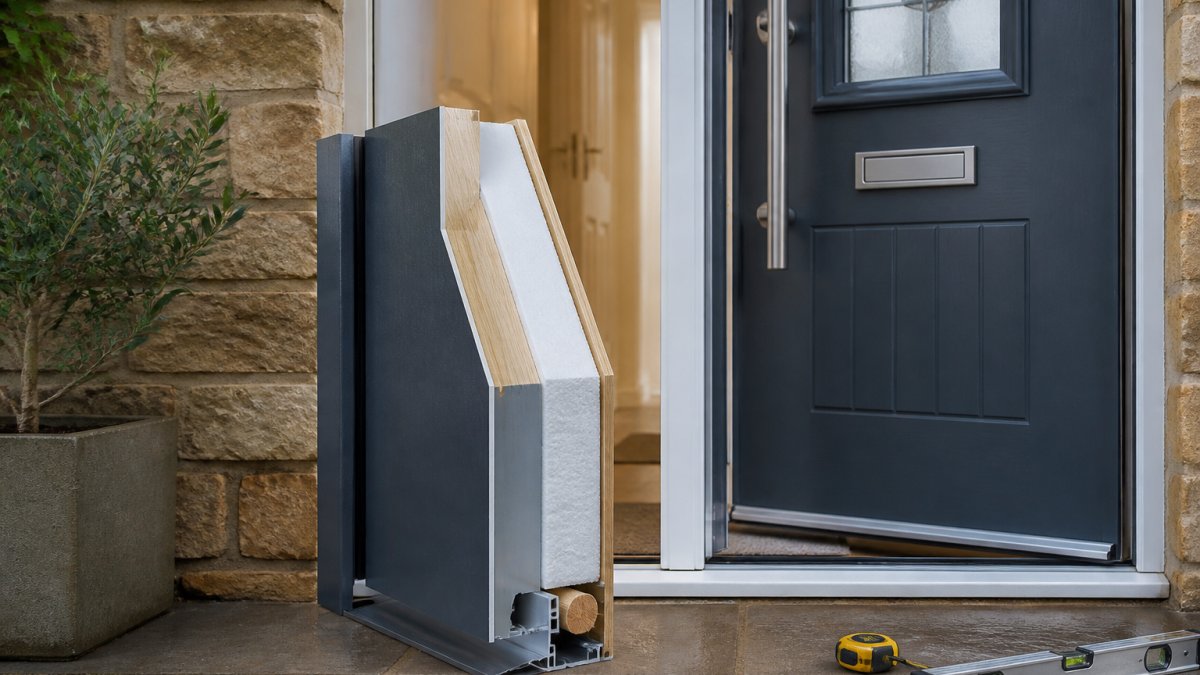
The best insulated front doors combine three elements: a solid or foam-filled core that resists heat transfer, a frame with thermal breaks that interrupt the conduction path, and quality weather seals that eliminate air leaks.
Energy efficiency is measured by U-value, how much heat passes through the door. Lower is better. A 1980s single-glazed wooden door might rate 3.0 or higher; a modern insulated front door sits between 1.2 and 1.8, which means lower heating bills and a more comfortable home.
Best Front Door Materials for Insulation
This section ranks five specific insulated door options widely available to homeowners, using consistent criteria: whole-door U-value, glazing configuration, frame construction, certification, warranty and installed cost.
Use the table below as a starting point, then read the notes underneath for the trade-offs each option carries.
| Rank | Door option | Typical whole-door U-value | Core construction | Glazing | Typical installed cost | Certification to look for |
|---|---|---|---|---|---|---|
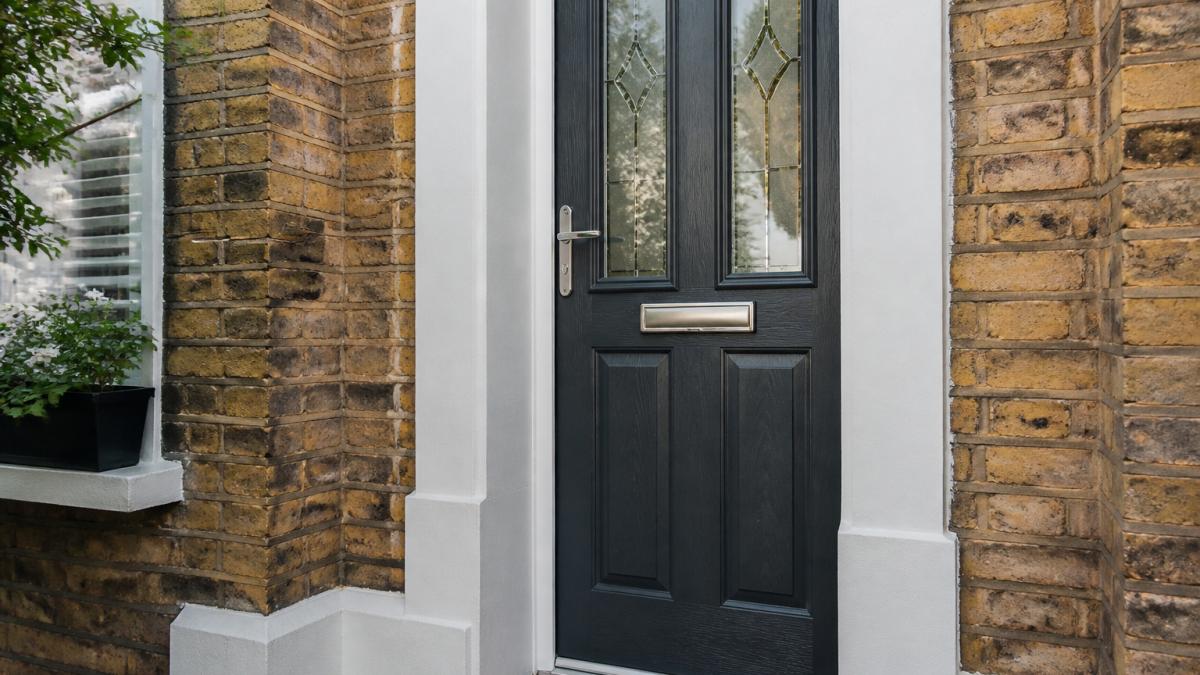
| 1 | Composite door with foam core and GRP skin (e.g. a solid-core composite from a mainstream fabricator) | 1.2-1.4 W/m²K | Polyurethane or polystyrene foam core, GRP skins, timber or PVC sub-frame | Double or triple glazed, warm-edge spacer | £900-£1,800 | BSI Kitemark, Secured by Design, BFRC or equivalent thermal rating |
| 2 | Thermally broken aluminium door | 1.0-1.4 W/m²K | Polyamide thermal break between inner and outer aluminium sections | Double or triple glazed, often large glazed area | £1,500-£3,000+ | BSI Kitemark, Secured by Design, BFRC rating |
| 3 | High-spec uPVC door with foam core | 1.4-1.6 W/m²K | Foam-filled uPVC sections, steel or aluminium reinforcement | Double glazed, warm-edge spacer | £500-£900 | BSI Kitemark, BFRC rating |
| 4 | Timber door with insulated core and high-performance frame | 1.4-1.8 W/m²K | Engineered timber with insulation board or foam infill | Double glazed, often with a timber or aluminium-clad frame | £1,200-£2,500 | BSI Kitemark, BFRC rating |
| 5 | Budget uPVC door with basic double glazing | 1.6-1.8 W/m²K | Hollow or lightly reinforced uPVC sections | Double glazed, standard spacer | £400-£700 | BSI Kitemark (check for it) |
How to read the table. These are typical whole-door U-values for a standard single-leaf door with a modest glazed area.
Rank 2, Thermally broken aluminium. Aluminium performs best only with a genuine thermal break; without one it conducts heat faster than almost any other frame material.
Rank 3, High-spec uPVC with foam core. uPVC is the value option, but the gap between budget and well-specified is large.
Rank 4, Insulated timber with a high-performance frame. Timber is the hardest material to make thermally competitive, but an engineered core and properly detailed frame achieve whole-door U-values of 1.4-1.8.
Rank 5, Budget uPVC with basic double glazing. The entry point: it outperforms an old single-glazed timber door but not the options above.
BSI Kitemark directory Secured by Design product search
Understanding Front Door U-Value and Thermal Performance
The U-value measures thermal transmittance in watts per square metre per degree Kelvin (W/m²K), how much heat escapes through the door per unit area per degree of temperature difference. A door rated 1.5 loses 1.5 watts per square metre for every degree of difference between inside and outside.
Lower U-values mean better insulation. A door rated 1.2 is twice as efficient as one rated 2.4. The difference adds up over a winter: a well-insulated front door can reduce heating bills by 5-10% depending on your home's overall insulation and how much you use that entrance.
U-values are tested to a standard, typically EN 10077-1 in Europe, which applies to UK doors. The test measures the entire assembly: frame, panel, glazing and seals. A manufacturer might quote a panel-only figure, which is misleading, always ask for the U-value of the complete door set as tested and installed.
Realistic expectations matter. No front door will achieve a U-value below 0.9. The glazing alone limits performance. If someone claims 0.5, they're not being honest. A genuinely good insulated front door sits between 1.0 and 1.4.
The Role of Insulated Exterior Door Frames in Heat Retention
The frame is where many installations fail. A panel rated 1.2 performs worse if the frame is thin, poorly fitted or thermally unbroken, heat finds the weak point.
A thermal-break frame has an insulating material between the inner and outer sections, just like an aluminium door. This interrupts the conduction path. Without it, cold flows straight through the frame into your home. Timber frames are naturally better insulators than metal, but they still benefit from careful detailing.
The fit between frame and wall is critical: gaps must be sealed with expanding foam and caulked properly. A 5mm gap can reduce effective U-value by 0.2 or more. This is installation quality, not product quality, a premium door installed badly performs like a budget door.
The door is half the job. The other half is the frame, seals and installation, a bespoke frame made to measure and properly sealed transforms performance.
Draught-Proofing a Front Door: Seals, Thresholds and Installation
Draught-proofing stops air leakage, which is separate from thermal conductivity but equally important for comfort and bills. A door can have a good U-value yet still feel draughty if seals are poor.
Quality weather seals around the frame perimeter are essential. They compress when the door closes, blocking the gap between door and frame. Over time, seals wear and compress permanently, losing effectiveness. Budget for replacement every 5-10 years. Silicone seals last longer than rubber.
The threshold is the horizontal strip at the bottom of the frame and the hardest part to seal, taking foot traffic and weathering. A well-designed threshold has a drip edge and a seal that compresses under the door's weight. Many installations use a cheap threshold, creating a draught that negates half the door's insulation benefit.
Installation quality determines whether seals work. The frame must be level, plumb and square; if twisted or tilted, seals won't compress evenly. Expanding foam must be applied correctly, too much pressure distorts the frame, too little leaves voids. These details are invisible but critical.
Choosing the Right Insulated Front Door for Your Home
Use the decision framework below, built around the gaps that matter in practice: installed cost, property type, exposure to weather, and the evidence behind performance claims.
Start with installed cost, not sticker price
The advertised price is rarely what you pay: a door quoted at £700 may become £1,100 once you add a made-to-measure frame, new threshold, hardware, disposal and labour. Ask for a written, itemised quote covering:
- Door leaf and frame
- Glazing specification
- Threshold and seals
- Hardware (handle, lock, letterplate, knocker)
- Removal and disposal of the old door
- Making good around the frame
- Labour and any scaffolding or access equipment
A realistic installed range for a standard single-leaf insulated front door is £500-£900 for budget uPVC, £900-£1,800 for composite, £1,200-£2,500 for insulated timber, and £1,500-£3,000+ for thermally broken aluminium. If a quote sits well below these ranges, check what has been left out.
Match the door to your property type
Victorian or Edwardian terrace. Composite with a timber-look finish is usually the best fit, respecting period proportions while delivering modern insulation. Avoid aluminium, which looks out of place on most older homes; if you want authentic timber, budget for maintenance.
1970s-1990s house. Composite or high-spec uPVC both work. The opening is usually a standard size, which keeps costs down. Focus on whole-door U-value and draught-proofing rather than aesthetics.
New-build. Aluminium or composite. New-build openings are often designed for a specific door size, so bespoke sizing may be unnecessary. Check whether the developer's original specification already meets current thermal standards.
Coastal or exposed property. Generic advice fails here: salt spray corrodes cheap hardware and untreated timber, and wind-driven rain finds every gap in the threshold and seals. Composite and aluminium handle exposure better than timber.
Older, draught-prone home. The door is only part of the problem: if the opening is out of square or the wall uneven, even a premium door will leak air.
An evidence checklist for manufacturer claims
Before you buy, ask for the following. A supplier who can provide them is more likely to be selling a genuinely insulated door rather than a marketing claim.
- Whole-door U-value tested to BS EN 10077-1. Not a panel figure, not a centre-pane figure.
- BSI Kitemark. Indicates the product has been independently tested against a recognised standard.
- Secured by Design accreditation. Relevant if security is a priority.
- BFRC or equivalent thermal rating. Provides a comparable energy rating across products.
- Warranty terms in writing. Check what is covered, frame, glazing, hardware, seals, and for how long.
- Installation specification. Ask how the frame will be sealed, what threshold will be used, and whether the installer will check the door for draughts after fitting.
Balance performance, appearance and price
There is no single best door. The right choice depends on how long you plan to stay, how exposed the entrance is, and how much maintenance you'll do. A composite door costs more upfront but typically lasts 20+ years with minimal maintenance; timber costs less initially but demands repainting and repairs. Over two decades, composite is often cheaper to own.
If budget is tight, prioritise installation quality over a marginal improvement in the panel's rating. A mid-range composite door fitted properly will outperform a premium door fitted badly, because the frame, seals and threshold are part of the thermal envelope.
BFRC energy ratings explained BS EN 10077-1 thermal performance standard
Frequently Asked Questions
What type of front door is best for insulation?
Composite doors typically offer the best insulation performance, combining a solid foam or timber core with a weather-resistant outer shell. uPVC doors are also efficient and low-maintenance, whilst timber doors with thermal breaks and quality seals perform well in traditional homes. Aluminium doors require thermal breaks to minimise heat loss. The best choice depends on your home's style, budget, and whether you prioritise low maintenance or traditional aesthetics.
What is a good U-value for an insulated front door?
A U-value of 1.6 W/m²K or lower is considered good for an insulated front door. Modern high-performance doors achieve 1.2-1.4 W/m²K. Lower U-values indicate better insulation and less heat loss. Check the manufacturer's specification for complete door assemblies (including frame and glazing), as this reflects real-world performance. Ensure the door is tested to BS EN 12207 or equivalent standards for reliable comparison.
Does the door frame affect insulation?
Yes, the door frame is critical to overall insulation performance. A poorly fitted or thin frame allows heat loss and draughts around the edges. Insulated exterior door frames with thermal breaks, quality weather seals, and proper installation significantly improve energy efficiency. The frame must be fitted flush to the opening with minimal gaps, and seals should compress fully when the door closes. A high-performance door installed in a weak frame will underperform.
How can I stop draughts around my front door?
Draught-proofing involves three key elements: weather seals around the door edges, a well-fitted threshold at the bottom, and proper frame installation. Check that seals compress when the door closes and replace them if worn. Upgrade to a threshold with a draught-reducing lip if your current one is flat or damaged. If draughts persist after seals are new, the frame may have shifted or gaps may exist between frame and wall. Professional installation or remedial sealing with flexible mastic can resolve this.
Share:
Bespoke vs Modular Staircases: Which Fits Your Home
Best Doors for Light Between Rooms: A Buying Guide