
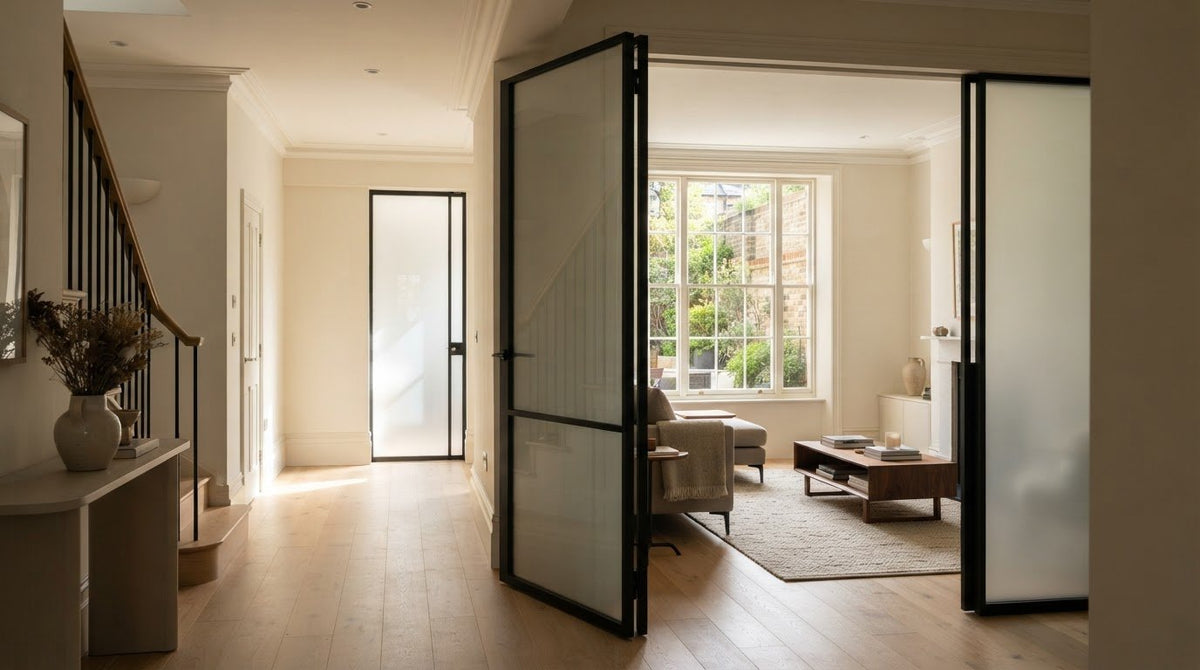
The door that admits the most daylight isn’t always the best choice for your home. Clear glazing can brighten a hallway and create an open feel, but it may offer less privacy than frosted or patterned glass. If a room feels gloomy despite daylight elsewhere, the best doors for letting light between rooms are those that balance brightness with how you use each space.
This guide compares glazed, folding and sliding internal doors, including how their layouts affect movement, privacy and visual flow. You’ll find out which styles suit different rooms, what to consider when choosing clear or textured glass, and how to select a design that complements your home. Arborfield Joinery supplies a wide range of joinery products, and its showroom displays more than 120 doors for comparing styles in person. From a hinged glazed door to a folding or sliding design, the right choice can help daylight travel further without making a room feel exposed.
Key Takeaways
- The best doors for letting light between rooms depend on where daylight starts, how the rooms connect and how much glazed area suits the opening.
- Compare hinged glazed, bi-fold, sliding and pocket formats by how they open, the space they use and the separation they provide.
- Choose clear glass for a direct sightline, or consider obscure and patterned glass when limiting views matters.
- Use a room-by-room checklist to set your priorities for daylight, privacy and opening space before choosing a style.
- Explore glazed, bi-fold and pocket doors from Arborfield Joinery, and compare styles in its showroom, which displays more than 120 doors.
Best doors for letting light between rooms: start with where daylight needs to go
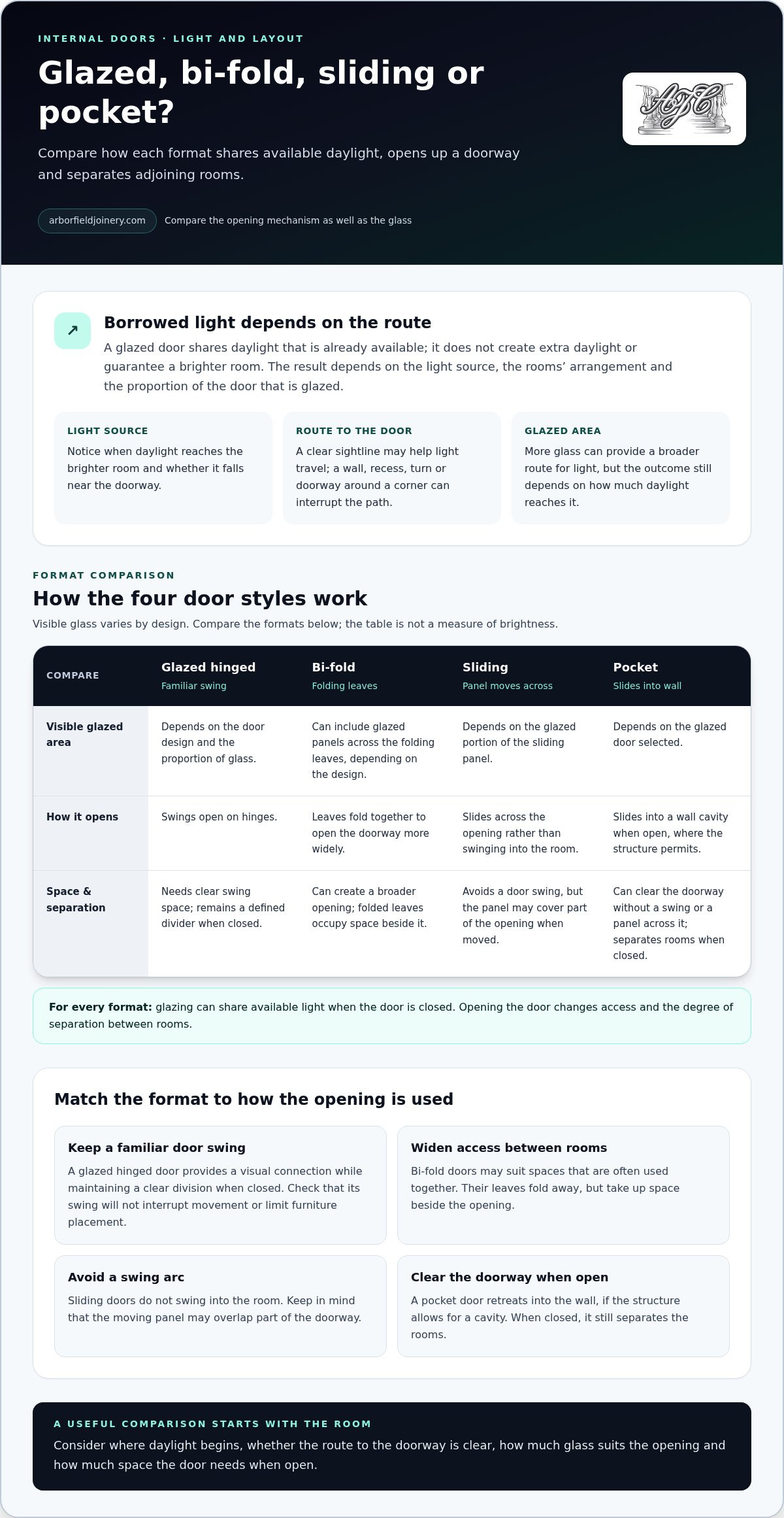
Before choosing a door, trace how daylight moves through your home. Borrowed light is daylight that passes from a brighter space through glazed areas into another room. A glazed door shares the light that is already available; it doesn’t create extra daylight or guarantee that a darker room will feel bright. The result depends on the strength and direction of the light source, the rooms’ arrangement and the proportion of the door that is glazed.
Start with the places where more natural light could make everyday life easier. A hallway, landing or internal room may benefit if it sits beside a brighter space and the doorway faces a window or has a clear sightline to it. The best doors for letting light between rooms are not simply those with the largest glass area. Their position in relation to the window and the way you use both rooms matter just as much.
Which room connections are most likely to benefit?
Imagine a windowless hallway beside a living room with a sunlit window. If the doorway is positioned so daylight can reach it, glazing may let some of that light filter into the hall. Compare this with two equally dim rooms: glazing between them can pass through available light, but it can’t brighten either space if little daylight reaches the door.
Check the route from window to doorway. Is the opening aligned with the light source, or does a wall, recess or turn interrupt the path? A clear sightline may help light travel between spaces, while a doorway around a corner may receive less. The glazed area matters too: more glass can provide a broader route for light, but the result still depends on how much daylight reaches it.
Observe the connection at different times of day before settling on a design. Notice when daylight reaches the brighter room, whether it falls near the doorway, and how the adjoining space feels at those times. This gives you a more realistic sense of what glazing might achieve than judging the rooms at a single moment.
What can a glazed door change beyond brightness?
Glazing can make adjoining rooms feel more visually connected, allowing a view through the doorway even when the door is closed. That may help a hallway feel less enclosed or make a compact layout seem more open. A door also has practical functions beyond dividing rooms; this overview of door types and functions provides useful background.
There’s a trade-off: a clearer view can mean less visual privacy, especially in a room used for work, rest or changing. Consider what someone in the hall could see and whether the rooms need to feel distinct at certain times. In short, borrowed light is daylight shared from a brighter room through glazing, with the amount reaching the next space shaped by the light source, layout and glazed area.
Glazed, bi-fold or sliding: compare door styles for sharing light
Start your comparison with two questions: how much daylight can pass through the door when it’s closed, and how much of the opening do you want clear when it’s open? A glazed hinged door shares light while maintaining a familiar division between rooms. Bi-fold, sliding and pocket formats change how the opening works, which can affect circulation and the sense of connection as well as daylight.
The visible glass area varies by design, so use the table to compare formats, not as a measure of brightness. For more on glazing as a design choice, see this guide to internal doors with glass.
| Format | Visible glazed area | How it opens | Space and separation |
|---|---|---|---|
| Glazed hinged | Depends on the door design and the proportion of glass. | Swings open on hinges. | Needs clear swing space; stays a defined divider when closed. |
| Bi-fold | Can include glazed panels across folding leaves, depending on the design. | Leaves fold together to open the doorway more widely. | Useful where a broader opening is wanted, though folded leaves occupy space beside the opening. |
| Sliding | Depends on the glazed portion of the sliding panel. | Slides across the opening rather than swinging into the room. | Avoids a door swing, but the panel may still cover part of the opening when moved. |
| Depends on the glazed door selected. | Slides into a cavity in the wall when open, where the structure permits. | Can clear the doorway without a swing or a panel remaining across it; closed, it still separates the rooms. |
When is a glazed hinged door the straightforward choice?
A glazed hinged door is a straightforward option if you want daylight to pass between rooms without changing the familiar way a door opens. It can stay closed to preserve a clear division, while its glass provides a visual connection. Check the swing before choosing: a door that opens into a narrow hall or towards furniture may interrupt movement or limit how you arrange the space.
When might bi-fold, sliding or pocket doors suit the opening?
Choose a format around how you use the opening. Bi-fold doors fold away to widen access, making them worth considering where rooms are often used together. Sliding doors don’t need a swing arc, but the moving panel may overlap part of the doorway. Pocket doors retreat into the wall when open, if the wall structure allows for a cavity. Each format can share light through its glazing when closed; opening it changes the degree of separation and access.
For an oak finish, consider the material and overall style alongside the opening mechanism. Arborfield Joinery supplies glazed, bi-fold and pocket doors, so comparing these formats can help you decide what suits your layout and preferred look. For more on timber style, see the internal oak doors guide.
Clear, obscure or patterned glass: balance borrowed light with privacy
Once you’ve settled on a door format, consider what you want people to see through it. Clear glass offers the most direct view between rooms, while obscure or patterned glass softens or limits that view. These are general design approaches, not guarantees of a particular level of privacy: the effect depends on the glass design, its position and how the spaces are used.
Glass choice doesn’t determine how bright the next room will feel on its own. The daylight available, the position of the opening and the glazed area all play a part. A door with a striking glass pattern may suit the interior beautifully, but if little daylight reaches it, the room beyond may still feel subdued.
How does glass choice affect privacy between rooms?
Clear glazing can suit a living area or hallway where a view through the door helps spaces feel connected. For a study, you might prefer a less direct view for a calmer sense of separation while still sharing some light. Obscure or patterned glass may also suit a bathroom entrance, depending on your preferences and the room’s layout.
Think about the view from both sides, not just from the doorway. What will someone see from the hall, and what might be visible from the adjoining room? Obscured glass limits views rather than creating an opaque barrier, so consider whether that softer separation feels comfortable for the way you use the space.
How should glazing style work with the rest of the interior?
Look at your home’s existing details before choosing a style. Traditional panel proportions may sit comfortably alongside classic joinery, while simpler lines can complement a more contemporary interior. Timber tone, frame shape and the balance between solid sections and glass all influence whether the door feels like a quiet continuation of the room or a more noticeable feature.
Compare the door with nearby flooring, furniture and other woodwork. A warm timber finish may bring continuity between rooms; a more restrained frame can keep the view feeling open. Neither approach is automatically better. Choose proportions and materials that feel considered from both sides of the doorway.
Clearer glass offers a more direct view, while obscure or patterned glass softens visibility. Both can share available light, but neither guarantees a particular level of brightness or privacy.
As you weigh up the best doors for letting light between rooms, separate your priorities. Is a clear sightline important, or would you rather soften the view? Then consider how the glass and frame will sit within your home’s character. This makes it easier to balance borrowed light with the visual separation you prefer.
Choose a light-sharing internal door with this practical room-by-room checklist
A short assessment of the rooms and doorway can turn a broad search into a more confident choice. First establish what the door needs to do each day, then decide which appearance and format best suit your home. This helps you compare the best doors for letting light between rooms against practical needs, rather than choosing on looks alone.
Assess the rooms, light source and opening
Follow the checklist in order, noting the details that matter for this doorway. Daylight, privacy and circulation can vary from one room connection to another.
- Identify the light source. Note which room receives daylight, where its windows are and how light reaches the doorway. Check whether this changes at different times of day.
- Consider how each room is used. A doorway between a hall and living space may have different requirements from one beside a study or bedroom. Think about when the door is usually open or closed.
- Set the privacy need. Decide whether you welcome a clear view between rooms or prefer glazing that softens visibility. Consider the view from both sides.
- Check the opening and surrounding space. Note how often the doorway is used, whether people or furniture pass through, and whether a swinging door could meet nearby furniture or narrow the route. A wider opening may matter if the rooms are often used together.
- Measure and consider the frame. Record the opening dimensions and account for the existing door frame when comparing options. The internal doors and frames guide can help you think through how the door and frame relate before ordering.
Set priorities before comparing designs
Separate essential requirements from preferences. Essentials might include enough privacy for the room, a practical opening action and a suitable fit for the doorway. Preferences could include a particular glass appearance, timber tone or door format. Rank the essentials first so an attractive finish doesn’t distract from how the door needs to work.
Then compare the options against your list. If keeping floor space clear matters most, consider formats that don’t swing into the room. If you prefer a familiar doorway, a glazed hinged door may be a natural starting point. Look at frame and glass proportions alongside existing skirting, flooring, furniture and other joinery. A finish that complements those details can help the new door feel at home in both adjoining spaces.
Use your notes to narrow the choice, not to force one answer for every room. A hall may call for a different balance of visibility and access from a room where people need greater privacy. For a closer look at options suited to your priorities, explore Arborfield Joinery’s glazed door range.
Explore Arborfield Joinery’s glazed doors and compare styles with confidence
The right choice comes down to what matters most in each doorway. A glazed hinged door can share light while keeping a familiar division between rooms; bi-fold doors may suit openings where you want wider access; sliding or pocket doors can work where a swinging leaf would take up useful floor space. Build your shortlist around the light, privacy and layout priorities you’ve identified, rather than treating one format as right for every room.
What to compare when browsing glazed door styles
Look at each door as a whole: its design, timber appearance and proportion of glazed panels. Consider how those details fit the room and how the door will look from both sides. A generous glazed area may create a more open view, while a greater balance of solid sections can give the doorway a more defined character. The effect on light still depends on the opening and the rooms around it.
Use your practical requirements as the test. Does the design suit the way the door opens? Does its glazing offer the visibility you want? Will its finish sit comfortably beside existing joinery and decoration? Comparing these points together helps you choose for everyday use as well as appearance.
Make the next step straightforward
Before browsing, narrow your options to formats that suit the opening. A glazed hinged door may fit a straightforward doorway; bi-folding may be worth considering when you want to open up more of the space; sliding and pocket doors can be useful where a swing would obstruct the room. Then compare the appearance and glazed-panel proportions within your shortlist.
Arborfield Joinery supplies glazed, bi-fold and pocket doors. Its showroom displays more than 120 doors, giving you the opportunity to see and compare different styles in person. The business has supplied doors, windows and stairs since 1953.
- Prioritise daylight: compare how the glazed area relates to the light source and doorway.
- Protect privacy: consider the sightlines between adjoining rooms.
- Make the layout work: choose a format that suits movement and available space.
- Match your home: weigh the door’s proportions and finish against existing details.
With your priorities in hand, you can browse with a clearer sense of which designs may suit your home. Explore Arborfield Joinery’s door range and compare styles at your own pace.
Make daylight part of your next design decision
Choosing a door is an opportunity to shape how your home feels as well as how its rooms function. Consider the view you want, the sense of privacy that feels comfortable and the character you’d like the doorway to bring to the interior. With those preferences in mind, the best doors for letting light between rooms become a personal choice, rather than a search for one perfect style.
Take time to compare designs against the spaces they’ll connect. A considered choice can help create a more welcoming transition between rooms while respecting how you live in each one. Keep your shortlist focused on what matters most, then compare styles to find a door that feels right for your home.
Explore Arborfield Joinery’s door range to compare styles and find a design that suits your home.
Frequently Asked Questions
Will a glazed internal door make a dark room brighter?
It can help a room feel brighter if daylight reaches the glazed door from an adjoining space. For example, replacing an opaque door between a naturally lit landing and a darker corridor may allow some available light through. The result depends on the window’s position, the route to the doorway and the amount of glazing. If both rooms receive little daylight, a glazed door alone is unlikely to transform the darker space.
Which internal door lets the most light between rooms?
A door with a larger area of clear glazing generally allows a more direct view and route for daylight than one with less glass or more obscured glazing. The best doors for letting light between rooms still depend on the layout: a large glazed panel won’t help much if the doorway is poorly positioned in relation to the window. Consider both the glazed proportion and how daylight reaches the opening before choosing.
Can obscure glass still let light through an internal door?
Yes. Obscure glass can transmit daylight while making shapes and details on the other side less distinct. That can be useful where you’d like a space to feel less enclosed without a clear view through the doorway, such as between a hall and a room where someone is working. The appearance and light transmission vary with the glass design, so consider how it looks from both sides and in your room’s natural light.
Are glazed internal doors suitable for homes with children?
They can be suitable, provided the glazing is appropriate for use in a door and the choice fits your household. In the UK, safety glazing requirements apply to glazing in doors and other critical locations. Consider how children use the adjoining spaces, whether they might run into the door, and how clearly they can see it when closed. The door’s visibility and safe everyday use matter alongside its appearance.
Can I add glazing to an existing solid internal door?
Adding a glass panel to a solid door isn’t simply a matter of cutting an opening. The alteration can affect the door’s construction, strength and suitability for its intended use, particularly if it has a specific safety or fire role. A purpose-made glazed door is often a more straightforward route to a finished design. Before altering an existing door, establish what it is designed for and whether modification is appropriate.
Do glazed internal doors work with pocket door systems?
Yes, glazed doors can be used with pocket door systems when the door and system are compatible. The door needs to suit the opening and the pocket arrangement, including the space within the wall when it slides away. Consider how the glazing will look both closed and open, and whether the selected format meets your privacy needs. Arborfield Joinery offers pocket doors alongside glazed doors as part of its joinery range.
Share:
Insulated Front Doors for UK Homes: A 2026 Guide
Are High-Performance Windows Worth the Investment?