

Last Updated: October 29, 2026
Quick Summary
To clean wooden frames, start by dusting them dry, then wipe with a damp microfiber cloth using lukewarm water and a few drops of mild dish soap, working with the grain. Rinse the cloth, wipe again, and dry the frame immediately so the timber never sits wet.
- Dust the frame dry first, since grit acts like sandpaper once liquid is added.
- Wring the cloth out thoroughly so it is damp, never dripping.
- Test any cleaner on a hidden area and let it dry before full use.
- Never use steam cleaners, bleach, ammonia, scouring pads or acetone on wooden frames.
- Call a specialist if the frame feels spongy, smells musty or the finish is lifting.
Table of Contents
- What You'll Need Before You Start
- Step 1: Dust the Frame and Protect the Glass
- How to Clean Wood Window Frames Without Soaking the Timber
- Best Cleaner for Wooden Frames and What to Avoid
- How to Remove Grime from Wood Frames and Common Stains
- Restoration Versus Cleaning: When to Stop and Call a Specialist
- How Often to Clean Wooden Window Frames
- Booking Your Frame Replacement or Bespoke Timber Joinery
- Frequently Asked Questions
Dusty wooden window frames look tired fast, and a careless clean can strip the finish or swell the timber within a day. This step-by-step guide shows you how to clean wooden frames safely, from the first dust sweep to the final polish.
Most damage comes from water and harsh products, not from dust. Work slowly, test first, and keep moisture low. The steps below are set out in the order most people find easiest to follow.
What You'll Need Before You Start
Gather your supplies before you touch the frame. Stopping halfway to hunt for a cloth is how drips end up on bare timber.
- Soft, dry microfiber cloths (at least two)
- A soft brush or clean paintbrush for corners
- A small bowl of lukewarm water with a few drops of mild dish soap
- A second bowl of clean water for rinsing the cloth
- Cotton swabs for mouldings and tight joints
- Masking tape to protect glass edges, if needed
- Gloves, if your skin reacts to cleaners
Skip the scouring pads, kitchen sprays and bleach. They scratch finishes and can lift paint.
Step 1: Dust the Frame and Protect the Glass
Always start dry. Dust and grit act like sandpaper once you add liquid, so remove as much as you can first.
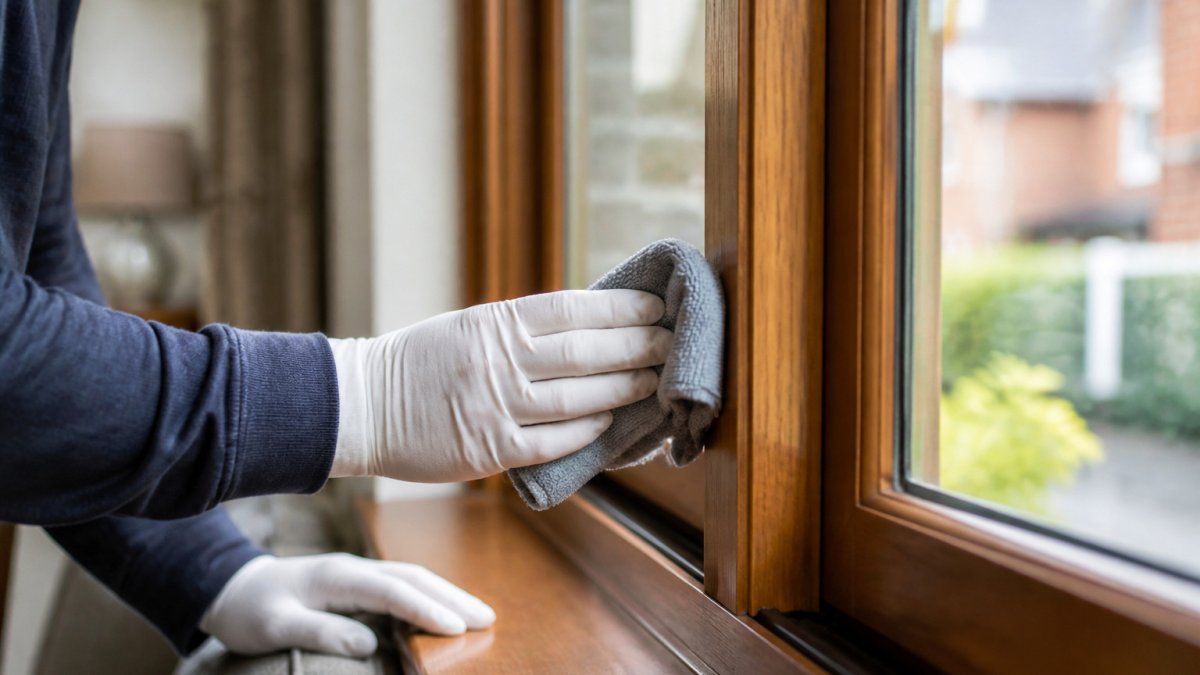
- Wipe the frame with a dry microfiber cloth, working from top to bottom.
- Use a soft brush to reach mouldings, sills and corners.
- Tape along the glass edges if the frame sits tight to the pane.
- Cover any nearby furniture or flooring with an old towel.
Many people skip the tape, then find cleaner dried into the glass seal. A few minutes of prep saves a lot of scraping later.
How to Clean Wood Window Frames Without Soaking the Timber
Wood swells when it takes on water, and repeated soaking can lead to warping or cracks. Keep your cloth damp, never dripping.
- Dip a microfiber cloth in the soapy water, then wring it out thoroughly.
- Wipe a small test area first, such as the back of the frame, and let it dry.
- Clean one section at a time, moving with the grain of the wood.
- Rinse the cloth in the clean water, wring it hard, and wipe the section again to remove soap.
- Dry the frame immediately with a clean, dry cloth.
Watch out: standing water in the joints is the biggest risk. If a cloth leaves a visible wet patch, you have used too much liquid.
Best Cleaner for Wooden Frames and What to Avoid
The right cleaner depends on what sits on top of the timber, because the finish, not the wood, is what you are actually cleaning.
Use the table below to match your cleaner to your finish.
| Finish type | Safe everyday cleaner | Avoid | Why |
|---|---|---|---|
| Painted timber | Lukewarm water with a few drops of mild dish soap | White spirit, ammonia, bleach, abrasive pads | Solvents soften and lift paint; abrasives dull the sheen |
| Varnished or lacquered | Mild dish soap solution; diluted white spirit only for sticky marks, spot-tested | Acetone, nail varnish remover, heavy silicone polish | Solvents can break down the lacquer film; silicone builds up and attracts dust |
| Oiled or waxed | Dry cloth first; re-oil or re-wax sparingly after cleaning | Dish soap in strong concentration, degreasers | Soap strips oil and wax, leaving dry, patchy timber |
| Gilded or gesso | Soft brush and dry cloth only; specialist cleaner if needed | Water, soap, any liquid cleaner | Water lifts gesso and dissolves gilding size; damage is rarely reversible |
| Raw or unfinished | Dry brush and cloth; fine sanding only if needed | Water, soap, any wet cleaner | Water raises the grain and can stain bare timber |
For most painted or varnished frames, a mild solution of dish soap and lukewarm water works well. It lifts everyday grime without stripping the finish.
Avoid these products on wooden frames generally:
- Strong household sprays containing ammonia or bleach
- Abrasive powders and scouring pads
- Heavy silicone polishes that build up and attract dust
- Anything you have not tested on a hidden area
Antique frames, gilded finishes and old French polish need a gentler approach.
Keep two cloths on the go, one for the soapy pass and one for the clean rinse, and change the rinse water as soon as it looks cloudy. Dirty rinse water simply redistributes grime across the frame.
How to Remove Grime from Wood Frames and Common Stains
Stubborn grime needs patience, not force. Lift dirt gradually with repeated light passes instead of scrubbing hard. Scrubbing a stain can burn through the finish, leaving a lighter patch that looks worse than the original mark. Going slowly keeps the surface even.
Work through the stains below in order of gentleness, and stop as soon as the mark lifts. Always test on a hidden area first, and never mix cleaning products.
Sticky residue from adhesive tape or labels
Adhesive residue sits on top of the finish, so lift it mechanically before you reach for any liquid. Warm the residue with a hairdryer on a low setting for 20-30 seconds, then roll it with a clean thumb or a soft eraser. For what remains, dampen a cotton swab with diluted white spirit and roll it gently over the spot, do not rub, because friction spreads the adhesive. Wipe clean with a damp cloth and dry immediately.
Greasy marks and kitchen grime
Grease responds to mild dish soap because the surfactant breaks the bond between oil and the surface. Use a little diluted dish soap on a cloth, wipe with the grain, then rinse with a clean damp cloth and dry. On oiled or waxed frames, use the weakest solution that works and re-oil or re-wax the area afterwards, because soap gradually strips the protective layer.
Water rings and dark water marks
Water rings form when moisture penetrates the finish and dries unevenly, leaving a mineral tide-line. Stop cleaning and let the frame dry fully before you judge it, many marks fade as the timber dries. If a ring persists on a waxed or oiled finish, a light rub with a cloth and a little wax can blend it. On lacquered or varnished surfaces, persistent rings usually mean the finish itself has been compromised, and a specialist should assess it rather than you sanding through the film.
Mould and mildew spots
Mould is a symptom of damp, not a cleaning problem on its own (Damp and mould). Address the source of damp first, blocked vents, failed seals or a leaking gutter above the frame, then clean gently and dry thoroughly. Wipe mould with a cloth dampened with mild soapy water, dry immediately, and dispose of the cloth rather than reusing it.
Scuffs, paint transfer and dark marks
Light scuffs often come off with a soft pencil eraser or a cloth dampened with mild soapy water. Paint transfer from a door or furniture can sometimes be lifted with a plastic scraper used gently along the grain. Never use a metal scraper or a scouring pad, both leave scratches that show through the finish.
When a stain means the finish has failed
Some marks are not dirt at all. A white, cloudy patch on varnish usually means moisture has become trapped in the film. A dark stain that spreads after cleaning often indicates rot or a water leak behind the frame. Flaking or bubbling around a mark means the finish has lost adhesion. In each case, cleaning will not fix it, the section below on restoration versus cleaning explains what to do next.
Restoration Versus Cleaning: When to Stop and Call a Specialist
Cleaning removes dirt from a sound surface. Restoration repairs damage, such as rot, flaking paint or cracked joints. If you find soft timber that gives under a fingertip, or paint that peels in sheets, cleaning will not fix it.
Call a specialist when:
- The frame feels spongy or smells musty
- The finish has lifted or bubbled over large areas
- The frame is older, listed, or part of a period property
- The joints have opened up and let in draughts
Period properties often have frames that look like a cleaning job but need careful repair. If you are weighing up options, read our guide to Period Property Windows: Renovation Tips That Work. It covers when a repair makes more sense than replacement, and our piece on Is Custom Joinery Good for Period Property Restoration? explains when bespoke work is the right route.
How Often to Clean Wooden Window Frames
For most homes, a light dust every few weeks and a proper clean two or three times a year keeps frames in good shape. Homes near busy roads, or rooms with cooking and open fires, may need more frequent cleaning.
Regular care also helps frames last longer. For longer-term performance, a well-chosen timber window matters, so How to Find a Good U-Value for UK Windows is worth a look if you are planning new frames.
Booking Your Frame Replacement or Bespoke Timber Joinery
If your frames are beyond cleaning, replacement may be the practical option. Arborfield Joinery is a family-run business trading since 1953, with full manufacturing facilities for bespoke joinery. Our team can advise on whether a repair, a stock product or a made-to-measure frame suits your property best.
Browse our range of Oak Shaker Architrave if you are finishing the surrounds once the frames are in.

Get in touch with the Arborfield Joinery team for advice on your frames.
Frequently Asked Questions
How do I clean wood window frames?
Start by dusting the frame with a dry, lint-free microfiber cloth, working along the wood grain to lift loose surface grime. Next, dampen a cloth in a mild solution of washing-up liquid and warm water, wring it out thoroughly, and wipe the timber gently. Dry the frame straight away with a clean cloth so moisture cannot soak into the grain. Avoid soaking the wood, as excess water can cause swelling, warping or cracking over time.
What is the safest way to clean wooden frames?
The safest approach is the gentlest one that works. Begin with dry dusting, then move to a barely damp cloth with a pH-neutral cleaner if needed. Test any product on a hidden area first to check it does not lift the varnish or paint. Work along the grain, avoid abrasives such as scouring pads or sandpaper, and dry the frame promptly. Antique or gilded frames are especially delicate, so if the finish is flaking or the frame is valuable, consult a professional conservator before using any liquid.
How often should wooden frames be cleaned?
For most indoor wooden window and picture frames, a light dusting every one to two weeks is enough to stop grime building up. A more thorough clean with a damp cloth is usually needed every few months, or sooner in kitchens, bathrooms or rooms with heavy condensation or smoke. Regular gentle cleaning is kinder to the finish than occasional heavy scrubbing, and it helps you spot early signs of moisture damage.
Can you use water to clean wooden frames?
Water can be used, but only sparingly. A cloth that is barely damp is safe for sealed, varnished or painted timber. Avoid soaking the frame, pooling water in joints, or leaving the wood wet, because moisture can warp the timber and lift the finish. Always dry the frame immediately with a clean, dry cloth. For raw or unfinished wood, keep moisture to an absolute minimum.

Share:
Oak Pyramid Newel Cap Dimensions and Fitting Options
How to Choose the Best Weatherstripping for Exterior Timber Doors