
Table of Contents
- Why Period Property Windows Matter to Your Home
- Restoration vs. Replacement: Making the Right Choice
- Understanding Listed Building Window Replacement Regulations
- Draught-Proofing Sash Windows Without Compromising Character
- How to Prevent Window Condensation Issues in Historic Homes
- Sash Window Repair Techniques and Timber Frame Maintenance
- Choosing Historically Accurate Hardware and Secondary Glazing
- DIY vs. Professional Restoration: Cost and Outcome Analysis
Last Updated: August 26, 2026
Why Period Property Windows Matter to Your Home
Restoring period property windows preserves structural integrity, thermal performance, and character. Whether Victorian sash frames, Georgian casements, or Edwardian timber joinery, they represent significant heritage value and ongoing maintenance investment.
The core challenge is deciding whether to restore originals or replace them entirely. This hinges on understanding what's salvageable, applicable regulations, and balancing authentic character with modern performance. Historic windows are typically single-glazed and prone to draught, yet possess qualities modern windows struggle to replicate: authentic proportions, traditional glazing bars, and hand-finished craftsmanship. The real question isn't whether period windows are "good" or "bad", but whether you understand what you're working with and can maintain it properly.
This guide covers practical decisions from initial assessment through final hardware selection, addressing regulations, cost-benefit trade-offs, and techniques that preserve character whilst improving performance.
Restoration vs. Replacement: Making the Right Choice
The choice between restoring existing period windows and replacing them with modern alternatives shapes everything else in your project.
Restoration retains original frames, sashes, and glazing bars whilst addressing rot, draught, and condensation through targeted repairs and upgrades. A skilled joiner can strip, repair timber, reglaze with traditional putty, and install draught-proofing that preserves appearance. The advantage is authenticity: your home retains period character, and listed building consent typically becomes straightforward.
Replacement removes the entire window assembly and installs new units, typically modern timber, aluminium, or composite frames. Modern replacements offer superior thermal performance and easier maintenance. The trade-off is visual: even high-quality replica windows struggle to match original proportions and craftsmanship. For listed buildings, replacement often triggers complex consent processes and may be refused.
Cost-benefit analysis depends on frame condition. If windows have solid timber with manageable rot, restoration typically costs less upfront than replacement. However, severely compromised frames make replacement more economical. A common mistake is underestimating restoration costs; hidden rot discovered mid-project can exceed replacement budgets.
Properly restored windows, maintained regularly, last decades. Modern replacements offer predictable performance but lack the repairability of traditional timber; component failure often requires replacing the entire unit.
Understanding Listed Building Window Replacement Regulations
If your home is listed, window replacement requires formal consent governed by planning and conservation regulations.
Listed building consent is required whenever you propose altering, removing, or replacing any part of a listed structure, including windows. The local planning authority's conservation officer assesses applications based on whether changes preserve the building's special architectural or historic interest. Regulations favour retention of original windows wherever possible; consent for replacement is harder to obtain. However, if you demonstrate that restoration is genuinely uneconomical or structurally impossible, replacement with historically appropriate alternatives becomes viable.
"Historically appropriate" matters significantly. Slimline double glazing units in traditional glazing bar patterns, timber frames matching original profiles, and period-correct hardware strengthen applications. Unauthenticated modern frames, aluminium casements, or oversized glass panes weaken them.
The application process requires detailed drawings showing existing windows, proposed replacements, and how new units match original proportions. Many applications fail because homeowners submit generic modern specifications without addressing how they fit the building's character.
Building Regulations approval is separate from listed building consent. New windows must meet current thermal performance standards, typically a U-value of 1.6 W/m²K or better (gov.uk). This requirement often drives the choice toward double glazing, even in heritage contexts, because single-glazed windows rarely meet modern standards.
According to Historic England's guidance on window conservation, the most successful projects combine retention of original frames with targeted upgrades to draught-sealing and secondary glazing rather than wholesale replacement.
Draught-Proofing Sash Windows Without Compromising Character
Sash windows are notorious for draughts due to traditional box sash construction with weights, cords, and loose-fitting sashes. Yet effective draught-proofing preserves operation whilst dramatically reducing air leakage.
Draughts originate from gaps between sash and frame, worn rope channels, deteriorated putty, and missing weather stripping. The traditional approach uses felt or brush seals fitted into channels on the sash and frame. These sit flush when closed, creating an tight seal without visibly altering appearance. Installation requires careful measurement; poorly fitted seals bind the sash or prevent full closure. Quality matters: cheap foam seals compress within months, whilst proper brush seals last years.
Putty glazing compounds deteriorate over time, leaving gaps where glass meets frame. Reputting, removing old putty and replacing it with fresh material, is labour-intensive but essential. Modern putty formulations remain flexible longer than traditional linseed oil putty, reducing cracking and shrinkage.
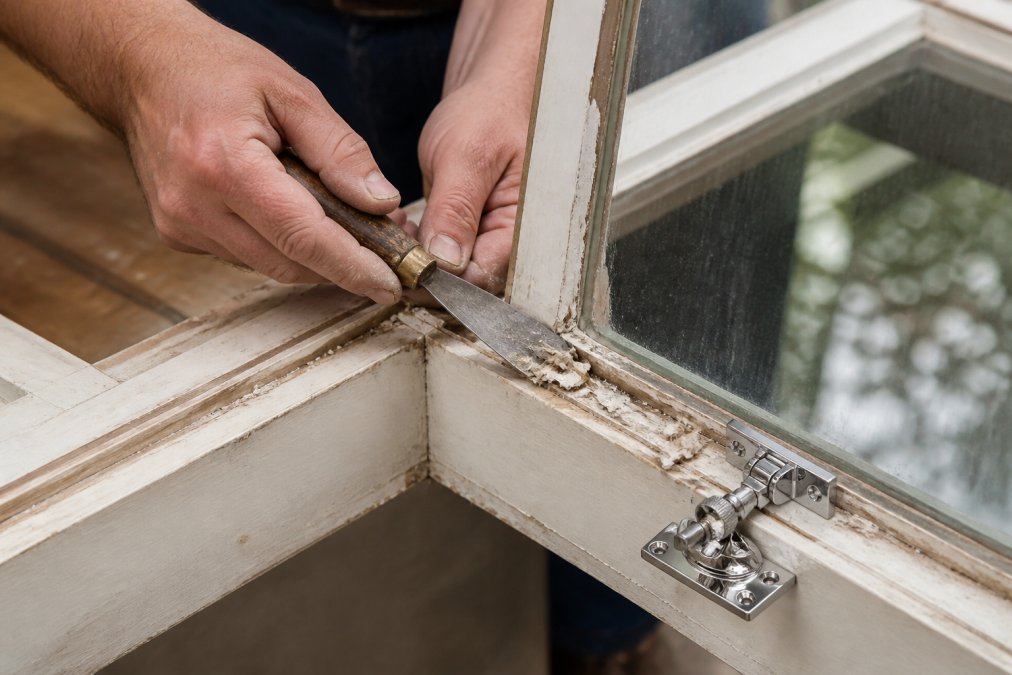
Weather stripping around the outer frame perimeter addresses draughts that bypass the sash itself. Silicone or polyurethane-based strips adhere to frame edges without visible fasteners.
Over-sealing sash windows can trap moisture inside the frame, promoting rot. Ventilation remains important; windows need to open regularly to allow air circulation. The goal is controlled air-tightness, not hermetic sealing.
For listed buildings, draught-proofing is almost always acceptable because it's reversible and doesn't alter external appearance.
How to Prevent Window Condensation Issues in Historic Homes
Condensation on period windows is common in older homes with poor ventilation or high internal moisture. Understanding why it occurs prevents misdiagnosis and ineffective remedies.
Condensation forms when warm, moisture-laden air contacts cold glass. In period homes, this happens because single-glazed windows conduct cold from outside directly into the interior. The air near the glass cools below its dew point, and moisture condenses. This is physics, not a window defect.
The root cause is usually indoor moisture combined with inadequate ventilation. Bathrooms, kitchens, and laundry areas generate significant moisture. Period properties often lack extraction fans or have sealed them to reduce draughts, trapping moisture inside.
The fix isn't always better windows, it's better ventilation. Opening windows daily, installing extractor fans in kitchens and bathrooms, and ensuring loft and underfloor spaces breathe all reduce internal moisture. These measures cost far less than replacing windows and often eliminate condensation entirely. restoring historic properties.
If condensation persists despite improved ventilation, secondary glazing becomes relevant. A secondary pane installed on the interior creates an insulating air gap. Interior surfaces warm up, reducing the temperature differential that triggers condensation. Secondary glazing also improves thermal performance without altering external appearance, crucial for listed buildings.
Modern slimline double glazing units can replace single panes within original frames, improving thermal performance whilst retaining period proportions. Glazing bars remain visible, and external appearance changes minimally.
Sash Window Repair Techniques and Timber Frame Maintenance
Sash windows deteriorate predictably: rope breaks, weights jam, putty fails, and timber rots. Understanding how to address each issue prevents irreversible damage.
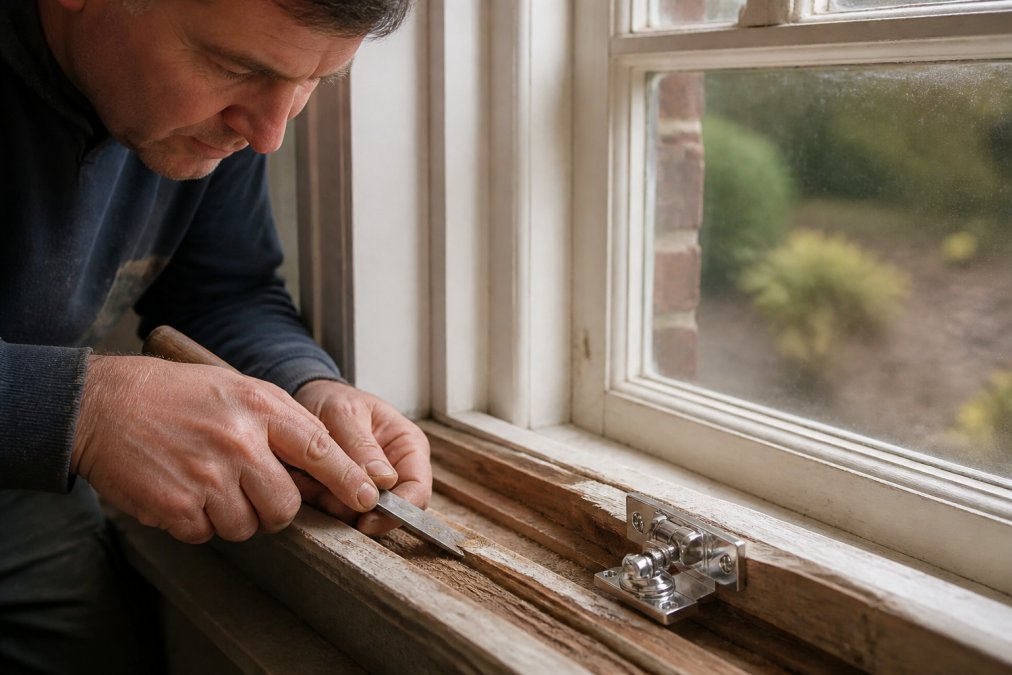
Rope and weight failures are common. Sash cords, traditionally made from jute, fray and snap over decades. Replacing cords requires opening the frame and accessing weight pockets. This is skilled work; incorrectly balanced weights cause sashes to jam or fall unexpectedly.
Timber rot requires careful assessment. Surface rot affecting only outer wood fibres can be cut out and filled with epoxy resin consolidant. Structural rot, where wood loses integrity, demands timber replacement. A joiner will splice new wood into the affected area, matching grain and profile to original material. This is expensive but necessary; ignoring structural rot accelerates decay.
Putty deterioration is inevitable. Traditional linseed oil putty hardens and cracks after 15-20 years. Reputting involves removing old material, cleaning glass and frame, and applying fresh putty in a continuous bead, then bevelled at 45 degrees to shed water.
Glazing bars, the slender timber divisions creating window panes, are structurally important and visually defining. If damaged, replacement must match original profiles exactly. Specialist joiners hold detailed templates of period bar designs and can reproduce them faithfully.
Preventive maintenance extends window life dramatically. Annual inspection for putty cracks, rope fraying, and paint deterioration catches problems early. Repainting every 5-7 years protects timber from water ingress.
A new sash assembly costs £1,500-3,000 depending on size and detail. Repairing an existing sash, including new rope, putty, and minor timber work, typically costs £400-800. Repair is almost always the first choice unless the sash is structurally compromised beyond practical repair.
Choosing Historically Accurate Hardware and Secondary Glazing
Hardware profoundly affects a period window's visual character. Original hardware is often worth preserving, but when replacement is necessary, matching original designs maintains authenticity.
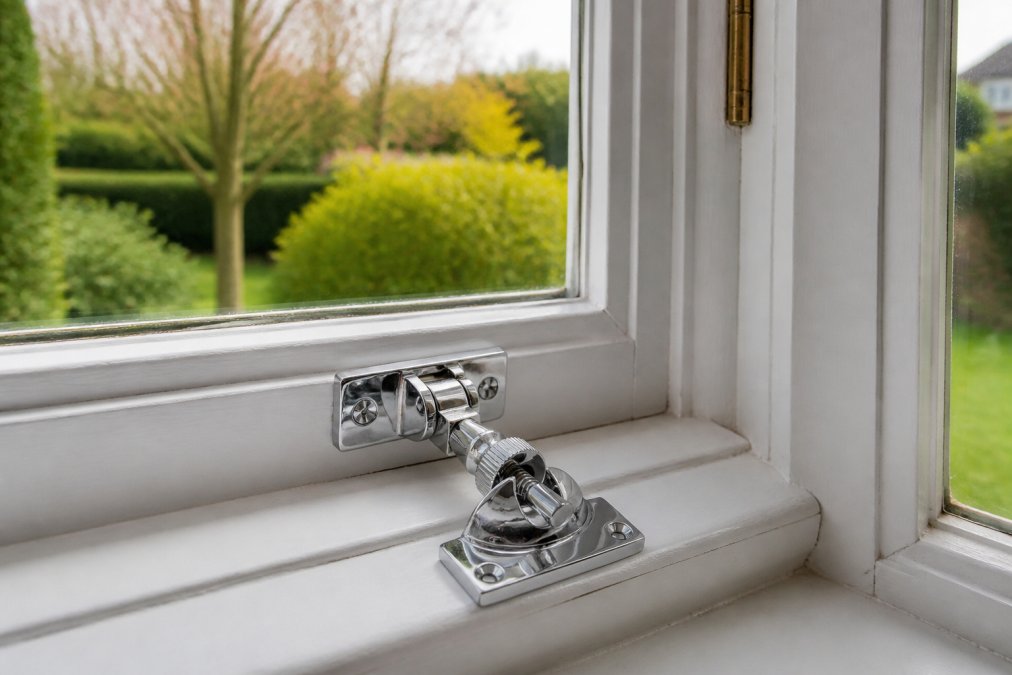
Traditional sash fasteners lock the two sashes together and prevent rattling. Common designs include the Brighton fastener (a brass toggle mechanism), the Fitch fastener (a rotating cam), and the quadrant sliding arm fastener. Each has distinct proportions and operation.

Arborfield Joinery stocks period-correct hardware including the Brighton Fastener in Polished Chrome (£13.32), the Fitch Fastener in Polished Brass (£12.21), and the Quadrant Sliding Arm Fastener in Polished Chrome (£13.32). These are exact reproductions of Victorian and Edwardian originals, manufactured to traditional specifications with solid brass construction. For casement windows, the Casement Fastener in Antique Brass (£13.32) provides period-appropriate securing with its distinctive spoon-shaped handle.


Secondary glazing involves installing a second pane on the interior of the primary window, creating an insulating air gap that improves thermal performance and reduces condensation without altering external appearance. For listed buildings, this is often the preferred route to meeting Building Regulations thermal requirements whilst preserving original windows.
Slimline secondary glazing units fit within existing frame depth, minimising visual intrusion. Alternatively, separate secondary frames can be installed inside the primary window reveal. Slimline units are less visible but more expensive; separate frames are cheaper but more obviously "secondary."
The thermal benefit is significant. A single-glazed window with secondary glazing achieves U-values around 1.8-2.0 W/m²K, approaching modern standards (peer-reviewed research). This reduces heat loss through windows by roughly 50% compared to single glazing alone, lowering heating bills and reducing condensation risk.
DIY vs. Professional Restoration: Cost and Outcome Analysis
Many homeowners consider tackling window restoration themselves to save money. Understanding realistic timescales, skill requirements, and cost trade-offs prevents expensive mistakes.
Professional restoration typically costs £800-1,500 per sash window for comprehensive work: rope replacement, reputting, draught-sealing, and minor timber repair. For a typical Victorian terrace with eight sash windows, professional restoration runs £6,400-12,000.
DIY restoration appeals because labour represents 60-70% of professional costs. However, several factors complicate the decision. Rope replacement requires opening the frame and accessing weight pockets, straightforward in principle but fiddly in practice. Reputting demands specific technique: putty consistency, bevel angle, and timing all affect durability. Poor reputting fails within 2-3 years.
Timber repair is where DIY becomes risky. Identifying rot extent, selecting appropriate repair methods, and executing timber splicing require experience. Mistakes here are costly; inadequate rot treatment leads to accelerated decay.
A single sash window takes an experienced DIYer 8-12 hours. For eight windows, that's 64-96 hours of work. Most homeowners spread this over weeks or months. Professional teams complete the same work in 2-3 days.
Quality outcomes differ markedly. Professional joiners have specialized tools, tested techniques, and experience troubleshooting issues. Their work carries implicit warranty; if a repair fails prematurely, they address it.
A hybrid approach makes sense for many homeowners. Professional assessment and planning (£200-400) identifies what's achievable DIY. Simple tasks, draught-sealing, minor paint work, hardware replacement, are reasonable for competent DIYers. Rope replacement and reputting are borderline; many homeowners achieve acceptable results with patience. Structural timber work is best left to professionals.
Many homeowners find that doing some work themselves whilst outsourcing skilled tasks offers the best balance of cost, quality, and satisfaction.
Period property windows demand a different approach than modern alternatives. Restoring them properly, understanding regulations, addressing draught and condensation systematically, and choosing authentic hardware preserves both character and function. Get your windows surveyed, understand what's salvageable, and plan accordingly. With proper care, period windows provide decades of reliable service and authentic beauty that modern replacements struggle to match. Arborfield Joinery can help with bespoke window solutions, period-correct hardware, and expert advice on what suits your property best. Shop now!
=== FAQ ANSWERS (audit these too, same rules) ===
[1] Q: Do I need planning permission to replace windows in a listed building? A: Yes. Listed building consent is required before replacing or altering windows in a listed property. Your local planning authority will assess whether replacements match the original character, materials, and design. Period-appropriate timber windows with slimline double glazing or secondary glazing often receive approval as they preserve architectural integrity. Speak to your planning department before starting work to avoid costly removals or enforcement action.
[2] Q: Is it better to repair or replace original sash windows? A: Repair is almost always preferable for period property windows. Original timber frames and box sash designs have heritage value and and character that replacement cannot replicate. Repairing involves fixing rot, replacing broken cords and weights, reglazing with putty, and draught-proofing. Replacement becomes necessary only when structural damage is beyond repair.
[3] Q: How can I improve the thermal efficiency of period windows without losing character? A: Secondary glazing and draught-proofing are the most effective methods. Secondary glazing sits inside the existing frame and adds an insulation layer without altering the exterior appearance. Draught-proofing with weather stripping and careful sealing of gaps reduces heat loss significantly. Slimline double glazing in the original sash can also work if designed to match period proportions. These approaches improve U-values and reduce condensation while keeping your period character intact and maintaining listed building compliance.
[4] Q: What are the common signs of rot in timber window frames? A: Look for soft or spongy wood when you press the frame, discoloured patches, peeling paint, or gaps opening between the frame and wall. Rot often starts at the bottom of frames where moisture collects, and around putty glazing where water pools. If left untreated, rot spreads into the structural timber and cords and weights system, making windows difficult to operate. Early detection through regular inspection allows targeted repairs to the affected section rather than full frame replacement, preserving the original joinery.
Frequently Asked Questions
Do I need planning permission to replace windows in a listed building?
Yes. Listed building consent is required before replacing or altering windows in a listed property. Your local planning authority will assess whether replacements match the original character, materials, and design. Period-appropriate timber windows with slimline double glazing or secondary glazing often receive approval as they preserve architectural integrity. Speak to your planning department before starting work to avoid costly removals or enforcement action.
Is it better to repair or replace original sash windows?
Repair is almost always preferable for period property windows. Original timber frames and box sash designs have heritage value and and character that replacement cannot replicate. Repairing involves fixing rot, replacing broken cords and weights, reglazing with putty, and draught-proofing. Replacement becomes necessary only when structural damage is beyond repair.
How can I improve the thermal efficiency of period windows without losing character?
Secondary glazing and draught-proofing are the most effective methods. Secondary glazing sits inside the existing frame and adds an insulation layer without altering the exterior appearance. Draught-proofing with weather stripping and careful sealing of gaps reduces heat loss significantly. Slimline double glazing in the original sash can also work if designed to match period proportions. These approaches improve U-values and reduce condensation while keeping your period character intact and maintaining listed building compliance.
What are the common signs of rot in timber window frames?
Look for soft or spongy wood when you press the frame, discoloured patches, peeling paint, or gaps opening between the frame and wall. Rot often starts at the bottom of frames where moisture collects, and around putty glazing where water pools. If left untreated, rot spreads into the structural timber and cords and weights system, making windows difficult to operate. Early detection through regular inspection allows targeted repairs to the affected section rather than full frame replacement, preserving the original joinery.
This article was written using GrandRanker
Share:
Bespoke Staircases in Berkshire: The Definitive Guide to Quality Timber Joinery
Cottage Style Internal Doors: A Complete Guide to Rustic Elegance