
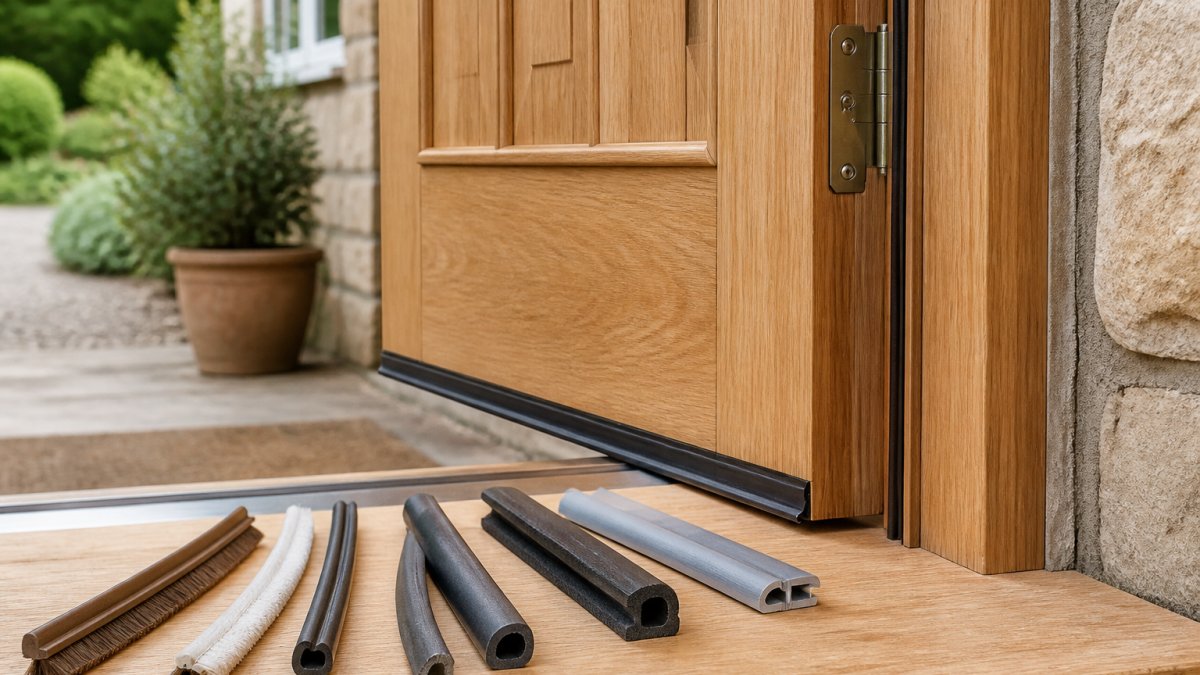
Last Updated: October 29, 2026
Quick Summary
The best weatherstripping for exterior timber doors is a seal matched to your measured gap and your door's seasonal movement, not a universal product. Diagnose the gap first with a torch test and a steel rule, then choose a profile that suits it. On timber doors, mechanically fixed seals such as kerf-in or screw-fixed types avoid the adhesive failures common on painted or damp timber.
- Timber doors swell in damp weather and shrink in dry spells, so clearances change through the year.
- Measure gaps with a steel rule or feeler gauges; hinge-side gaps are usually smaller than latch-side ones.
- Foam tape suits small, even gaps of 2-4mm but compresses permanently and is a short-term fix.
- Door sweeps handle the gap under the door, often the largest single source of draught.
- Check the seal each autumn and re-adjust the threshold if the door starts to drag.
Table of Contents
- Why Timber Doors Need a Different Weatherstripping Approach
- How to Diagnose the Gap Before You Buy a Weather Seal
- Weatherstripping Options for Exterior Timber Doors Compared
- How to Seal Gaps Around a Door: Step by Step
- Choosing a Door Threshold Weather Seal for Uneven and Old Doors
- Draught Proofing Timber Doors: Seasonal Movement and Maintenance
- Get Advice on Sealing Your Timber Doors
- Frequently Asked Questions
Why Timber Doors Need a Different Weatherstripping Approach
Timber doors move. Precision in these measurements is equally critical when selecting garage door weather stripping to ensure that the seal accommodates the natural expansion and contraction cycles of the wood.
The problem is that a timber door is not a fixed object. A seal that fits tightly in October can bind and jam by January. Rustica's guide to door weatherstripping makes the same point: fit and the gap being sealed matter more than any single recommended profile.
That changes how you shop. You are not looking for the strongest seal, the cheapest strip or the thickest foam. You are looking for the seal that suits your door assembly, your attachment method and the size of the gap you actually have.
How to Diagnose the Gap Before You Buy a Weather Seal
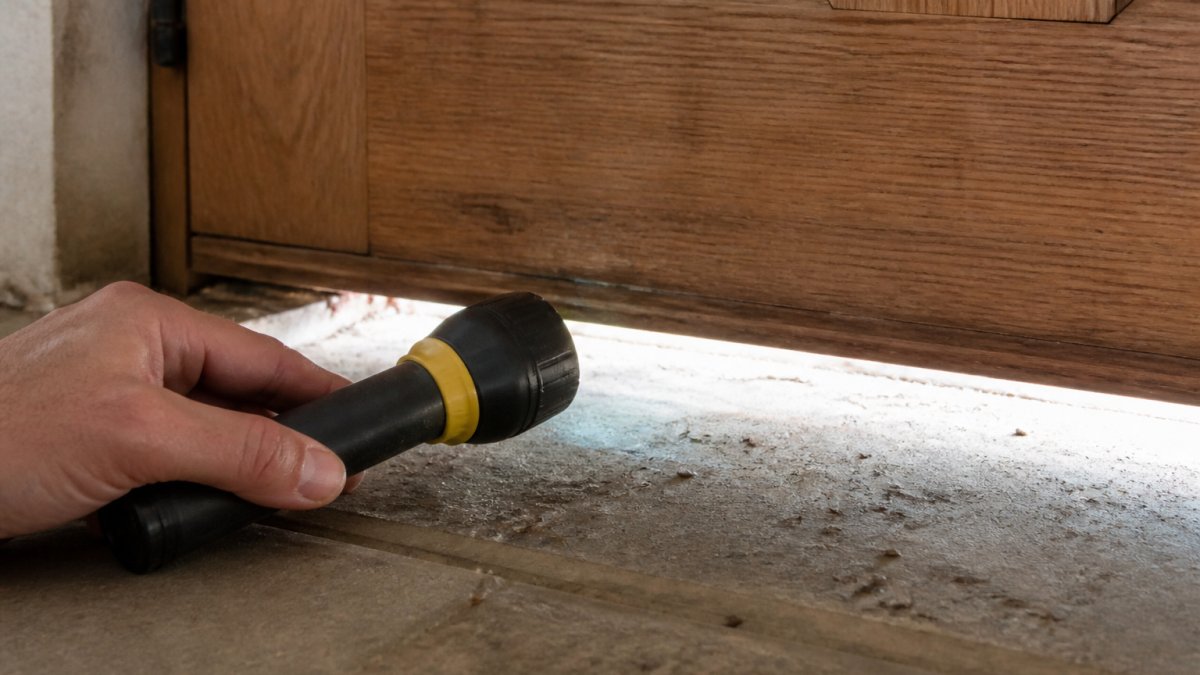
Diagnosing the gap means checking three things before you spend anything: where the draught enters, how wide the gap is, and whether the gap stays the same all year. Skip this and you will buy the wrong profile, then buy again.
Start with the torch test. On a dark evening, shine a torch around the closed door from inside while someone outside watches for light. Mark every point where light shows.
Next, measure. A steel rule or a set of feeler gauges tells you whether the gap is 2mm, 5mm or wider.
Finally, check the frame itself. If you are choosing an external oak door frame kit, our guide on how to choose the right fit explains how to measure your opening accurately and ensure proper weatherproofing.
Weatherstripping Options for Exterior Timber Doors Compared
No single weather seal wins across every timber door, so compare profiles against your measured gap and against how your door behaves through the year. The table below sets out what each type does well, where it struggles, and how it interacts specifically with timber surfaces and door movement.
| Seal type | Best for | Gap it suits | Timber-specific watch-out |
|---|---|---|---|
| Foam tape | Quick, low-cost draught proofing | Small, even gaps (2-4mm) | Compresses permanently; adhesive can lift from painted or varnished timber in damp conditions |
| Rubber or foam strip | General door seal on a sound frame | 3-6mm | Can bind as timber swells; choose a hollow or cellular profile that recovers after compression |
| V-strip (compression seal) | Uneven gaps along jambs and head | Variable (typically 3-7mm) | Needs clean, dry, sealed timber to adhere; mechanical fixing is more reliable on bare or newly painted edges |
| Door sweep | Gap under the door | 5-15mm | Brush or flexible blade copes with uneven thresholds; rigid blades wear on rough sills |
| Threshold seal | Bottom of door, weatherproofing | Adjustable | Fiddly to set; timber sills need a drip groove to shed water away from the seal |
| Kerf-in or screw-fixed seal | Long-term performance on doors that move | 3-6mm | Requires a router or kerf tool; mechanical fixing avoids adhesive failure on painted or varnished timber |
Foam Tape and Self-Adhesive Strips
Foam tape is the cheapest way to block cold air, and it is genuinely useful for a quick fix on a small, even gap. The catch is durability and adhesion. Foam compresses and loses its spring, so a strip that seals well in autumn may flatten by spring. On timber, the adhesive backing is also vulnerable: painted or varnished edges can be dusty or slightly oily, and damp timber will not hold a self-adhesive strip for long.
Rubber and Foam Door-Seal Strips
Rubber or foam strip is the middle ground most homeowners reach for, and it suits a sound frame with a 3-6mm gap. The important choice is the profile: a hollow or cellular rubber compresses and recovers better than solid foam, which takes a permanent set. On a timber door that swells in winter, a thick solid strip can bind at the latch side and force the door out of square.
V-Strip and Compression Seals
V-strip is a folded strip that compresses as the door closes, making it a better choice for an uneven gap than flat foam. It copes with slight variation along a jamb, which suits older timber doors. The limitation is adhesion: V-strip needs a clean, dry, painted or sealed surface to stay put, so preparation matters more than the product itself.
Door Sweeps and Draught Excluders
A door sweep or draught excluder handles the gap under the door, which is often the largest single source of draught. On timber doors, the base of the leaf is also the most vulnerable to water, so pair a sweep with a hardwood weather bar or sill that has a drip groove; this sheds water away from the door base and protects both the timber and the seal.
How to Seal Gaps Around a Door: Step by Step
Sealing gaps around a door is a sequence, not a single purchase. Follow it in order and you avoid buying twice.
- Clean and dry the door edge and frame where the seal will sit. Adhesive will not bond to damp or dusty timber.
- Fill any deep or irregular gaps first with a suitable filler, then sand flush.
- Fit the threshold seal or sweep at the bottom, adjusting it so the door closes without dragging.
- Apply the perimeter seal, working from the hinge side so the door still closes squarely.
- Test the fit by closing the door and checking for light and draught.
- Leave the seal to settle for a few days, then re-check as the door moves.
A common mistake is fitting a thick seal all the way round. On a timber door that binds at the latch side, thin the seal there rather than forcing the door shut. Watch out: forcing a swollen door against a new seal can distort the frame and damage the hinges.
Choosing a Door Threshold Weather Seal for Uneven and Old Doors
A door threshold weather seal is the strip or bar at the base of the door that blocks cold air, water and draughts from entering under the leaf.
Start by measuring the gap at three points: hinge side, centre and latch side. If the variation is more than about 3mm, an adjustable threshold or a sweep with a flexible blade is usually the better choice. An adjustable threshold lets you raise or lower the seal to match the door, and you can re-set it as the seasons change. A sweep with a brush or rubber blade copes with a uneven sill because the blade follows the surface rather than relying on a fixed plane.
For timber doors, the sill detail matters as much as the seal. If you are weighing up options, our guide to hardwood exterior door sill pricing and options covers dimensions, drip grooves and timber choices.
Setting an adjustable threshold is a sequence.
Maintenance is straightforward but easy to neglect. Check the threshold each autumn before the cold arrives, clear debris from the seal, and re-adjust if the door starts to drag. Replace worn sweep blades rather than adding a second layer, and re-coat any bare timber at the base of the door where the finish has worn, since bare timber moves fastest and will change the clearance you set.
Draught Proofing Timber Doors: Seasonal Movement and Maintenance
Draught proofing timber doors is not a one-off job, because the door keeps moving after you finish. Timber takes on moisture in damp weather and releases it in dry spells, so clearances change with the seasons. A door that seals perfectly in summer may need a slight adjustment in winter.
Build a simple maintenance habit:
- Check the seal each autumn before the cold arrives.
- Re-tighten or adjust the threshold if the door starts to drag.
- Replace flattened foam or worn sweep blades rather than adding a second layer.
- Re-coat painted or varnished edges where the finish has worn, since bare timber moves fastest.
Durability depends on the seal type. Foam tape is a short-term fix; V-strip and adjustable thresholds last longer if fitted correctly. Green Building Advisor's discussion of airtight entry doors notes that even a strong option like spring bronze depends on a properly fitted and adjusted door, which is the point most guides miss.
Get Advice on Sealing Your Timber Doors
Getting the seal right is easier with the right advice. Our team is happy to help homeowners, builders and designers match products to their doors and openings.
If you are ready to act, you can browse our range on the Arborfield Joinery website. We offer free UK mainland shipping on orders over £900, and our team is happy to talk through suitability before you buy.
Frequently Asked Questions
What is the best weatherstripping for an exterior timber door?
There is no single best profile for every timber door. The right choice depends on the gap size, whether the door is inward or outward opening, and the condition of the frame. V-strip or compression seals suit narrow, even gaps on a well-fitted door, while foam tape and self-adhesive strips work better on older, uneven gaps. For the bottom of the door, a door sweep or adjustable threshold seal handles clearance changes. Diagnose the gap first, then match the seal to it.
How do you seal gaps around an exterior timber door?
Start by checking where the draught enters: along the jamb, at the head, or under the door. Clean and dry the surface, then fit the seal to the frame or the door stop rather than the door face where possible. Press self-adhesive strips firmly and leave them to bond. For the bottom, fit a door sweep or threshold seal and adjust it so the door closes with a firm but not forced fit. Test with a sheet of paper: it should pull out with slight resistance.
Should weatherstripping go on the door or the frame?
It usually goes on the frame or the door stop, not the door face. Fitting to the frame keeps the seal out of sight when the door is open and avoids wear from the door swinging. On inward-opening doors, the seal sits on the stop so the door presses against it. On outward-opening doors, it often fits on the frame rebate. Whichever you choose, the seal must compress against a flat, clean surface to work.
Can you fit a door sweep to a wooden front door?
Yes. Door sweeps are one of the most effective fixes for draughts under a timber door. Screw-fix sweeps are the most durable for a front door, while self-adhesive versions suit a quick fix. Fit the sweep so the flap or brush just touches the floor or threshold across the full width. On uneven floors, an adjustable threshold seal gives a more reliable fit than a sweep alone, and it copes better with seasonal timber movement.
Sealing a timber door well comes down to measuring the gap, matching the seal to the door and checking it as the seasons change. If you would rather get it right first time, Arborfield Joinery can help: our bespoke manufacturing, wide range of external doors on display and expert advice on property suitability mean you can choose with confidence. Get started with Arborfield Joinery and seal your timber doors properly.

Share:
How to Clean Wooden Frames Step by Step
How to Stop Bifold Doors Sticking with Simple Adjustments