Table of Contents
- Why Wood Choice Matters for Staircase Treads
- Quick Comparison: 5 Best Woods for Staircase Treads
- 1. European White Oak: The All-Rounder
- 2. Ash: The Hardwearing Alternative
- 3. Walnut: The Statement Choice
- 4. Southern Yellow Pine: The Budget-Friendly Option
- 5. Red Oak: The Traditional Favourite
- Staircase Tread Thickness Regulations: What You Need to Know
- Frequently Asked Questions
Last Updated: September 28, 2026
Why Wood Choice Matters for Staircase Treads
Staircase treads are the horizontal boards you step on, and the wood you choose decides how they wear, how they sound and how they look for the next twenty years. This guide from Arborfield Joinery compares five timbers that cope well with daily use. Get it right and a staircase looks considered. Get it wrong and you will be sanding out dents within a couple of years.
Density drives durability. Dense hardwoods resist indentation from heels and furniture far better than softwoods, which is why oak and ash dominate serious staircase renovation work. Moisture content matters just as much: timber that is not properly dried before fitting will shrink, cup and creak once your home's heating dries it out further.
The five woods below cover the full range, from premium European white oak to budget-friendly pine. We will also cover the staircase tread thickness regulations that apply to any new or replacement flight, because a beautiful tread that fails Building Regulations is an expensive mistake.
Quick Comparison: 5 Best Woods for Staircase Treads
| Wood | Hardness | Best For | Finish |
|---|---|---|---|
| European white oak | Very high | All-round use | Oil or varnish |
| Ash | High | High-traffic homes | Hard wax oil |
| Walnut | Medium-high | Statement interiors | Oiled |
| Southern yellow pine | Medium | Tight budgets | Stain and seal |
| Red oak | High | Period properties | Varnish or stain |
1. European White Oak: The All-Rounder
European white oak is the best all-round wood for staircase treads because it combines high density, tight grain and excellent stability. It takes stain evenly, resists wear well and suits both modern and traditional interiors without looking dated.
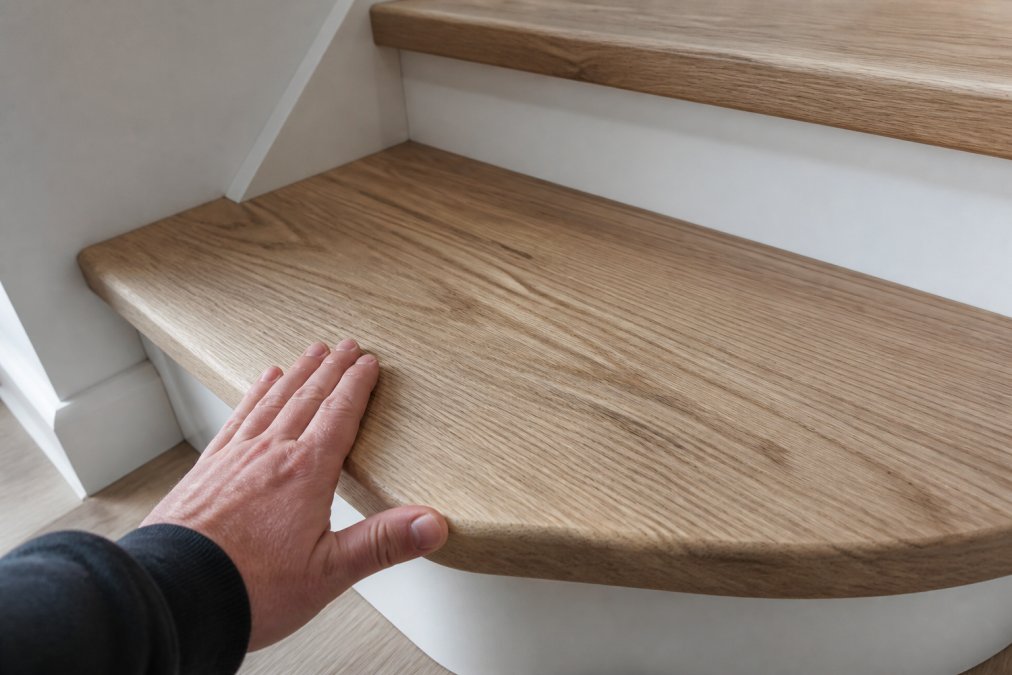
The grain pattern is subtle rather than dramatic, which is exactly why designers keep specifying it. A common mistake is choosing a rustic finish for a narrow hallway, where heavy knots make a small space feel busy. European white oak also machines cleanly, so nosings and returns meet crisply.
Where it falls short is cost. It sits at the premium end of the range, and pricing depends on thickness, width and quantity, so ask for a quote rather than assuming a figure.
2. Ash: The Hardwearing Alternative
Ash is a dense hardwood with a bold, open grain, and it handles heavy footfall as well as oak at a slightly lower cost. Its springy, shock-resistant nature makes it a favourite for staircases in busy family homes.
Unlike oak, ash takes stains and dyes reliably, so you can push it towards a darker walnut tone if you want the look without the price. The open grain shows more texture, which suits a rustic finish. Where it falls short is moisture movement: ash responds more to humidity swings than oak, so it needs sealing on all faces, not just the top.
For high-traffic areas, ash is a smart middle ground. Expect it to need a refresh coat of hard wax oil every couple of years in a busy hallway.
3. Walnut: The Statement Choice
Walnut is the timber you choose when the staircase is the centrepiece. Its rich, dark colour and flowing grain make a hallway feel warm and expensive, and it pairs beautifully with pale walls and modern balustrades.
The trade-off is hardness. Walnut is softer than oak or ash, so it dents more easily under concentrated weight, and it fades in strong direct sunlight over time. It also costs the most of the five, which makes it a poor choice for a rental or a quick flip.
If you want the walnut look in a hardwearing home, a common approach is walnut treads with a more durable nosing, or a stained ash.
4. Southern Yellow Pine: The Budget-Friendly Option
Southern yellow pine is the practical choice when the budget is tight but you still want real timber rather than a laminate flooring effect. It is a softwood, but a dense one, and it takes stain and varnish well enough to mimic more expensive species. While this pine offers a resilient surface for high-traffic areas, homeowners often weigh it against other durable flooring choices to ensure their stairs remain scratch-resistant and comfortable for every member of the household.
It dents more readily than any hardwood on this list, so it suits low-traffic staircases, loft conversions and painted finishes where minor marks disappear. The grain can be patchy, and knots may bleed through light stains unless you seal them first with a knotting solution.
For DIY installation, pine is forgiving. It cuts easily, takes fixings without splitting and is cheap enough to replace a single damaged tread. If you plan to paint the staircase rather than expose the grain, pine is the sensible spend.
Where pine earns its place is in refurbishment rather than new-build. If you are overcladding existing treads rather than replacing the whole flight, pine is often the only species where the cost of the timber is low enough to make the project worthwhile. A common pattern is to overclad with pine, fill and sand the joints, then paint the whole flight in a hard-wearing floor paint. The result looks deliberate rather than budget, and it avoids the geometry problems that come with changing tread thickness on a full replacement.
Pine is also the species most likely to creak. Softwood treads move more with humidity than oak or ash, and if they are not acclimatised in the room for several days before fitting, the shrinkage shows up as movement against the riser. Acclimatise, fix securely, and the creaking is manageable. Skip it and you will be lifting boards within a year.
If your staircase is in a busy family home with heavy daily footfall, pine is a false economy. If it is a loft conversion, a spare-room access stair or a painted flight in a rental, it is the right call.
5. Red Oak: The Traditional Favourite
Red oak is the classic staircase timber, and it is still the safest choice for period properties. Its pronounced grain and warm, pinkish tone take varnish and stain beautifully, and it is hard enough to shrug off decades of daily use.
The one drawback is that open grain. It drinks stain unevenly unless you use a grain filler first, which adds a step to any finishing schedule. Red oak also moves more with moisture than European oak, so acclimatise it in the room for several days before fitting.
For staircase renovation in an older home, red oak blends with existing joinery better than almost anything else. Match the stain to your existing treads and the new section will disappear into the old.
Staircase Tread Thickness Regulations: What You Need to Know
Most staircase guides stop at "check the regs". That is not much help when you are standing in a hallway with a tape measure. Here is what actually governs a timber tread in a domestic flight, and where thickness fits into it.
In England and Wales, stairs in a dwelling are controlled by Approved Document K of the Building Regulations, which covers stairs, ramps and guarding.
- Maximum rise: 220mm per step
- Minimum going: 220mm per step (going plus twice the rise should fall between 550mm and 700mm)
- Maximum pitch: 42 degrees
- Minimum headroom: 2m measured vertically from the pitch line to the ceiling or any obstruction
- Minimum width: 900mm for a private stair in a dwelling
For refurbishment rather than full replacement, you can often keep the existing structure and overclad or replace the treads and risers, which avoids many of these geometry issues entirely. Overcladding adds thickness to the tread, so check the resulting rise and going against the figures above before you commit. If you are unsure, your local building control team will confirm whether your project needs approval, and it is far cheaper to ask before you cut timber than after.
Frequently Asked Questions
Which wood is most durable for staircase treads?
European white oak and ash are the most durable options for staircase treads. Both are hardwoods with excellent density and wear resistance. Oak has a Janka hardness of around 1,360 lbf, making it suitable for high-traffic areas. Ash is slightly harder at approximately 1,320 lbf. For busy family homes, these species resist dents and scratches far better than softwoods like pine.
What is the minimum thickness for a wooden stair tread?
Building Regulations Part K does not specify a minimum tread thickness directly, but structural requirements mean most timber treads are at least 25mm thick for domestic staircases. For open-riser designs or wider spans, 32mm or 44mm is common. Always check with a qualified joiner or structural engineer, as thickness depends on span, loading, and whether the tread is supported at both ends.
Do I need to use hardwood for staircase treads?
Hardwood is not mandatory, but it is recommended for high-traffic staircases. Softwoods like southern yellow pine can work well in low-traffic areas or when budget is tight, provided they are properly sealed and maintained. Hardwoods such as oak, ash, and walnut offer better durability, hold finishes longer, and resist wear from daily use. The choice depends on your budget, traffic levels, and aesthetic goals.
How do I maintain wooden stair treads in a high-traffic area?
Vacuum or sweep weekly to remove grit that scratches the surface. Wipe spills promptly with a damp cloth. Reapply a hard-wax oil or varnish every 12 to 18 months, or sooner if the finish looks dull or worn. Use felt pads under furniture and avoid walking on treads with sharp shoes. For high-traffic areas, consider a matte lacquer finish, which is more resistant to scuffs than oil alone.
Share:
Drop Down Acoustic Door Seals: How to Choose the Right Fit
Hardwood Sill Extensions: How to Choose the Right Fit