
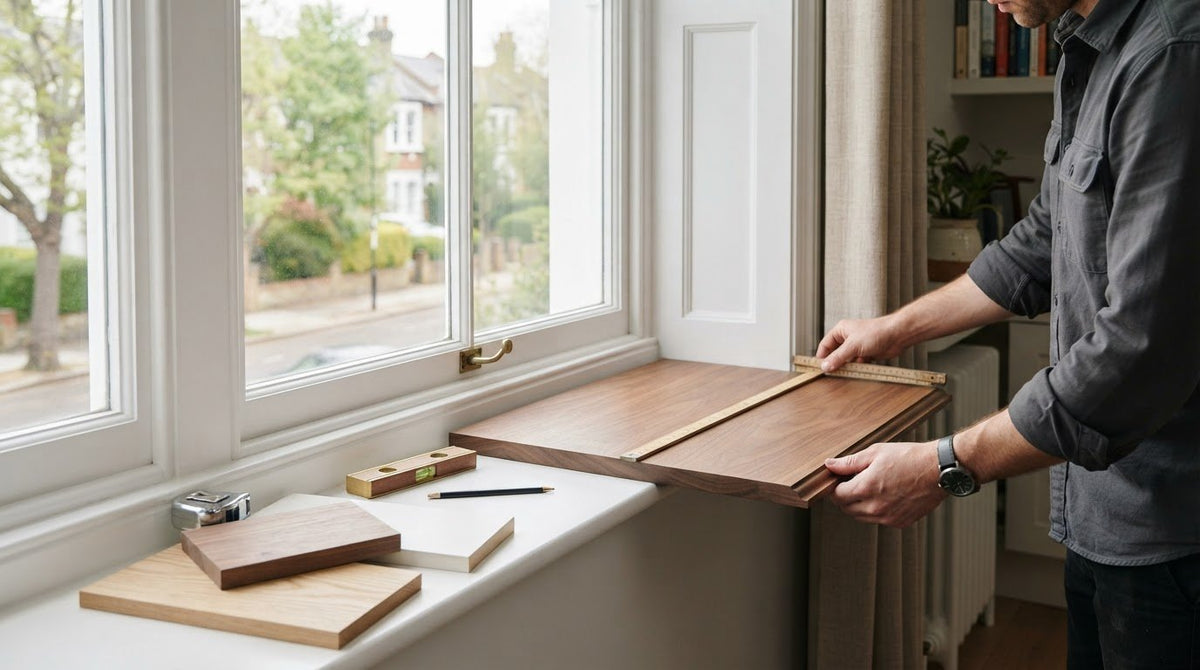
The hardwood that looks perfect in a sample can still be the wrong choice for your window. Hardwood sill extensions add depth and natural character to a room, but a beautiful finish won’t make up for a board that’s too narrow, too long or poorly matched to the existing sill.
If you’re unsure how to measure the wall depth, or whether hardwood is worth choosing over MDF, start by looking beyond the material. The opening, the dimensions of the existing board and the finish you want all affect the final fit.
This guide explains how to compare hardwood with MDF and other window-board materials, choose a timber and finish, and check the details before ordering. You’ll find practical measurement steps, profile considerations and questions to ask the supplier about the product’s intended use and finish. A clear specification can help you choose an extension that suits the room and reduce the chance of surprises.
Key Takeaways
- Understand when an extension can add useful depth to an existing internal window board, and how terminology varies between suppliers.
- Compare hardwood sill extensions with MDF and other timber options by appearance, finish, upkeep and intended use.
- Consider how species, grain and colour variation will look alongside the existing window and other joinery.
- Measure the existing board and the required projection at several points to account for uneven walls or openings.
- Before ordering, confirm the dimensions, profile, finish, suitability and availability directly with the supplier.
What Are Hardwood Sill Extensions, and When Do You Need One?
A sill extension is an added section that increases the depth of an existing internal window board. It adds to the board rather than replacing it. Terminology can be confusing: an internal window board is often called a sill or stool, while “sill” can also refer to the external component at the bottom of a window. Usage varies between tradespeople and suppliers. The Windowsill overview explains the general role of a windowsill and the distinction between interior and exterior parts.
Hardwood sill extensions may be suitable when a deep wall reveal leaves the existing board short of the finished edge you want, or when you’d prefer a deeper surface projecting into the room. The right size depends on how the window frame, board and wall meet, not just on the apparent depth of the opening.
How does a sill extension relate to the window and wall?
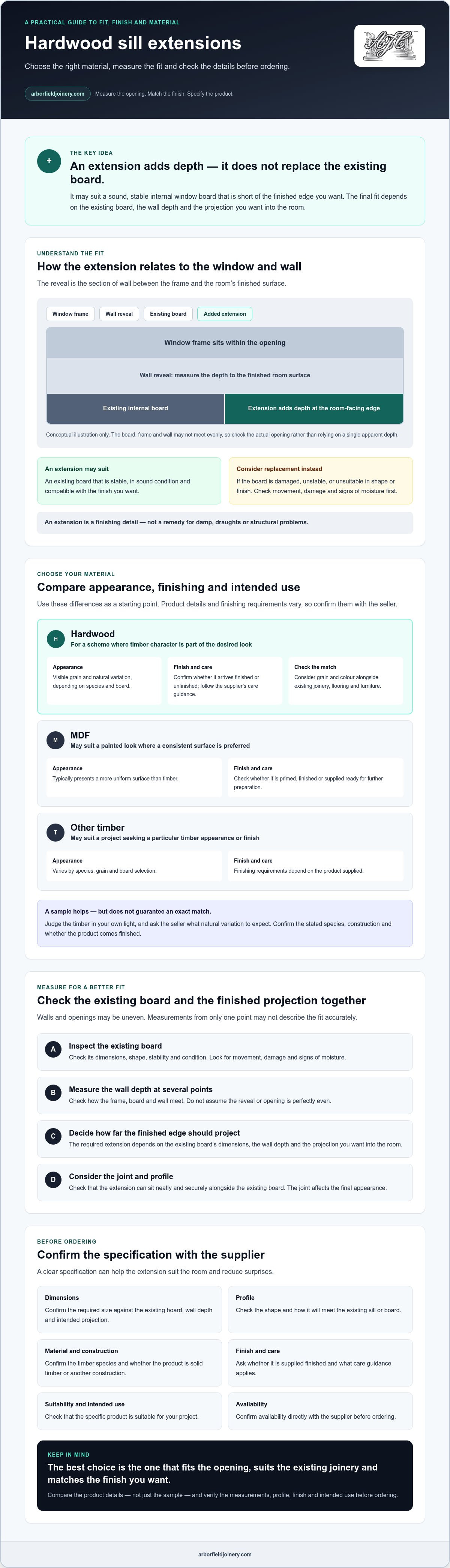
The window frame sits within the opening. The reveal is the section of wall between the frame and the room’s finished surface, and the existing board spans the base of that reveal. An extension adds depth at the room-facing edge. Its required size therefore depends on the existing board’s dimensions, the wall depth and how far you want the finished edge to project.
Check these measurements together before specifying a piece. Walls and openings may not be perfectly even, so measurements taken at only one point may not describe the fit accurately. An extension is a finishing detail, not a remedy for damp, draughts or structural problems.
When might an extension be preferable to replacement?
An extension may suit an existing board that is stable, in sound condition and compatible with the finish you want. It can preserve the established board while creating a deeper surface, although the joint between the old and new sections will affect the final appearance.
Replacement may be more appropriate if the board is damaged, unstable, or unsuitable in shape or finish. First check for movement, damage and signs of moisture. Then consider whether an extension can sit neatly and securely alongside it. If the underlying condition is uncertain, establish the cause before choosing a cosmetic change.
How to Choose Hardwood for a Sill Extension
Choosing a material involves more than selecting a timber species. Think about the look you want, how the extension will be finished and cared for, and whether it should blend with the existing window board or create a deliberate contrast. The right choice depends on the room’s appearance, your preferred finish, the upkeep you’re prepared for and how the board will be used.
Which hardwood characteristics should buyers compare?
Compare the grain, colour and natural variation of the timber. Some boards have a more even appearance; others show stronger grain patterns and changes in tone. Consider how those features will sit alongside the flooring, furniture and existing joinery. A sample can help you judge the timber in your own light, while product imagery can give you a sense of its general appearance. Neither guarantees an exact match, so ask the seller what variation to expect.
Before ordering hardwood sill extensions, confirm the stated species, whether the product is solid timber or another construction, and whether it comes finished. These details affect the appearance you receive and the work needed to achieve your intended finish.
Hardwood, MDF or another window-board material?
Each material has different visual and finishing considerations. Use this comparison as a starting point, then check the specific product details with the seller.
| Material | Appearance | Finishing and care | May suit |
|---|---|---|---|
| Hardwood | Visible grain and natural variation, depending on species and board. | Confirm whether it arrives unfinished or finished, and follow the supplier’s care guidance. | A scheme where the character of timber is part of the desired look. |
| MDF | Typically presents a more uniform surface than timber. | Check whether it is primed, finished or supplied ready for further preparation. | A painted look where a consistent surface is preferred. |
| Other timber | Appearance varies by species, grain and board selection. | Finishing requirements depend on the product supplied. | A project where a particular timber appearance or finish is sought. |
Whichever material you choose, clarify the expected finish and care instructions before buying. The Architectural Woodwork Institute (AWI) standards provide a reference for architectural woodwork quality. Check which guidance, if any, is relevant to your product and project.
If you’re also choosing a window, you can explore timber window options and check product compatibility directly with the supplier.
Hardwood Sill Extensions Compared: Profile, Finish and Practical Fit
The profile and finish affect how an extension meets the existing window board and surrounding trim. A square edge may suit simple, contemporary joinery, while a shaped edge can echo more decorative details. Don’t assume a particular profile is available. Check the supplier’s options and consider how the detail will look with the rest of the room.
Depth and thickness matter as much as appearance. The extension needs to provide the projection you want, while its thickness and edge position should meet the existing board neatly. A sudden step, noticeable joint or mismatched edge can draw attention even when the timber itself looks right. Specify the piece for the individual opening rather than relying on appearance alone.
Which edge profile and overhang suit the room?
Start with the finished edge. Decide how far you want the board to project beyond the wall, then consider how that projection relates to the existing board, window frame and nearby trim. A square edge can create a simple transition where other interior details have clean lines. A shaped profile may suit more decorative joinery, but confirm its dimensions and availability with the supplier before choosing it.
Check the space around the window as well. A deeper projection could affect how curtains hang or blinds sit, and the board should be considered alongside radiators and nearby fittings. These clearances help you decide whether the depth you want will work comfortably in the room.
How should the extension be finished?
A clear finish leaves the grain visible, a stain changes its tone, and paint gives a more uniform coloured appearance. The result depends on the timber, its natural colour variation and the existing coating. A finish that looks suitable on its own may appear different beside an older board or painted frame.
Before ordering, confirm whether the extension is supplied unfinished or pre-finished, and ask what preparation or finishing the supplier recommends. If you want to match an existing surface, check that the proposed finish is compatible with the timber and any coating already on the board. Ask about a sample or product imagery where available, but treat images as a guide rather than a promise of an exact colour match.
How to Measure and Specify Hardwood Sill Extensions
Accurate measurements help the supplier understand how the extension should meet the existing board and where the finished edge needs to sit. Record the dimensions clearly and separate the total depth you want from the size of the added piece. If the opening is uneven, one measurement may not describe the fit accurately.
What measurements should you take before ordering?
Use this checklist to prepare a clear specification for the supplier:
- 1. Record the existing board. Note its width along the window, thickness and the usable edge or connection area where the extension is intended to meet it.
- 2. Measure the required finished depth. Record the distance from the window-side reference point to the finished edge you want, including any projection beyond the wall. State whether this is the total finished depth or the extension piece’s depth alone.
- 3. Check for variation. Measure at both ends and at points along the wall line. Note differences in the reveal, board edge or wall surface rather than assuming they are square and even.
- 4. Record obstructions and details. Note nearby fittings or anything else that could affect the extension’s position, thickness or edge.
Label each measurement and use the same units throughout, such as millimetres. A simple sketch showing the window, existing board and proposed finished edge can make your measurements easier to understand.
What should you confirm with the supplier?
Before ordering hardwood sill extensions, compare your measurements with the supplier’s stated dimensions and ask what tolerances apply. Confirm the timber species, thickness, available profile and finish. Also check whether the extension is supplied as a separate piece and how it is intended to meet the existing board. Don’t assume custom sizing, fixings or fitting advice are included. Confirm each point directly.
If the opening is unusual, the board is damaged, or you’re unsure how the extension should be cut or fitted, seek an appropriate professional assessment before proceeding. This is particularly sensible where the existing surface is uneven or the connection area is unclear. Clear measurements help you discuss the job, but they can’t resolve uncertainty about the condition or suitability of the existing joinery.
If you’re also considering replacement joinery, explore timber window options and confirm any product compatibility directly with the supplier.
Buying Hardwood Sill Extensions with Confidence
A clear specification makes it easier to compare products and spot unanswered questions before you order. Suppliers may describe dimensions or measuring methods differently, so check their instructions rather than assuming your measurements will be interpreted as intended.
What should a hardwood sill-extension checklist include?
Before placing an order, check the following:
- Measurements: Compare your recorded dimensions with the supplier’s measuring method. Make clear which figures describe the existing board and which describe the finished extension.
- Material: Confirm the timber species and whether the product is solid timber or another construction.
- Profile and finish: Check the available edge detail and finish, and whether the piece is supplied unfinished or pre-finished.
- Quantity: Confirm how many pieces are included and whether each opening needs a separately specified extension.
- Product limitations: Ask about any stated restrictions on dimensions, intended use or compatibility with your existing board.
- Delivery and order contents: Clarify delivery arrangements, what is included and what is excluded, such as fixings or finishing materials. Don’t assume these are supplied.
Ask the seller to confirm important specifications before you commit. If an answer is unclear, request clarification in writing so you can check it against your measurements and the requirements of the opening.
How can the extension coordinate with timber windows?
Consider the window frame and board as parts of the same composition. A close match in colour and finish can create a cohesive look, while a contrast in tone or visible grain may feel more deliberate. Exact matching can be difficult because timber characteristics and existing finishes vary. Compare samples or product imagery where possible, and check what the supplier can confirm.
Arborfield Joinery’s range includes timber windows, which may be useful when coordinating joinery choices. For guidance on window quality and style, read the timber windows guide. Confirm directly with the relevant supplier whether a particular board or extension is available and suitable for your window. Don’t assume compatibility or availability based on appearance alone.
Choose a Sill Extension That Fits Your Home
Choose hardwood sill extensions to suit the opening, the finish and how the board will be used. Compare timber and other materials for appearance and upkeep, then consider how the grain, colour and edge profile will look alongside your existing joinery.
Before ordering, check your measurements against the supplier’s instructions. Confirm the extension’s dimensions, material, profile, finish and delivery details, and ask directly about suitability and availability. Resolving these points first can help avoid surprises and create a more considered finish.
If you’re also selecting a window, Arborfield Joinery’s timber-window range is a useful place to continue your research. The family-run business has supplied doors, windows and stairs since 1953, with a focus on craftsmanship and personalised service. Explore Arborfield Joinery’s timber windows, and confirm any compatibility questions with the relevant supplier.
With a clear specification and the key details confirmed, you can choose an extension that suits your room and move ahead with greater confidence.
Frequently Asked Questions
Can hardwood sill extensions be fitted to an existing window?
Yes, hardwood sill extensions may be suitable if the existing board is stable and there’s a suitable way to join the extension securely. Check the available surface, the finished depth you want and any unevenness before deciding. Ask the supplier how its product is designed to connect to an existing board. If the board is damaged, moves, or the fit is uncertain, seek advice from a suitably experienced professional before ordering or cutting material.
How do I measure for a hardwood sill extension?
Measure the existing board’s width and thickness, then work out the total finished depth you want, including any projection beyond the wall. Check the depth at several points, as the wall or opening may be uneven, and note obstructions or unusual edge details. Record the measurements clearly and distinguish the finished depth from the size of the extension itself. Before ordering or cutting, confirm the supplier’s measuring method and any stated tolerances.
Is hardwood better than MDF for a sill extension?
Neither material is automatically best for every project. Hardwood has visible natural grain and may complement timber joinery, while MDF offers a different, often more uniform surface and finishing option. Compare the look you want, the finish available, care requirements and the details of the specific product. Consider where the extension will be used, then confirm its suitability with the supplier. Avoid relying on broad claims about durability or moisture resistance without product-specific evidence.
Can I paint or stain a hardwood sill extension?
Often, but the suitable finish depends on the timber, its surface condition and whether it arrives unfinished or already coated. Check the supplier’s preparation and finishing advice, and make sure your chosen product is compatible with the timber and any existing coating. If you’re matching nearby joinery, test a sample where possible before finishing the whole piece. Grain and natural colour variation can affect the result, so an exact match isn’t always achievable.
What happens if my window opening is not square?
Measurements can vary across an uneven opening, so one figure may not describe the required fit. Record dimensions at several points and note visible slopes, gaps or irregular surfaces. Don’t assume an extension will correct a wider fitting issue. Share your measurements and observations with the supplier, or ask a suitably experienced professional to assess the opening if you’re unsure how to specify the board accurately.
Do hardwood sill extensions come in standard sizes?
Available dimensions and profiles vary by supplier, so check the product specification rather than assuming a standard size will suit. Compare its measurements and stated tolerances with your recorded requirements, and confirm the timber species and finish. If your opening needs a particular dimension or edge detail, ask whether that option is available. Don’t assume bespoke sizing is offered, or that a listed size can be altered to suit your opening.
Can I fit a hardwood sill extension myself?
It depends on your experience, the product’s fitting method and the condition of the existing board. Accurate measuring, careful cutting and a secure join all affect the finished appearance. Follow the supplier’s instructions and use suitable tools and safety measures. If the opening or board is uneven or damaged, or you’re unsure about the fitting method, consider asking a suitably experienced professional to assess the work before you begin.
Share:
5 Best Wood for Staircase Treads UK: Expert Guide 2026
Georgian vs Edwardian Doors: Key Style Differences