
Last Updated: November 6, 2026
Quick Summary
Water based wood stains dry fast, clean up with soap and water and carry far lower solvent emissions, while solvent based wood stains penetrate more slowly, raise less grain and give you more working time. The choice changes what the timber looks like for years.
- A study found the solvent-based stain produced the highest total VOC concentration at 5.7 mg/m³.
- Water-based products are gradually replacing solvent-based finishes across the wood industry.
- Dampen bare timber, let it dry and sand lightly before staining to fix grain raising.
- Leftover solvent-based stain is classed as hazardous waste and needs a household recycling centre.
- Water-based stain over an existing oil film can pool or flake, so strip back to bare wood first.
Table of Contents
- Water Based vs Solvent Based Wood Stains: The Quick Comparison
- Water-Based Wood Stain Advantages and Trade-Offs
- Solvent-Based Wood Stain Drying Time and Curing Explained
- VOC Levels, Odour and Indoor Air Quality
- How to Apply Wood Stain to Timber: Step by Step
- Water-Based Wood Stain Over Oil-Based Stain: What Works
- Durability, Maintenance and Recoating Over Time
- Choosing a Finish for Unfinished Oak Doors and Joinery
- Frequently Asked Questions
Water Based vs Solvent Based Wood Stains: The Quick Comparison
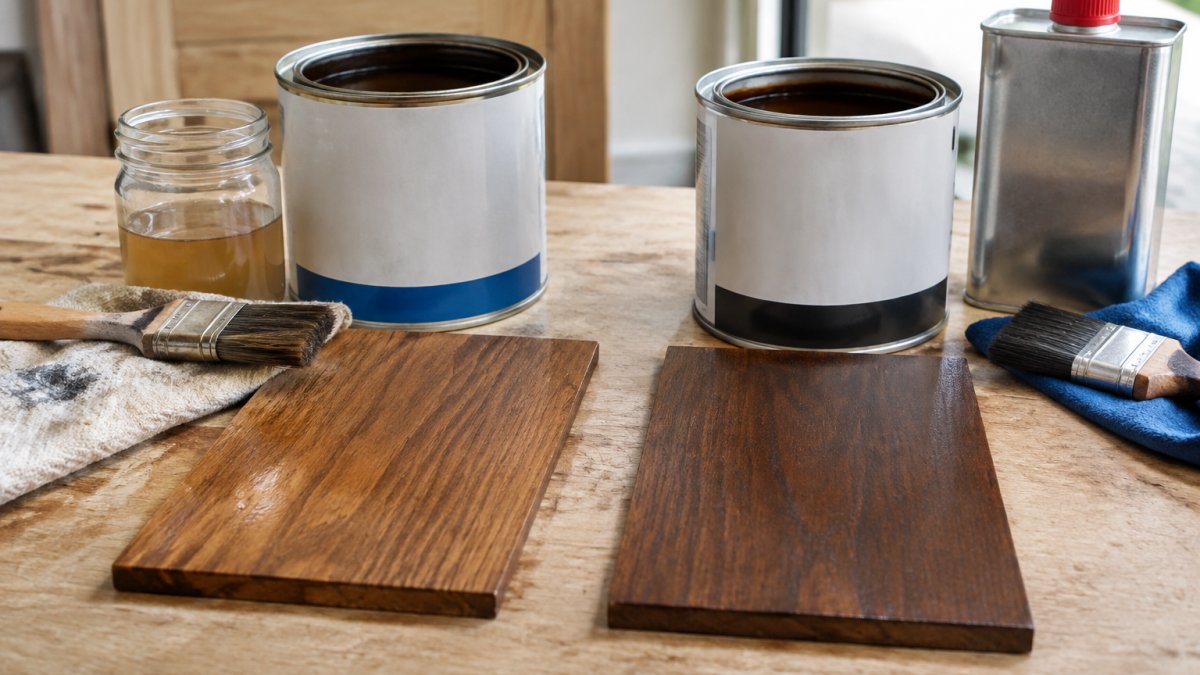
Water based vs solvent based wood stains comes down to one trade-off: water-based stains dry fast, clean up with soap and water and carry far lower solvent emissions, while solvent-based stains penetrate more slowly, raise less grain and give you more working time. The choice changes what the timber looks like for years.
The chemistry matters less than the practical difference. A study of wood-stain emissions found the solvent-based stain produced the highest total VOC concentration at 5.7 mg/m³, and its emissions declined more slowly over time than the water-based stains studied (De Gennaro et al. study on VOC emissions from wood stains). That single finding explains most of the advice that follows.
Side-by-Side Comparison Table
| Factor | Water-Based Stain | Solvent-Based Stain |
|---|---|---|
| Drying time | Fast, often hours | Slow, often overnight |
| Odour | Low | Strong solvent smell |
| VOC level | Lower | Higher |
| Grain raising | Likely on bare timber | Minimal |
| Working time | Short | Generous |
| Clean-up | Soap and water | White spirit |
| Best for | Interiors, quick turnarounds | Detailed work, open grain |
Water-Based Wood Stain Advantages and Trade-Offs
The biggest advantage of a water-based wood stain is speed and a cleaner workspace. These finishes dry quickly and clean up with soap and water, which is why water-based products are gradually replacing solvent-based finishes across the wood industry (BioResources study on water-based and solvent-based stains). You can coat, sand back and recoat in a single day.
Where Water-Based Stains Fall Short
Grain raising is the honest drawback. Water swells the surface fibres, so bare timber feels rougher after the first coat. The fix is simple: dampen the timber, let it dry, and sand lightly before staining.
The second issue is working time. Water-based products dry quickly, and On large panels, that means working in smaller sections.
Solvent-Based Wood Stain Drying Time and Curing Explained
Solvent-based wood stain drying time is measured in hours, not minutes, and that is the point. A solvent-based stain stays open long enough to brush out, blend edges and wipe back evenly. Touch-dry usually comes within a few hours; full curing takes considerably longer, often several days.
Humidity and temperature drive the schedule. Cool, damp conditions stretch drying time further, while warm, well-ventilated rooms shorten it. The De Gennaro research found solvent-based emissions declined more slowly over time than water-based emissions, which is a useful proxy for how long the solvent keeps evaporating from the film (ScienceDirect research on VOC emission decay).
Plan around the cure, not the touch-dry test. Recoating too early traps solvent and softens the finish.
VOC Levels, Odour and Indoor Air Quality
VOC stands for volatile organic compounds, the solvents that evaporate from a finish and affect indoor air quality. Solvent-based stains carry a higher VOC load and a stronger odour during application and curing. Water-based stains carry less, which matters most in bedrooms, hallways and any room without good airflow. The De Gennaro research found the solvent-based stain produced the highest total VOC concentration at 5.7 mg/m³ and its emissions declined more slowly over time than the water-based stains studied (De Gennaro et al. study on VOC emissions from wood stains).
Ventilation is non-negotiable either way. Open windows, keep doors ajar and avoid sleeping in a freshly stained room for the first night. If you are working in a sealed interior, water-based is the more sensible default.
Safe Handling, Ventilation and Protective Equipment
Solvent-based stains give off vapour that can irritate eyes, nose and throat. Treat them as a solvent job, not a paint job: keep them away from pilot lights, heaters and anything that sparks, and never decant them near an open flame.
For either type, the basics are the same. Work in a space with cross-ventilation, wear nitrile gloves rather than latex, and use eye protection when brushing overhead or spraying. If you are sensitive to solvent vapour, a cartridge respirator rated for organic vapour is the sensible choice for solvent-based work; a dust mask is not a substitute.
Watch out: applying any stain in an unventilated room with the door closed concentrates fumes and slows curing. Keep air moving until the smell has gone completely.
Disposal and Leftover Materials
Leftover solvent-based stain is classed as hazardous waste and should go to a local household waste recycling centre that accepts chemicals, not down the drain or into the general bin. Rags, cloths and brushes used with solvent-based stain can self-heat and ignite if bundled together while still wet; spread them flat to dry outdoors, or soak them in water before disposal. Water-based stain residue can usually be allowed to dry solid and then disposed of with general waste, but check the tin's label because formulations vary.
Clean brushes as soon as you finish. Solvent-based tools need white spirit, which itself needs the same hazardous-waste handling; water-based tools wash out under a tap, but let the washings settle and dispose of the solids rather than flushing them straight down.
How to Apply Wood Stain to Timber: Step by Step
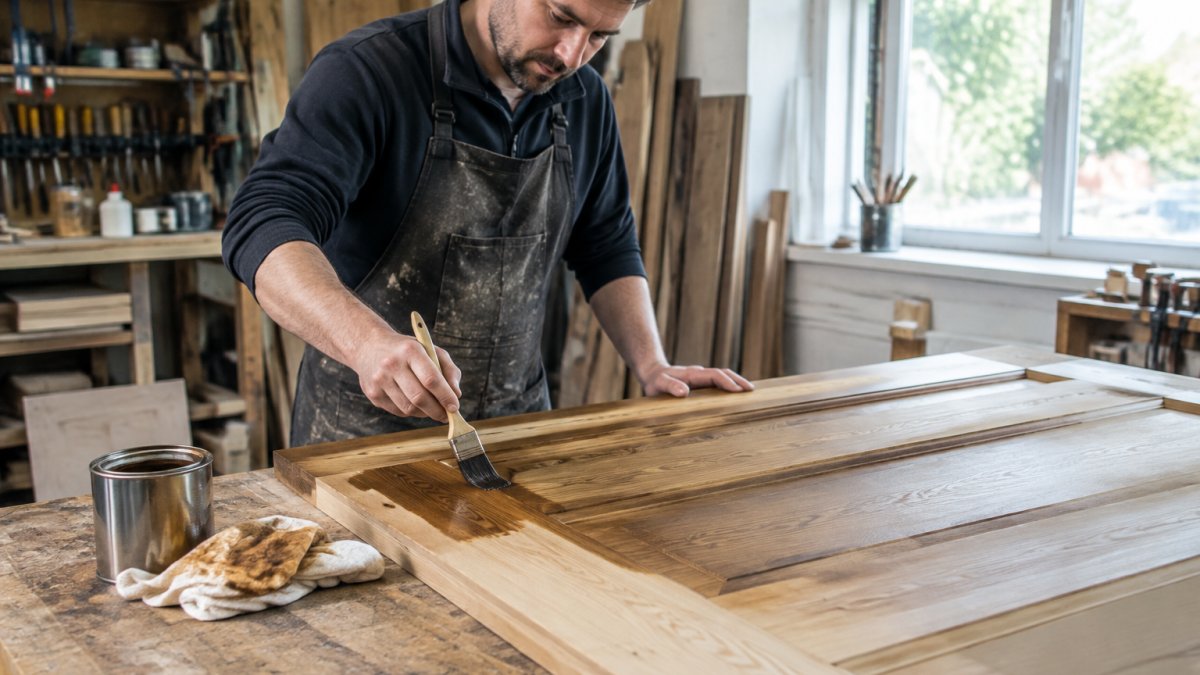
Applying wood stain well is mostly preparation. Sand to your final grit, remove every trace of dust, then test the stain on an offcut before it touches a finished door. If you are working on existing frames, our guide on how to clean wooden frames step by step covers the preparation stage properly.
- Sand the timber to its final grit and vacuum off the dust.
- Dampen bare timber and sand back the raised grain if using water-based.
- Stir the stain thoroughly; never shake it.
- Apply with a brush or cloth, working with the grain.
- Wipe back excess before it tack-dries.
- Leave to dry fully, then assess the colour.
- Apply a second coat if the tone needs deepening.
- Seal with a compatible topcoat once cured.
Water-Based Wood Stain Over Oil-Based Stain: What Works
Water-based wood stain over oil-based stain is risky. Water-based products need bare, absorbent timber to bite; an existing oil film repels them, and the new coat can pool or flake. Once the old finish is stripped, choose a coating suited to the wood’s use, since a food safe finish for boards calls for different considerations than a stain on decorative timber.
The same caution applies to switching on new joinery. How a stain behaves depends on the timber itself, and stable, well-seasoned stock takes a finish more evenly than timber that is still moving. Our article on how to choose stable timber for doors explains what to look for.
If you cannot strip back fully, stay within the same family and test a small hidden area first.
Durability, Maintenance and Recoating Over Time
Durability depends on the topcoat and the exposure, not the stain colour. All stains fade over time, and Interior joinery under indirect light holds its tone far longer than a south-facing exterior door. A common pattern is that the topcoat fails before the stain does: once the protective film breaks down, water gets in and the colour goes patchy, so judge the finish by the topcoat's condition rather than the stain's shade.
Recoating Intervals and Spot Repairs
There is no single recoating schedule, because exposure drives it. As a working expectation, interior joinery under indirect light may go several years between refreshes, while exterior timber in full sun and rain often needs attention far sooner, inspect annually and recoat when water stops beading on the surface. Our guide on how long exterior wood stain lasts and the signs it needs renewing sets out the warning signs in detail.
Spot repairs are easier than full recoats if you catch them early. Clean the area, lightly abrade the damaged patch, and feather the new coat into the surrounding finish rather than painting a hard edge.
Watch out: recoating over a surface that is still tacky or contaminated traps solvent and softens the finish. Clean, abrade and let the previous coat cure fully before adding another.
Switching Between Water-Based and Solvent-Based Stains
Switching stain types is where most maintenance goes wrong. Water-based stain needs bare, absorbent timber to bite; an existing oil or solvent film repels it, and the new coat can pool or flake. The safe route is to strip the old finish back to bare wood before switching.
The reverse direction is more forgiving but not automatic. A solvent-based stain can sometimes go over a fully cured water-based finish, but adhesion depends on the surface being clean, abraded and free of wax or silicone contamination.
How a stain behaves also depends on the timber itself, and stable, well-seasoned stock takes a finish more evenly than timber that is still moving. Our article on how to choose stable timber for doors explains what to look for.
Choosing a Finish for Unfinished Oak Doors and Joinery
Oak's open grain takes stain unevenly, so always test on an offcut and keep a wet edge.
If you are choosing the door itself, our Oak Regency 4 Panel and Girona unfinished Oak internal door both arrive unfinished and ready for your chosen stain, varnish or lacquer. Both use a solid engineered core for stability, and the Girona carries a 10-year manufacturer's conditional warranty.


Best for: interiors where low odour and fast turnaround matter. Skip if: you are coating a large, detailed surface and need extended open time.
Picking a stain is the easy part; getting an even finish on oak that has been properly prepared is where most projects succeed or slip.
Frequently Asked Questions
What is the difference between water-based and solvent-based wood stain?
The carrier is the main difference. Water-based stains use water as the carrier, dry quickly and clean up with soap and water. Solvent-based stains use chemical solvents, which produce stronger odour and higher VOC emissions. Solvent-based stains generally release more VOCs than water-based stains. Both types colour the timber; the practical differences show up in drying, odour, grain raising and clean-up.
Does water-based wood stain raise the grain?
Yes, grain raising is a recognised drawback of water-based finishes. Grain raising is a recognised issue with water-based finishes. The practical fix is to dampen the timber lightly and sand back the raised fibres before staining, then sand gently between coats. Solvent-based stains are less associated with this problem, which is one reason some woodworkers still prefer them on open-grained timbers.
How long does solvent-based wood stain take to dry?
Solvent-based wood stain drying time is longer than water-based, and the gap widens when you factor in curing. The 2015 study found solvent-based stain emissions declined more slowly over time than water-based emissions, which reflects its slower release of solvents. In practice, expect longer touch-dry and recoat intervals, and allow extra time before applying a topcoat. Cool temperatures and high humidity extend drying further, so plan around the conditions in your workshop or room.
Can you apply water-based wood stain over oil-based stain?
Only after the existing oil-based finish has fully cured and been prepared. A water-based stain needs a surface it can grip, so sand the old finish to provide a key, then test on an inconspicuous area first. If the old coating is a solid film rather than a penetrating stain, the water-based product may sit on top rather than absorb. Where the existing finish is sound, a light sand and a test patch tell you more than any general rule.
Which wood stain is easier to clean up?
Water-based stain cleans up with soap and water while wet, which makes brushes, rollers and drips far simpler to handle. Solvent-based stain needs chemical solvents for clean-up, so you need the right thinners on hand and a plan for disposing of contaminated rags safely. For indoor projects and anyone working without strong extraction, the water clean-up is a practical advantage. Whichever you use, ventilate the space and follow the manufacturer's disposal guidance.

Share:
7 Steps to Calculating Window Clearance for Smooth Operation
Common mistakes when buying new doors and how to avoid them