
Last Updated: November 5, 2026
Quick Summary
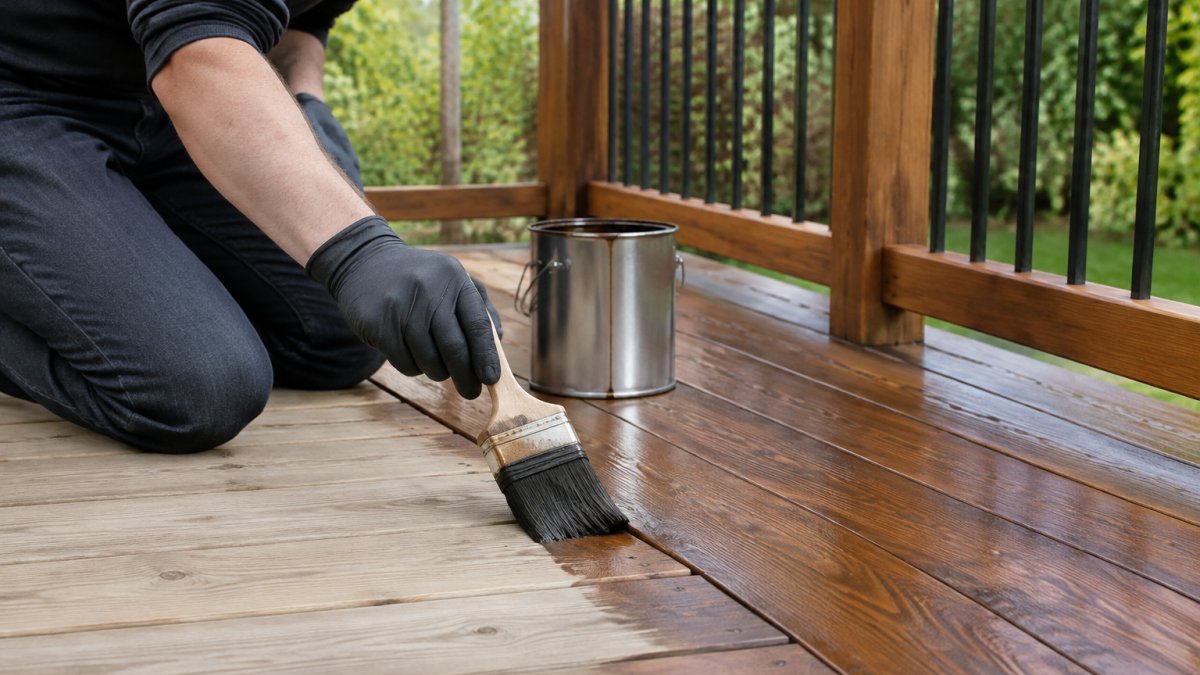
Most exterior wood stain lasts between two and five years, depending on the surface, the stain type and how much weather it takes. Solid stains typically last three to five years on a deck, while transparent stains offer the least UV protection and need recoating sooner. Check your wood annually and recoat when water soaks in instead of beading.
- Horizontal surfaces like deck boards wear out faster than vertical surfaces such as fences and siding.
- Oil-based stain generally lasts longer on exterior wood because the oils penetrate deeper and stay flexible.
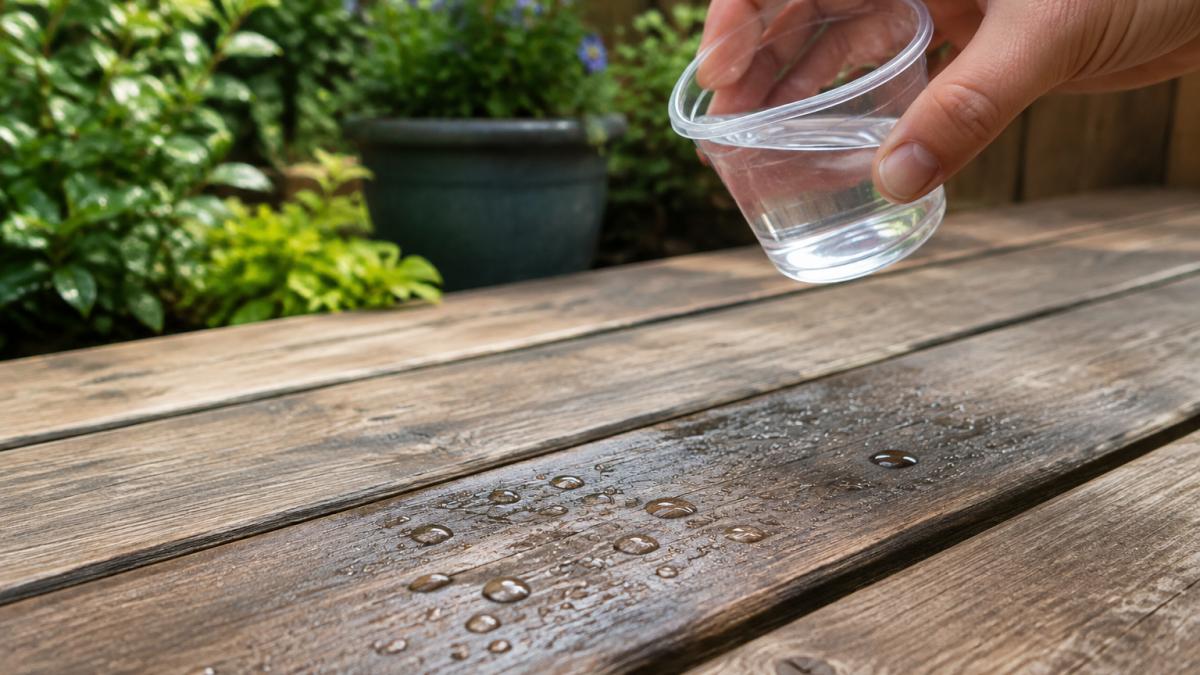
- Drop water on the surface: if it soaks in within a minute, it's time to recoat.
- Good preparation separates a five-year finish from a two-year one, since most early failures trace back to poor prep.
- Sunlight and moisture are the two biggest killers of exterior wood stain.
Table of Contents
- How Long Does Exterior Wood Stain Last by Surface and Type
- Oil-Based vs Water-Based Wood Stain: Which Lasts Longer?
- How Often to Stain a Deck, Fence and Siding
- 7 Signs Exterior Wood Needs Restaining
- How to Prepare Wood for Staining So It Lasts
- What Makes Exterior Wood Stain Wear Out Faster
- Choosing Timber That Takes a Finish Well
- Frequently Asked Questions
How Long Does Exterior Wood Stain Last by Surface and Type
The short answer: most exterior wood stain lasts between two and five years, depending on the surface, the stain type and how much weather it takes. One number never fits every job. Consumer Reports found that the best solid stains should last three to five years on a deck (Consumer Reports wood stain testing). That's a useful benchmark, not a guarantee.
Exterior wood stain is a protective coating that soaks into or sits on timber to block water and UV light. How long it lasts depends on where the wood sits and what you put on it. Below, we break down the ranges by surface and type, then show you how to spot the moment a recoat is due.
Horizontal Versus Vertical Surfaces
Horizontal surfaces wear out fastest. Deck boards, handrails and window sills take full sun, standing water and foot traffic. Vertical surfaces like fences and siding shed water and last longer.
Flat, exposed surfaces usually wear faster than vertical ones.
Solid, Semi-Transparent and Transparent Stain Performance
Solid stain lasts longest. It forms a film on the surface with high pigment and hides grain. Semi-transparent stain sits in the middle, adding colour while showing some grain. Transparent stain shows the most timber but offers the least UV protection.
For a longer service life, solid stain wins. For a natural look, expect to recoat sooner.
| Stain Type | Typical Lifespan | Best For |
|---|---|---|
| Solid | 3-5 years | Decks, high-traffic wood |
| Semi-transparent | 2-4 years | Fences, siding |
| Transparent | 1-2 years | Feature timber, natural look |
Oil-Based vs Water-Based Wood Stain: Which Lasts Longer?
Oil-based stain generally lasts longer on exterior wood. The oils penetrate deeper and stay flexible, so they move with the timber as it swells and dries. Water-based stains dry faster and are easier to clean up, but they tend to need recoating sooner.
That said, modern water-based formulas have closed the gap. The right choice depends on your timber and your timetable. On older, resinous timber, oil-based stain often holds up better against moisture. On new joinery, check the manufacturer's guidance first.
A US Forest Service study found that stains with a 20% binder content still protected wood well after eight years of exposure (US Forest Service exterior finish durability research). Binder content matters more than the oil-versus-water label.
How Often to Stain a Deck, Fence and Siding
Reapplication intervals vary by surface, stain type and exposure. The table below gives qualified ranges based on typical external conditions; treat them as planning guides, not guarantees. A sheltered, well-prepared surface will often sit at the top of the range, while a fully exposed, high-traffic one will sit at the bottom.
| Surface | Solid stain | Semi-transparent stain | Transparent stain |
|---|---|---|---|
| Deck boards (horizontal, foot traffic) | 3-5 years | 2-3 years | 1-2 years |
| Fence panels (vertical) | 4-6 years | 3-4 years | 2-3 years |
| Siding and cladding (vertical) | 5-7 years | 4-6 years | 2-4 years |
| Railings, trim and sills | 2-4 years | 2-3 years | 1-2 years |
Decks need the most attention because they combine horizontal exposure with foot traffic. Check a deck annually and recoat as its condition requires. Fences can stretch to three to four years for semi-transparent finishes, longer for solid. Siding often holds for four to six years with a semi-transparent stain and longer with solid.
Your climate and exposure shift these numbers. A south-facing deck in full sun will always need work before a shaded fence. A coastal site with salt-laden wind or a region with frequent freeze-thaw cycles will wear finishes faster than a sheltered inland garden. Build a simple schedule around your own conditions:
- Full sun, exposed: inspect every spring and autumn; expect to recoat at the lower end of the range.
- Part shade, sheltered: inspect annually; recoat when the water-drop test fails.
- High foot traffic: check deck boards and steps every six months.
- Coastal or freeze-thaw: inspect after winter and before the wet season.
Watch out: extending intervals because the surface still looks coloured can lead to water ingress under a failing film, which is harder to fix than a timely recoat.
If you're planning new external joinery to finish yourself, browsing external doors that come ready for staining can save you prep time later.

7 Signs Exterior Wood Needs Restaining
Water no longer beads on the surface. That's the clearest sign your exterior wood stain has failed. When water soaks in instead of sitting on top, the timber is exposed.
Use this inspection checklist to decide what action each sign calls for. The key is to distinguish normal fading from coating failure: fading is cosmetic and often reversible with a clean and recoat, while failure means the protective film has broken down and the wood is vulnerable.
L&B External Ledged & Braced Redwood Door →
| Sign | What it means | Action |
|---|---|---|
| Water absorbs instead of beading | The coating is no longer repelling water | Clean and recoat within the season |
| Colour fades or turns grey | UV breakdown or normal weathering | Clean; recoat if the water-drop test fails |
| Surface feels rough or fuzzy | Wood fibres are lifting, often from moisture | Light sand and recoat |
| Stain peels or flakes | Coating failure, usually from poor prep or moisture | Strip, prepare and refinish |
| Cracks appear in the timber | Wood movement or moisture cycling | Inspect for rot; repair before recoating |
| Moss or algae starts growing | Damp, shaded conditions | Clean, treat and improve drainage or airflow |
| Wood looks dry and dull | Loss of oil or film integrity | Clean and recoat; consider a maintenance coat |
If you spot deep cracks, our guide on repairing cracks in solid wood doors walks through the fix step by step.
The Water-Drop Test and Other At-Home Checks
The water-drop test is the simplest check. Drop a small amount of water on the surface. If it beads up, the stain is still working. If it soaks in within a minute, it's time to recoat. Repeat the test in several places, because shaded and exposed areas wear at different rates.
Try a scratch test too. Scrape a small area with a coin. If the stain lifts easily, the coating has broken down. A rub test with a cloth can reveal how much pigment is still present: a lot of colour on the cloth suggests the finish is thinning.
Watch out: testing only one spot can mislead you, a deck can be sound in the shade and failing in full sun, so check both before deciding whether to spot-recoat or refinish the whole surface.
How to Prepare Wood for Staining So It Lasts
Good preparation is what separates a five-year finish from a two-year one. Most early failures trace back to poor prep, not poor stain.
Clean the wood first. Remove dirt, moss and old flaking stain with a stiff brush or a dedicated cleaner. Sand bare or rough areas smooth. Let the timber dry fully before you start.
- Clean and strip old finish
- Sand to open the grain
- Check wood moisture is low
- Fill cracks and gaps
- Apply in dry, mild conditions
- Follow the can's drying and curing times
If you're preparing new external timber, a ledged and braced redwood door arrives ready to finish and takes stain well.

What Makes Exterior Wood Stain Wear Out Faster
Sunlight and moisture are the two biggest killers. UV light breaks down the coating, and water works its way into any gap. Together they speed up wear on any exterior wood surface.
Other factors add to the strain:
- Foot traffic: decks and steps wear faster
- Poor drainage: standing water ruins stain
- Wrong application: thin coats fail early
- Harsh climate: freeze-thaw cycles crack coatings
- Neglected cleaning: dirt traps moisture
If you're specifying external doors for a harsh, exposed spot, a Pattern 20 rebated external door is built to stand up to the elements.

Choosing Timber That Takes a Finish Well
The timber you start with shapes how long the finish lasts. Stable, well-seasoned wood holds stain far better than green or unstable stock. Wood that moves and splits will crack any coating on top of it.
Look for straight grain and low movement. Check the moisture content before finishing. Denser hardwoods take longer to absorb stain but reward you with a longer service life.
For a deeper look at picking stable stock, read our guide on choosing stable timber for doors.
Frequently Asked Questions
How long does exterior wood stain last on a fence compared with a deck?
A fence usually holds its finish longer than a deck because it sits vertically and takes no foot traffic. Vertical surfaces shed water quickly and are not scuffed, so a solid stain may give four to six years on fence boards. Horizontal deck boards face standing water, sun and shoes, so the same product may need renewing in two to three years. Check the surface by hand each spring rather than working to a fixed calendar.
Does oil-based or water-based exterior wood stain last longer?
Oil-based stains soak into the grain and leave a flexible film, which suits timber that moves with the seasons and makes spot repairs easier. Water-based stains dry faster, carry less solvent odour and resist UV fading well, but the film can crack as the wood expands. In practice, the number of coats and the preparation matter more than the base. Two thin coats on clean, dry timber outperform one thick coat of either type.
Can you apply new stain over old exterior wood stain?
You can recoat over a sound, well-bonded finish, but not over flaking or blistering stain. Scrape and sand any loose patches back to bare wood, feather the edges, then clean the whole surface before applying the new coat. Test a small area first: if the fresh stain beads or sits on top without soaking in, the old film is sealing the wood and needs removing. Matching the new product to the existing one reduces the risk of patchy colour.
How do you make exterior wood stain last longer?
Most of the service life is decided before the first coat goes on. Clean the timber, let it dry to a moisture content low enough for the product, and sand back grey, weathered fibres so the stain can bond. Apply two thin coats rather than one heavy one, work in dry conditions, and keep up with cleaning and inspection. Sound stock is the starting point: the L&B External Ledged & Braced Redwood Gate, £112.00, is built from redwood for outdoor exposure.
The finish on your external timber is only as good as the wood beneath it. At Arborfield Joinery, we've been supplying quality doors and joinery since 1953, with expert advice on what suits your property and fast product availability. Browse our external doors and timber range, and get the right foundation for a finish that lasts. Get started with Arborfield Joinery and protect your timber for years to come.

Share:
Internal doors for period homes: choose a style that fits
How to choose the right size, style and material for internal doors