
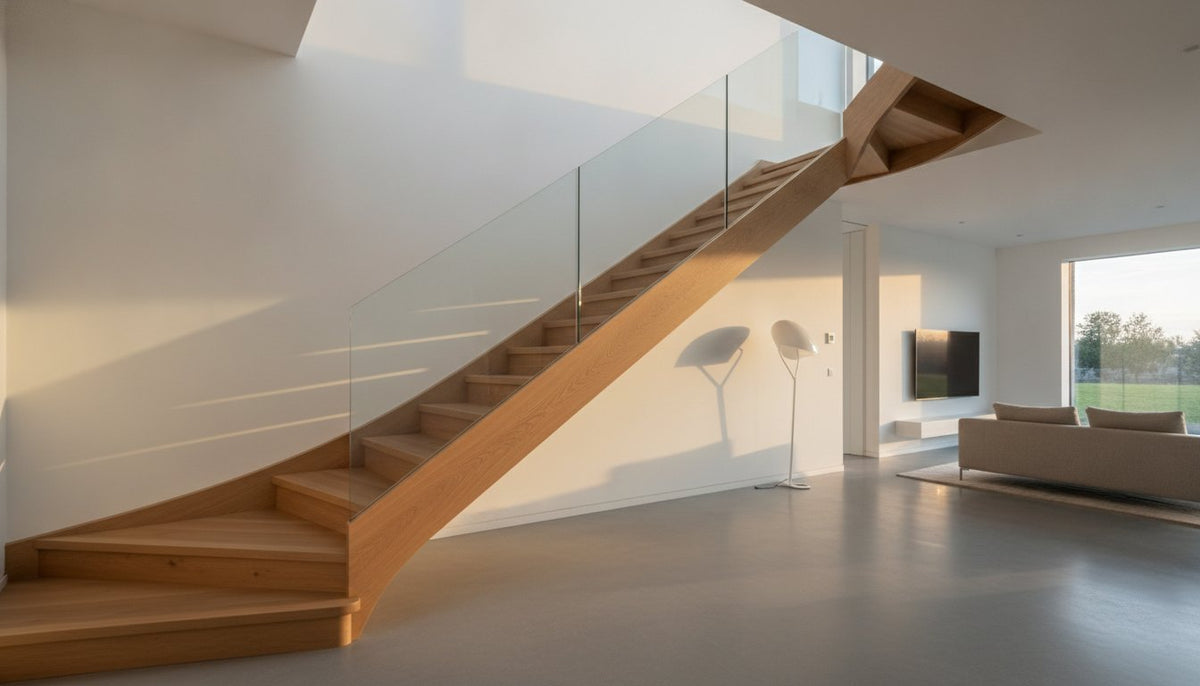
A staircase is rarely just a way to get from one floor to another; it's the architectural heartbeat of your home. You've likely spent hours scrolling through design inspiration, only to feel overwhelmed by technical talk of strings, spindles, and newels. It's frustrating when you want a premium finish but worry about timber stairs warping under heavy use or failing to match your existing internal doors. We believe that quality joinery should be accessible, and you deserve a solution that stands the test of time without sacrificing style.
This guide simplifies the entire selection process, helping you choose materials that balance aesthetic appeal with lifelong durability. You'll discover how to navigate the differences between various wood species and understand which components are essential for a safe, stylish build. We'll explore everything from the timeless elegance of oak to the practicalities of modern building regulations. By the end, you'll have the confidence to curate a space that adds genuine value to your property and feels perfectly at home.
Key Takeaways
- Learn how to transform your hallway by treating the staircase as a central architectural feature rather than a purely functional element.
- Discover which wood species best suits your lifestyle and how to match your timber stairs with existing internal oak or walnut doors.
- Gain clarity on technical joinery terms like strings and treads to ensure you select the most durable components for high-traffic areas.
- Explore a range of configurations, from space-saving modern designs to grand traditional styles, tailored to your home's unique layout.
- Benefit from 70 years of craftsmanship insights to choose a staircase that offers both timeless elegance and long-term structural integrity.
Why Choose Timber Stairs for Your Interior Design?
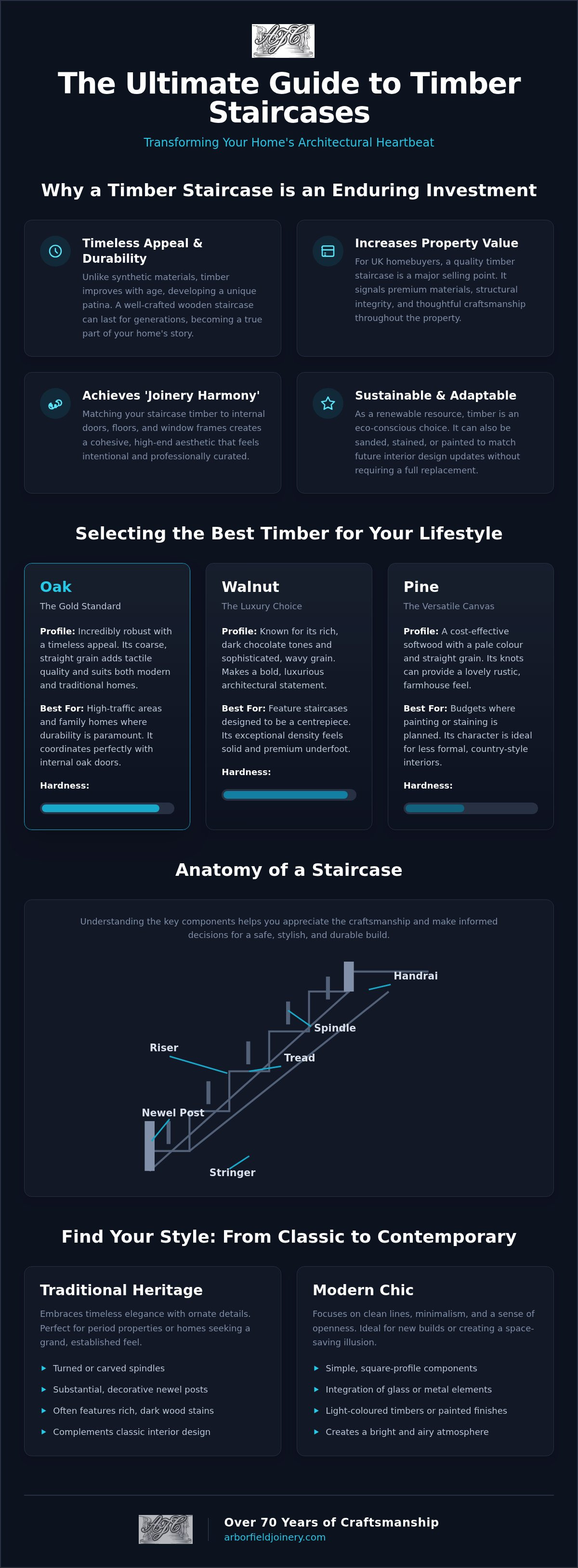
We often discuss the concept of "joinery harmony" with our clients. This involves matching your staircase with other timber elements, such as your internal oak doors or window frames. This creates a cohesive aesthetic that feels intentional and curated. It's about building a narrative throughout the home where every piece of wood tells the same story of quality and craftsmanship. When the grain of your banister matches the texture of your flooring, the entire hallway feels more expansive and unified.
The Benefits of Natural Wood
Timber is one of the few materials that actually improves with age. As the years pass, the grain deepens and the wood develops a unique patina, gaining character whilst remaining structurally sound. It's a renewable resource, making it an excellent choice for those focused on sustainability. Unlike mass-produced materials that end up in landfill after a decade, a well-maintained staircase can last for generations. Maintenance is surprisingly straightforward. You can sand and refinish the wood to refresh its look or change the stain to match a new interior design scheme, ensuring your home stays current without needing a full replacement.
Adding Value to Your Property
For UK homebuyers, a high-quality staircase is a major selling point. It suggests that the property has been cared for and built with premium materials. Because a staircase is a significant investment, seeing a bespoke timber installation provides immediate peace of mind regarding the home's structural integrity. Understanding the Essential Staircase Components helps you appreciate the craftsmanship involved in every tread and riser. Whether you're renovating a Victorian terrace or building a modern minimalist home, bespoke timber components can be tailored to fit the space perfectly. This ensures that your first impression is always one of quiet elegance and enduring value.
Selecting the Best Timber Species for Your Staircase
Choosing the right wood is about more than just looks. It's about how those timber stairs will handle the daily traffic of a busy household. Density is the key factor here. In the context of longevity, hardwoods come from slow-growing deciduous trees and offer superior resistance to dents, whilst softwoods come from faster-growing conifers and are generally more prone to surface marking over time. Understanding these differences ensures you select a material that matches both your aesthetic vision and your home's activity levels.
Oak Timber Stairs: The Gold Standard
Oak remains the definitive favourite for UK homeowners. It's incredibly robust and possesses a timeless appeal that bridges the gap between rustic charm and modern sophistication. The grain is typically straight with a coarse, uneven texture that adds a wonderful tactile quality to your hallway. One of its greatest strengths is its versatility; it takes stains and oils beautifully. This allows you to perfectly coordinate your staircase with your internal oak doors, creating a seamless flow from the hallway into your living spaces. In a high-traffic family home, oak's durability means it can withstand decades of use without losing its structural integrity.
Premium Walnut and Sustainable Softwoods
If you're seeking a luxury aesthetic, walnut is an unrivalled choice. It features rich, dark chocolate tones and a sophisticated, wavy grain that makes a bold architectural statement. It is a dense hardwood that feels exceptionally solid underfoot, though it is often reserved for feature staircases where its natural beauty can be fully appreciated. On the other end of the spectrum, pine serves as a cost-effective and sustainable option. Whilst it is a softwood and requires more care to prevent scuffs, its pale colour and straighter grain make it a perfect canvas for painting or staining. Pine grain often features prominent knots, which can lend a lovely rustic, farmhouse feel if finished with a clear wax.
The trade-off often comes down to initial investment versus long-term maintenance. Walnut and oak require a higher upfront cost but demand less frequent attention. Pine is more affordable initially but may need more regular refinishing in high-use areas. Regardless of the species you choose, ensuring your design meets Stairway Safety Standards is vital for a secure and compliant installation. If you're unsure which material suits your budget, you can browse our range of timber components to see these woods in person and find the perfect match for your home.
Understanding Essential Staircase Components
Designing timber stairs requires a clear understanding of the individual parts that ensure both safety and style. To the untrained eye, a staircase is a single unit, but it's actually a precision-engineered assembly of several bespoke elements. Choosing the right combination allows you to tailor the final look to match your home's unique architectural language. It isn't just about functionality; it's about selecting components that feel right underfoot and look beautiful from the hallway.
Treads, Risers, and Strings
The foundation of your staircase begins with the tread and the riser. The tread is the horizontal surface you step on, whilst the riser is the vertical face between each step. If you're aiming for a modern, airy feel, open-riser designs omit the vertical board to let light flow through the hallway. For a more traditional, grounded appearance, closed risers provide a sense of permanence and strength. Supporting these steps are the strings. These are the structural boards that run along the sides of the staircase, acting as the framework that holds everything in place. A well-constructed string ensures the staircase remains silent and sturdy for decades.
Newel Posts, Spindles, and Handrails
The balustrade is where you can truly express your personal style. This assembly consists of the newel posts, spindles, and handrails. The newel post is the large, vertical anchor found at the start and end of a flight or at a change in direction. It provides the primary structural support for the handrail and serves as a significant design focal point. You might choose a simple chamfered post for a modern look or a more ornate turned design for a period property.
Spindles, or balusters, are the smaller vertical components that fill the gap between the steps and the handrail. You might choose turned timber spindles for a classic heritage look, or minimalist square designs for a cleaner, contemporary finish. Finally, the handrail serves as the ergonomic connection between all these parts. It needs to be comfortable to grasp whilst providing a secure grip for users of all ages. By carefully selecting these components, you ensure your timber stairs aren't just a way to move between floors, but a high-quality piece of furniture that enhances your living space.
Design Styles: From Traditional Heritage to Modern Chic
Choosing the right layout for your timber stairs isn't just about aesthetics; it's about the physical flow and light of your home. Are you working with a grand, open-plan entrance or a compact Victorian hallway? The footprint of your staircase dictates the configuration, whilst the materials you choose define the atmosphere. You might prefer the simplicity of a pre-assembled flight for a new build, or perhaps you're looking to refresh a heritage property by replacing individual components to maintain its original soul. Each choice you make, from the wood species to the shape of the spindles, contributes to the overall narrative of your interior design.
There's a significant difference between choosing a pre-assembled kit and selecting individual components for a renovation. For many homeowners, the existing structural strings are perfectly sound, meaning a full replacement isn't necessary. Instead, you can focus on high-quality decorative elements that breathe new life into the space. This bespoke approach allows you to mix and match styles, perhaps pairing a traditional oak handrail with more contemporary glass balustrades to create a look that is entirely unique to your home.
Straight and Winder Staircases
If your renovation extends beyond the hallway to include structural building work or garden improvements, partnering with a professional firm such as WillsByrne Construction & Landscaping LTD can help you achieve a cohesive look across your entire property. Their expertise in both construction and landscaping ensures that your internal joinery choices are complemented by high-quality work throughout the rest of your home.
Straight flights are the most versatile and cost-effective layout, offering a clean, unobstructed line that suits the majority of UK homes. They provide a sense of openness and are easy to navigate, making them a practical choice for families. However, when space is at a premium, winder stairs become essential. These are stairs that turn through 90 or 180 degrees without a landing, using tapered treads to navigate the corner. They're a brilliant space-saving solution for tighter hallways or when you need to fit a staircase into a specific alcove. Precision is vital here; measuring correctly for winder configurations ensures the "walk line" remains safe, comfortable, and compliant with building regulations.
Modern Minimalism vs Traditional Elegance
Achieving a contemporary look often involves stripping back the detail to focus on form. Think clean lines, square spindles, and the integration of glass panels to allow light to permeate the hallway. Combining the natural warmth of timber with the transparency of glass creates a striking visual contrast that feels incredibly modern. Conversely, traditional elegance relies on the weight and texture of the wood. Ornate carvings on newel posts and the use of rich, dark tones can evoke a sense of history and permanence. If you aren't ready for a full replacement, you can easily update an existing staircase using new components from our stairs collection. Refreshing just the spindles or the handrail can completely transform the aesthetic of your hallway without the upheaval of a major build.
Ready to elevate your home's entrance? Browse our range of timber staircase components to find the perfect match for your style.
Arborfield Joinery: Quality Timber Stairs Since 1953
Since our founding in 1953, Arborfield Joinery has remained a family-run enterprise dedicated to the art of fine woodwork. We've seen trends come and go, but our commitment to providing premium timber stairs and components has never wavered. As a heritage business with over 70 years of experience, we operate as a steady hand for homeowners and trade professionals alike. We don't just sell products; we offer a depth of knowledge that ensures every staircase we help create is built for durability and aesthetic excellence.
One of the distinct advantages of working with us is our comprehensive understanding of the entire home's joinery needs. Because we also specialise in internal doors and door frames, we can offer expert guidance on how to achieve a seamless transition between your hallway and your living spaces. This holistic approach ensures that your staircase doesn't sit in isolation but instead acts as a complementary piece to the rest of your home's architecture.
A Heritage of Craftsmanship
Our brand story is rooted in reliability and a "quality-first" narrative that has been cultivated over seven decades. This long-standing presence in the industry means we have a discerning eye for material selection, ensuring that only the finest oak, walnut, and sustainable softwoods make it into our inventory. We understand that a staircase is a significant investment. That's why we position ourselves as a knowledgeable consultant rather than just a retailer. Whether you're a homeowner embarking on a first renovation or a developer seeking high-end components, we provide the stability and expertise you need to make informed decisions.
Creating a Cohesive Home with Arborfield
Achieving a unified interior design is often a challenge when sourcing materials from different suppliers. By choosing Arborfield Joinery, you can perfectly match your new timber stairs with our extensive range of internal oak doors. Sourcing all your joinery from a single trusted supplier ensures consistency in wood grain, colour, and finish, which is vital for creating a high-end, bespoke feel throughout the property. This "joinery harmony" is what transforms a standard renovation into a professionally curated living space.
We invite you to visit our showroom, where you can find over 120 doors on display for aesthetic inspiration. If you can't make it in person, our online shop offers a convenient way to browse our full collection. We provide national UK mainland shipping on orders over £900, ensuring that our premium components are accessible no matter where you're located. From the initial spark of inspiration to the final delivery, we're here to help you curate a home that reflects your pride in quality and craftsmanship.
Elevate Your Home with Expert Joinery
Investing in high-quality timber stairs is a decision that pays dividends in both daily enjoyment and long-term property value. You've seen how the right choice of oak or walnut can transform a simple hallway into a grand entrance, especially when paired with matching internal doors for a truly cohesive finish. By focusing on premium components like solid strings and precision-turned newels, you're creating a structural legacy that will stand firm for generations.
As a family-run business established in 1953, we take immense pride in our craftsmanship. Our heritage joinery specialists are here to provide the expert guidance you need to navigate technical details and design choices with confidence. Whether you're renovating a period property or finishing a modern build, we're ready to help you curate your ideal living space. Explore our full range of timber stairs and components today and enjoy free UK mainland shipping on orders over £900. We look forward to helping you bring your vision to life.
Frequently Asked Questions
What is the best timber for a staircase in a high-traffic home?
Oak is the definitive choice for high-traffic family homes due to its exceptional density and natural resistance to wear. Whilst softwoods like pine are more affordable, they can scuff and dent more easily under heavy use. Oak’s tight grain ensures it remains structurally sound and visually appealing for decades. It handles the daily impact of footwear better than lighter species, making it a wise long-term investment for the busiest areas of your property.
Can I replace my existing staircase components without a full rebuild?
You can absolutely refresh your hallway by replacing individual components like spindles, handrails, and newel posts without a full structural rebuild. If your existing strings and treads are in good condition, swapping the decorative elements is a cost-effective way to modernise your home. This approach allows you to update the style from traditional to contemporary minimalism with far less upheaval than a total replacement, provided the original framework remains safe and compliant.
How do I maintain and clean my timber stairs to keep them looking new?
Regular maintenance involves dusting with a soft microfibre cloth and using a slightly damp, well-wrung cloth for deeper cleaning. Avoid saturated mops or harsh chemicals that can damage the wood’s natural finish. For long-term care, you might need to apply a fresh coat of oil or wax every few years depending on the level of foot traffic. This simple routine preserves the lustre of your timber stairs and prevents dirt from becoming ingrained in the wood.
Do timber stairs meet UK building regulations for safety?
Yes, all timber stairs must comply with UK Building Regulations, specifically Approved Document K. For private domestic dwellings, the maximum rise of each step is 220mm and the maximum pitch is 42 degrees. A minimum headroom of 2000mm is also a mandatory requirement. Ensuring your design meets these specific safety standards is vital for both legal compliance and the physical safety of everyone using the staircase in your home.
Should I choose a solid timber staircase or a timber-veneered option?
Solid timber is the superior choice for homeowners seeking longevity and the ability to refinish the wood in the future. Whilst veneered options can be more affordable initially, they have a thin layer of real wood over a composite core, meaning they cannot be sanded back if they become scratched or dented. Solid wood offers a tactile sense of quality and structural integrity that simply cannot be replicated by engineered or veneered alternatives.
How do I match my stairs with my internal oak doors?
The most effective way to achieve a perfect match is to source both your staircase components and your internal oak doors from a single trusted supplier. Using the same wood species ensures the grain patterns and base tones are consistent throughout your hallway. You should also use identical oils, waxes, or stains across all joinery elements. This unified approach prevents clashing finishes and creates a professional, bespoke aesthetic that ties the entire interior design together.
What is the average lead time for timber staircase components?
Lead times typically range from two to four weeks depending on whether you are ordering standard stock components or bespoke items. Since we process every order with precision and care, we recommend contacting our expert team for the most current delivery schedules. We offer national UK mainland shipping, and orders over £900 qualify for free delivery. Planning ahead ensures your joinery arrives exactly when your project is ready for the next phase of construction.
Do you provide installation services for your timber stairs?
We do not provide installation services, as we specialise exclusively in the supply of high-quality timber stairs and components. Our focus is on sourcing the finest materials and ensuring they are delivered safely to your door across the UK mainland. We recommend hiring a qualified local joiner or carpenter who understands UK building regulations to handle the fitting. This allows us to concentrate on our heritage of craftsmanship and providing the expert guidance you need.
Share:
Bespoke Joinery Design Consultation: A Complete Guide
High Quality Timber Doors for Builders