
Table of Contents
- What Is Bespoke Joinery Design Consultation?
- The Bespoke Joinery Project Timeline: What to Expect
- How to Choose a Bespoke Joinery Company
- Bespoke Joinery Cost Calculator: Understanding Pricing
- Key Steps in the Design Consultation Process
- Sustainability and Material Certifications in Bespoke Joinery
- Maintenance and Aftercare for Custom Joinery
- Conclusion
Last Updated: August 18, 2026
What Is Bespoke Joinery Design Consultation?
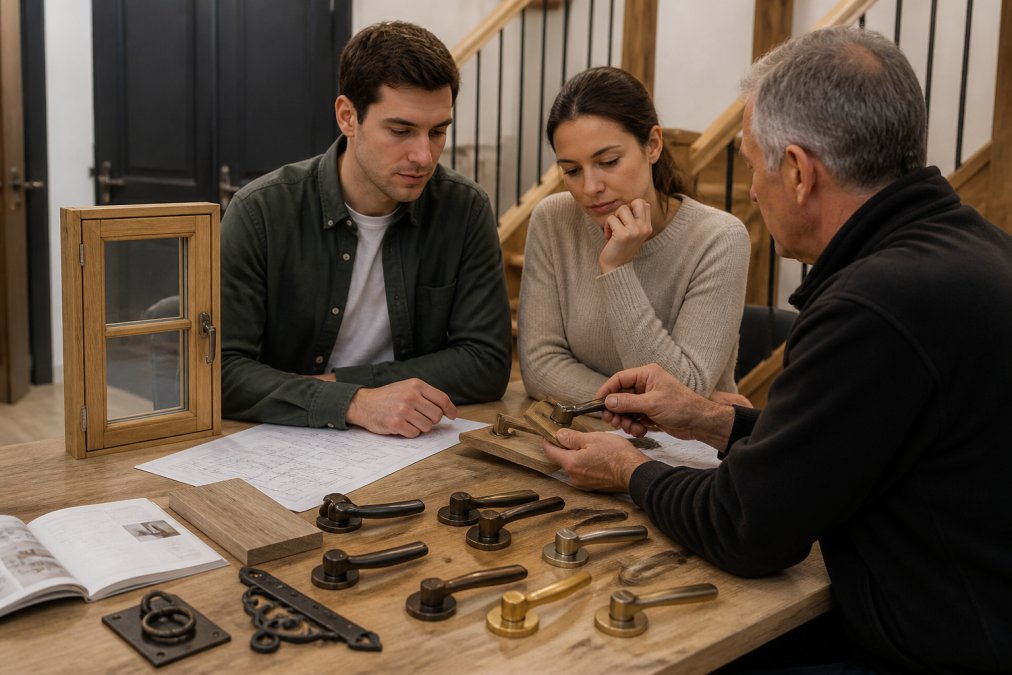
Bespoke joinery design consultation is the process of working with specialist craftspeople to create custom-made furniture, cabinetry, doors, windows, or staircases tailored to your exact specifications and space. Unlike off-the-shelf solutions, bespoke joinery involves designers, engineers, and master craftspeople collaborating to deliver pieces that fit perfectly into your property while meeting your aesthetic and functional requirements.

At Arborfield Joinery, we understand that every property is unique. Victorian terraces rarely have standard window openings. Extensions create non-standard measurements. Listed buildings demand period-appropriate details. Bespoke joinery solves these problems by treating each project as a custom challenge rather than fitting you into an existing template.
The consultation process combines three critical elements: precise measurement and assessment of your space, technical design using CAD visualisation to show exactly what you'll receive, and material selection that balances durability, aesthetics, and budget.
The Bespoke Joinery Project Timeline: What to Expect
Understanding the project lifecycle helps you plan your renovation schedule realistically. A typical bespoke joinery project follows a predictable sequence, though timescales vary based on complexity, material availability, and your approval speed.
Initial Site Survey and Measurements
The first stage involves a professional on-site survey where the joinery designer takes precise measurements, photographs, and notes about your space. A thorough site survey typically takes 1-2 hours for a single room or 3-4 hours for a whole-house project.
During the survey, the designer assesses structural conditions, existing openings, wall angles, floor levels, and any quirks that affect fabrication. Victorian properties often have walls that aren't square. The survey captures these realities so your custom joinery fits without gaps or forcing. The surveyor also discusses your requirements in detail: functional needs, aesthetic preferences, budget constraints, and material preferences.
Design Development and CAD Visualisation
Once measurements are collected, the designer develops detailed technical drawings and 3D CAD visualisations. This stage typically takes 1-2 weeks depending on complexity and your responsiveness to feedback.
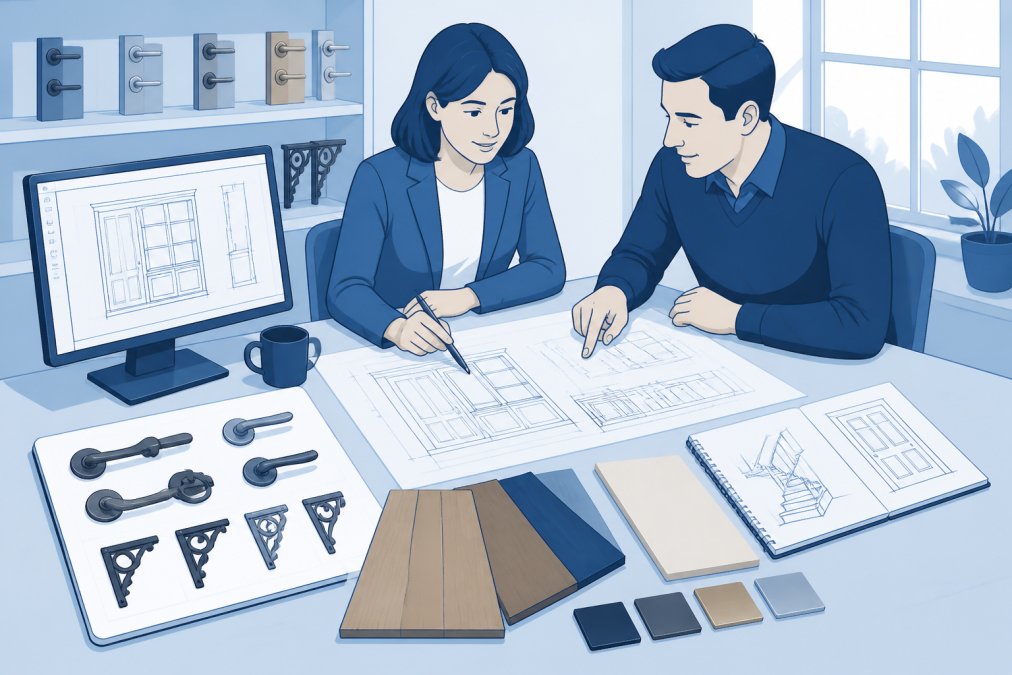
CAD drawings show exact dimensions, joinery details, and how the finished piece will look in your space. You'll see elevations, sections, and often photorealistic 3D renderings. This is your chance to spot problems before fabrication begins. Most designers provide 1-2 revision rounds included in the consultation fee.
Material Selection and Approval
Once the design is locked, you'll specify materials, finishes, and hardware. Material selection affects both aesthetics and durability. Softwoods like pine are affordable and work well for painted finishes. Hardwoods like oak offer durability and grain character but cost more. Finish selection is equally important. A painted finish hides the timber grain but requires maintenance every 5-7 years. Natural oil finishes highlight grain character but need reapplication annually.
Fabrication and Quality Control
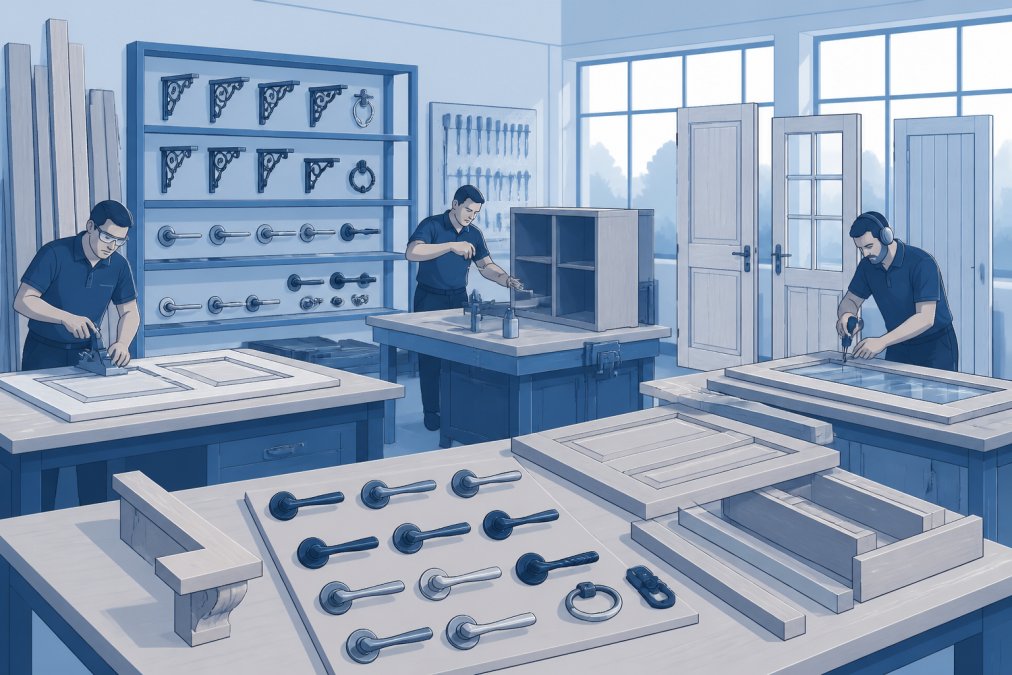
Fabrication is where design becomes reality. Your bespoke joinery moves to the workshop where craftspeople execute the design using precision machinery and hand-finishing techniques. Fabrication timescales typically range from 4-8 weeks for straightforward pieces to 12+ weeks for intricate architectural joinery.
During fabrication, quality control checks happen at multiple stages. Components are cut to tolerances measured in millimetres. Joints are test-fitted before final assembly. The finished piece is inspected against the approved drawings before leaving the workshop.
Professional Installation
Installation is the final stage where your bespoke joinery is delivered and fitted into your property. Professional installation typically takes 1-3 days depending on complexity. During installation, the fitter checks that everything aligns correctly with your space. Once installed, the fitter demonstrates operation, explains care instructions, and leaves you with documentation and warranty details.
How to Choose a Bespoke Joinery Company
Not all joinery companies deliver the same quality or service. The difference between a mediocre result and an excellent one often comes down to choosing the right partner.
Track Record and Craftsmanship
A company's portfolio tells you what they actually deliver. Look for projects similar to yours. Ask for references from customers with similar project types. When you speak to references, ask specific questions: Did the project finish on time? Did costs stay within budget? How does the work hold up?
Craftsmanship quality shows in details. Look at how joints are finished. Are grain patterns matched across panels? Is the finish even without drips or sags? These details signal whether the company sweats the small things.
In-House Manufacturing Capability
Companies that own their own workshop have more control over quality and timescales than those outsourcing fabrication. In-house manufacturing means the designer, maker, and installer understand each other's constraints. Ask whether the company fabricates in-house or outsources.
Communication and Project Management
Clear communication prevents misunderstandings that lead to costly rework. Assess how a company communicates during the consultation phase. Do they explain things clearly? Do they respond promptly to emails and calls? Good project management means you know what's happening at each stage with clear timelines.
Bespoke Joinery Cost Calculator: Understanding Pricing
Cost is often the biggest question when considering bespoke joinery. Unlike stock products with fixed prices, bespoke work varies dramatically based on complexity, materials, and specifications.
Factors That Influence Cost
Complexity is primary: a simple door frame costs far less than an intricate architectural staircase. Material choice matters significantly: solid oak costs more than pine. Finish type affects cost: a simple paint finish is cheaper than multi-stage stain and varnish processes. Quantity influences unit cost. A single bespoke window costs more per unit than five identical windows. Site conditions matter too: difficult access or unusual measurements increase costs.
Budget Planning for Custom Projects
Start with a realistic budget. Bespoke joinery typically costs more than mass-produced alternatives, but often delivers better value over time because it's made to last and fits perfectly. For budgeting purposes, consider material costs, labour, and contingency (typically 10-15% for unexpected issues). A straightforward bespoke door might cost £800-1,500. A full kitchen with custom cabinetry might range from £5,000-15,000+ depending on size and specification.
Get written quotes from multiple companies. A good quote breaks down costs clearly: design fees, material costs, fabrication labour, installation labour, and contingencies.
Key Steps in the Design Consultation Process
A structured design consultation process ensures nothing gets missed and decisions happen logically.
Step 1: Initial Assessment and Requirements
The first meeting establishes what you actually need. Bring photographs of your space, measurements if you have them, and examples of styles you like. Discuss your budget openly. A good designer will tell you whether your budget is realistic for your requirements.
Step 2: Technical Drawings and 3D Visualisation
After the initial meeting, the designer produces technical drawings and 3D visualisations showing exactly what you'll receive. Review them carefully. Do the proportions look right? Does the design solve your functional needs? This is the right time to request changes. Modifications at this stage cost far less than changes after fabrication starts.
Step 3: Material Specification and Finish Selection
Once the design is approved, you'll specify materials and finishes. Request timber samples and finish samples so you can see how they look in your actual space with your actual lighting. Consider maintenance requirements. A natural oil finish looks beautiful but needs annual care. A painted finish requires repainting every 5-7 years.
Step 4: Final Approval and Production Planning
Before fabrication begins, you'll give final approval. At this point, the design is locked. Changes after this trigger additional costs and delays. The designer will provide a production timeline showing when fabrication will start, estimated completion, and installation dates.
Sustainability and Material Certifications in Bespoke Joinery
Environmental considerations increasingly matter when choosing materials. FSC (Forest Stewardship Council) certification indicates timber comes from responsibly managed forests. PEFC (Programme for the Endorsement of Forest Certification) provides similar assurance.
Some companies offer reclaimed or salvaged timber options. Reclaimed timber has environmental benefits and aesthetic appeal, but costs more and has limited availability. Engineered timber alternatives offer sustainability advantages in some contexts by using timber more efficiently.
Ask your joinery company about their material sourcing. Reputable companies can explain where timber comes from, what certifications they hold, and what sustainability practices they follow.
Maintenance and Aftercare for Custom Joinery
Proper maintenance extends the life of your bespoke joinery significantly. Solid timber doors and windows need regular inspection for signs of movement, gaps, or finish deterioration. Hinges and locks should be oiled occasionally. Painted finishes benefit from touch-ups before small marks become larger problems.
Natural oil finishes require annual reapplication. Varnished finishes need less frequent maintenance but are harder to repair when damaged. Staircases need regular inspection for loose treads or handrails. Most joinery companies provide care instructions with your finished pieces. Follow these recommendations to maintain your investment.
Bespoke joinery design consultation services transform how you approach custom woodwork projects. Rather than forcing your space into stock solutions, you get pieces designed specifically for your property, your needs, and your aesthetic. The process takes longer than buying off-the-shelf products, but the result is joinery that fits perfectly, functions properly, and lasts for decades.
Arborfield Joinery has delivered bespoke solutions since 1953, combining traditional craftsmanship with modern CAD design capabilities. Whether you need custom windows for a Victorian terrace, bespoke cabinetry for a modern kitchen, or a handcrafted staircase for a listed building, our team manages the entire process from initial survey through final installation. We provide expert advice on material selection, realistic timescales, and transparent pricing so you know exactly what to expect. Get started with Arborfield Joinery and transform your space with joinery designed specifically for you.
Frequently Asked Questions
How much does bespoke joinery cost in the UK?
Bespoke joinery costs vary significantly based on complexity, materials, and scope. Victorian-style door knobs start from £22.09, whilst custom fitted cabinetry and built-in storage solutions typically range from £2,000 to £15,000+ depending on room size and timber selection. Factors affecting price include non-standard measurements, material grade (hardwood versus softwood), finish complexity, and installation requirements. Request a detailed cost estimate after your initial site survey, most reputable joinery companies provide transparent pricing without hidden charges.
What should I expect during a bespoke joinery design consultation?
A professional bespoke joinery design consultation includes a site survey with precise measurements, discussion of your aesthetic preferences and functional needs, presentation of material and finish options, CAD drawings or 3D visualisation of the proposed design, and a detailed cost breakdown. The consultant will assess your space's unique characteristics, odd angles, non-standard openings, architectural style, and explain how the custom design addresses these challenges. You'll typically receive samples of timber finishes and hardware options (such as our Victorian door knobs from £22.09 to £75.37) to help finalise your choices.
How long does a bespoke joinery project take from consultation to installation?
Most bespoke joinery projects take 8-12 weeks from initial consultation to completion, though timelines vary. The process includes 1-2 weeks for initial survey and design development, 2-3 weeks for CAD drawings and approval, 4-6 weeks for fabrication and quality control, and 1-2 weeks for professional installation. Rush timelines are possible for simpler projects but may incur additional costs. Discuss your deadline during the initial consultation so the joinery company can plan production schedules accordingly and manage your expectations.
What is the difference between bespoke joinery and off-the-shelf furniture?
Bespoke joinery is custom-designed and manufactured to fit your exact space, measurements, and aesthetic preferences, whilst off-the-shelf furniture comes in standard sizes with limited customisation. Bespoke solutions optimise awkward spaces, non-standard openings, and unique architectural features, particularly valuable in older properties with irregular dimensions. Custom joinery typically offers superior durability, better material quality, and precision fit. Off-the-shelf options are faster and cheaper upfront but may require filler panels, gaps, or compromises on design. For Victorian terraces or properties with unusual features, bespoke joinery delivers a tailored solution that off-the-shelf alternatives cannot match.
This article was written using GrandRanker
Share:
Pocket Door Systems UK: The Complete Guide to Space-Saving Joinery
The Ultimate Guide to Timber Stairs: Quality, Style, and Selection