
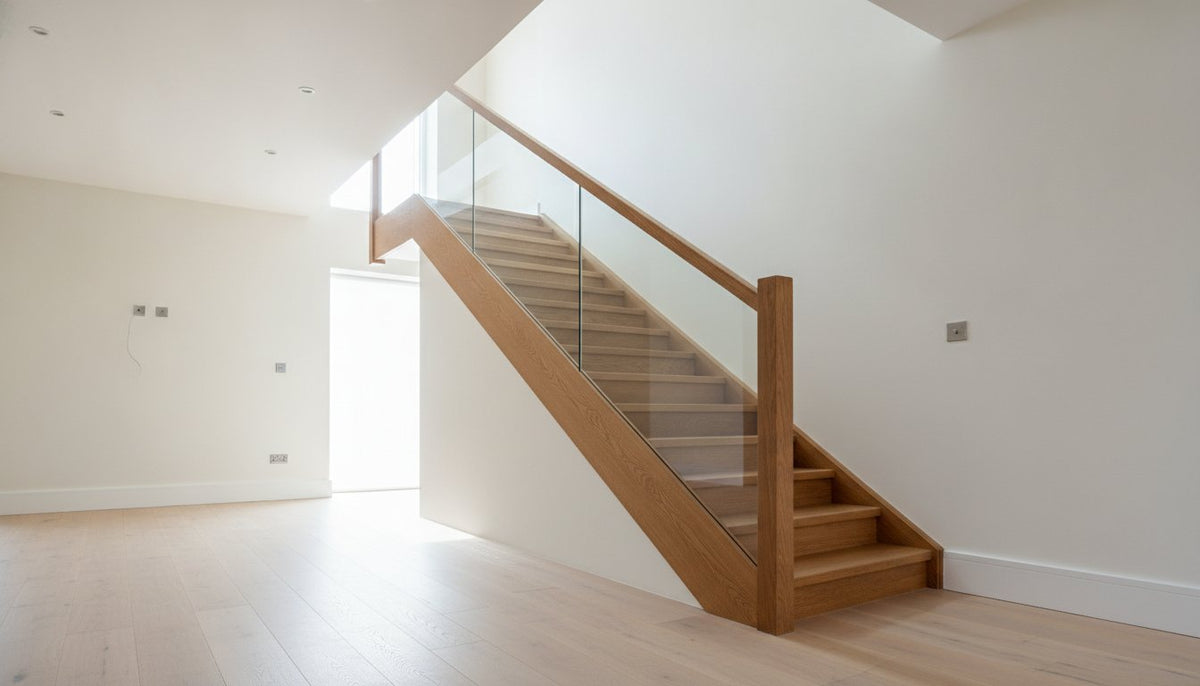
A staircase is the only piece of furniture in your home that you'll never replace, so it's vital to get the craftsmanship right the first time. When you're looking for the premium oak staircases UK homeowners have admired for generations, you're looking for more than just a functional path to the first floor; you're seeking an architectural centrepiece that defines the character of your entire property.
It's completely understandable to feel some trepidation when choosing between solid or engineered timber, or to worry about the long term frustration of creaking treads and structural movement. You want a hallway that feels cohesive and sophisticated, without the stress of navigating complex building regulations alone. This guide provides the expert clarity you need to select a staircase that balances traditional British heritage with modern structural excellence. We will examine the essential Part K safety standards, compare material performance, and show you how to curate a stunning focal point that adds tangible, lasting value to your home.
Key Takeaways
- Discover why oak is considered the gold standard for British joinery, providing a durable, high-value investment for high-traffic areas.
- Understand the structural benefits of engineered timber versus solid oak to prevent warping and ensure your staircase remains silent and stable.
- Explore the latest design trends, including the "Urban" aesthetic which pairs natural timber with sleek glass or black metal components.
- Gain a clear understanding of Part K Building Regulations to ensure your oak staircases UK installation meets all safety, pitch, and headroom standards.
- Learn how 70 years of family-run expertise can help you coordinate your staircase with existing internal joinery for a cohesive home design.
Why Oak Staircases Remain the Gold Standard for British Homes
Choosing a new staircase is one of the most significant decisions a homeowner can make. It isn't merely a way to move between floors; it's a permanent structural element that anchors the entire aesthetic of your entrance hall. For those investing in oak staircases UK properties benefit from a material that has been the preferred choice for master joiners since long before we opened our doors in 1953. Unlike softwoods like pine, which can feel flimsy and show signs of wear within a decade, oak offers a dense, resilient foundation that withstands the heavy footfall of a busy family home.
This durability translates directly into tangible property value. When prospective buyers enter a home, they look for signs of quality and longevity. A premium oak staircase signals that the property has been maintained with an eye for excellence, often making it a top priority for those looking to maximise their return on investment. The Staircase design and history in British architecture shows that timber has always been a symbol of status and stability; oak continues this tradition today whilst adapting to modern tastes.
The Aesthetic Advantage of Natural Grain
The visual appeal of oak lies in its unique, swirling grain patterns and warm honey tones. It's a tactile material that feels substantial underhand, providing a sense of reassurance every time you climb the stairs. Whether you prefer the rustic charm of character oak with its natural knots or a sleek, contemporary finish for a modern apartment, oak adapts beautifully to its environment. To create a truly harmonious interior, many homeowners choose to match their new flight with internal oak doors. This creates a seamless flow through the home, ensuring the joinery feels like a deliberate, curated choice rather than a collection of mismatched parts.
Durability and the "30-Year Investment"
One of the most common frustrations with cheaper staircases is the inevitable "creak." This usually happens when lower-density wood expands and contracts significantly, causing joints to rub. Oak's incredible density makes it far less prone to these structural shifts. It also acts as a natural acoustic insulator, dampening the sound of footsteps and creating a quieter, more peaceful living environment. We view an oak staircase as a 30-year investment, though with minimal care, it'll easily last a lifetime. It's also an eco-conscious choice; timber is a renewable resource that stores carbon, making it a responsible selection for a sustainable renovation.
Understanding Oak Quality: Solid vs. Engineered Timber
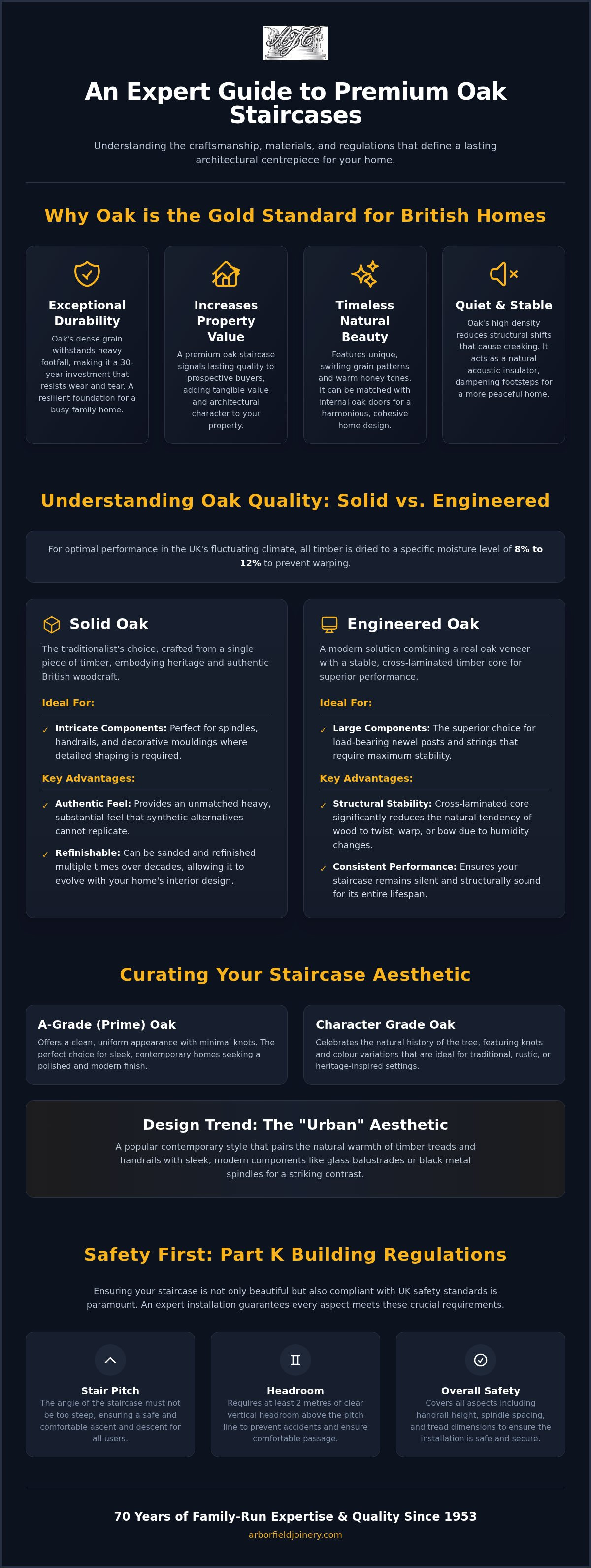
When browsing for oak staircases UK suppliers often use terms like "solid" and "engineered" interchangeably. However, the distinction is crucial for the longevity of your installation. The British climate, with its fluctuating humidity and widespread use of central heating, can be particularly demanding on natural timber. Wood with incorrect moisture content will inevitably warp, shrink, or expand, leading to structural issues. For internal joinery, we ensure timber is dried to a specific moisture level, usually between 8% and 12%, to match the average UK home environment.
We typically categorise oak into two main grades to help you achieve your desired aesthetic:
- A-Grade (Prime): Offers a clean, uniform appearance with minimal knots; it's the perfect choice for sleek, contemporary homes.
- Character Grade: Celebrates the natural history of the tree, featuring knots and colour variations that suit more traditional or rustic settings.
Solid Oak: The Traditionalist’s Choice
Solid oak joinery remains the pinnacle of traditional British woodcraft. It's the ideal choice for smaller, intricate components like spindles, handrails, and decorative mouldings. Because it's a single piece of timber, you can sand and refinish it multiple times over the decades, allowing the staircase to evolve with your interior design. This material provides an authentic, heavy feel that purely synthetic alternatives simply cannot replicate. It's the ultimate choice for those who value heritage and tactile quality in every step.
Engineered Oak: Performance and Stability
For larger, load-bearing components like newel posts and strings, engineered oak is often the superior choice. It isn't a "fake" wood; rather, it consists of a high-quality oak veneer over a cross-laminated timber core. This construction method significantly reduces the natural tendency of wood to twist or bow. By alternating the grain direction in the core, the internal stresses cancel each other out. This stability is essential for meeting the strict safety requirements detailed in the UK Building Regulations (Approved Document K).
In the UK market, you'll primarily encounter White Oak and Red Oak. We specialise in White Oak because its closed-cell structure makes it far more resistant to decay and moisture than the more porous Red Oak. If you're unsure which material suits your project, you might find it helpful to view our components in person to feel the difference in density and finish. Understanding these technical nuances ensures your investment remains as beautiful in twenty years as it is on the day of installation.
Designing Your Staircase: Styles, Components, and Trends
Designing a staircase is the moment where engineering meets artistry. While standard kits might solve a practical need, the finest oak staircases UK homes feature are treated as bespoke architectural statements. Every element, from the sturdy newel posts that anchor the structure to the delicate spindles that provide safety and style, offers an opportunity to express your property's personality. By viewing the staircase as a focal point rather than a mere utility, you can transform a simple hallway into a grand entrance.
The Anatomy of a Staircase
Understanding the terminology is the first step toward a successful design. You'll need to choose between a "closed string" design, where the edges of the treads are hidden by a side board, or a "cut string" style, which exposes the profile of the steps for a more decorative finish. Handrail profiles also vary significantly; a chunky, rounded mopstick rail offers a different tactile experience than a sharp, contemporary square edge. If you're not replacing the entire flight, you can use individual staircase components to transform an existing structure, giving an older staircase a premium oak facelift without the upheaval of a full structural rebuild.
Modern vs. Traditional Balustrades
The choice of balustrade defines the era of your home. For period properties, traditional turned spindles and ornate newel caps preserve a sense of heritage. These classic details look particularly impressive in Victorian or Edwardian renovations where original features are being celebrated. Conversely, the "Urban" trend is currently dominating 2026 renovations. This style pairs the warmth of natural oak with sleek black metal spindles or minimalist glass panels. It creates a striking industrial aesthetic that works perfectly when coordinated with black door handles and other dark hardware throughout the hallway.
Glass balustrades are particularly effective in narrow UK hallways. By removing the visual clutter of timber spindles, you allow light to transfer freely between floors, making a cramped space feel considerably more open and airy. Whether you prefer the timeless Ledge and Brace cottage look or a floating glass design, the versatility of oak ensures it remains the perfect partner for any material. Is your goal to create a grand entrance or a subtle, functional transition? The right combination of components will make all the difference.
Technical Requirements: Regulations and Maintenance
Precision is the hallmark of high-quality joinery. When installing oak staircases UK building control officers look for strict adherence to safety standards that ensure the structure is fit for purpose. You must measure the "total rise" from the finished lower floor to the finished upper floor and the "total going," which is the horizontal distance the staircase covers, with absolute accuracy. Even a few millimetres of discrepancy can lead to a staircase that feels awkward to climb or, worse, fails a mandatory inspection.
Approved Document K dictates the geometry of your flight to prevent falls and injuries. These rules aren't just bureaucracy; they ensure the ergonomic safety of everyone in your home. Before you commit to a design, ensure your plans meet these specific criteria:
- Individual Rise: Each step must have a height between 150mm and 220mm.
- Individual Going: The depth of each tread must be between 220mm and 300mm.
- Maximum Pitch: The steepness of the staircase cannot exceed 42 degrees.
- Headroom: A minimum of 2 metres of clear headroom is required above the pitch line.
Navigating UK Building Regulations
Safety extends beyond the steps themselves. The "100mm rule" is a critical requirement for any balustrade; no gap between spindles or glass panels should allow a 100mm sphere to pass through. This prevents small children from getting stuck or falling. Additionally, handrails must sit at a height between 900mm and 1000mm from the floor or pitch line. Because these regulations are updated periodically, we always recommend consulting a professional joiner during the planning stage to ensure your design is fully compliant with the latest 2026 standards.
Preserving the Beauty of Oak
Oak is a hardy material, but it requires the right finish to stay beautiful. For a natural, tactile feel that celebrates the grain, a hardwax oil is often the best choice. It penetrates the wood and is easy to "spot repair" if a minor scratch occurs. If your hallway is a high-traffic zone for a busy family, a high-quality lacquer provides a tougher, moisture-resistant barrier that is easier to wipe clean. To prevent tread wear in the centre of the steps, many homeowners opt for a carpet runner, which protects the timber whilst leaving the beautiful oak edges exposed.
Regular maintenance involves little more than dusting with a soft cloth and avoiding harsh chemical cleaners that can strip the wood's natural oils. If you are currently in the planning stage and want to ensure your project meets these technical standards, you can browse our range of stair components to find the perfect, compliant fit for your home.
The Arborfield Joinery Difference: Quality Since 1953
When you're investing in oak staircases UK homes deserve a level of attention that volume retailers simply cannot provide. We've been a family-run enterprise since 1953, which means we bring over 70 years of joinery expertise to every conversation. We don't just sell components; we act as knowledgeable consultants who understand that a staircase is a lifetime commitment. Our team prioritises long-term relationships over quick transactions, ensuring you receive the specific technical guidance needed for a successful installation. It's this steady hand that has helped thousands of homeowners navigate the complexities of structural joinery with absolute confidence.
A Heritage of Craftsmanship
Our pride in craftsmanship is most evident in our massive showroom. It's one of the largest in the country, featuring over 120 doors and a vast array of stair components. Seeing and touching the timber in person is an essential part of the design process. It allows you to appreciate the subtle differences in grain and tone that photos often fail to capture. We've spent decades sourcing "best in class" timber from premium suppliers, ensuring our commitment to sustainability is never at the expense of structural quality. This heritage allows us to act as your "Quality Curator." We help you organise a cohesive aesthetic across your entire home, ensuring your new staircase coordinates perfectly with existing internal joinery for a seamless, high-end finish.
Nationwide Supply and Expertise
Whilst we value our local roots, we operate as a national supplier. We've perfected our logistics to ensure that heavy, delicate oak components arrive at your doorstep in pristine condition. Whether you're in the Highlands or on the South Coast, our delivery network is designed to handle premium joinery with the care it requires. We understand that a renovation can be a significant undertaking. To make your project more cost-effective, we offer free mainland UK shipping on all orders over £900. This combination of heritage expertise and modern delivery capability makes us the reliable partner you need for your home improvement journey. Browse our premium oak staircase components and doors today to begin curating your ideal living space with a brand that has stood the test of time.
Choosing Arborfield Joinery means you're not just buying a product; you're gaining access to seven decades of industry evolution. We've seen trends come and go, but our focus on reliability and aesthetic appreciation remains unchanged. If you're looking for a staircase that combines British heritage with modern durability, our team is ready to help you master the art of selection. Visit our showroom or explore our online range to see how we can transform your hallway into a stunning architectural focal point.
Transform Your Home with Timeless Oak Craftsmanship
Investing in a new staircase is a rare opportunity to redefine your home's architectural heart. By choosing the premium oak staircases UK homeowners have trusted for decades, you're securing a legacy of durability that far outlasts standard softwood alternatives. Whether you've opted for a traditional turned balustrade or the sleek lines of an Urban glass design, your choice represents a commitment to quality that adds tangible value to your property.
Remember that success lies in the details; from strict adherence to Part K building regulations to selecting the right moisture-stable timber. Since 1953, our family-run business has helped clients master these technicalities whilst curating beautiful, cohesive spaces. With over 120 doors and joinery items on display in our showroom, we invite you to experience the tactile difference of expert joinery first-hand.
Ready to begin your renovation? You can discover our premium range of oak staircase components at Arborfield Joinery and benefit from free mainland UK delivery on all orders over £900. Let's build something that stands the test of time together.
Frequently Asked Questions
Is an oak staircase more expensive than a softwood one?
An oak staircase is a more significant initial investment than a softwood alternative like pine. This price difference reflects the density and durability of the timber; oak is far more resistant to the dents and scratches common in high-traffic hallways. Whilst the upfront cost is higher, the long-term value is superior. You won't need to replace it, and it adds tangible resale appeal to your property that cheaper materials simply cannot match.
How do I maintain a solid oak staircase to keep it looking new?
Maintaining your staircase involves regular dusting with a soft cloth and avoiding harsh chemical cleaners that strip natural oils. If your oak is finished with hardwax oil, you may need to apply a fresh coat every few years to keep the wood nourished and protected. For lacquered surfaces, a damp cloth is usually sufficient. Always address spills immediately to prevent moisture from penetrating the grain and causing permanent staining or swelling.
Can I renovate my existing stairs using oak cladding?
You can certainly renovate an existing flight using high-quality oak components to achieve a premium look without a full structural replacement. This process involves cladding the existing treads and risers with oak veneers or thin solid sections. It's an excellent way to upgrade your hallway's aesthetic whilst minimising the upheaval of a complete rebuild. Pairing these with new oak spindles and handrails creates the seamless appearance of a brand-new installation.
What are the current UK building regulations for staircase handrails?
Under current UK building regulations, specifically Approved Document K, handrails must be set at a height between 900mm and 1000mm from the pitch line. They must also provide a continuous, comfortable grip for safety. If your design includes balustrades, any gaps between spindles or glass panels must be small enough that a 100mm sphere cannot pass through. These 2026 standards are vital for preventing accidents, particularly in homes with young children.
What is the difference between white oak and red oak for stairs?
White oak is the preferred choice for oak staircases UK suppliers recommend because of its superior durability and closed-cell structure. This makes it highly resistant to rot and moisture compared to red oak, which is more porous and prone to staining. Visually, white oak offers a more consistent tan or honey-coloured grain. Red oak has a distinct pinkish hue and a coarser texture that may not suit every contemporary interior design.
How long does it take to deliver an oak staircase in the UK?
Delivery times for oak components vary depending on whether you are ordering standard stock items or bespoke sections. We provide national shipping across the mainland, ensuring your joinery arrives in perfect condition. For orders over £900, we offer free mainland UK delivery to help manage your project costs. It's always best to plan your order well in advance of your joinery team's arrival to ensure every component is on-site and ready for assembly.
Do I need to treat my oak stairs before installation?
It's highly recommended to seal your oak components before or immediately after installation to protect the timber from moisture and dirt. Applying a base coat of oil or lacquer whilst the parts are accessible ensures that every surface, including those hidden after assembly, is protected. This prevents the wood from drying out or absorbing humidity from the building environment. Proper sealing is essential for maintaining structural stability and the natural beauty of the grain.
Are engineered oak stairs as durable as solid oak?
Engineered oak is exceptionally durable and often more stable than solid timber for larger components like newel posts or strings. Its cross-laminated core prevents the wood from warping, twisting, or bowing in the fluctuating UK climate. Because the top layer is a thick oak veneer, you get the same tactile feel and visual appeal as solid wood. It's a high-performance choice that combines traditional aesthetics with modern engineering to prevent structural movement.
Share:
Alternatives to uPVC Windows for Modern Homes
How to Install Custom Wooden Window Frames in Period Properties