
Table of Contents
- Why Look Beyond Standard uPVC for Modern Homes?
- Aluminium vs Timber Window Frames: Which Suits Your Project?
- Building Regulations for Window Replacement
- Maintenance Requirements for Hardwood Windows
- Lifecycle Cost Analysis: uPVC vs Timber vs Aluminium
- Acoustic Performance and Smart Home Integration
- Frequently Asked Questions
Last Updated: September 12, 2026
Why Look Beyond Standard uPVC for Modern Homes?
Standard uPVC has dominated window replacement for decades, but it is no longer the automatic choice for architects and homeowners weighing upvc alternatives for modern homes. Timber and aluminium now lead the market for projects where thermal efficiency, slim sightlines and long-term value matter more than the lowest upfront quote. At Arborfield Joinery, we have supplied timber windows to designers, builders and homeowners since 1953, and the shift in specification is unmistakable.
The reason is simple: uPVC is a sealed unit. Once the frame discolours, warps or the glazing unit fails, you replace the whole thing. Timber and aluminium frames can be repaired, recoated and reglazed, which changes the maths on a 30-year ownership.
Below, we break down how aluminium and timber compare on thermal performance, aesthetics, maintenance and lifecycle cost, and where each one wins.
Aluminium vs Timber Window Frames: Which Suits Your Project?
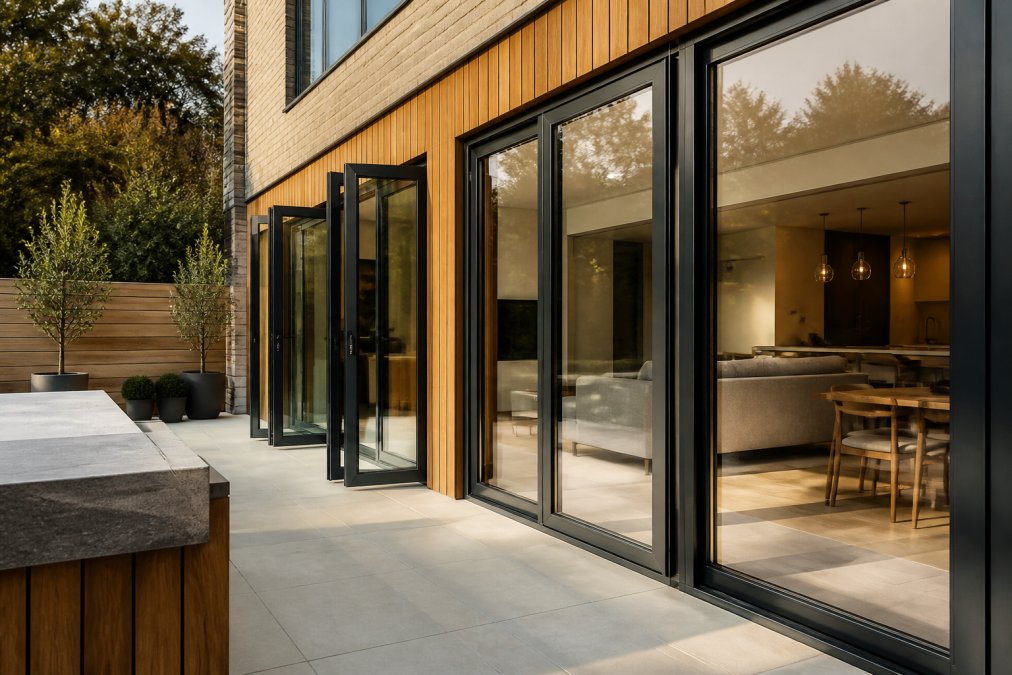
Aluminium suits contemporary architecture and coastal exposure; timber suits heritage and thermally demanding projects. Both outperform standard uPVC on longevity, but they solve different problems.
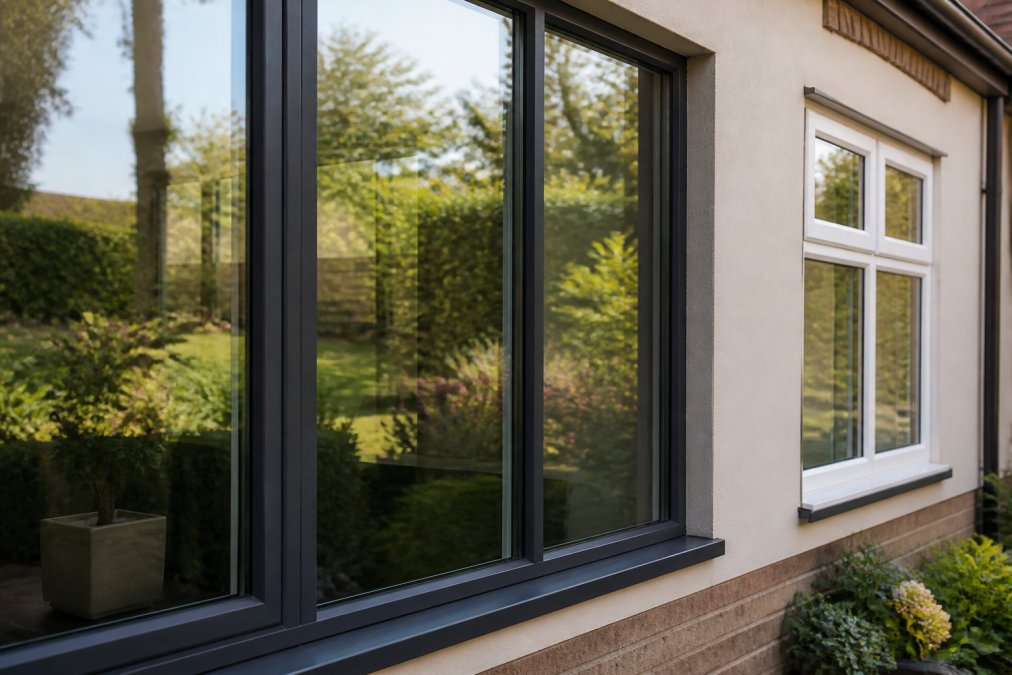
Aluminium frames are typically powder-coated and can be made far slimmer than uPVC, which matters when you want maximum glass and minimum frame. Timber, particularly engineered timber, offers lower thermal conductivity and can be finished to match any architectural style.
Thermal Performance and U-Values
U-values measure heat loss through a window, and lower is better. Timber has a natural thermal advantage because wood conducts heat roughly a thousand times less effectively than aluminium, so a timber frame resists thermal bridging at the edges far better than an unbroken aluminium one.
For either material, the glazing unit does most of the work. Double glazing is the baseline; triple glazing adds a third pane and a second cavity, which lifts performance further but adds weight and cost. The British Fenestration Rating Council guidance on energy ratings explains how whole-window ratings are calculated. Always ask for the whole-window U-value, not just the centre-pane figure.
Aesthetic Differences for Modern Architecture
Aluminium delivers the sharp, minimal lines that contemporary design demands, and it can be powder-coated in almost any colour. Timber offers grain, warmth and depth that no coated frame replicates, and it is the only honest choice for heritage aesthetics where planning or conservation constraints apply.
If your project sits between the two, flush sash and tilt and turn profiles in engineered timber give you the clean sightlines of aluminium with the thermal behaviour of wood.
Building Regulations for Window Replacement
Replacement windows must comply with building regulations on thermal performance, safety glazing, ventilation and fire escape, regardless of frame material. In practice, that means meeting a minimum whole-window U-value and using toughened or laminated glass in critical locations such as doors and low-level glazing. These stringent safety requirements extend to the threshold and frame design of entryways, necessitating a careful evaluation of residential door options to ensure that structural integrity and thermal efficiency remain consistent across the entire building envelope.
The UK government guidance on building regulations for windows and doors sets out the approved documents that apply. A reputable supplier will confirm compliance as part of the specification, and for listed buildings or conservation areas you may also need consent before work starts. Get this wrong and you can be forced to remove and refit the windows at your own cost.
Maintenance Requirements for Hardwood Windows
Hardwood windows need recoating every few years, but they can be repaired rather than replaced. Engineered timber is more dimensionally stable than solid hardwood, which reduces movement and the risk of condensation and draughts at the joints.
A practical maintenance schedule looks like this:
| Interval | Task | Why It Matters |
|---|---|---|
| Annually | Inspect seals, joints and drainage | Catches water ingress early |
| Every 3-5 years | Recoat exposed timber | Prevents rot and UV damage |
| Every 10-15 years | Check and reglaze units | Restores thermal performance |
| As needed | Adjust or replace hardware | Keeps multi-point locking working |
Compare that with uPVC alternatives, which are often described as maintenance-free but cannot be sanded, repaired or recoated. When a uPVC frame fails cosmetically, replacement is usually the only option. The Wood Window Alliance guidance on timber window durability covers finishes and expected service life in more detail.
Lifecycle Cost Analysis: uPVC vs Timber vs Aluminium
Upfront price is the easiest number to compare and the least useful one. A window is a 25- to 35-year asset, and the cost of owning it is driven by four things: the purchase price, the cost of keeping it weathertight, the cost of the energy it loses, and whether it can be repaired or must be replaced. Most buying guides stop at the first. This section works through all four, because that is where the frame materials genuinely separate.
The four cost drivers
| Cost driver | What it covers | Why it dominates the total |
|---|---|---|
| Capital cost | Frame, glazing unit, hardware, fitting | Highest single outlay, but paid once |
| Maintenance | Recoating, seal replacement, hardware adjustment | Recurs every 3-10 years on timber; near-zero on aluminium and uPVC until failure |
| Energy | Heat lost through frame and glazing | Compounds annually and rises with energy prices |
| Replacement / repair | Reglazing, frame replacement | The swing factor, repair resets the clock, replacement does not |
The reason lifecycle cost diverges is the fourth row. A sealed uPVC unit has no repair path: once the frame discolours, warps, or the glazing unit's seal fails and misting appears between the panes, the standard remedy is a new window. Timber and aluminium frames can be sanded, recoated, re-weather-sealed and reglazed, so the frame outlives several glazing units.
A 30-year ownership pattern
A common pattern practitioners see over a 30-year horizon looks like this:
- uPVC: one initial installation, then typically one full replacement somewhere in years 15-25 as frames and units reach end of life. Two capital events, no meaningful repair spend in between.
- Timber (engineered): one installation, recoating every 3-5 years on exposed faces, seal and hardware checks annually, and one reglaze around years 10-15. One capital event, recurring maintenance, one mid-life glazing refresh.
- Aluminium: one installation, minimal maintenance beyond hardware adjustment and gasket replacement, and one reglaze around years 15-20. One capital event, low recurring spend, one mid-life glazing refresh.
The headline is not that timber or aluminium are cheaper on day one, they are not. It is that the uPVC saving is a loan against a future replacement, and the interest is the second installation.
What actually moves the number
Three variables swing the 30-year total more than frame material choice:
- Glazing unit specification. The sealed unit is usually the first component to fail, and it is also where thermal performance is won or lost. A better-specified unit costs more upfront and less over time.
- Exposure. A south-west-facing elevation on an exposed site will demand more frequent recoating on timber than a sheltered one. Coastal and elevated sites accelerate everything.
- Repairability. Every component that can be replaced independently, gaskets, hinges, handles, glazing units, removes a future capital event from the ledger.
How to run the comparison yourself
Ask each supplier for the same four figures and put them in one table:
- Purchase price including fitting and making good.
- Expected service life of the frame and of the glazing unit, stated separately.
- Maintenance schedule and the cost of each intervention.
- Whether the glazing unit can be replaced without removing the frame.
If a supplier cannot answer the last question, that is the answer. A window that must be removed to be reglazed is a window that will be replaced rather than repaired.
For a complete entrance to match, our Hillingdon Oak External Door at £578.65 pairs high-quality oak construction with the insulation and weather resistance you would expect from a modern timber front door.

Acoustic Performance and Smart Home Integration
Two specifications separate a modern window from a standard one, and almost no buying guide quantifies either: how much noise it keeps out, and how well it accepts automation. Both are decided at the frame and glazing stage, and both are difficult and expensive to retrofit.
Acoustic performance: what actually reduces noise
Sound reduction is measured as R_w, the weighted sound reduction index, expressed in decibels. A higher figure means more noise blocked. The single most useful number to ask for is R_w + C_tr, because the C_tr term adjusts the rating for low-frequency traffic noise, which is what most urban and roadside properties actually suffer from. A window can have a respectable R_w and a poor R_w + C_tr, and it is the second figure that predicts whether you will still hear buses.
Four mechanisms do the work:
- Asymmetric glazing. Panes of different thicknesses resonate at different frequencies, so they do not transmit the same sound together. A 4 mm / 6 mm pairing outperforms a 4 mm / 4 mm pairing of the same total weight. This is why asymmetric units are standard on busy roads.
- Cavity width. A wider gap between panes improves insulation up to a point, but beyond roughly 16-20 mm the cavity can begin to couple and performance can fall away. Wider is not automatically better.
- Laminated glass. A laminated pane incorporating an acoustic interlayer is the single most effective upgrade for traffic noise, because the interlayer damps the glass rather than letting it vibrate.
- Frame and seals. A poorly sealed frame leaks sound at the perimeter regardless of the glazing. Compression seals and a rigid, well-fitted frame matter as much as the glass.
Triple glazing improves acoustic performance further, but the gain comes mainly from the extra pane and cavity rather than the frame material. If noise is the priority, specify the glazing unit and the seals first, then choose the frame.
Smart home integration: what the frame must accept
Frequently Asked Questions
What are the most durable alternatives to uPVC window frames?
Aluminium and timber are the most durable alternatives. Aluminium is resistant to rust and warping, while hardwood like oak, when properly maintained, can last decades. Steel is another option for a slim, industrial look. Each material offers different benefits depending on your home's style and exposure to weather.
Is timber or aluminium better for modern home design?
Timber offers natural warmth and can be finished in any colour, suiting both traditional and contemporary homes. Aluminium provides slim, sleek frames ideal for large glazed areas and modern architecture. Your choice depends on the desired aesthetic, maintenance preference, and thermal performance requirements.
Do timber windows require more maintenance than uPVC?
Yes, timber windows need periodic painting or staining, typically every few years, to protect against moisture and UV damage. However, modern factory-finished timber can extend intervals. uPVC requires little more than cleaning, but timber offers superior aesthetic appeal and can be repaired if damaged.
Are there eco-friendly alternatives to uPVC windows?
Timber is a renewable resource and has a lower carbon footprint when sourced sustainably. Aluminium is highly recyclable, though its production is energy-intensive. Both can improve energy efficiency, reducing heating demand. Look for FSC-certified timber or recycled aluminium content for the best environmental profile.
How do aluminium windows compare to uPVC in terms of thermal efficiency?
Modern aluminium frames with thermal breaks can achieve U-values comparable to or better than standard uPVC. Timber naturally insulates well. The overall performance depends on glazing units, frame design, and installation. Always check the energy rating and U-value to compare specific products.
Share:
Urban Doors: Industrial Chic for Modern British Homes
The Ultimate Guide to Oak Staircases in the UK: Quality, Style, and Craftsmanship