
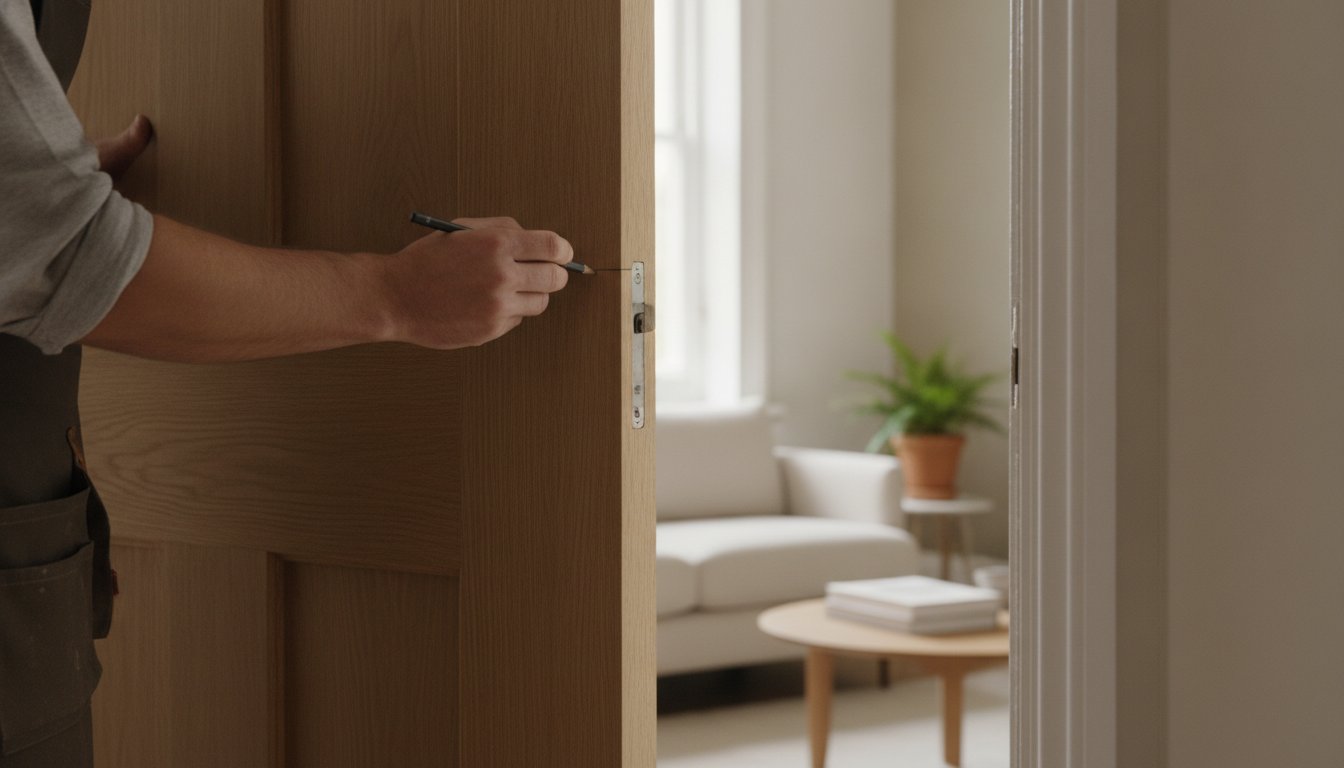
Is there really such a thing as a perfectly square door frame in a British home? Whether you reside in a characterful period cottage or a modern property that has settled over the years, you've likely found that "standard" sizes are rarely as uniform as they seem. Finding the right trimmable door is often the only way to handle these architectural quirks without the daunting cost of bespoke joinery. It's a common concern for homeowners who want to upgrade their space but fear that trimming a new purchase might compromise its structural integrity or reveal the internal core.
By choosing a product with the right specifications, you can achieve that elusive perfect fit regardless of your home's unique dimensions. This guide explains how to understand the differing trimming allowances between oak, walnut, and white primed doors so you can shop with certainty. We'll outline the precise measurements required and the technical limits of various lippings, ensuring your door remains as durable as it is beautiful. From understanding timber tolerances to mastering the final adjustments, you'll gain the expertise needed to transform your interior with professional results whilst protecting your investment.
Key Takeaways
- Learn why non-standard frames in characterful British homes require a trimmable door to achieve a professional, flush finish.
- Understand the vital role of the 'lipping' and how different core types dictate the structural limits of your adjustments.
- Discover how trimming allowances vary between materials, from traditional oak and walnut to modern laminate internal doors.
- Master essential measurement techniques, such as checking three points of the frame, to account for skews and ensure a bespoke fit.
- Ensure long-term durability by choosing high-quality joinery designed with generous margins for safe, precise trimming.
Understanding Trimmable Doors for Non-Standard Openings
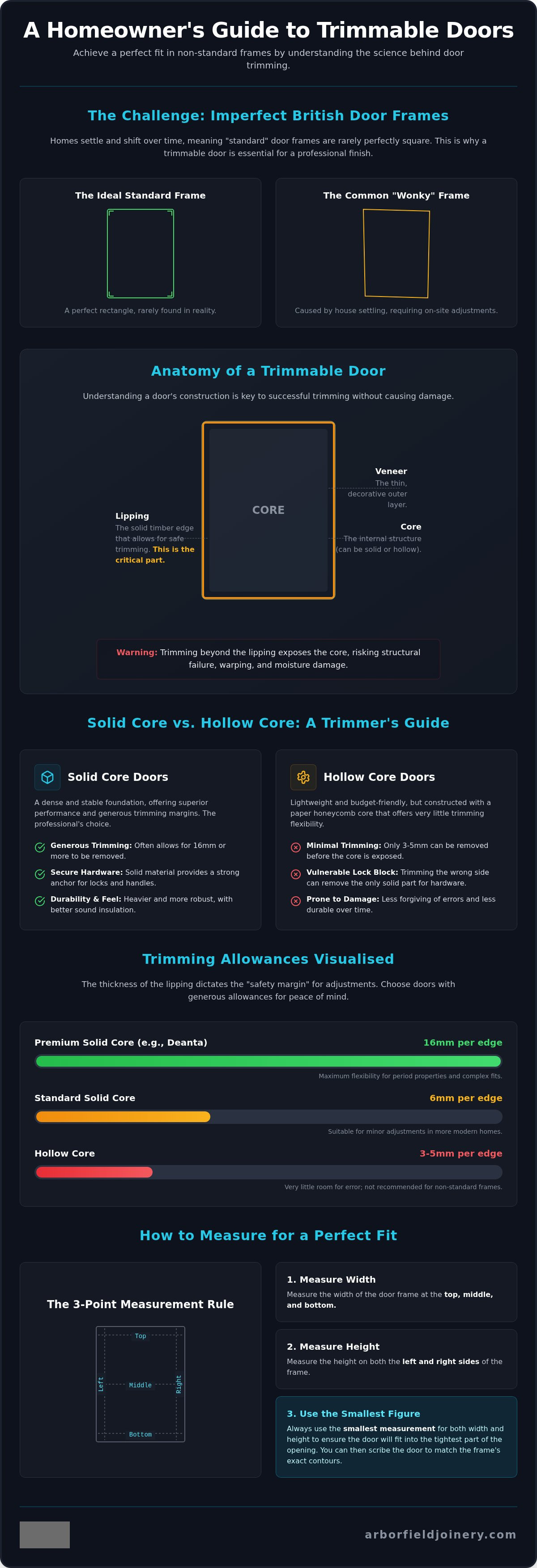
A trimmable door is essentially a standard-sized door designed with foresight. Unlike basic mass-market options that offer very little room for adjustment, these doors feature generous internal margins known as "lippings." These are solid timber edges that run around the perimeter of the door, acting as a safety buffer. They allow you to reduce the height or width of the door to fit a specific opening without risking its structural stability or exposing the internal core material. For homeowners dealing with the unique architectural character of British housing stock, this flexibility is often the difference between a door that sticks and one that glides perfectly.
Why "Standard" Doors Often Require Adjustments
Perfectly square door frames are a rare find in the UK. In older period properties, decades of structural settling often result in frames that have shifted into subtle trapezoids or parallelograms. You might discover that your frame is slightly wider at the middle than at the top, or perhaps the lintel has dipped over time, leaving a "wonky" opening that won't accept a standard rectangle. Even in modern builds, slight inaccuracies during the construction process can leave you with variations in frame width. Beyond the frame itself, internal changes like the addition of thick underlay or luxurious deep-pile carpets often necessitate trimming the bottom of the door to ensure it clears the floor smoothly without dragging.
Trimmable vs. Bespoke: Making the Right Investment
When you're faced with an odd-sized opening, the temptation is often to look toward bespoke joinery. However, custom-made doors usually involve lengthy lead times and a substantial financial investment. A high-quality trimmable door offers a more efficient and pragmatic alternative. Because these doors are kept in stock, they're the ideal solution for fast-moving renovation projects where you need a high-end finish without the bespoke wait times. You're essentially getting the look and feel of a custom fit at a fraction of the cost. For the trade professional or the skilled DIY enthusiast, the ability to scribe a door on-site means you can achieve a professional-looking finish that accounts for every dip and curve in the masonry. It's a sensible approach to home improvement that doesn't sacrifice the quiet elegance of a well-crafted timber product.
The Anatomy of Trimmable Doors: Lipping and Core Types
Understanding what lies beneath the surface of a door is essential before you ever pick up a plane or a saw. A lipping is the solid wood margin that allows for safe resizing. This component is the unsung hero of the trimmable door, providing the structural "meat" required to make adjustments without compromising the unit's integrity. In premium construction, a fine veneer is bonded over this solid timber edge to create a seamless, elegant finish. However, if you cut too deep and penetrate beyond this lipping, you risk exposing the internal core. This not only ruins the aesthetic but also invites moisture to seep into the door, which can lead to swelling, delamination, or permanent warping.
Solid Core vs. Hollow Core: Which is Better for Trimming?
The internal composition of a door dictates how much flexibility you have during installation. High-quality internal oak doors typically utilise a solid core, offering a dense and stable foundation that permits more generous trimming margins. In contrast, hollow core doors are constructed with a timber frame surrounding a honeycomb paper centre. These lightweight options are far less forgiving, often allowing for only 3-5mm of adjustment. If you trim too aggressively from one side of a hollow door, you may even remove the "lock block." This is the specific section of solid timber designed to support the handle and latch; without it, your hardware will have nothing secure to bite into.
Identifying High-Quality Lipping Construction
When you're evaluating different products, the thickness of the lipping is the most reliable indicator of a door's versatility. While many standard doors offer only a minimal 6mm edge, premium brands like Deanta prioritise the homeowner's experience by providing much thicker lippings, sometimes reaching 16mm or more. This extra timber provides a significant safety net when you're dealing with particularly skewed frames in a period property. A well-trimmed edge on a superior door will maintain the appearance of solid timber once finished. Conversely, a door with a thin lipping will quickly reveal its internal materials if over-trimmed, leaving you with a frayed, unprofessional edge that cannot be easily repaired. If you're planning a renovation, you can explore our curated collection of timber doors to find the specifications that best match your project's needs.
Comparing Trimming Allowances Across Materials
Material choice is more than just an aesthetic decision; it fundamentally changes the way a trimmable door responds to tools. While the internal construction provides the allowance, the surface material dictates the technique required to maintain a professional finish. Different timbers possess unique grain structures that react differently to being cut. A technique that works for a robust oak door might require more delicacy when applied to a darker walnut veneer. Understanding these nuances is the key to avoiding costly mistakes and ensuring your new door looks as though it was made specifically for your home.
Oak and Walnut: The Premium Trimmable Options
Oak remains the perennial favourite for UK homeowners. This is largely due to its incredible durability and classic grain. When trimming an oak or walnut door, the goal is to preserve the structural integrity of the hardwood veneer. Using a fine-tooth saw is essential here to prevent the grain from splintering or "shagging" at the exit point of the cut. Beyond the technicality of the cut, you must also consider the visual balance. Trimming too much from the bottom of a panelled door can make it look disproportionate. We recommend taking equal amounts from the top and bottom where possible to keep the stiles and rails in harmony with the original design.
White Primed and Laminate Considerations
For those new to DIY, white primed doors are often the most forgiving option. Because these doors require a final coat of paint anyway, any minor slips or slight over-sanding can be easily rectified with a bit of filler and a fresh coat of primer. In contrast, laminate internal doors present a different challenge. The tough, pre-finished surface is prone to chipping if the blade isn't sharp enough or if you don't use masking tape to score the cut line first. These doors are designed for durability, but they demand precision during the fitting process.
Regardless of the material you choose, certain rules always apply to ensure a long-lasting fit:
- Seal the edges: Immediately after trimming any door, you must seal the exposed timber with a suitable paint, varnish, or wax to prevent moisture ingress.
- Check the specs: Every manufacturer has different tolerances. A Deanta oak door might offer a 16mm lipping, whereas a budget white primed door might only allow for 6mm.
- Urban Styles: Be cautious with modern, slim-profile "Urban" doors. These often have much stricter trimming limits due to their narrower stiles and minimalist construction.
Always consult the specific guidelines provided by the manufacturer before making your first cut. This attention to detail protects your warranty and ensures the door remains a stable, beautiful feature of your interior for years to come.
How to Trim a Door: A Practical Guide for Homeowners
Achieving a flawless result with a trimmable door requires a methodical approach that prioritises accuracy over speed. Precision is the hallmark of any successful installation. Before you begin, you must understand that the goal isn't just to make the door smaller, but to mirror the unique character of your home's architecture. If you're ready to select a door that offers the flexibility you need for your project, browse our range of high-quality timber doors and find the perfect match for your space.
Scribing: The Secret to Fitting Wonky Frames
The first step in any professional fitting is a thorough measurement. You should measure the width of your frame at three distinct points: the top, the middle, and the bottom. This identifies any skews or tapering in the masonry. Once you have these figures, the most effective way to ensure a bespoke-looking fit is through a process called scribing. Using a compass or a dedicated scribing tool, you can map the irregularities of the frame directly onto the door's surface. This allows you to plane or saw away exactly what's necessary to follow the line of the wall.
To maintain the structural balance and aesthetic symmetry of the door, always aim to trim an equal amount from both sides. If you remove 10mm from the hinge side but nothing from the leading edge, the panels will look off-centre. The "measure twice, cut once" rule is never more relevant than when working with premium timber joinery. A single hurried mistake can compromise a beautiful investment.
Executing the Cut and Protecting the Finish
Choosing the right tools is essential for a clean, professional edge. A circular saw equipped with a guide rail, often referred to as a plunge saw, is the preferred choice for trade professionals. It provides a perfectly straight line that a hand saw simply cannot match without immense skill. To protect the delicate veneer from splintering, apply a strip of high-quality masking tape along the cut line and ensure you're using a fine-tooth blade. This simple precaution keeps the exit point of the blade clean and prevents the grain from "shagging" or lifting.
Finishing and Sealing Your Trimmed Edges
Once the cut is made and the edge is sanded smooth, your work isn't quite finished. Every trimmed edge must be treated immediately. Whether you're using oil, paint, or varnish, sealing the raw timber is vital to prevent moisture ingress. Without this protection, the porous core of the trimmable door will absorb humidity from the air, causing it to swell, stick, or even warp over time. Aim to match the colour of your sealant to the factory finish of the door to ensure the adjustment remains invisible to the naked eye. This final step preserves the integrity of the wood and ensures your door continues to operate smoothly through the changing seasons.
Selecting Quality Joinery for a Long-Lasting Fit
Choosing a trimmable door is only half the battle. The quality of the timber and the precision of the manufacturing determine whether that door remains a functional asset or becomes a maintenance burden. At Arborfield Joinery, we've been supplying quality joinery since 1953. This long-established heritage means we've seen how different products perform over decades, not just years. We curate our collection with a specific eye for the generous lippings that make adjustments safe and successful for the homeowner. Our expertise ensures you don't just buy a product, but a solution tailored to the unique architectural character of your property.
The Arborfield Standard: Craftsmanship and Reliability
Our family-run ethos dictates a "quality-first" narrative. We don't just sell doors; we act as knowledgeable consultants for your home improvement journey. This commitment to excellence extends to our choice of sustainable timber sources, ensuring that your new internal or external doors are as environmentally responsible as they are beautiful whilst providing peak performance. Whether you're coordinating a simple room refresh or a complex project involving stairs and multiple openings, our team provides the steady hand you need. We understand that every component must work in harmony, which is why we emphasise the relationship between internal doors and door frames to ensure a seamless, professional fit.
Choosing Your Purchase: Showroom vs. Online
While our national delivery service ensures your order arrives safely at your doorstep, there is no substitute for experiencing quality in person. Our Berkshire showroom features over 120 doors on display. This environment allows you to feel the weight of solid oak and inspect lipping thicknesses for yourself. Seeing the Deanta and walnut ranges up close provides the confidence that a digital image simply cannot replicate. Before committing to a specific trimmable door, use this final checklist with our team:
- What is the exact trimming allowance for this specific model?
- Is the core type suitable for the amount of reduction required?
- Does the door style complement the existing architecture of my home?
- Are the accompanying frames and hardware compatible with my choice?
We invite you to visit us and speak with a specialist who understands the quirks of UK housing stock. By combining our decades of expertise with your vision, we can ensure your home improvement project results in a professional finish that stands the test of time. Our goal is to help you curate an ideal living space that reflects both tradition and modern style.
Transform Your Interior with Confidence
Finding the right fit for an awkward frame doesn't have to be a source of stress. By prioritising a trimmable door with generous lippings and understanding the technical limits of your chosen material, you can achieve a professional finish that rivals bespoke joinery. Whilst precise scribing is vital, the immediate sealing of every cut edge is equally important to protect the timber's integrity. These details ensure your doors remain stable and beautiful for years.
As family-run joinery experts since 1953, we're here to help you navigate these choices with ease. You can visit our Berkshire showroom to see over 120 doors on display, ensuring you feel the quality before you buy. We also offer free UK mainland shipping on orders over £900 to make your renovation as smooth as possible. Explore our range of high-quality internal doors at Arborfield Joinery and start your journey toward a perfectly fitted home today.
Frequently Asked Questions
How much can I safely trim off a standard internal door?
Standard doors usually allow for 3mm to 6mm of adjustment on each edge. However, a high-quality trimmable door from a premium manufacturer like Deanta often features much larger lippings, sometimes permitting up to 16mm of reduction per side. You must always consult the specific technical data sheet for your chosen model before starting. Trimming beyond these documented limits risks exposing the internal core and permanently weakening the door’s structure.
Will trimming my door void the manufacturer warranty?
Trimming will only void your warranty if you exceed the manufacturer's specified allowances. Most reputable brands provide clear guidelines on the maximum amount of timber that can be removed from the top, bottom, and stiles. If you stay within these margins and correctly seal the raw edges, your warranty remains intact. It's essential to keep your purchase records and the fitting instructions as proof that you've followed the recommended professional standards.
Can I trim a fire door to fit a non-standard frame?
Fire doors have very strict trimming limitations, typically restricted to just 3mm on the long edges and the bottom. Because these doors are precision-engineered to save lives, removing too much material can compromise their ability to resist heat and smoke. Trimming a fire door beyond its certified limit doesn't just void the warranty; it makes the door legally non-compliant. If your frame is significantly out of square, a bespoke fire door is often the only safe solution; for those seeking specialist technical options, you can explore DoorMarket fire doors and door hardware sales to find products designed for maximum protection.
It is generally better to trim the bottom of the door for height adjustments, as this is less visible and avoids interfering with the top rail’s structural joint. However, for a truly professional finish, you should aim to remove equal amounts from the top and bottom to keep the panels visually balanced. The same logic applies to the sides. Taking a small amount from each stile ensures the lock block and hinges remain correctly positioned.
What tools do I need to trim a solid oak door at home?
To trim a solid oak door effectively, you'll need a circular saw with a fine-tooth blade and a guide rail for perfectly straight cuts. A hand plane is useful for minor adjustments, whilst high-quality masking tape helps prevent the oak veneer from splintering. You'll also require a workbench or sawhorses to support the door, along with sandpaper and a suitable sealant to finish the raw edges immediately after the cut is completed.
Can you trim a glazed door as easily as a solid panel door?
Glazed doors can be trimmed just as effectively as solid panel options, provided you stay within the solid timber lippings. The internal structure around the glass is carefully balanced, so you must ensure your measurements are precise to avoid getting too close to the glazing beads. Whilst the process is similar, the stakes are higher; any vibration or slip could potentially crack the glass, so using a sharp, high-quality blade is non-negotiable.
What happens if I accidentally trim past the lipping?
Trimming past the lipping exposes the door's internal core, which is often made of less durable materials like particleboard or honeycomb paper. This mistake ruins the visual appeal of the edge and makes the door highly susceptible to moisture damage. Once the core is revealed, the structural integrity of the door is compromised, and it will likely swell or warp. In most cases, a door trimmed past its lipping cannot be repaired and will need replacing.
Do I need to re-finish the door after I have trimmed the edges?
Yes, every trimmed edge must be re-finished immediately to protect the timber. Even if the rest of the door is factory-finished, the newly exposed raw wood is porous and will absorb atmospheric moisture. This leads to swelling and can cause the door to stick in the frame. You should apply at least two coats of a matching oil, varnish, or paint to seal the grain. This simple step ensures your trimmable door remains stable and looks professional.
Share:
Best Bespoke Joinery for Architects: 2026 Guide
Modern Steel Doors for Renovations: 2026 Guide