
Table of Contents
- Why Modern Steel Doors Transform Renovation Projects
- Steel Door Security Standards and PAS 24 Compliance
- Glazing and Glass Panel Configurations
- Modern Steel Door Design Trends for 2026
- Steel Door Installation Costs and Budget Planning
- Customisation and Bespoke Design Options
- Durability, Maintenance, and Long-Term Performance
- Internal vs. External Steel Door Applications
Last Updated: August 28, 2026
Why Modern Steel Doors Transform Renovation Projects
Modern steel doors have become the go-to choice for renovation projects. They deliver structural integrity, contemporary aesthetics, and durability that timber alternatives struggle to match. Steel doors offer superior security, thermal efficiency, and longevity, working equally well as internal partitions or external doors where weatherproofing and security matter most.
What makes modern steel doors particularly valuable in renovation work is their ability to fit non-standard openings. Older properties rarely have square, level, or standard-sized doorways. A bespoke steel door manufactured to your exact measurements eliminates the gaps, drafts, and structural compromises that plague generic replacements. The design possibilities have expanded dramatically: slimline frames maximise glazed areas, powder-coated finishes offer unlimited colour options, and bar configurations range from industrial minimalism to contemporary elegance.
Steel Door Security Standards and PAS 24 Compliance
PAS 24 is the standard that matters in the UK market, defining minimum security requirements for doors intended to resist physical attack (bsigroup.com). PAS 24 compliance covers frame strength, locking mechanisms, and hinges. A door that meets PAS 24 has been tested to withstand forced entry attempts.
Steel's inherent strength makes it naturally suited to PAS 24 compliance. Unlike timber, which can be split or warped, steel frames maintain their integrity under sustained pressure. This is why insurers often prefer steel doors for properties at higher risk.
When specifying your modern steel door, ask whether the complete doorset, frame, door leaf, hinges, and locking hardware, is tested as an assembly. Multi-point locking systems distribute load across the frame, making forced entry significantly more difficult. Three-point or five-point hinge configurations prevent the door from being lifted off its hinges, a common attack vector.
Glazing and Glass Panel Configurations
Glazing transforms a steel door from a functional barrier into a design feature. The amount of glass, the pattern of bars, and the type of glazing determine how much light flows through whilst maintaining security, privacy, and acoustic performance.
Toughened Glass and Light Transmission
Toughened glass is the only sensible choice for doors. It's been heat-treated to be four to five times stronger than standard glass, and if it breaks, it fragments into small, relatively harmless pieces rather than sharp shards (peer-reviewed research). A 6mm toughened glass panel is standard for most residential applications, transmitting natural light effectively whilst providing reasonable acoustic insulation (bsigroup.com). If your renovation sits on a busy road or near a railway, thicker glass (8mm or 10mm) or laminated toughened glass improves sound dampening significantly.
Clear glass maximises light flow and creates visual openness. Frosted or textured options maintain transparency to light whilst obscuring the view, useful for bathrooms or utility rooms. Tinted glass reduces solar heat gain, worth considering for south-facing doors.
Bar Configurations and Contemporary Aesthetics
The bars (muntins or glazing bars) that divide the glass panels define the door's visual character. Minimalist configurations, large single panes or simple two-over-two grids, suit contemporary and industrial aesthetics, maximising light and creating clean sightlines. Traditional bar patterns, smaller panes in a six-over-six or eight-over-eight grid, reference period architecture and suit Victorian terraces or period cottages. Modern steel doors can replicate these patterns precisely using slimline bars. The spacing between bars affects both aesthetics and performance: closer spacing creates a more traditional appearance; wider spacing feels more contemporary and maximises daylight.
Modern Steel Door Design Trends for 2026
The design direction for modern steel doors in 2026 continues to favour minimalism, precision engineering, and finish quality.
Slimline Frames and Minimalist Industrial Aesthetic
Slimline frames are now the dominant aesthetic for new installations. These frames reduce the visible frame width to 35mm or even 25mm, maximising the glazed area and creating an almost frameless effect. The industrial aesthetic, exposed steel, visible hardware, minimal ornamentation, continues to dominate high-end residential design. Rather than hiding the door's construction, this approach celebrates it. Raw steel finishes and substantial door furniture become design features.
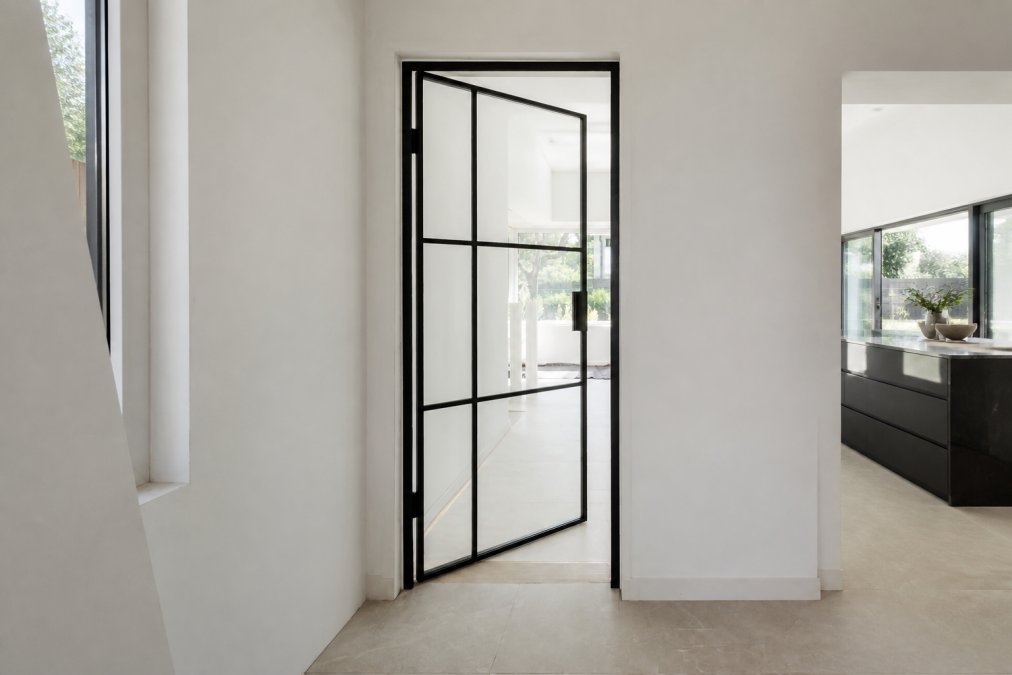
Thermal efficiency has also driven design changes. Modern frames incorporate thermal breaks, insulating materials between the inner and outer steel, reducing heat loss without compromising the visual effect.
Powder-Coated Finishes and Colour Palettes
Powder coating has replaced traditional paint as the finish standard for modern steel doors. It's more durable, more uniform, and available in virtually unlimited colours. Black remains the dominant colour for contemporary installations. It's versatile, suits almost any architectural style, and creates visual definition. Charcoal and deep grey are close alternatives that feel slightly softer.
White and off-white finishes suit minimalist and Scandinavian-inspired renovations, creating visual lightness and making rooms feel larger. Bolder colours, deep green, navy, terracotta, are increasingly popular for feature doors and work best in properties with confident design direction. The finish quality matters as much as the colour. A high-quality powder coat maintains colour stability for years; cheaper finishes chalk, fade, and degrade more quickly.
Steel Door Installation Costs and Budget Planning
Installation costs vary significantly based on whether you're installing a standard off-the-shelf door or a fully bespoke design, and whether structural modifications are required.
A standard steel door in a pre-prepared opening typically costs between £800 and £1,500 including installation labour. If reframing is required, add £400 to £800. Bespoke steel doors manufactured to your exact specification start at around £1,045 for the door itself, with installation labour adding a further £300 to £600. If your opening is severely non-standard or requires structural work, budget an additional £500 to £1,200.
Hardware adds to the final cost. Basic hinges and a simple handle might add £50 to £100. High-quality, design-focused hardware like the Lugano Satin Stainless Hardware Pack at £47 or the Zurich Satin Stainless Steel Hardware Pack at £52 transforms the door's finish and longevity. Additional costs include removal and disposal of the old door (£50 to £150), making good any structural damage (£100 to £400), and finishing work around the frame (£100 to £400).

Customisation and Bespoke Design Options
Unlike standard doors that force you to adapt your opening, bespoke doors adapt to your space.
Made-to-Measure Solutions for Non-Standard Openings
Most renovation projects involve non-standard openings. Victorian terraces have uneven walls. Period cottages have sloped frames. Extensions create openings that don't align with standard door sizes. A bespoke steel door is manufactured to your exact measurements, eliminating gaps, reducing drafts, and creating a professional appearance.
Customisation extends beyond size. You specify the glazing configuration, powder-coat colour from thousands of options, bar pattern, handle style, hinge configuration, and whether the door opens left or right. Lead times for bespoke doors typically run 6 to 8 weeks from order confirmation. Arborfield Joinery manages this process directly, so communication is straightforward and changes can be accommodated more easily than with mass-produced alternatives.
Door Hardware and Finishing Touches
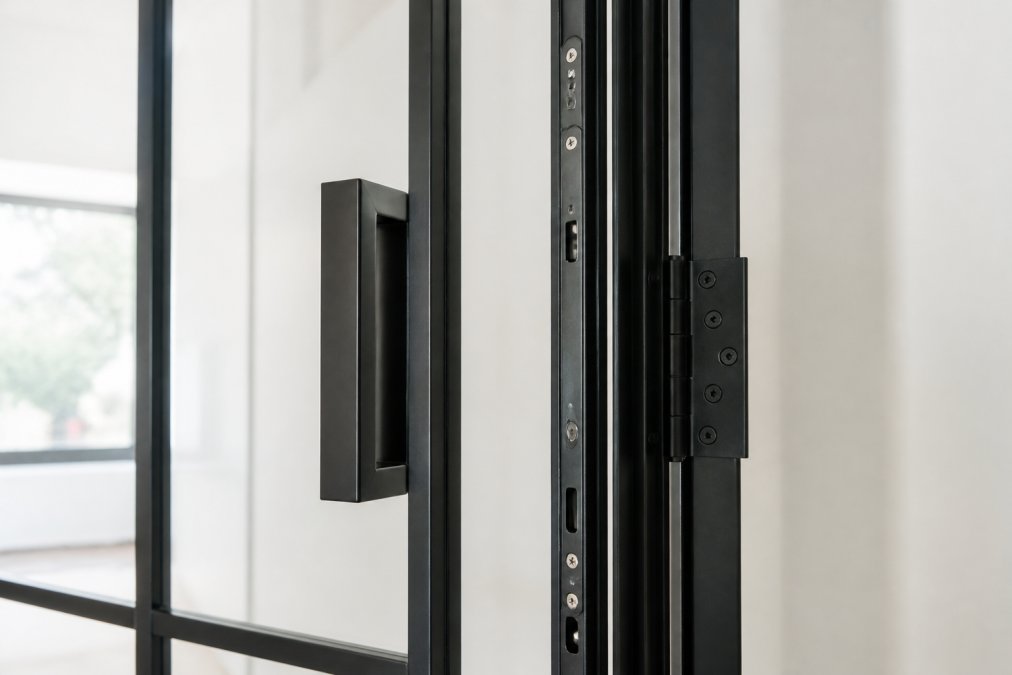
The handles, hinges, and locking mechanisms you choose define how the door feels and functions. Handles come in two broad styles: pull handles (bars you grip) and lever handles (pivoting handles). Pull handles suit industrial and minimalist aesthetics; lever handles work with virtually any style. Stainless steel resists corrosion and fingerprints better than painted finishes.
The Mitred Pull Handle Polished Steel 22mm from Arborfield Joinery (£23.04) is a straightforward, contemporary option. The Lugano Satin Stainless Hardware Pack (£47) or the Zurich Satin Stainless Steel Hardware Pack (£52) include matched handles, hinges, and latches in cohesive finishes.

Hinges should be invisible to the user but critical to the door's function. Three-point or five-point hinge configurations distribute load evenly, preventing sagging over time. Stainless steel hinges resist corrosion far better than plated alternatives. Locking mechanisms range from simple latches (adequate for internal doors) to sophisticated multi-point locks (necessary for external doors and security-critical applications).
Durability, Maintenance, and Long-Term Performance
Steel doors are fundamentally more durable than timber alternatives, but they're not maintenance-free.
Corrosion Resistance and Weatherproofing
Steel's main vulnerability is corrosion. Bare steel exposed to moisture will rust. Powder coating is a protective barrier that prevents moisture from reaching the steel underneath. A quality powder coat lasts 10 to 15 years before it begins to chalk or fade.
For external doors, corrosion resistance depends on the quality of the powder coat, the steel's inherent corrosion resistance, and how well the door is sealed at the frame. Modern steel doors include gaskets and seals that prevent water from running into the opening. These seals need to remain flexible and intact.
For internal doors, corrosion is less of a concern, but condensation can still cause issues in humid environments. Ensure adequate ventilation and wipe down the door after high-moisture activities.
Maintenance Schedule and Care Guide
A practical maintenance schedule keeps your modern steel door performing well for decades.
Monthly: Wipe down the door and frame with a soft cloth. For external doors, pay particular attention to the bottom frame where water collects.
Quarterly: Clean the glass. Check that hinges operate smoothly and handles feel solid. Tighten any loose fixings.
Annually: Inspect the weatherseals and gaskets. If they're hardening or pulling away, they need replacement. Check the powder-coat finish for chips or damage. Lubricate hinges and locking mechanisms with light machine oil if they're sticking.
Every 3 to 5 years: Have external or security-critical doors professionally inspected.
Every 10 to 15 years: The powder-coat finish will eventually chalk or fade. The door can be professionally re-coated, returning it to like-new condition and extending its lifespan indefinitely.
Internal vs. External Steel Door Applications
Modern steel doors perform differently depending on whether they're internal or external.
External steel doors must prioritise security, weatherproofing, and thermal efficiency. Specification should include PAS 24 compliance, multi-point locking, substantial hinges, and high-quality weatherseals. Glazing should be toughened glass, ideally with lamination for security. Powder-coat finishes must be premium-grade to resist UV degradation. Thermal breaks in the frame reduce heat loss.
Internal steel doors can prioritise aesthetics and acoustic performance. Security is less critical (simple latches are adequate), and weatherproofing requirements are minimal. This is where you can experiment with colour, bar configurations, and minimalist frame designs. Internal doors benefit from sound insulation; thicker glazing or laminated glass reduces noise transmission between spaces, particularly valuable in open-plan renovations.
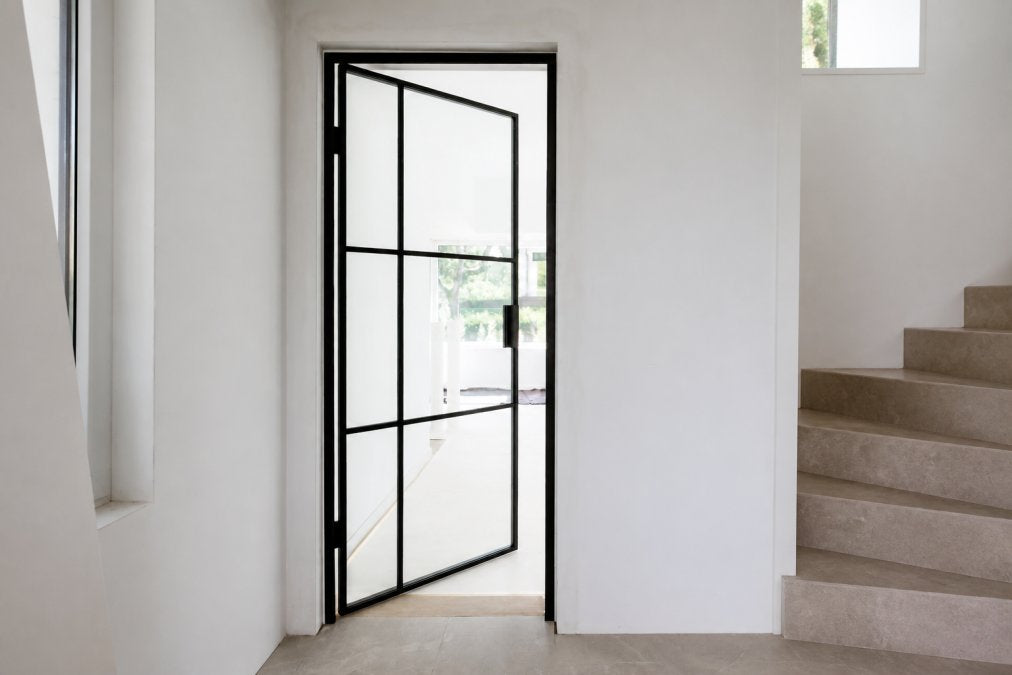
The OTIF Steel Hinged Door from Arborfield Joinery is specified as internal use only in its standard configuration, but it can be customised for external applications with appropriate security hardware and weatherproofing upgrades.

Modern steel doors solve real problems in renovation projects. They fit non-standard openings precisely, deliver superior durability and security compared to timber alternatives, and create a strong visual statement. Whether you're installing a feature internal partition or upgrading external security, a bespoke steel door is an investment that pays dividends for decades.
The design possibilities in 2026 are broader than ever. Slimline frames, unlimited powder-coat colours, and customisable bar configurations mean you can create a door that's both functionally perfect and visually distinctive. At Arborfield Joinery, we've been helping renovators and builders find the right doors since 1953. The OTIF Steel Hinged Door starts at £1,045 and can be customised to suit virtually any requirement. Pair it with quality hardware, the Lugano or Zurich hardware packs at £47 to £52, to complete the installation with finishes that last. Get started with Arborfield Joinery and transform your renovation with a door that works as beautifully as it looks.
| Configuration | Best For | Key Consideration |
|---|---|---|
| Large single pane, slimline frame | Contemporary interiors, maximising light | Requires toughened glass for safety |
| Traditional bar pattern (6-over-6) | Period properties, heritage contexts | More visual divisions, slightly less light |
| Minimalist 2-over-2 grid | Modern renovations, balanced aesthetics | Versatile across most architectural styles |
| Frosted or textured glazing | Privacy-critical spaces (bathrooms, utility) | Reduces light transmission slightly |
| Laminated toughened glass | High-noise environments, security priority | Thicker, more expensive, significantly better sound insulation |
Frequently Asked Questions
What makes modern steel doors suitable for renovation projects?
Modern steel doors offer exceptional durability, thermal efficiency, and architectural flexibility that suit renovation work. Their slimline frames maximise light transmission while maintaining structural integrity in non-standard openings. Bespoke manufacturing means they fit perfectly in Victorian terraces, extensions, and contemporary spaces without gaps or drafts. The industrial aesthetic complements both traditional and modern interiors, making them ideal for feature walls and room dividers.
Do modern steel doors meet PAS 24 security standards?
Steel doors can be manufactured to meet PAS 24, a key security standard for residential doors in the UK. PAS 24 certification requires multi-point locking systems, reinforced frames, and toughened glazing. When ordering bespoke steel doors, specify security requirements during the design phase. Hardware packs like the Zurich Satin Stainless Steel include matching hinges and latch components that support secure installation.
What is the typical cost of installing a modern steel door during renovation?
A bespoke steel door like the OTIF Steel Hinged Door starts at £1,045.00. Installation costs vary depending on structural modifications needed, frame preparation, and labour rates. Budget an additional £200-£500 for professional fitting if structural work is required. Hardware packs (Lugano at £47.00 or Zurich at £52.00) add finishing costs. Total project costs typically range from £1,300 to £2,000 for a complete installation including labour and materials.
How do I maintain a modern steel door to ensure long-term durability?
Clean powder-coated finishes quarterly with mild soap and water, then dry thoroughly to prevent water spots. Check hinges and multi-point locking systems twice yearly for smooth operation. Inspect weatherproofing seals around the frame annually, especially before winter. Avoid abrasive cleaners that damage the powder coating. Steel doors naturally resist corrosion, but keeping the finish dry prevents rust. Most modern steel doors require minimal maintenance beyond these basic steps.
Can steel doors be customised to fit non-standard renovation openings?
Yes. Bespoke steel doors are made to measure for any opening size, glazing configuration, colour, and hardware specification. This eliminates gaps and drafts common with standard doors in period properties or irregular extensions. Specify your exact dimensions, desired bar configuration (slimline, minimalist, or contemporary patterns), and powder-coat colour. Lead time is typically 6-8 weeks from order confirmation, allowing time for precise manufacturing.
EXTERNAL LINKS VERIFICATION:
- PAS 24 security standard requirements (security standards)
- UK building regulations for door thermal efficiency (thermal performance)
- Powder coating durability and maintenance guide (maintenance standards)
This article was written using GrandRanker
Share:
The Homeowner’s Guide to Trimmable Doors: Achieving the Perfect Fit
Internal Bifold Door Sizes UK: The Homeowner’s Guide to a Perfect Fit