
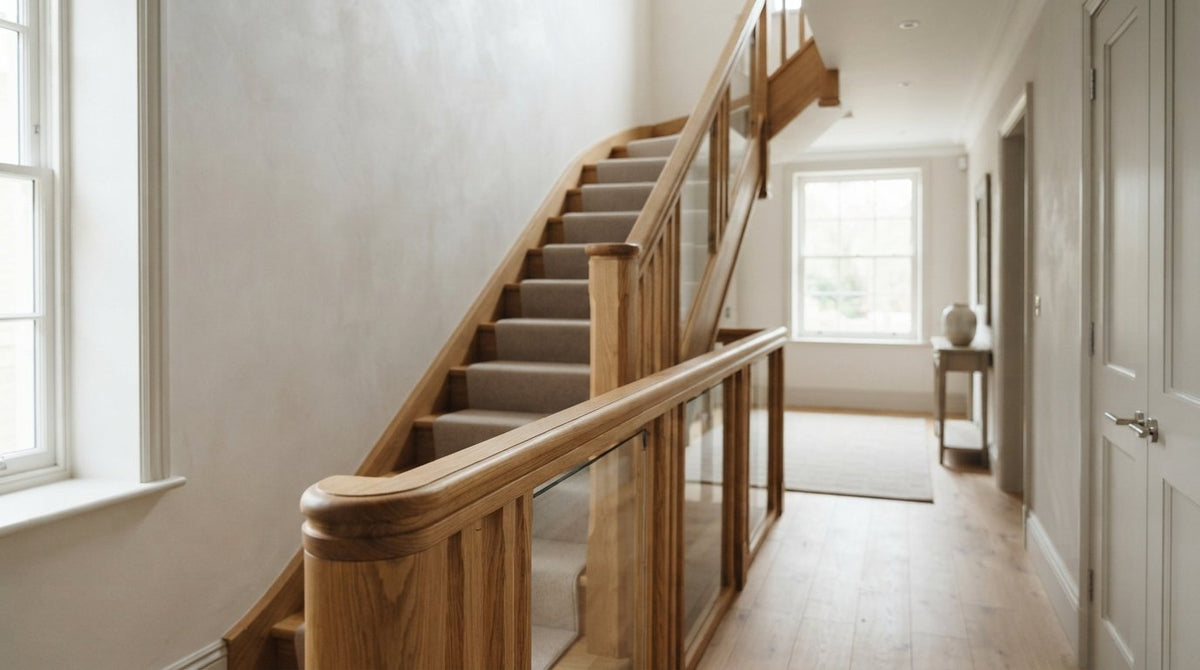
Could the most vital piece of furniture in your home be the one you grasp every single day without a second thought? Your staircase is more than just a transition between floors; it's a structural centrepiece that demands a perfect balance of safety and tactile elegance. You've likely invested time selecting the right internal doors, so it's understandable to feel a flicker of uncertainty when choosing oak handrails for stairs and confronting technical terms like HR profiles or groove sizes. Nobody wants to risk a mismatch that disrupts the aesthetic flow of their home's existing oak joinery.
We agree that upgrading your balustrade should be a rewarding experience, not a source of technical confusion. This 2026 guide is designed to remove the guesswork, ensuring you find a durable rail that feels as substantial as it looks. You'll discover how to meet UK building regulations with confidence, whilst selecting the precise fixings and profiles required for a seamless installation. We will explore the differences between wall-mounted and balustrade-mounted options, providing the clarity you need to create a beautiful, safe feature that stands the test of time with minimal upkeep.
Key Takeaways
- Learn why solid oak remains the premium choice for high-traffic staircases, offering a unique combination of natural durability and a grain that ages beautifully over time.
- Understand how to select the correct profile and groove size to ensure your oak handrails for stairs perfectly accommodate either traditional timber spindles or modern glass panels.
- Discover the structural advantages of investing in solid timber over engineered veneers, specifically regarding impact resistance and the ability to sand and refinish the wood for decades.
- Identify the most suitable installation method for your home, comparing the aesthetic and safety benefits of wall-mounted rails versus integrated balustrade systems.
- Achieve "joinery harmony" by learning how to match your new handrail with your existing oak doors and staircase components for a professional, cohesive interior finish.
Why Oak Handrails for Stairs Remain the Premium Choice
For over seven decades, we've seen interior trends shift, yet one material remains the undisputed gold standard for the British home. Choosing oak handrails for stairs isn't merely a design preference; it's a commitment to a timber species, Quercus, renowned for its formidable density and strength. Unlike softwoods like pine that can splinter or dent under pressure, oak provides a resilient surface that thrives in the high-traffic environment of a central hallway. It's a wood that commands respect, offering a sense of permanence that few other materials can replicate.
Property value often hinges on the quality of fixed joinery. Synthetic alternatives or cheap laminates may offer a temporary aesthetic fix, but they rarely contribute to the long-term resale appeal of a home. Solid timber is a premium investment that tells a story of quality. It also offers a sustainable choice for the environmentally conscious homeowner. Oak acts as a natural carbon store; when sourced responsibly, it provides a lifetime of service that far outlasts mass-produced plastic components. It's a choice that respects both the heritage of your home and the future of the environment.
The Tactile Experience of Solid Timber
Have you ever noticed how a cold metal rail can feel jarring on a winter morning? Oak possesses natural thermal properties that ensure it remains comfortable to the touch regardless of the season. This sensory connection is a vital part of home comfort. The intricate anatomy of handrails and banister systems requires a profile that is easy to grasp, providing security as you move between floors. Because every piece of oak features a unique medullary ray pattern and grain structure, your staircase becomes a bespoke piece of functional art. No two rails are identical, ensuring your home retains a character that's entirely its own.
Durability and Longevity in Modern Homes
Modern life is demanding. Between the chaos of moving furniture and the inevitable occasional knock from a vacuum cleaner, your staircase components need to be tough. Solid oak handrails for stairs are remarkably resistant to surface scratches and deep indentations. While other materials might look tired after a few years, oak ages gracefully. It develops a rich, deep patina that enhances its character over time. Since we began supplying quality joinery in 1953, we've championed the structural integrity of solid sections. This thickness isn't just for show; it ensures the rail won't warp or bow, maintaining a safe and steady grip for generations to come.
Understanding Oak Handrail Profiles and Groove Sizes
Selecting the right oak handrails for stairs involves more than just picking a beautiful piece of timber. You must consider the "profile", which is the cross-sectional shape of the rail. This shape dictates how your hand fits around the wood, affecting both the ergonomic comfort and the overall architectural style of your hallway. Precision matters here. A profile that's too bulky can be difficult to grasp, whilst one that's too slim might feel flimsy. According to Approved Document K stair safety guidance, domestic handrails must be set between 900mm and 1000mm high to ensure they're always within reach during a stumble.
The "groove" is the hidden hero of your staircase. This is the recessed channel cut into the underside of the rail that holds your spindles or glass panels in place. If your design features traditional timber spindles, matching the groove size to the spindle thickness is essential for a rattle-free, secure fit. For those opting for a minimalist look with glass clamps or wall-mounted brackets, an ungrooved rail provides a cleaner, uninterrupted aesthetic.
Mopstick vs. Cottage Loaf vs. HR Profiles
Mopstick rails are the circular classics of the joinery world. Typically 44mm or 54mm in diameter, they're the ideal choice for wall-mounted systems using decorative metal brackets. Their simple, rounded shape is exceptionally comfortable for all hand sizes. If you prefer a more traditional look, the Cottage Loaf profile offers a nostalgic, ergonomic shape with a wider top and a narrower "neck" for a very secure grip. For contemporary homes, the HR (Handrail) profile is the versatile rectangular choice. It features clean lines and slightly rounded edges, making it a popular partner for modern square spindles or glass balustrades.
Choosing the Right Groove for Your Balustrade
Standard UK industry benchmarks for grooves are 32mm and 41mm. A 41mm groove is the most common requirement for turned, square, or chamfered timber spindles. To achieve a professional finish, you'll use infill strips, also known as fillets. These small lengths of oak sit inside the groove between each spindle, creating a flush surface that hides the fixings. If you're designing a modern space with toughened glass panels, you might require a specific 8mm, 10mm, or 12mm groove, or even an ungrooved rail if you're using external glass clamps. If you're struggling to match a profile to your existing oak doors, our team can guide you toward a cohesive design that ties your entire landing together.
Solid Oak vs. Oak Veneer: Making the Right Investment
When you decide on oak handrails for stairs, the choice between solid timber and engineered veneer is the most significant factor in your staircase's lifespan. Solid oak is a single, homogeneous piece of wood. It provides superior impact resistance that veneers simply cannot match. Hallways are busy thoroughfares. Vacuum cleaners, heavy suitcases, and active children inevitably lead to knocks. Solid wood absorbs these impacts with ease. Engineered veneer, whilst stable over long straight runs, uses a thin layer of oak over a cheaper softwood or MDF core. This decorative layer is susceptible to damage that's often impossible to repair invisibly.
Structural integrity is about more than just aesthetics; it's a fundamental safety requirement. International stair rail load and construction criteria emphasise the need for rails to withstand significant force without failing. Solid oak sections comfortably meet these requirements, providing a smooth, splinter-free surface and safe finger clearance. Modern kiln-drying processes further enhance this reliability. By removing moisture in a controlled environment, we ensure the timber won't warp or bow once it's installed in your centrally heated home. This stability allows the wood to be sanded down and re-stained decades later, effectively resetting its appearance.
The Pitfalls of Cheap Alternatives
Softwoods like pine are common budget choices, but they often prove to be a false economy. Pine requires frequent maintenance and often needs painting to hide the inevitable dents and scratches of daily life. Veneered rails carry their own risks. In humid British hallways or near drafty front doors, glue bonds can fail over time. This leads to "bubbling" or peeling at the edges, which ruins the visual flow of your joinery. Whilst the initial price of a veneered rail might be lower, the lifetime cost is often higher. Replacing a failed rail every few years is far more expensive than investing in a solid oak centrepiece that lasts a lifetime.
White Oak vs. Red Oak: Colour and Grain Differences
Not all oak species are suitable for premium joinery. We champion White Oak for its tight, uniform grain and cooler, neutral tones. This consistency makes it the perfect partner for matching your internal oak doors. Red Oak, by contrast, features a more porous structure and distinct pinkish undertones. If you use Red Oak for your handrail, you risk a disjointed aesthetic that clashes with the golden hues of your other timber features. Choosing White Oak ensures a timeless, cohesive look that enhances the architectural character of your entire home.

Installation and Maintenance: Ensuring a Safe, Beautiful Staircase
Deciding how to fix your oak handrails for stairs depends largely on the architecture of your hallway and the available space. Integrated balustrade handrails are part of the staircase structure itself, sitting atop spindles or glass panels. If your stairs are enclosed by walls on both sides, a wall-mounted rail is the most practical solution. For these, choosing the right fixings is paramount. High-quality brackets in brushed nickel, antique brass, or matte black provide a sophisticated contrast to the oak's natural grain. For unique architectural projects, bespoke metal fabrication specialists such as donewrightstainless.com showcase how custom metalwork can be tailored to complement fine timber. Always ensure these brackets are secured into wall studs or solid masonry; a handrail is only as safe as its weakest connection point.
Precision is the hallmark of professional joinery. To ensure your installation meets UK building regulations, the top of the rail must sit between 900mm and 1000mm above the pitch line of the stairs. This height provides the optimal ergonomic position for most adults to steady themselves. When selecting your finish, consider how the rail will be used. A high-traffic family home might benefit from a durable lacquer, whilst those who appreciate the tactile nature of timber often prefer a hardwax oil that can be easily touched up over time.
Measuring and Fitting Your Handrail
Before you make your first cut, you must accurately determine the "pitch" or angle of your staircase. This is typically between 36 and 42 degrees in most British homes. You'll also need to choose between "post-to-post" and "over-the-post" installation methods. Post-to-post systems involve the rail meeting the side of the newel post, often secured with a universal handrail connector. Over-the-post systems use decorative components like volutes or goosenecks to create a continuous, flowing rail that sits on top of the posts. Both require absolute precision to ensure the structural integrity of the entire balustrade.
Maintaining the Lustre of Your Oak
Maintaining your oak handrails for stairs requires minimal effort but consistent care. We provide our components in both unfinished and pre-finished options. Unfinished oak offers the greatest customisation, allowing you to match the timber exactly to your floor or furniture. If you choose to oil your rail, apply thin, even coats of a quality hardwax oil. This penetrates the wood to protect it from skin oils and moisture whilst maintaining a natural look. For daily cleaning, a damp microfibre cloth is all you need. Avoid harsh chemical sprays or bleach-based cleaners, as these strip away the timber’s protective oils and can lead to a dull appearance over time.
Ready to upgrade your staircase? You can browse our full range of premium oak handrails and components to find the perfect match for your home.
Creating a Cohesive Look with Arborfield Joinery
Choosing the right oak handrails for stairs is only the first step in a successful home renovation. To truly transform your space, you must consider how these components interact with the surrounding architecture. At Arborfield Joinery, we've been supplying quality timber since 1953. This heritage allows us to offer more than just retail products; we provide the expertise of a family-run business that understands the nuances of grain consistency and structural durability. We hand-select our oak to ensure every length of handrail meets our rigorous standards for both strength and visual appeal. This meticulous selection process is what separates a standard staircase from a true architectural centrepiece.
Achieving "Joinery Harmony" is about ensuring your staircase doesn't look like an afterthought. By matching your handrail to your stairs and existing joinery, you create a sense of deliberate, high-end design. This is particularly important in open-plan homes where the hallway is visible from multiple rooms. When the grain of your handrail mirrors the texture of your balustrade, the entire structure feels cohesive and intentional. It's this attention to detail that adds lasting value to your property.
Matching Handrails to Internal Oak Doors
One of the most common design mistakes is ignoring the relationship between the staircase and the doorways it serves. When you pair our handrail profiles with our internal oak doors, you establish a consistent timber species and finish throughout the property. This continuity elevates the interior design, providing a seamless flow between a busy hallway and the tranquillity of your living areas. It removes the visual "noise" that occurs when different oak tones and grains compete for attention, replacing it with a quiet elegance that defines a well-curated living space.
Expert Advice and Nationwide Support
Renovating a staircase can feel daunting, but you don't have to navigate technical specifications alone. As a trustworthy veteran in the industry, we act as knowledgeable consultants, guiding you through profile selections and fixing requirements. This empathetic approach ensures the components you choose are perfectly suited to your home’s unique environment, whilst our logistical support simplifies the purchasing journey. Our commitment to service extends far beyond the workshop. We provide national mainland shipping across the UK, ensuring our premium craftsmanship is accessible regardless of your location. For larger projects, we offer free mainland delivery on orders over £900. You can begin your staircase transformation today by exploring our extensive range of oak handrails for stairs, knowing you're supported by decades of proven expertise and a passion for fine joinery.
Invest in the Timeless Appeal of Oak
Choosing the right oak handrails for stairs is a decision that balances structural safety with sensory delight. We've explored how the correct profile selection and the use of solid timber ensure a durable finish that withstands the rigours of daily life whilst maintaining an elegant patina. By matching these components with your internal doors, you create a home that feels intentional and well-crafted. This joinery harmony is what transforms a standard hallway into a sophisticated architectural feature.
Since 1953, our family-run business has focused on delivering this level of precision to homeowners across the UK. Whether you visit our extensive showroom for a quality inspection or order online, you're supported by over 70 years of joinery expertise. We provide national delivery for your convenience, including free mainland UK shipping on orders over £900. Explore our range of premium oak handrails and stair components today to begin your staircase renovation. Your home is a legacy piece that deserves the finest materials; let us help you find the perfect match for your space.
Frequently Asked Questions
What is the most popular profile for oak handrails?
The Mopstick and HR profiles are currently the most sought-after designs for British homes. Mopstick rails are circular and offer a classic, comfortable grip that is ideal for wall-mounted systems. The HR profile is a rectangular shape with rounded edges, providing a versatile look for modern balustrades. Choosing between them depends on whether you prefer a traditional feel or a sleek, contemporary aesthetic that complements square spindles or glass panels.
Can I install an oak handrail myself or do I need a joiner?
While a confident DIY enthusiast can install a handrail, we generally recommend hiring a professional joiner for the best results. Precision is vital when measuring the pitch of your stairs and ensuring structural stability. A joiner possesses the specialist tools required for clean, accurate mitre cuts and secure mechanical fixings. This ensures your oak handrails for stairs meet all safety regulations and remain a sturdy, reliable feature for decades to come.
How do I match my new oak handrail to my existing oak doors?
Achieving a perfect match involves selecting the same timber species, such as White Oak, and using a consistent finishing product. We have spent over 70 years helping homeowners coordinate their joinery. Because we supply both internal doors and staircase components, we can ensure the grain patterns and tones align across your hallway. Applying the same brand of hardwax oil or lacquer to both the door and the rail will create a seamless, professional flow.
What is the difference between a grooved and ungrooved handrail?
The primary difference lies in how the rail connects to the rest of the balustrade. A grooved handrail features a recessed channel on the underside, typically 32mm or 41mm wide, to house timber spindles or glass panels. An ungrooved handrail is completely flat on the bottom. This makes it the perfect choice for wall-mounted installations using brackets or for contemporary designs where glass is secured using external metal clamps rather than being embedded.
Are oak handrails suitable for modern glass balustrades?
Oak handrails are an exceptional partner for modern glass balustrades, offering a warm, natural contrast to the cool transparency of the panels. For a minimalist look, many homeowners choose a slim, square profile or a low-profile HR rail. You can either use a grooved rail that allows the glass to sit directly inside the timber or an ungrooved version paired with brushed steel or matte black glass clamps for a high-end, architectural finish.
How do I clean and maintain a solid oak handrail?
Maintaining your oak handrails for stairs is straightforward and requires only a few minutes of care each month. Use a dry microfibre cloth for regular dusting and a slightly damp cloth to remove any sticky finger marks. If you have chosen a hardwax oil finish, we recommend applying a fresh maintenance coat every 18 to 24 months. Avoid using harsh household chemicals or bleach, as these can strip the wood's natural oils and cause the timber to dull.
What length of oak handrail do I need for a standard UK staircase?
A standard straight flight of UK stairs typically requires a handrail length between 3.6 and 4.2 metres. However, you should never guess these measurements. You must measure the distance along the pitch line, which is the diagonal line following the nosing of the treads. It is always wise to order slightly more than you need to allow for precise trimming at the ends, ensuring a flush fit against your newel posts or walls.
Do I need to treat an oak handrail before installation?
If you purchase an unfinished rail, we strongly advise applying at least one coat of your chosen finish before installation. This initial treatment protects the raw timber from skin oils and pencil marks during the fitting process. If you prefer a more convenient option, our pre-finished rails arrive already lacquered or oiled. This saves time on-site and ensures a perfectly even factory finish that is ready for immediate use once the installation is complete.
Share:
How to Integrate Smart Home Features in Modern Doors
Best Timber Alternatives for External Doors in Coastal Areas