
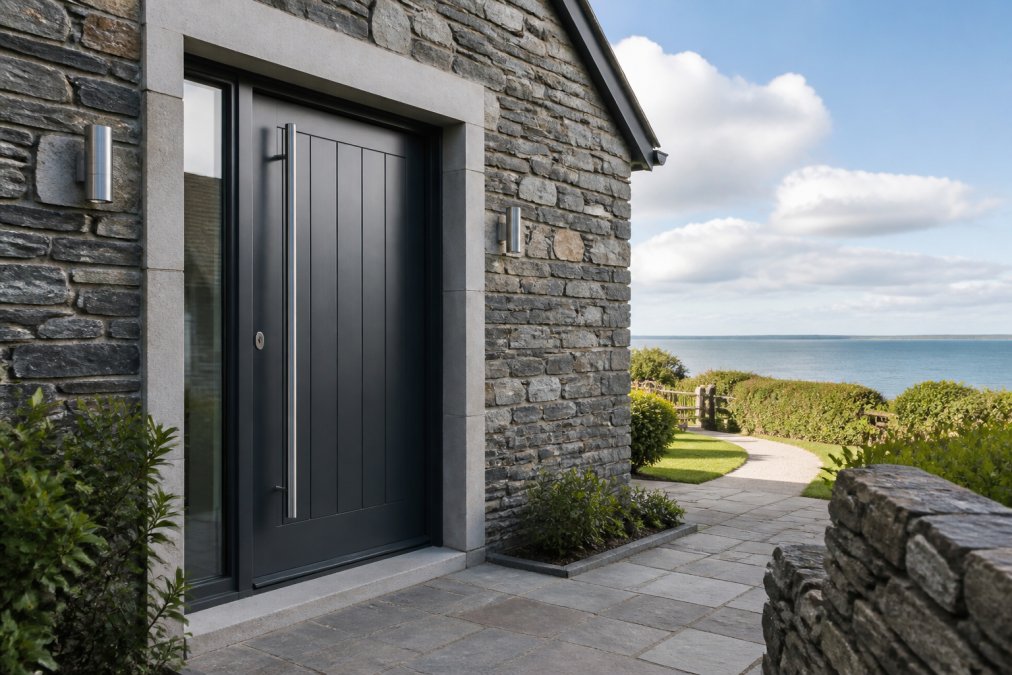
Table of Contents
- Why Coastal Environments Destroy Standard Doors
- Best Front Door Materials for Salt Air
- Composite vs Timber Doors Coastal: Which Performs Better?
- uPVC and Aluminium: The Low-Maintenance Timber Alternatives
- Hardwood Doors That Handle Coastal Conditions
- Coastal Door Maintenance Tips for Longevity
- Hardware, Warranty and Environmental Considerations
- Conclusion
- Frequently Asked Questions
Last Updated: September 20, 2026
Why Coastal Environments Destroy Standard Doors
Salt spray is the most destructive force a coastal front door faces. Airborne salt crystals settle on the surface, draw moisture into the grain, and attack the finish and fixings long before a door looks tired. At Arborfield Joinery, we've supplied external doors to homes since 1953, and doors that perform inland fail within a few seasons by the sea.
Best Front Door Materials for Salt Air
The best front door materials for salt air are engineered hardwood, marine-grade aluminium, and composite doors with a solid core. Each resists salt spray and humidity differently, so the right pick depends on exposure, budget, and upkeep.
| Material | Salt Resistance | Maintenance | Best For |
|---|---|---|---|
| Engineered hardwood | High (finished well) | Annual sealing | Period properties |
| Composite (solid core) | High | Occasional wipe-down | Low-maintenance homes |
| Aluminium | Very high | Minimal | Modern, exposed sites |
| uPVC | High | Minimal | Tight budgets |
| Softwood | Low | Frequent repainting | Sheltered inland sites |
Composite vs Timber Doors Coastal: Which Performs Better?
Composite vs timber doors coastal is the comparison most homeowners get wrong, because both can work well and both can fail badly. A composite door with a solid core and GRP skin resists moisture absorption, warping, and swelling, and holds its finish for years with almost no input. Timber needs a proper finish and periodic recoating, but no other material matches its warmth and grain.
- Composite: no swelling, stable in humidity, minimal upkeep, but harder to repair if the skin is damaged
- Timber: repairable, paintable, period-appropriate, but demands a disciplined finishing routine
- Both: perform well when the core is engineered rather than solid softwood
uPVC and Aluminium: The Low-Maintenance Timber Alternatives
uPVC and aluminium are the timber alternatives that remove maintenance almost entirely. Neither absorbs moisture, so neither swells, warps, or rots, making them a strong fit for exposed coastal positions. But coastal performance depends far more on specification than on the material name on the brochure.
Aluminium: what actually matters for salt air
Aluminium is the more durable of the two in a marine environment, but only when specified correctly. Bare or anodised aluminium can pit and chalk in salt-laden air. What matters is a marine-grade powder coat, typically a polyester powder coat cured to a minimum dry film thickness of around 60 microns, with a pretreatment stage that keys the coating to the metal.
uPVC: the budget option, with caveats
uPVC is the budget-friendly option: weather-resistant, rot-free, and needing little more than an occasional wipe-down with fresh water to remove salt residue. The caveats are worth knowing:
- Discolouration: south- and west-facing elevations take the most UV, and cheaper uPVC profiles can yellow or chalk over time. Higher-grade profiles with a UV-stable cap layer resist this far better.
- Thermal movement: uPVC expands and contracts more than aluminium or timber, so reinforcement within the profile (usually a steel or aluminium insert) is what keeps a coastal door from dropping or catching as temperatures swing.
- Colour and finish: foiled or painted uPVC finishes are more durable than older laminated skins, but they can still lift at the edges on an exposed elevation.
- Repairability: a deep scratch or impact crack in a uPVC panel usually means replacing the panel rather than refinishing it.
The shared weakness
Both materials share one weakness: they do not offer the period look or wood grain many coastal homes need to stay in keeping with their surroundings. If your property has original detailing, a hardwood door is usually the better answer. Neither removes the need to think about hardware either: hinges, handles, letter plates, and locks on a uPVC or aluminium door are still typically steel, and steel fails first in salt air.
British Standard for powder-coated aluminium architectural applications
Hardwood Doors That Handle Coastal Conditions
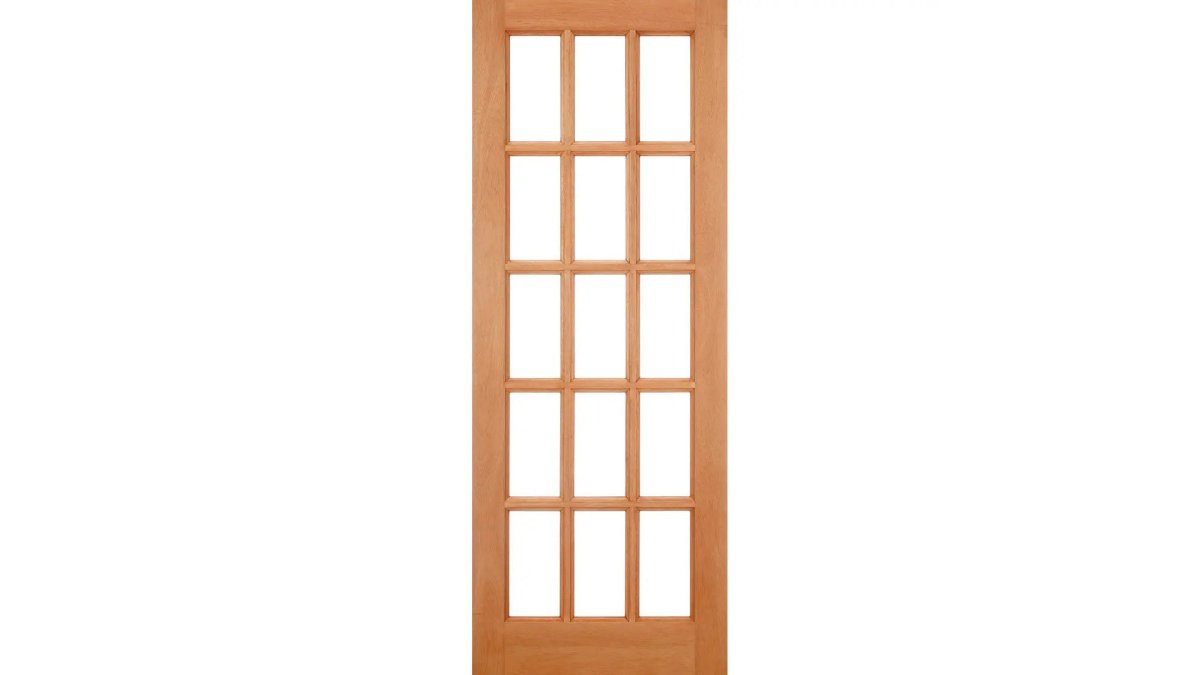
Colonial Dowel Hardwood External (£195.00) is an unfinished veneered hardwood door with dowel joints, a solid engineered timber core, and solid hardwood lippings. It can be trimmed for a flexible fit and carries a 10-year manufacturer's conditional warranty. For a coastal home on a sensible budget, it's a strong starting point if you finish it properly.

Coastal Door Maintenance Tips for Longevity
Coastal door maintenance tips come down to one principle: keep water out and the finish intact. A door inspected and re-sealed on schedule lasts far longer than one left to fend for itself.

The finishing system, not just the finish
A coastal timber door needs a finishing system, not a single coat of varnish. The system has three jobs: block UV, repel liquid water, and let the timber release any moisture that gets in. A high-build film finish that traps moisture underneath is worse than no finish, because it hides early rot until damage is advanced.
Colonial Dowel Hardwood External →
For coastal positions, the practical options are:
- Marine-grade oils and hardwax oils: penetrate the grain rather than sitting on top, so the timber can still breathe. They need recoating more often, typically every six to twelve months on an exposed elevation, but they are easy to spot-treat and do not trap moisture.
- Flexible microporous stains and paints: form a breathable film that moves with the timber as it swells and shrinks. Look for products labelled for exterior joinery and for marine or coastal exposure.
- Traditional solvent-borne paints: durable but rigid, and prone to cracking at joints as the timber moves. If you use them, the joints need checking every season.
Seal all six faces, especially the bottom edge
The single most important maintenance habit is re-sealing the bottom edge every year. It is the first place water attacks and the easiest to forget: water wicks up through an unsealed base far more often than it penetrates the face, and once it reaches the joints, rot follows.
The seasonal routine
Timing matters more than effort: a quick spring and autumn inspection catches most problems before they take hold.
- Spring: check the finish for chalking, cracking, or bare patches after winter storms, and re-coat before the summer sun bakes the timber.
- Autumn: clear salt residue with fresh water and a soft cloth, check weather stripping for gaps, and re-seal the bottom edge before the wet season.
- Every six months: lubricate hinges with a marine-grade grease, check fixings for early corrosion, and test the door for swelling or sticking at the frame.
- Immediately after damage: re-treat any scratch or chip before moisture gets a foothold. A scratch that exposes bare timber will start to grey and take on water within weeks in a coastal position.
Hardware and fixings
Hardware, Warranty and Environmental Considerations
Warranty is the second thing to check. Many door warranties exclude or limit cover for coastal and exposed locations, so read the terms before you buy. Our hardwood external doors carry a 10-year manufacturer's conditional warranty, and it's worth confirming how a coastal installation is treated under any policy before committing.
Conclusion
Choosing the right door for a coastal home means weighing salt resistance, maintenance, and character against each other, and no single material wins on every count. Get the construction and finish right, and a timber door will hold its own against the sea air for decades.
Frequently Asked Questions
What is the best door material for a coastal home to prevent salt corrosion?
For salt-heavy air, composite doors with a GRP skin and aluminium doors offer the highest corrosion resistance because neither material absorbs moisture or feeds rust. Marine-grade stainless steel hardware is essential regardless of door material. Hardwood doors also perform well when properly sealed and maintained. The key is avoiding untreated steel fittings and unsealed softwood, both of which deteriorate quickly in coastal climates.
Are composite doors better than timber for coastal properties?
Composite doors resist warping, swelling and salt spray without annual re-coating, which makes them lower maintenance than timber in exposed positions. Timber alternatives still win on period look and repairability. A hardwood door with a solid engineered core, such as the Colonial Dowel Hardwood External, can match composite durability if finished correctly and re-sealed every few years. The right choice depends on how much maintenance you will realistically do.
How do uPVC doors perform in high-salt coastal environments?
uPVC does not rust, rot or absorb water, so salt spray has little direct effect on the frame. The weak points are the steel reinforcement inside cheaper profiles and the hardware, which can corrode if not marine-grade. Over many years, UV exposure can cause slight colour fading on lower-grade uPVC. Choosing a quality profile with stainless steel fittings makes uPVC a practical, low-maintenance option for coastal external doors.
What are the maintenance requirements for coastal front doors?
Timber doors need re-sealing every 12 to 24 months in exposed coastal positions, with particular attention to end grain at the top and bottom edges. Composite and aluminium doors typically need only occasional cleaning with mild soapy water. All door types benefit from annual checks of weather stripping, hinges and locks, since salt accelerates corrosion on metal components. Promptly touch up any scratches or chips to protect the surface finish.
Can aluminium doors withstand harsh coastal weather conditions?
Aluminium doors handle coastal weather well because the metal does not absorb moisture, warp or rot. Powder-coated finishes add a protective layer against salt spray, though chips should be touched up to prevent pitting underneath. The critical factor is specifying marine-grade stainless steel hardware and fixings, since standard steel hinges and screws corrode quickly in salt air. With those fittings, aluminium offers excellent longevity with minimal upkeep.
Share:
Oak Stair Handrails: 2026 Quality & Style Guide
The Homeowner’s Guide to Oak Stair Cladding Kits: A 2026 Renovation Essential