
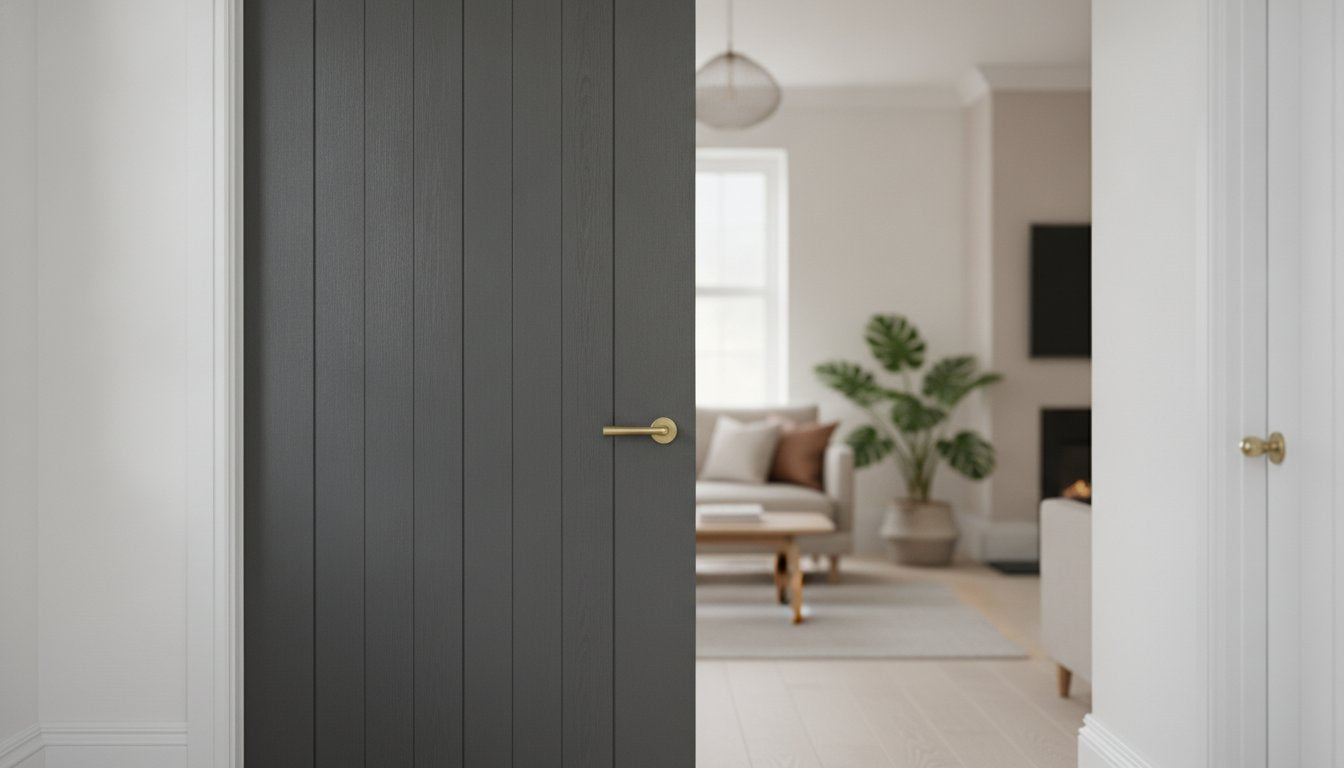
For decades, many homeowners have viewed laminate internal doors as the "sensible" but slightly less glamorous alternative to solid timber. However, as we move into 2026, that perception is being completely redefined by a new generation of high-performance engineering. You might worry that opting for a laminate finish means sacrificing a premium feel or risking unsightly chips and peeling in your home's busiest thoroughfares. It's a perfectly valid concern, particularly whilst trying to harmonise contemporary door styles with the cherished character of a traditional property.
We understand that you want a home that feels curated and permanent, not temporary. In this definitive guide, you'll discover the technical benefits, design versatility, and long-term durability of laminate internal doors to ensure your next purchase is a wise investment. We'll provide a clear breakdown of modern construction methods, confirm the simple maintenance requirements, and explain why pre-finished options are a significant time-saver for any busy household. By the end, you'll have the technical confidence to choose a door that looks truly exquisite and stands up to the rigours of daily life.
Key Takeaways
- Learn how 2026 engineering has created grain patterns so realistic they are virtually indistinguishable from natural timber.
- Understand the technical benefits of High-Pressure Laminate (HPL) construction and how core material choices affect the weight and stability of your home's entryways.
- Compare the long-term maintenance costs of laminate internal doors against natural veneers to see why they represent a superior "fit-and-forget" investment.
- Discover how to pair modern "Urban" finishes like charcoal and black with contemporary hardware to create a cohesive, high-end look.
- Gain expert advice on navigating the selection process, from understanding trimming limits to the value of a curated showroom experience.
Understanding Laminate Internal Doors: Performance and Style in 2026
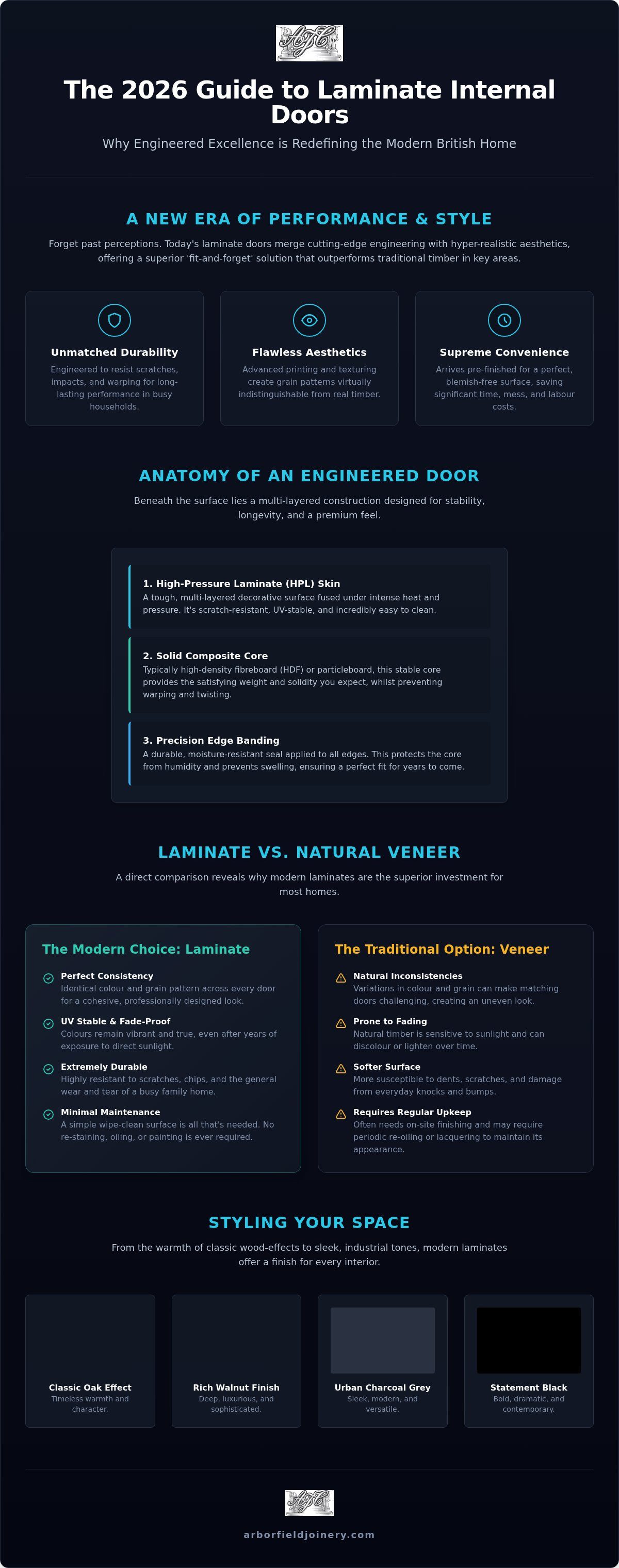
Laminate internal doors have undergone a remarkable transformation, shedding their old reputation as a budget alternative to become a first-choice specification for premium homes. Unlike traditional timber, these doors are sophisticated engineered products. They typically feature a stable composite core, such as high-density fibreboard or particleboard, which is then encapsulated in high-pressure decorative laminates. This construction creates a door that is remarkably heavy, solid, and resistant to the warping that often plagues natural wood in centrally heated environments.
By 2026, the technology behind these surfaces has advanced to an extraordinary level. Manufacturers now use high-definition digital printing and synchronous embossing to align the physical texture of the door with the visual grain. This means that when you run your hand over the surface, you feel the ridges and pores exactly where you see them. The result is a finish that's virtually indistinguishable from real oak or walnut, providing the warmth of wood with none of its practical drawbacks. This shift in quality explains why so many UK homeowners are moving away from high-maintenance materials in favour of these durable, "fit-and-forget" solutions.
Why Laminate is Surpassing Traditional Veneers
Whilst natural wood veneers offer a unique charm, they come with inherent inconsistencies that can be frustrating during a home renovation. Laminate internal doors provide several distinct advantages for the discerning eye:
- Visual Consistency: You won't have to worry about one door appearing significantly darker than the next. Every door in your hallway will share the same precise colour and grain pattern.
- UV Stability: Natural timber is sensitive to sunlight and will often change colour over time. Laminate surfaces are engineered to resist UV fading, ensuring they look as vibrant in ten years as they do on the day of installation.
- Sustainability: By using sustainable composite cores and decorative layers, these doors reduce the demand for slow-growing hardwoods, making them a responsible choice for the eco-conscious decorator.
The Pre-Finished Revolution
Perhaps the most significant advantage is that laminate doors arrive "pre-finished." In the past, buying a new door meant preparing for days of sanding, priming, and painting, often resulting in a finish that was susceptible to brush marks or dust. Laminate doors are finished in a controlled factory environment, ensuring a blemish-free surface that's incredibly easy to clean. This saves you significant time and money on labour costs. To ensure your project looks its best, it's worth reviewing how your new purchase will sit within internal doors and door frames, as a professional match between the leaf and the frame is essential for a premium aesthetic.
The Engineering Behind Laminate: Durability and Construction Decoded
To appreciate why laminate internal doors have become a staple of modern joinery, you must look beneath the surface. These doors aren't merely wrapped in a decorative film; they utilise a High-Pressure Laminate (HPL) process. This involves fusing multiple layers of resin-impregnated paper under intense heat and pressure to create a skin that's far tougher than any natural timber veneer. This skin is then bonded to a stable core, usually made of Medium Density Fibreboard (MDF) or solid particleboard. These core materials provide the weight and tactile "thud" you expect from a premium door whilst ensuring the structure remains perfectly flat over time.
Safety and quality curation are at the heart of our selection process. We ensure that the composite woods used in our doors meet rigorous standards, including international formaldehyde emissions rules. This technical oversight means your doors aren't just durable and beautiful, but also contribute to a healthy living environment. To further bolster this longevity, precision edge banding is applied to every side. This creates a moisture-resistant seal that prevents the core from swelling, a common issue in homes where humidity levels fluctuate between kitchens and cooler hallways.
Impact and Scratch Resistance
Life in a busy British household is rarely gentle. Between vacuum cleaners, boisterous pets, and children's toys, doors take a lot of punishment. Laminate internal doors feature a transparent melamine overcoat that acts as a hard-wearing shield. This surface is significantly harder than traditional softwoods like pine or even some hardwoods, resisting the indentations and scratches that usually require a sander and a fresh coat of paint to fix. If you're planning a full renovation, seeing how these durable surfaces interact with quality door frames can help you visualise the long-term value of your investment.
Stability and Warp Resistance
One of the biggest headaches for homeowners is a door that sticks in the winter and rattles in the summer. Natural wood is hygroscopic, meaning it expands and contracts with humidity. In contrast, the engineered core of a laminate door provides exceptional thermal stability, maintaining its structural integrity even as your central heating works overtime during a UK winter. This is achieved through balanced construction, where the tension on the front face is perfectly matched by the tension on the back. This scientific approach prevents the bowing or twisting that often affects solid timber, ensuring your doors open and close smoothly for years to come.
Laminate vs. Natural Veneer: A Comparative Analysis for UK Homeowners
Choosing between laminate internal doors and natural veneers is often the most significant decision a homeowner faces during a renovation. It's a choice between the unique, unpredictable beauty of nature and the high-performance consistency of modern engineering. Whilst natural veneers offer a "one-of-a-kind" grain pattern, they also require regular maintenance to prevent drying or discolouration. In contrast, laminate surfaces provide an unwavering aesthetic that remains identical from the first door in the hallway to the last. This consistency is underpinned by technical classifications defined in the ASTM Standard Terminology for Composite Materials, which ensures that these engineered products meet specific performance criteria for residential use.
The "touch test" has historically been the downfall of laminate, but 2026 technology has closed that gap. Modern laminate internal doors now feature intricate textures that mimic the open pores of oak or the smooth silkiness of walnut. You no longer have to settle for a flat, plastic feel. However, for those who believe that nothing can truly replace the soul of real wood, our range of internal oak doors remains a popular choice for heritage properties. The decision ultimately rests on whether you value the "fit-and-forget" convenience of laminate or the evolving character of natural timber.
When to Choose Laminate
Laminate is the superior choice for high-traffic environments where durability is non-negotiable. If you're managing a rental property or living in a busy family home with pets and children, the scratch-resistant melamine layer is invaluable. It's also the ideal solution for modern apartments where a sleek, industrial aesthetic is required. Because the grain is printed, you can achieve a uniform look across a large number of doors without the risk of a "mismatched" hallway. Finally, laminate is often more budget-friendly when you need to replace multiple doors simultaneously, as it eliminates the high cost of professional on-site finishing.
When to Choose Natural Veneer
Natural veneer still holds the crown for period properties and high-end bespoke renovations. If your home's character relies on the organic imperfections of wood, such as knots and medullary rays, then veneer is the correct path. It's also the necessary choice if your door openings are non-standard and require significant trimming. Whilst laminate doors have specific trimming limits to maintain their sealed edges, natural timber doors allow for more substantial adjustments to fit wonky frames in older cottages. You're investing in a product that will age with the house, developing a unique patina that engineered surfaces cannot replicate.
Styling Your Space: From Industrial Urban to Classic Wood-Effect Laminates
Laminate internal doors have evolved into a vital tool for modern interior design, offering a level of aesthetic precision that natural timber simply cannot guarantee. In 2026, we've seen a decisive shift towards "Urban" styles, where charcoal, slate grey, and deep black finishes dominate contemporary renovations. These bold choices provide a crisp, architectural silhouette that anchors a room. To elevate the look, many homeowners are now pairing these doors with sophisticated hardware. Knurled black handles or satin brass levers act as the "jewellery" of the door, creating a tactile contrast against the smooth laminate surface. If you're looking to maximise natural light in darker hallways, glazed laminate doors offer a practical solution, allowing light to flow between rooms whilst maintaining the durable, easy-clean benefits of the laminate frame.
The Industrial Trend in 2026
The industrial aesthetic remains a favourite amongst UK homeowners, particularly those living in modern apartments or converted spaces. Pairing black laminate doors with crittall-style internal glazing creates a striking rhythm throughout the home. This look is most effective when the interior choices mirror the exterior. For instance, coordinating your internal door styles with high-quality timber windows ensures a cohesive design narrative from the moment you approach the property. We often recommend using vertical grain patterns in these settings. The continuous lines draw the eye upwards, creating an illusion of height that makes even modest rooms feel more expansive and grand.
Warmth Without the Work: Wood-Effect Finishes
Whilst dark tones are perfect for urban lofts, light oak-effect laminates remain the foundation of the popular "Scandi" look. These finishes provide the organic warmth of Ash or Oak without the maintenance burden of natural wood. Achieving a professional finish requires careful coordination with your flooring. If you have LVT or laminate floors, try to match the undertones rather than the exact grain. A cool-toned grey oak door pairs beautifully with a similar cool-toned floor, whilst Walnut laminates require warmer, richer surroundings to truly sing. For a more adventurous focal point, consider using a contrasting colour for your architrave. A light oak door framed by a dark grey architrave can turn a simple entryway into a curated piece of art.
Ready to transform your home with a finish that lasts? Explore our expertly curated range of laminate doors to find the perfect match for your interior vision.
Selecting Your Perfect Door: Why Quality Curation Matters
Investing in new doors is a significant decision that defines the atmosphere of your home for years to come. Whilst the technical specifications of laminate internal doors are impressive, the source of your purchase is equally critical. Big-box retailers often prioritise volume over value, which can lead to common industry frustrations like poor edge-banding or delamination. At Arborfield Joinery, we take a different approach. We act as quality curators, only stocking brands that meet our rigorous heritage standards. This ensures that every product we offer provides the stability and premium feel our customers expect from a specialist joinery business.
Choosing the right door involves more than just a digital click. Even in a modern landscape, the "Showroom Experience" remains invaluable for confirming the textures and weight we've discussed in previous sections. Seeing how different finishes react to light and testing the solid "thud" of a particleboard core provides a level of confidence that a screen simply cannot replicate. Before you place your final order, use this essential checklist to ensure a seamless installation:
- Precise Measurements: Record the height, width, and thickness of your existing frame at three different points to account for any slight "wonkiness" in older walls.
- Determine Handing: Decide which side the hinges will sit on and which way the door will swing into the room.
- Hardware Compatibility: Ensure your chosen knurled or brass handles are compatible with the door's internal lock block.
- Check Trimming Limits: Confirm how much can be taken off the edges, as laminate doors have stricter limits than solid timber to maintain their protective seal.
The Arborfield Difference Since 1953
We've been a family-run business since 1953, applying over 70 years of joinery expertise to the modern selection of laminate internal doors. This longevity is built on trust and a "quality-first" narrative. Unlike impersonal national chains, we value long-term relationships and take pride in offering personalised guidance. We're committed to sustainability, ensuring our composite materials are sourced responsibly. When you speak to our team, you're talking to experts who understand the nuances of timber and engineering, providing post-purchase support that big-box retailers simply cannot match.
Next Steps for Your Home Renovation
We invite you to experience our collection first-hand. Our Berkshire showroom features over 120 doors on display, allowing you to compare finishes and styles in a relaxed, helpful atmosphere. If you've already found your perfect match, we offer free mainland UK shipping on all orders over £900, ensuring your investment arrives safely and efficiently. Whether you're looking for a single replacement or a full-house renovation, we're here to help you curate a space that feels both premium and personal. View our complete collection of laminate internal doors and start your home's transformation today.
Investing in the Future of Your Home
Choosing the right internal doors is about more than just filling a gap in the wall; it's about curating an environment that balances sophisticated style with the practicalities of modern life. Modern engineering has transformed these products into a premium, "fit-and-forget" solution. By providing unwavering grain consistency and superior impact resistance, they offer a level of reliability that natural timber often lacks whilst providing an elegant, modern aesthetic.
As family-run joinery specialists since 1953, we're here to ensure your renovation is a success. Whether you're visiting our extensive Berkshire showroom to see over 120 doors on display or taking advantage of our free UK mainland delivery on orders over £900, you can trust in our proven expertise. We invite you to explore our expertly curated range of laminate internal doors and find the perfect match for your interior vision. Your ideal living space is within reach, and we look forward to helping you make it a reality.
Frequently Asked Questions
Can laminate internal doors be trimmed to size?
Yes, but only within specific limits. Most laminate doors allow for approximately 5mm to 10mm of trimming on each side, though this varies by manufacturer. It's vital to check the specific guidelines for your chosen model before cutting. Excessive trimming can compromise the internal core and the protective edge banding, potentially leading to moisture ingress or structural instability over time.
How do I clean and maintain laminate doors?
Maintenance is remarkably simple, as these doors are designed to be "fit-and-forget" solutions. You only need a soft, damp cloth and a mild, non-abrasive detergent to remove everyday fingerprints or dust. Avoid using harsh chemical cleaners, scouring pads, or excessive amounts of water, as these can dull the finish or damage the seals. Unlike timber, there's no need for periodic sanding or repainting.
Are laminate doors fire-rated?
Many laminate internal doors are available with FD30 fire ratings, providing 30 minutes of protection. These fire-rated versions feature a thicker, specialised core and are tested as complete systems to meet current British Standards. When installing a fire door, ensure you use the correct intumescent strips and fire-certified hardware. Always verify the specific certification of the door leaf to ensure it meets your local building regulations.
Do laminate doors look like real wood?
Modern 2026 technology ensures that laminate internal doors are virtually indistinguishable from natural timber. High-definition printing and synchronous embossing techniques allow the texture to align perfectly with the visual grain. This means you get the aesthetic warmth of oak or walnut with the added benefit of colour consistency across every door in your home. It's a sophisticated way to achieve a premium look without unpredictable variations.
Are laminate doors suitable for bathrooms and kitchens?
Yes, laminate is an excellent choice for these high-humidity areas. The High-Pressure Laminate (HPL) surface and precision edge banding provide a robust barrier against moisture and steam. Whilst they aren't waterproof and shouldn't be saturated, they're far more resistant to warping and swelling than solid timber. This stability makes them a practical, long-lasting option for the unique environments found in British kitchens and bathrooms.
What handles and hinges should I use with laminate doors?
You can use most standard internal hardware, but we recommend high-quality handles that reflect the door's premium build. Black, knurled, or satin brass finishes are particularly popular for contemporary styles. Ensure your hinges are sturdy enough to support the weight of the engineered core. If you're installing a fire-rated version, you must use CE-marked, fire-certified hinges and latches to maintain the door's safety integrity.
Why are laminate doors more expensive than moulded doors?
The price difference reflects the superior engineering and material quality involved. Moulded doors often use a hollow core with a vacuum-formed plastic skin, whereas laminate doors feature a solid, stable composite core and a hard-wearing HPL surface. You're investing in better sound insulation, significantly higher impact resistance, and a more realistic aesthetic. Over the long term, the durability of laminate often provides better value for money.
How long do laminate internal doors typically last?
When properly installed and cared for, these doors can easily last 20 to 30 years. Their resistance to UV fading, scratches, and warping ensures they maintain their structural integrity and appearance much longer than cheaper alternatives. Because they don't require the same intensive upkeep as natural wood, they remain a stable and attractive feature of your home for decades. It's a truly durable investment for any modern property.
Share:
Bespoke Staircase Manufacturing Process Explained
Buy Custom Timber Doors Online: A 2026 Guide