
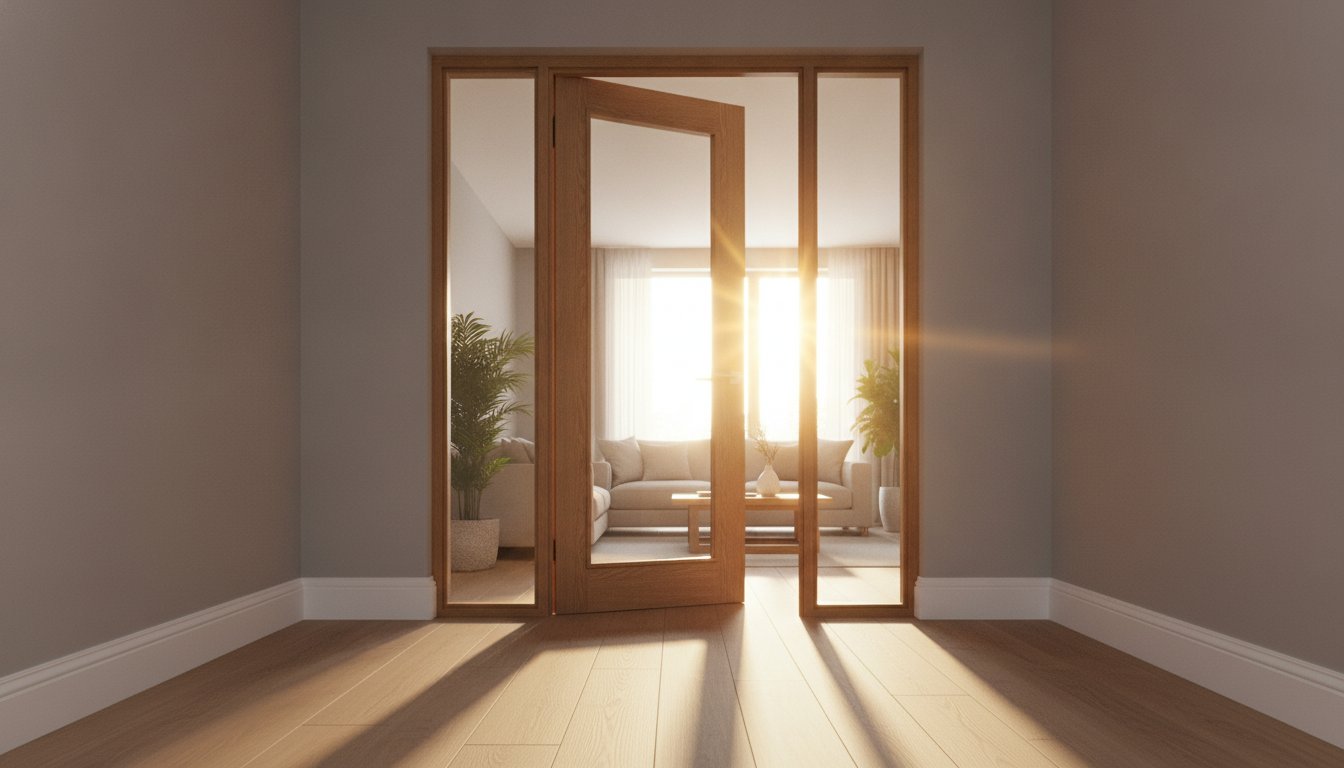
What if the simplest way to banish a dark, uninviting hallway wasn't a brighter light bulb, but a design choice that lets the sun follow you from room to room? Many homeowners feel stuck with gloomy corridors or rooms that feel isolated, yet they hesitate to install internal doors with glass because they worry about sacrificing privacy or failing to match their existing solid timber joinery. It's a common dilemma, especially when you want to maintain the warm, traditional feel of a family home whilst modernising its flow and aesthetic appeal.
We'll help you discover how to transform your interior with glazed doors that maximise natural light without compromising on the British craftsmanship you value. This guide covers everything from choosing between premium oak and walnut finishes to understanding essential safety glass requirements, such as BS EN 12150 standards. You'll learn how to create a brighter, more open-plan atmosphere whilst ensuring your new doors harmonise perfectly with your home's unique character and current safety regulations. We will explore how different glazing styles can solve your lighting issues whilst keeping your living spaces feeling private and secure.
Key Takeaways
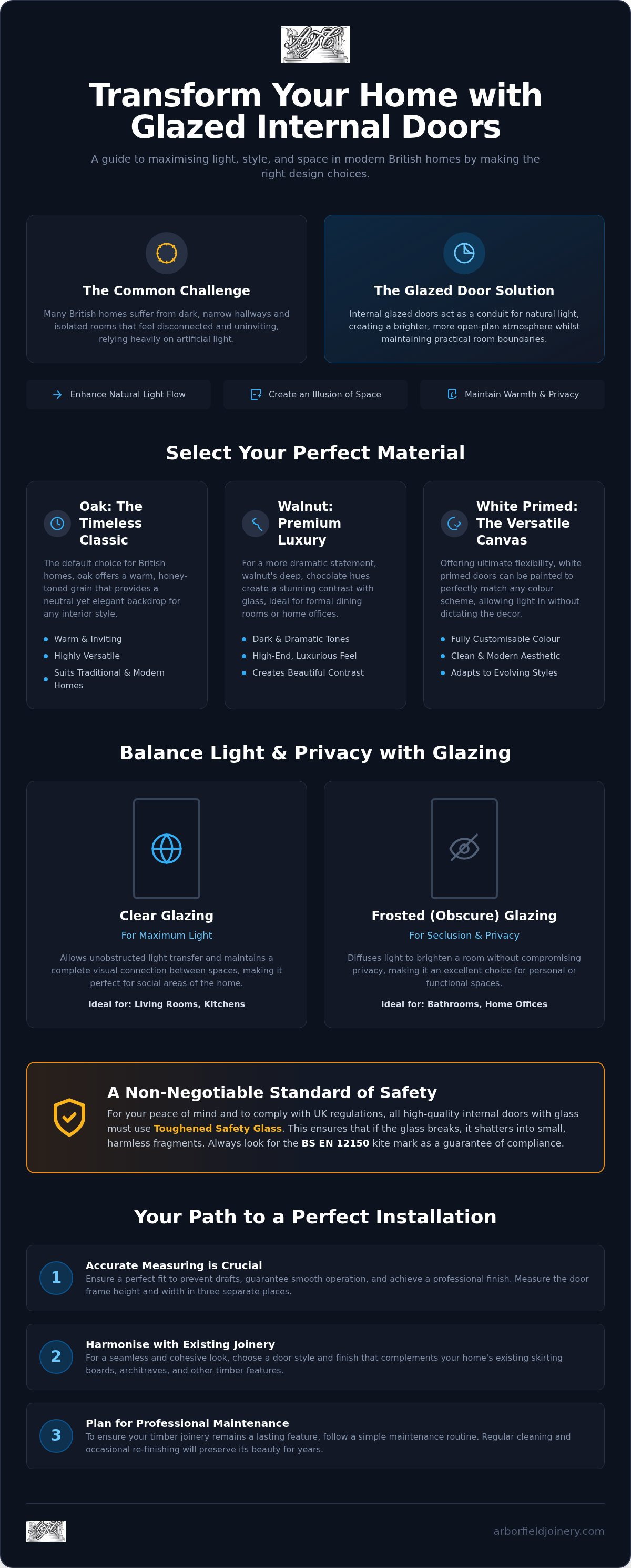
- Learn how to enhance natural light and create an illusion of space in traditionally narrow British hallways without losing room boundaries.
- Compare the timeless appeal of oak with the premium luxury of walnut to find the perfect material match for your home's existing aesthetic.
- Understand the vital role of UK safety standards and why toughened glass is a non-negotiable requirement for all high-quality internal doors with glass.
- Master the balance between visibility and seclusion by choosing between clear and frosted glazing for different living areas.
- Get expert advice on accurate measuring and professional maintenance to ensure your timber joinery remains a lasting feature of your home.
The Role of Glazed Internal Doors in Modern British Homes
British architecture is renowned for its character, yet many period properties and even modern builds suffer from a common flaw: narrow, shadowed hallways. Installing internal doors with glass isn't just an aesthetic upgrade; it's a structural solution to a lack of natural light. These doors act as a conduit, pulling sunlight from sun-soaked lounges into central corridors that usually rely on artificial bulbs. This creates a far more inviting atmosphere and significantly improves the daily living experience by making the home feel unified rather than a series of disconnected cells.
Beyond the physical brightness, there's a psychological shift when you open up your floor plan. A home that feels "open" reduces the boxed-in feeling common in traditional layouts, which can significantly lower stress and improve well-being. Glazed panels serve as a visual bridge, allowing you to maintain a consistent design theme across different rooms whilst keeping noise and heat contained. When exploring various door types and materials, it's clear that incorporating glass panels offers a versatility that solid timber alone cannot match. It allows the beauty of the wood grain to frame the view of the next room, creating a sophisticated transition between living spaces.
Maximising Light Transfer Between Rooms
Many UK homes have North-facing rooms that feel perpetually dim. By using internal doors with glass, you can "borrow" light from South-facing aspects to balance the home's illumination. It's about more than just visibility; it's a practical way to reduce reliance on electricity during the day. Whilst large glass apertures can sometimes raise concerns about heat loss, modern glazing technology ensures that thermal insulation remains high. High-quality glazed doors are designed to meet strict standards without sacrificing the elegance of a slim timber frame, ensuring your home stays warm whilst looking bright. To ensure your entire property benefits from these advancements in energy efficiency, you can visit JF Bodman Ltd to see their range of high-quality double-glazed windows and doors.
Open-plan layouts are highly desirable, but they often lack the practical boundaries needed for a busy family life. Glazed doors allow you to divide large spaces into functional zones without creating dark, claustrophobic boxes. For instance, installing a pair of glazed oak doors between a kitchen and dining room creates a grand entrance that feels expansive yet allows for acoustic privacy when needed. It keeps family members connected visually, even when they're in separate rooms, fostering a sense of togetherness that solid doors often interrupt. This balance of transparency and structure is essential for a home that needs to be both social and functional.
Selecting the Perfect Material: Oak, Walnut, and Urban Designs
Choosing the right timber is as much about the tactile feel as the visual appeal. Whilst oak remains the gold standard for British homes, the rise of darker walnuts and sleek urban styles offers homeowners a chance to be more adventurous. Which material best complements your existing décor? Each timber type brings a unique character to the home, influencing how light interacts with your living space and how the door feels underhand.
The Timeless Appeal of Internal Oak Doors
Internal oak doors have long been the default choice across the UK. Their warm, honey-toned grain provides a neutral backdrop that works equally well in a rustic cottage or a contemporary apartment. When you choose internal doors with glass crafted from oak, the precision of the glass beading is paramount. High-quality joinery ensures the beads match the grain perfectly, creating a seamless transition from timber to pane. Most modern oak doors utilize an engineered core for stability, preventing the warping that can occur with temperature fluctuations in centrally heated homes.
For those seeking a more dramatic statement, walnut glazed doors offer a premium, dark-toned luxury. The deep chocolate hues contrast beautifully with clear glass, making them a favourite for home offices or formal dining rooms. Conversely, white primed doors serve as a versatile canvas. They allow you to paint them to match your specific colour scheme whilst still benefiting from the light-enhancing properties of glazed panels. This flexibility makes them an excellent choice for modern renovations where the colour palette might change over time.
Urban and Industrial Glass Door Trends
One of the most significant shifts in interior design for 2026 is the surge in demand for "Urban" styles. These black-framed designs mimic the iconic Crittall-style industrial look that has become a staple of modern British architecture. They typically feature slim stiles and bold lines, providing a striking modern contrast against neutral walls. You can achieve this industrial aesthetic without the heavy weight or high cost of solid steel. Pairing these with minimalist black hardware creates a cohesive, high-end feel that bridges the gap between traditional joinery and modern metalwork.
Regardless of the style you choose, safety remains the absolute priority. All our products adhere to UK safety glazing standards, ensuring that toughened glass is used in all critical zones to protect your family. If you're unsure which grain suits your space, you can browse our full range of timber doors to see how different finishes interact with natural light.
Understanding Glazing Options: Clear, Frosted, and Safety Standards
Selecting the right glazing for your home is a decision that balances aesthetic desire with practical necessity. Whilst the frame provides the structure, the glass itself determines how a room feels, sounds, and functions on a daily basis. Choosing internal doors with glass requires a thoughtful approach to transparency; you must decide where you want to invite the eye in and where you need to create a private sanctuary.
Privacy vs. Light: When to Choose Frosted Glass
Finding the perfect middle ground between a bright home and a private one often leads homeowners to frosted glass. This option is ideal for bathrooms, bedrooms, or home offices where you want to benefit from "borrowed light" without sacrificing seclusion. There are two primary ways to achieve this look:
- Sandblasted Glass: This involves pelting the glass with sand to create a textured, opaque finish. It provides high levels of privacy but can sometimes be more prone to finger marks.
- Acid-Etched Glass: A chemical process creates a smoother, more satin-like finish. It's often easier to clean and provides a contemporary, high-end appearance.
Both styles maintain high light transmittance, ensuring that even with the door closed, the adjacent hallway doesn't fall into shadow. This allows you to maintain the "flow" discussed earlier whilst keeping specific areas of the home off-limits to prying eyes.
Safety First: Toughened Glass and Building Regulations
In a family environment, the durability of your glazing is a non-negotiable factor. Standard glass is far too brittle for domestic doors; instead, UK building regulations mandate the use of safety glass in "critical impact zones." This includes any glass in a door up to 1,500mm from the floor and in side panels within 300mm of a door. We ensure our internal doors with glass utilise toughened safety glass that meets BS EN 12150 standards. This material is up to five times stronger than regular glass and, should it ever break, it shatters into small, blunt pieces rather than dangerous shards.
How can you be sure your glass is compliant? Look for a permanent, visible British Standards stamp in the corner of the pane. This mark is your guarantee of quality and safety. Beyond strength, thicker glass also provides better sound insulation. Whilst a standard 4mm pane is common, opting for 6mm or laminated glass (BS EN 14449) can significantly reduce noise transfer between rooms. This makes it a wise choice for busy households where quiet areas are a priority. For those looking to add a touch of heritage, decorative glazing offers a final layer of style. From simple bevelled edges that catch the light to intricate traditional patterns, these details can elevate a standard door into a bespoke design feature.
Practical Considerations: Maintenance, Measuring, and Matching
Investing in internal doors with glass requires a commitment to both precision during installation and regular upkeep to preserve that crystal-clear finish. Unlike solid timber doors, glazed models demand a gentler touch. When cleaning, avoid abrasive chemicals that might damage the timber beads; a simple mixture of warm water and a drop of dish soap usually suffices for streak-free results. It is also vital to understand trimming limits. Whilst you can often trim a few millimetres from the edges of a standard timber door, you must never cut into the area housing the toughened glass. Doing so compromises the structural integrity of the unit and can cause the pane to shatter instantly.
Measuring Your Door and Frame Kit
Accuracy is the foundation of a successful installation. We recommend the three-point measurement rule: measure the width and height at the top, middle, and bottom of the opening. Use the largest height and width to select your door size. Don't forget to account for floor clearances. If you're planning on installing thick new carpets or underfloor heating, these extra millimetres will affect how the door swings. In many cases, especially in older properties with irregular openings, it is more efficient to purchase a full internal door and frame kit. This ensures the door and lining are perfectly matched from the outset, reducing the need for complex adjustments on site.
Coordinating Your Interior Joinery
A common design mistake is treating doors as isolated units. To achieve a high-end, curated look, you should ensure consistency across all your timber elements. This means matching the grain and finish of your doors with your skirting, architraves, and your stairs. If you have a grand oak staircase as a central feature, installing oak internal doors with glass nearby helps to draw the eye through the space, creating a visual harmony that feels intentional and professional. This consistency in timber species prevents different wood tones from clashing, which can often happen when mixing mass-market oak with premium walnut.
The hardware you choose acts as the jewellery for your doors. For urban-style doors, sleek black handles provide a striking contrast, whilst traditional oak pairs beautifully with brushed brass or chrome. Ensure your hinges are rated for the weight of the glass, as glazed doors are often heavier than their solid counterparts. If you're ready to upgrade your home's aesthetic, you can explore our premium range of glazed doors and find the perfect match for your interior.
Why Quality Joinery Matters: The Arborfield Difference
Arborfield Joinery isn't just another retailer; we're a family-run specialist with roots stretching back to 1953. For over seven decades, we've helped homeowners across Britain select internal doors with glass that stand the test of time. In an era of mass-produced, low-quality imports, we've maintained a quality-first narrative. We believe that every door is a structural design element that should honour your home's heritage whilst providing modern functionality. This pride in craftsmanship is why we remain a steady hand for our customers, acting as knowledgeable consultants rather than mere sellers.
Our commitment to sustainability is at the heart of our operation. We prioritise high-quality timber sourcing, ensuring that our oak and walnut veneers are as responsible as they are beautiful. When you choose us, you're not just buying a product; you're benefiting from the accumulated knowledge of a team that has seen the joinery industry evolve through every major trend and regulation. We value long-term relationships over quick transactions, which is why we focus on durability and timeless style in every piece we curate.
Expert Advice from a Trustworthy Veteran
Renovating a home is a significant undertaking. It's easy to feel overwhelmed by technical specifications or matching grain patterns. We take a consultative approach, offering guidance that's both expert and empathetic to your specific needs. Our 70+ years of experience mean we've solved almost every installation challenge imaginable. We organise our curated collection with strict quality control, ensuring that every panel and bead meets our exacting standards before it ever reaches your doorway. This methodical approach mirrors a real-world showroom experience, where quality is never compromised for speed.
Seamless National Delivery and Support
Transporting glazed products requires a level of care that standard couriers often can't provide. We've developed safe transit protocols specifically for internal doors with glass to ensure they arrive in pristine condition. Our nationwide delivery network covers the mainland UK, and we're pleased to offer free shipping on all orders over £900. When your order arrives, you'll find it securely packaged and ready for your joiner. We handle the logistics so you can focus on the transformation of your living space.
Whether you're looking for a single urban door or a full set of walnut glazed pairs, our team is here to ensure your home improvement journey is smooth and successful. Ready to see the difference that 70 years of craftsmanship makes? Browse our full range of internal doors with glass today and find the perfect fit for your living space.
Transform Your Home with the Perfect Glazed Door
Choosing the right internal doors with glass is a transformative step in any renovation. It's about more than just aesthetics; it's a structural decision that balances the flow of natural light with the necessary boundaries of a functional home. By selecting premium materials like walnut or oak and prioritising toughened safety glass, you ensure that your interior remains both stylish and secure for years to come. These choices help define the character of your living space whilst ensuring every room feels connected and bright.
At Arborfield Joinery, we've been a steady hand for UK homeowners since 1953. Our family-run business values quality-first craftsmanship, which you can see firsthand in our 120+ door showroom. We're here to help you curate your ideal living space with expert advice and a discerning eye for detail. Plus, we offer free mainland UK shipping on all orders over £900 to make your project even more seamless.
Are you ready to banish dark hallways and embrace a brighter, more open atmosphere? Explore Our Premium Collection of Internal Glass Doors today and discover joinery that truly lasts. We look forward to helping you find the perfect match for your home.
Frequently Asked Questions
Are internal doors with glass safe for homes with children?
Yes, internal doors with glass are perfectly safe for family homes provided they utilise toughened safety glass. We ensure our products meet BS EN 12150 standards, meaning the glass is treated to be significantly stronger than standard panes. If an accident occurs, it shatters into small, blunt granules rather than sharp shards. This makes them a reliable choice for high-traffic areas where children or pets are present.
Can I trim an internal door with glass panels?
You can typically trim the timber edges of a glazed door, but you must be extremely cautious. Most manufacturers allow for a small amount of reduction, usually around 6mm to 10mm from the sides and bottom. However, you must never trim into the area surrounding the glass aperture. Doing so compromises the structural integrity of the door and risks shattering the toughened pane, which cannot be altered once manufactured.
Do internal glass doors provide any soundproofing?
Whilst glass is naturally more resonant than solid timber, internal doors with glass still offer respectable sound insulation. The level of noise reduction depends largely on the glass thickness and the quality of the door's construction. Opting for 6mm toughened glass or laminated options provides a denser barrier against sound transfer. For the best results, ensure your door is fitted tightly within a high-quality frame to minimise gaps where noise can escape.
What is the difference between clear and frosted glass for privacy?
The primary difference lies in visibility and light diffusion. Clear glass offers an unobstructed view, making it ideal for connecting living areas and maximising light flow. Frosted glass, created through acid-etching or sandblasted techniques, provides a translucent finish that obscures direct sightlines whilst still allowing sunlight to penetrate. It's the perfect solution for rooms requiring privacy, such as bathrooms or home offices, without plunging adjacent corridors into darkness.
How do I clean the glass in my internal doors without leaving streaks?
To achieve a streak-free finish, use a mixture of mild dish soap and warm water or a dedicated glass cleaner applied with a microfibre cloth. Avoid spraying liquids directly onto the glass near the timber beads, as moisture can seep into the joinery and cause the wood to swell. Instead, dampen the cloth first. This gentle approach prevents dust build-up and keeps your internal doors with glass looking pristine without damaging the delicate wood grain.
Do I need a special frame for a glazed internal door?
You don't usually need a "special" frame, but it's essential that the lining is robust enough to support the extra weight. Glazed doors are significantly heavier than hollow-core alternatives. We often recommend a matching timber frame kit to ensure the grain and colour remain consistent. A high-quality oak or walnut frame provides the necessary stability and ensures the door hangs correctly, preventing any sagging or sticking over time.
Are your internal glass doors supplied with toughened safety glass as standard?
Yes, we supply all our internal glass doors with toughened safety glass as standard. This is a non-negotiable quality requirement for us, ensuring full compliance with UK building regulations for critical impact zones. Every pane features a permanent safety mark, giving you peace of mind that your joinery is built to the highest safety specifications. We never compromise on these standards, prioritising your family's safety alongside aesthetic appeal.
Can I get a matching solid door for my glazed door style?
Absolutely. We understand that most homeowners want a cohesive look throughout their property. Most of our popular styles, including our oak and walnut ranges, are available in both glazed and solid versions. This allows you to use internal doors with glass in communal areas like lounges and kitchens whilst installing matching solid timber doors in bedrooms where complete privacy is required, ensuring a seamless design theme across your entire home.
Share:
Bespoke Joinery Cost Estimation: A 2026 Guide
Timber Door Installation Cost Breakdown