
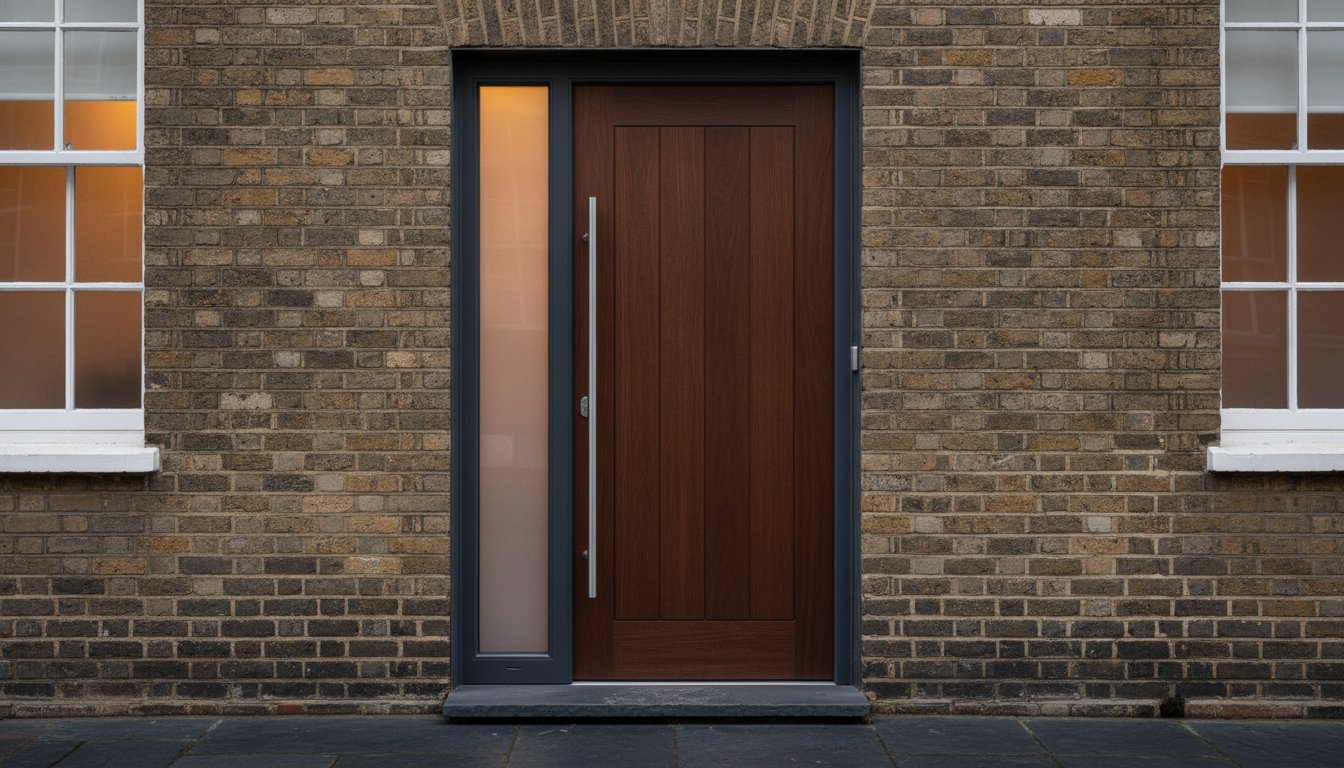
Your front door is the only piece of architecture that must act as a structural shield against the British elements whilst simultaneously serving as your home’s most important visual centrepiece. It’s a significant investment, and it’s natural to feel a sense of anxiety when choosing between different timber types or worrying about how a natural material will behave in the damp. You want the timeless beauty of Oak or Walnut, but you also need the certainty that your external doors won't warp, rot, or compromise your family's safety.
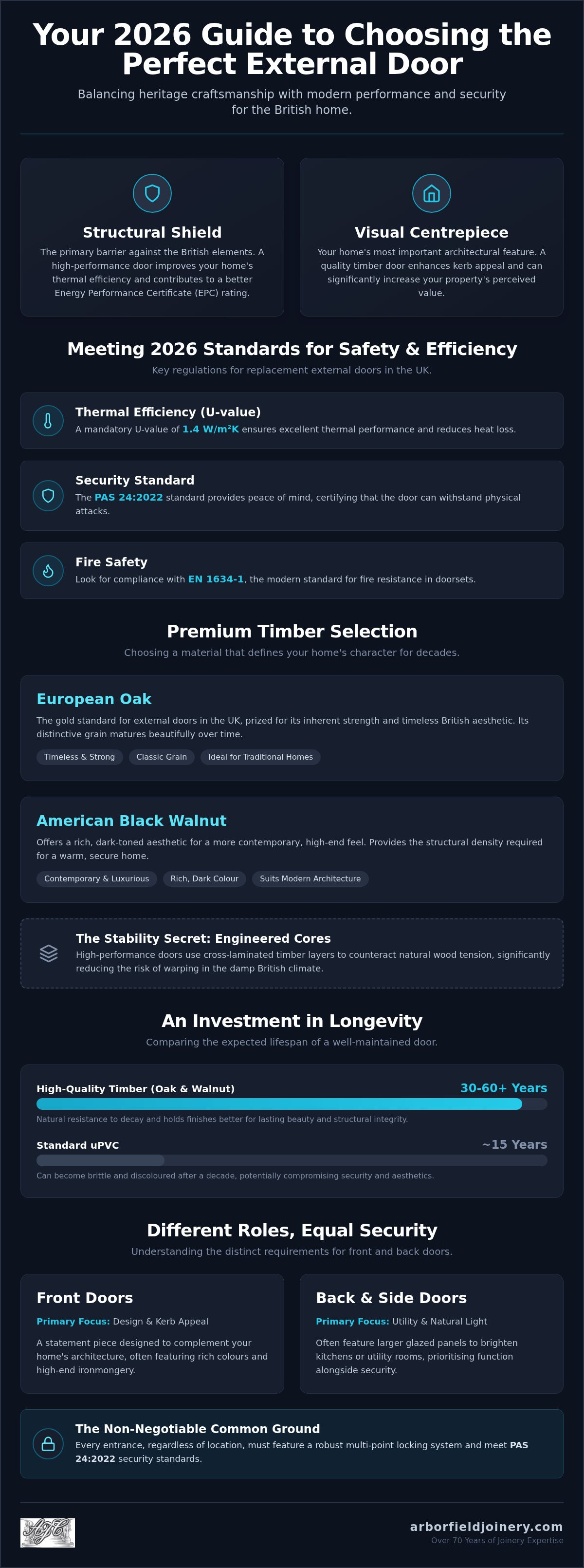
In this 2026 guide, you’ll discover how to choose the perfect entrance that balances heritage craftsmanship with robust weather protection and modern efficiency. We’ll break down the latest Building Regulations, including the 1.4 W/m²K U-value requirements for replacement doors and the peace of mind provided by PAS 24:2022 security standards. From selecting the right timber species to understanding the transition to EN 1634-1 fire safety, we provide the expert clarity you need to create an entrance that is as secure as it is stunning.
Key Takeaways
- Learn why choosing between Oak and Walnut is more than just a style choice, and how these premium timbers provide long-term durability against the British weather.
- Understand the latest 2026 regulations for external doors, including mandatory U-values for thermal efficiency and the peace of mind offered by PAS 24 security standards.
- Discover why the door frame is just as critical as the door itself and how to measure your opening accurately to ensure a perfect, draught-proof fit.
- Explore how to balance glazing for natural light without compromising your home's privacy or structural integrity.
- Benefit from over 70 years of joinery expertise to help you navigate technical specifications and find a high-end solution that increases your property value.
Understanding the Role of External Doors in the Modern British Home
An external door is the primary barrier between your sanctuary and the elements. It’s the first line of defence against the biting British wind and rain, but it’s also the gateway to your personal life. In 2026, the choice of external doors has shifted from a simple functional necessity to a sophisticated component of home engineering. Homeowners are increasingly looking for sustainable, long-life timber joinery that offers a lifetime of service rather than a temporary fix. This move towards quality isn't just about aesthetics; it’s a strategic choice to improve a property's thermal performance and Energy Performance Certificate (EPC) rating.
When you start looking at replacements, it's useful to understand the fundamental components of a door. The relationship between the leaf, the frame, and the threshold determines how well the unit will perform over decades of use. At Arborfield Joinery, we’ve seen these standards evolve since 1953. We know that a door is only as good as the precision of its construction and how well it integrates with the rest of your home's exterior.
Front Doors vs. Back Doors: Distinct Requirements
While they both lead outside, front and back external doors serve very different purposes. Your front door is a statement piece. It’s where you prioritise design, rich colours, and high-end ironmongery to create that vital kerb appeal. Back doors and side entrances usually focus on utility and light transfer, often featuring larger glazed panels to brighten up a kitchen or utility room. However, security is the one area where they must be identical. Every entrance to your home requires a robust multi-point locking system. Whether it’s the main thoroughfare or a quiet side gate, the level of protection must remain consistently high to meet modern safety expectations like PAS 24:2022.
When planning these security upgrades, it's worth considering the total cost of securing your property's perimeter; checking Fixed-price or quote-based fencing and landscaping installation fees can help you budget for professional gate and fence installation that matches your new door's quality.
The Aesthetic Impact on Property Value
Choosing high-quality timber joinery can significantly increase your home’s perceived value. To a potential buyer, an Oak or Walnut door signals that the property has been maintained to a high standard. You should select a style that complements the architectural era of your home. A Victorian townhouse demands different details than a minimalist contemporary build. Beyond the looks, there is a distinct psychological effect of a "solid" feel. When you close a heavy, well-fitted timber door, the sound and weight provide an immediate sense of security. It’s a tactile reminder that you’ve invested in excellence, creating a cohesive look that pairs perfectly with matching timber windows.
Selecting the Right Materials: Oak, Walnut, and Hardwood
Choosing the right material for your entrance is a decision that impacts your home's character for decades. Oak remains the gold standard for external doors in the UK, prized for its inherent strength and the way its distinctive grain matures over time. It offers a timeless British aesthetic that works as well on a rural cottage as it does on a suburban semi-detached. If you’re looking for a more contemporary, high-end feel, Walnut doors offer a rich, dark-toned aesthetic that suits modern luxury developments perfectly. These materials aren't just about looks; they provide the structural density required to keep your home warm and secure.
The distinction between hardwood and softwood is one of density and longevity. Hardwoods like Oak and Walnut grow slower, resulting in a tighter grain that is naturally more resistant to the elements. A common misconception is that "solid" timber is always superior. In reality, engineered timber cores are often more stable. They use cross-laminated layers to counteract the natural tension in wood, which significantly reduces the risk of warping or twisting when exposed to a damp British winter. This engineering ensures your door remains easy to open and close regardless of the season.
The Durability of Oak and Hardwood
These timbers possess a natural resistance to fungal decay and insect attacks, which is vital given our unpredictable climate. Because the grain is so dense, it holds finishes and stains much better than porous alternatives. Whilst a uPVC door might look tired after a decade, a well-maintained timber door can easily last 30 to 60 years. This structural integrity is a key reason why these materials are preferred when meeting UK security requirements for new homes, as the door must resist physical force without splintering.
Modern Material Innovations
Not every home requires a natural wood finish. White primed doors are an excellent choice if you want to apply a bespoke colour whilst benefiting from a professionally prepared base. For those seeking an industrial edge, our Urban doors combine traditional timber reliability with sleek, modern lines. If your property is in a particularly exposed coastal or hilltop location, high-performance laminate options provide an extra layer of protection against extreme weather. You can explore our full range of Oak and Walnut doors to see how these materials look in a real-world setting.
Balancing Glazing, Energy Efficiency, and Security
Modern homeowners often face a paradox: they want a bright, welcoming hallway flooded with natural light, but they don't want to compromise on privacy or thermal performance. High-quality external doors now solve this through advanced glazing technology. It isn't just about the glass itself; it's about how that glass integrates with the timber to prevent heat loss. When you choose a glazed entrance, you're investing in a component that directly impacts your monthly energy bills and the overall comfort of your living space.
To ensure your home meets the current standards, it's vital to consult the official building regulations for external doors. As of 2026, replacement doors must hit a maximum U-value of 1.4 W/m²K. Achieving this requires a combination of precision joinery and high-performance units. Beyond the technical specs, consider the visual harmony of your property. We often advise our clients to match the timber species and finish of their door with their timber windows. This creates a unified architectural narrative that significantly boosts the kerb appeal we discussed in the opening section.
Glazing Options for Light and Privacy
Double glazing remains the standard for most UK homes, providing excellent thermal retention. However, triple glazing is becoming a popular choice for those living near busy roads due to its superior acoustic insulation. Safety is paramount, so all glazed panels must use toughened or laminated safety glass to comply with building codes. If your door opens directly onto a street, frosted or sandblasted glass offers a sophisticated way to obscure the view whilst keeping your entrance hall bright and airy. These decorative options allow you to maintain a private sanctuary without sacrificing the benefits of natural light.
Security Features and Ironmongery
Security isn't just about a thick piece of wood; it's about the hardware that binds it to the frame. Multi-point locking systems are now the industry benchmark for external doors. These systems engage at several points along the frame, making it nearly impossible to jemmy the door open. Don't overlook the importance of high-quality hinges and handles. Heavy-duty ball-bearing hinges ensure the door doesn't sag, which is crucial for maintaining a tight weather seal and smooth operation. Whether you prefer the traditional look of antique brass or the sharp lines of modern matte black, your ironmongery should feel substantial and operate with a reassuring click.
Installation Essentials: Frames, Measuring, and Weatherproofing
The frame is the structural backbone of any entrance. Whilst we often focus on the aesthetic of the door leaf, the frame determines the long-term performance of your external doors. A frame that isn't up to the task will eventually sag under the weight of heavy timber, leading to sticking, binding, and compromised security. Professional installation ensures that the frame is perfectly plumb and level, which is the only way to maintain the structural integrity required for a draught-free home.
Weather-stripping and thresholds are your final line of defence against the British rain. High-quality compression seals should run continuously around the frame to create an airtight pocket when the door is closed. This prevents the "whistling" effect common in older houses and keeps your hallway warm even during a winter gale. Without these precision-engineered seals, even the most expensive Oak door will fail to provide the thermal efficiency you expect.
Accurately measuring the opening for new external doors is the most critical step to avoid costly errors. To get it right, follow this routine:
- Measure the width at the top, middle, and bottom of the opening.
- Measure the height at both the left and right sides.
- Check the diagonals from corner to corner to ensure the opening is square.
- Always use the smallest dimension and subtract 10mm for a fitting allowance to allow for the frame and expansion.
Choosing the Right External Door Frame
It’s best to match your frame material to the door itself. If you've chosen an Oak door, an Oak frame ensures that both components expand and contract at the same rate during seasonal changes. The sill is equally vital; it must be designed to direct water away from the property to prevent rot at the base of the jambs. Many homeowners now opt for pre-hung door sets, as these come factory-fitted with hinges and seals, offering the most reliable choice for a perfect, airtight fit from day one.
Maintenance for Longevity
Timber is a living material that responds to its environment. Whilst it requires more care than plastic, its ability to be repaired and refinished adds decades to its life. A simple annual checklist should include checking the integrity of the finish, cleaning the hinges, and ensuring the weather-stripping hasn't perished. If you notice the wood looking dull, a fresh coat of UV-resistant sealant will protect it from both sun damage and moisture. This small investment in time preserves the value of your joinery and keeps it looking as good as the day it was installed.
Ready to ensure a perfect fit for your home? Explore our range of external door frames and accessories to find the ideal match for your new entrance.
Investing in Excellence: The Arborfield Joinery Difference
Choosing the right entrance for your home is an investment in both security and architectural beauty. At Arborfield Joinery, we have been supplying the UK with premium timber products since 1953. This long heritage as a family-run specialist allows us to act as a steady hand for our customers, offering the authoritative confidence of a veteran joiner with the personal touch of a local business. We believe that external doors should never be treated as mere commodities. Instead, they are structural assets that, when sourced sustainably and crafted with precision, will serve your home for generations.
Our commitment to excellence extends beyond the workshop to your front door. We provide seamless national delivery across the UK, ensuring that high-end British craftsmanship is accessible regardless of your location. To make your renovation more cost-effective, we offer free mainland UK shipping on all orders over £900. This service allows you to focus on the quality of the materials rather than the logistics of transport, knowing that your investment is handled with the same care we put into our joinery.
From Our Showroom to Your Home
Whilst we serve customers nationwide, our physical showroom in Berkshire remains a vital hub of expertise. With over 120 doors on display, it provides a unique opportunity for quality verification. We carefully curate our range of oak, walnut, and urban doors to ensure they meet the specific needs of the UK housing stock. Whether you are looking for a bespoke aesthetic or a traditional style, our team provides personalised advice to help you select the right door, frame, and accessories. This consultative approach ensures you avoid the pitfalls of generic retail and instead secure a product tailored to your property’s environment.
Complete Your Project
A truly beautiful home relies on a sense of visual continuity. Once you have selected your main entrance, you can create a seamless interior flow by coordinating your external doors with our range of internal oak doors. This design synergy increases the perceived value of your property and creates a sophisticated atmosphere throughout. To further enhance your home's exterior performance, consider matching your new door with high-performance timber windows. Choosing heritage joinery is a decision you will appreciate every time you turn the key, providing a solid, reassuring feel that modern plastic alternatives simply cannot replicate.
Secure Your Home with Timeless Heritage Joinery
Selecting the right entrance for your property is a strategic investment in both security and architectural character. By prioritising high-density timbers like Oak or Walnut and ensuring your installation meets the latest thermal and safety standards, you create a barrier that is as functional as it is beautiful. It’s important to remember that the frame and weather-stripping are just as vital as the door itself for maintaining a draught-free, energy-efficient home over the coming decades.
At Arborfield Joinery, our family-run team has been providing specialist guidance since 1953. Whether you visit our Berkshire showroom to inspect our 120+ door display or order online for delivery across the country, we’re here to ensure your project is a success. We even offer free mainland UK shipping on orders over £900 to help you secure the best value for your renovation. We don't just sell products; we help you curate a space that you'll be proud of for years to come.
Browse our full range of premium external doors and enhance your kerb appeal today. Your home is your sanctuary; make sure its first impression is one of quality and enduring style.
Frequently Asked Questions
What is the best material for an external door in the UK?
Oak is widely considered the best material for the British climate due to its natural density and inherent resistance to decay. Walnut is an excellent alternative for homeowners seeking a more contemporary, luxury finish. Both hardwoods offer significantly greater longevity and structural stability than softwoods or plastic alternatives, provided they're finished with a high-quality sealant.
How do I measure for a new external door and frame?
You should measure the width and height of your brickwork opening in three different places and use the smallest dimension as your base. Subtract 10mm from these final figures to provide a fitting allowance for the frame and expansion. It’s also vital to check the diagonals of the opening to ensure it's perfectly square before you place an order.
Are wooden external doors secure enough for a front entrance?
Modern wooden external doors are exceptionally secure when fitted with multi-point locking systems and high-quality ironmongery. When built with a solid engineered timber core, they offer a level of physical resistance that often exceeds thinner composite or uPVC alternatives. Always ensure your hardware meets the latest PAS 24 standards for maximum protection against forced entry.
How often do I need to treat or paint a timber external door?
You’ll typically need to refresh the treatment or paint every two to five years, depending on how much direct sun and rain the entrance faces. We recommend a quick annual inspection to check for any thinning of the finish or small cracks in the sealant. Catching these early with a light sand and a fresh coat of UV-resistant finish will preserve the timber for decades.
What is a pre-hung external door set and do I need one?
A pre-hung set is a complete unit where the door is already hinged into its matching frame at the factory. We recommend these for external doors because they guarantee a perfect, airtight fit between the leaf and the frame. This eliminates the difficulty of hand-cutting hinge recesses on-site and ensures the weather seals perform exactly as the manufacturer intended.
Can I install an external door myself or do I need a professional?
Whilst an experienced DIY enthusiast can hang a door, we strongly recommend professional installation for all external entrances. A professional ensures the frame is perfectly plumb and level, which is critical for maintaining the door's structural integrity and weatherproofing. Incorrect installation can lead to warping, draughts, and potential issues with your home insurance if security standards aren't met.
How do I prevent my wooden external door from warping?
The best way to prevent warping is to choose a door with an engineered timber core and ensure all six sides are fully sealed with a high-quality finish before installation. This prevents moisture from entering the grain and causing the wood to move. You should also avoid painting timber doors in very dark colours if they are in direct, constant sunlight, as the heat can cause the wood to dry unevenly.
Does Arborfield Joinery offer bespoke sizes for external doors?
Yes, we provide bespoke sizing for many of our timber ranges to suit non-standard UK openings that don't fit off-the-shelf dimensions. Our heritage as joinery specialists since 1953 means we understand that older homes often require a tailored approach to ensure a perfect fit. If you have a specific requirement, our Berkshire showroom team can guide you through the customisation process for your project.
Share:
Internal Door Handles: The Homeowner’s Buying Guide for 2026
Walnut Internal Doors: The Complete Homeowner’s Guide to Premium Style