
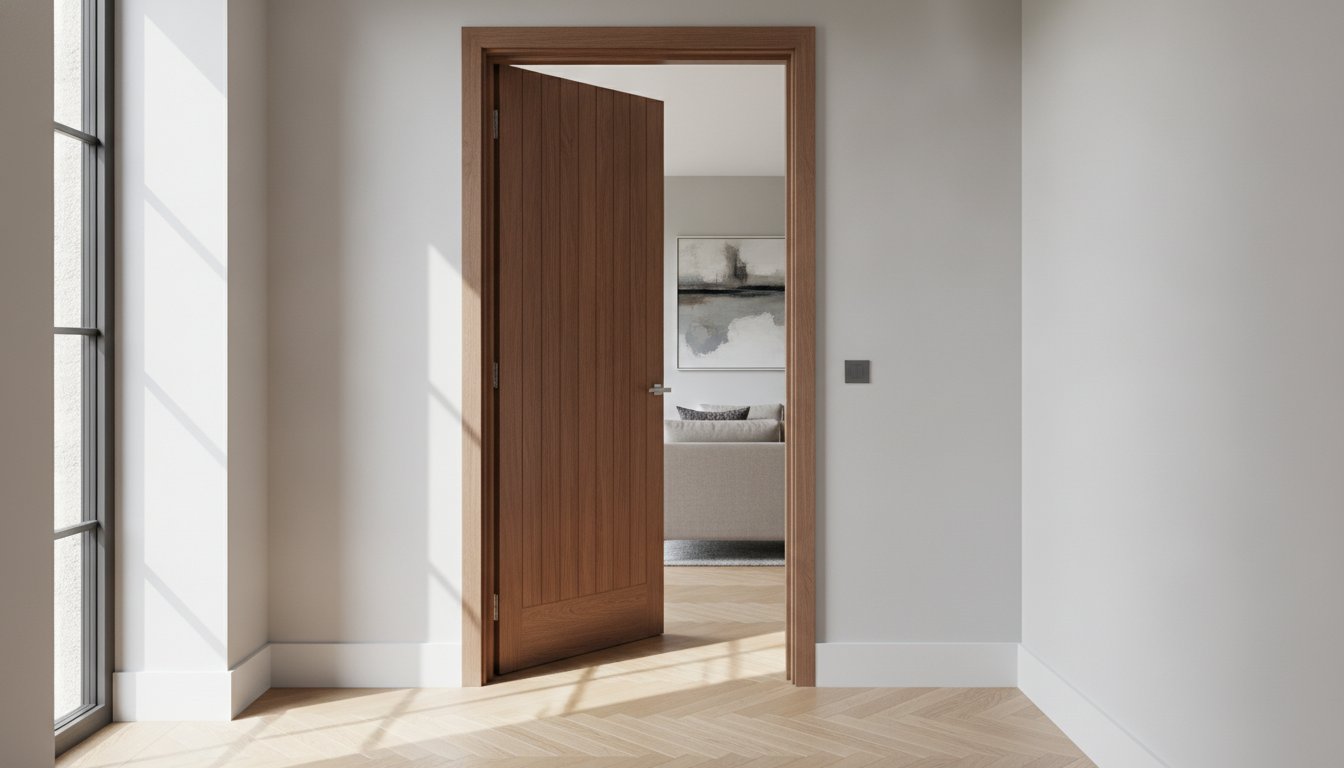
While oak is often the default choice for British homes, it's walnut that acts as the true architectural furniture of a premium interior. Choosing walnut internal doors is a deliberate design statement, offering a depth of character and tonal warmth that lighter timbers simply cannot replicate. It's an investment in a look that feels both established and effortlessly modern, providing a sense of permanent luxury to any room.
You may worry that such a rich, dark wood might make your hallways feel smaller or clash with your contemporary flooring. It's a common concern for homeowners who want to embrace elegance without compromising on the sense of space. This guide will show you how to select and style these doors to enhance your home’s light and flow, whilst ensuring your investment is durable and compliant with the latest BS 8214:2026 fire safety standards. We'll clarify the vital differences between solid wood and veneers, explain the importance of the new EN 1634-1 testing protocols, and provide the expert insight you need to curate a home that feels truly unique. From thermal efficiency to the perfect hardware pairings, you'll discover how to bring a heritage feel into the modern day.
Key Takeaways
- Learn how to balance the rich, dark tones of walnut internal doors with your wall colours to create a sense of luxury without making your living space feel smaller.
- Discover the aesthetic differences between contemporary flush designs for minimalist homes and traditional panelled doors that suit a classic British aesthetic.
- Understand the critical legal requirements for fire safety, including the transition to EN 1634-1 standards and how to correctly identify FD30 and FD60 ratings.
- Gain expert advice on trimming allowances and simple maintenance routines to ensure your premium timber doors remain durable and warp-free for decades.
- Find out why visiting a heritage showroom with over 120 designs helps you verify the grain quality and tactile feel of the timber before you purchase.
Why Choose Walnut Internal Doors for Your Home?
Many homeowners view a door as a simple functional necessity. However, choosing walnut internal doors elevates the humble doorway into a piece of architectural furniture. It is about more than just closing off a room; it's about adding a sense of weight, permanence, and luxury to the home's skeleton. Unlike lighter woods that blend into the background, walnut demands attention, acting as a grounding element that ties different design features together.
Walnut is prized amongst joiners for its high density and strength. Because it's a slow-growing hardwood, the grain is incredibly tight and resilient. This makes it a perfect long-term investment for high-traffic areas like the kitchen or hallway where doors face daily wear and tear. Beyond durability, there's the matter of sustainability. As a family-run business established in 1953, we understand the importance of longevity. We ensure our timber is sourced from responsibly managed forests, providing a premium finish that supports healthy woodlands whilst lasting for generations.
The Aesthetic Appeal of Black Walnut
The visual allure of walnut lies in its unpredictability. One door might showcase straight, orderly lines, whilst the next features wild, swirling burls. This natural artistry is what sets it apart from more uniform timbers, offering a depth that feels like a piece of fine art rather than a mass-produced building material. The properties of black walnut include a stunning colour palette that moves from deep espresso to lighter, honeyed streaks of sapwood. When you compare this to the golden, consistent hues of internal oak doors, it's clear why walnut is the choice for those seeking a more dramatic, bespoke atmosphere. Over time, the wood develops a subtle patina, growing richer and more characterful as it ages in your home.
Value and ROI in Home Renovation
In the UK property market, first impressions are everything. Premium joinery acts as a silent indicator of quality throughout a house. High-end developers and interior designers frequently specify walnut because it creates a cohesive, "finished" look that cheaper materials can't match. Choosing walnut internal doors isn't just an aesthetic choice; it's a savvy financial move for those looking to distinguish their property in a competitive market.
- Enhanced Perceived Value: Buyers often associate dark, rich timbers with bespoke, expensive builds, which can influence their overall valuation of the property.
- Tactile Satisfaction: There is a distinct psychological comfort in the weight of a solid walnut door. It makes a home feel more secure, private, and quiet.
- Design Versatility: It bridges the gap between traditional heritage and modern minimalism effortlessly, ensuring the style won't feel dated in a few years.
Exploring Styles: From Contemporary Flush to Traditional Panelled Walnut
Your choice of door style acts as a visual bridge between your furniture and the architecture of the house. Because walnut is such a versatile timber, it can be crafted into designs that suit almost any era of British housing. Whether you are looking for the sleek uniformity of a modern apartment or the structured weight of a country home, walnut internal doors provide a sophisticated foundation for your decor.
Modern Minimalism with Flush and Grooved Doors
In contemporary interiors, the "Iseo" style has become a definitive favourite. These doors typically feature a vertical grain pattern that draws the eye upward, creating a subtle sense of height in rooms with lower ceilings. Subtle grooved details or metallic inlays can be added to the flat surface to provide depth without cluttering the visual field. To achieve a truly high-end finish, many homeowners choose to pair their new doors with matching internal doors and door frames. This creates a seamless, built-in look that is a hallmark of professional interior design. It's these small details in alignment and grain matching that separate a standard renovation from a premium one.
Flush designs are not just about aesthetics. Because timber is naturally durable and strong, these doors offer excellent sound insulation and a solid feel that hollow-core alternatives cannot match. They provide a quiet, private atmosphere that is essential for home offices or bedrooms.
Glazed Walnut Doors for Light Transfer
If your hallway feels a little dim, glazed doors are the perfect solution. They allow natural light to flow between living spaces whilst still defining the boundaries of each room. You might consider:
- Clear Glass: Best for communal areas like kitchens or dining rooms where you want to maintain a sense of openness.
- Frosted or Obscure Glass: Ideal for home offices or en-suites where you need light but require privacy.
Safety is paramount when incorporating glass into your home. In the UK, all glazed walnut internal doors must meet safety glass standards, specifically BS EN 12150. This ensures that the glass is toughened to withstand daily impacts, providing peace of mind for families with children or pets. If you are unsure which style will best complement your space, you can view our full collection to compare the different glass configurations and panel designs in person.
For those with more traditional tastes, panelled walnut doors offer a timeless alternative. These designs use raised or sunken panels to create shadows and highlights, playing with the natural light to showcase the wood's rich grain. They are particularly effective in Victorian or Edwardian properties where they respect the home's heritage whilst introducing a modern, chocolate-toned palette that feels fresh and current.
Interior Design: How to Style Walnut Doors Amongst Your Decor
Integrating walnut internal doors into your home requires a thoughtful approach to colour and light. Because walnut possesses such a rich, chocolate-toned presence, it can easily become the focal point of a room. The secret to success lies in creating a balanced environment where the door enhances the decor rather than dominating it. You must consider how the timber interacts with your walls, floors, and even the smallest pieces of ironmongery to achieve a cohesive look.
The Perfect Colour Palette for Walnut
Choosing the right wall paint is essential to prevent a room from feeling too enclosed. For a contemporary aesthetic, many homeowners are turning to "greige" or cool, stony greys. These neutral shades provide a crisp backdrop that allows the warmth of the walnut to shine without the space feeling dated. If you prefer a more dramatic atmosphere, perhaps for a home office or a snug, deep navy or forest green can create a sophisticated, library-like feel. To keep the look sharp, we often recommend using bright white architraves. This framing effect makes the dark timber "pop" and provides a clean transition between the door and the wall colour.
Flooring presents another stylistic choice: do you match or contrast? Whilst matching walnut doors to a walnut floor creates a seamless, moody luxury, it can sometimes feel heavy in smaller British hallways. A popular alternative is to pair your doors with a lighter oak or a neutral stone tile. This contrast highlights the unique grain patterns of the walnut and ensures the hallway remains bright and welcoming. Proper lighting is also vital. Using warm-toned LED spotlights can help bring out the reddish undertones in the wood, preventing it from looking flat or overly dark in the evening.
Hardware and Ironmongery Trends for 2026
The hardware you choose is the final touch that defines the door's personality. As we look towards 2026, two distinct trends have emerged in the UK market. Matt black handles are a favourite for those seeking an industrial or "Urban" look. The dark finish complements the walnut's tones whilst adding a modern, tactile edge. Conversely, satin brass or gold hardware leans into the inherent luxury of the timber, offering a classic elegance that feels incredibly high-end.
- Polished Chrome: A timeless choice that offers a bright, clean contrast against dark wood.
- Matt Black: Perfect for minimalist or industrial-inspired interiors.
- Satin Brass: Adds a warm, vintage glow that pairs beautifully with the chocolate hues of the wood.
Don't forget the importance of what you can't see. Because walnut internal doors often feature a heavy solid core for better sound insulation, high-quality hinges are a necessity. Ensuring your ironmongery is robust enough to support the weight will prevent dropping or misalignment over time, maintaining that satisfying, premium "clunk" every time the door closes.
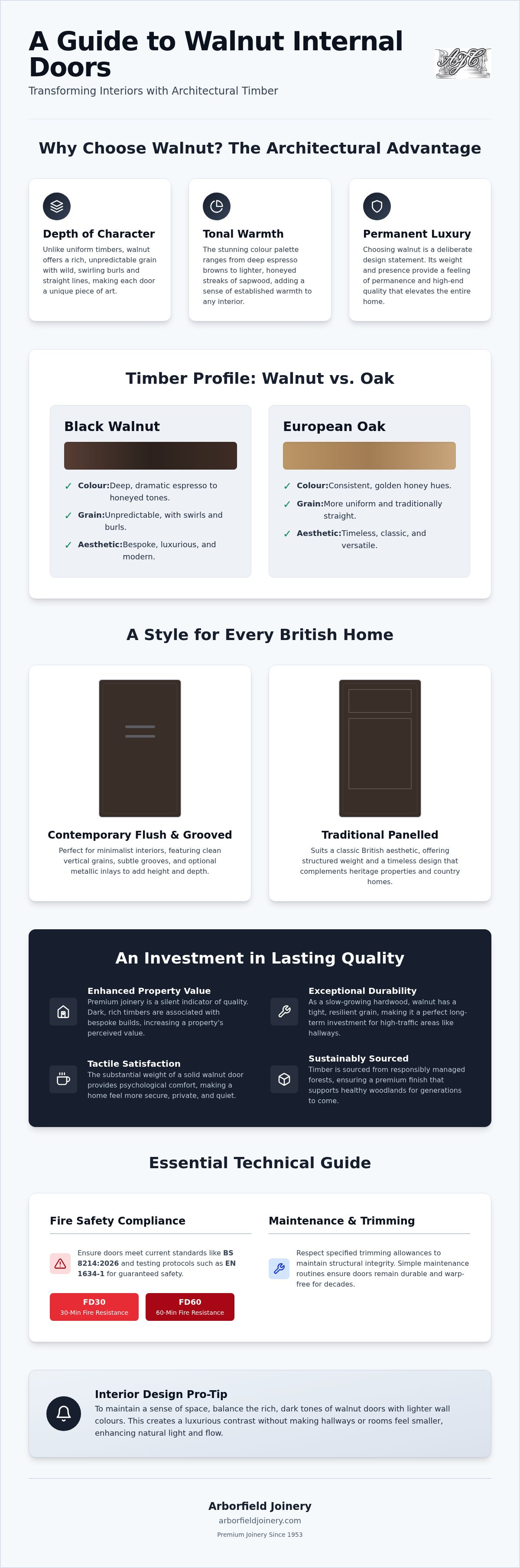
Technical Specifications: Fire Ratings, Trimming, and Maintenance
Selecting walnut internal doors is as much a technical decision as it is a stylistic one. Whilst the visual appeal is immediate, the internal construction of the door dictates how it will perform over the coming decades. Most premium walnut doors feature a solid core construction, which is essential for that heavy, high-end feel. This density doesn't just provide a satisfying "clunk" when the door closes; it also offers superior sound insulation and thermal retention compared to cheaper hollow-core alternatives. When you invest in quality joinery, you are buying a product that stays stable and resists warping even as temperatures fluctuate throughout the British seasons.
Walnut Fire Doors (FD30)
UK building regulations often mandate the use of fire doors in specific areas of the home. If you are planning a loft conversion, installing an integral garage, or renovating a multi-storey property, fire safety becomes a legal priority. Many homeowners worry that a fire door will look bulky or industrial, but modern manufacturing means a walnut FD30 door looks identical to a standard door. An FD30 fire door provides a minimum of 30 minutes of fire resistance when installed correctly with the appropriate intumescent seals. This allows you to maintain a consistent aesthetic throughout your hallway whilst meeting all necessary safety standards. For residential buildings over 11 metres in height, remember that flat entrance doors now require at least annual inspections to ensure they remain compliant with the latest 2026 safety revisions.
Trimming is another vital consideration, especially in older UK homes where door frames are rarely perfectly square. Whilst some budget doors offer almost no flexibility, premium brands often provide generous trimming allowances. Some of our hand-picked ranges allow for up to 32mm of total trimming, giving your joiner the freedom to achieve a perfect fit without compromising the door’s structural integrity. Always check the specific manufacturer’s guidelines before cutting, as exceeding these limits can void your warranty and affect the door’s fire rating.
Long-term Care and Maintenance
One of the greatest benefits of modern walnut doors is the convenience of factory-applied finishes. Most of our collection comes pre-finished with multiple layers of UV lacquer. This provides a durable barrier that protects the timber from sunlight and minor impacts. To keep your doors looking their best, follow these simple care steps:
- Dusting: Use a soft, lint-free cloth to remove surface dust regularly.
- Cleaning: Avoid harsh chemical cleaners or abrasive pads. A slightly damp cloth with a mild soap solution is usually all that's required to remove fingerprints.
- Scratches: Minor scuffs on dark walnut can be easily hidden with a matching wax repair stick, which blends seamlessly into the grain.
- Humidity: Walnut behaves well in kitchens and bathrooms, but ensure your rooms are well-ventilated to prevent the timber from absorbing excessive moisture.
If you want to ensure your home renovation meets the highest standards of safety and style, you can browse our full range of walnut internal doors to find the perfect technical match for your project.
Choosing Your Walnut Doors from Arborfield Joinery
Since 1953, our family-run business has remained a steady hand for homeowners across the UK. We don't just sell timber products; we curate a selection of the finest joinery available. Choosing walnut internal doors is a significant investment in your home's character, and we believe that such a choice deserves expert guidance and a personal touch. Our long-standing heritage provides the reassurance that you're dealing with professionals who understand the nuances of timber, from the specific grain patterns of black walnut to the technical requirements of modern building regulations.
Whilst digital galleries are helpful for inspiration, nothing compares to the tactile experience of a physical showroom. Our Berkshire centre features over 120 door designs, allowing you to see the rich chocolate tones and feel the weight of our solid-core doors in person. This hands-on approach ensures there are no surprises when your order arrives. For customers located further afield, our national delivery service ensures your investment is transported safely and efficiently to your doorstep. We take immense pride in our logistics, ensuring that every door is handled with the care a premium product deserves.
Expert Guidance for Your Project
Our team acts as your knowledgeable consultant throughout the entire renovation process. We help you navigate the complexities of measuring accurately, selecting the correct fire ratings for your specific property type, and choosing hardware that complements your chosen style. By acting as a "Quality Curator," we hand-pick our ranges from premium brands like Deanta and LPD. This means we've already done the hard work of vetting for quality, ensuring that every product meets our rigorous standards for durability and finish. If you're within travelling distance, we highly recommend visiting our showroom to speak with our experts and see the quality of our walnut internal doors first-hand.
Ready to Transform Your Interior?
The journey from a simple idea to a finished, cohesive room is an exciting one. Once you've selected your perfect style, we handle the logistics of getting your doors to you in pristine condition. We offer free mainland UK shipping on all orders over £900, which is a significant benefit for those undertaking a full-home upgrade. Whilst we don't provide installation services, we provide all the technical specifications and trimming advice your contractor needs for a flawless fit. Our goal is to make the purchasing process as seamless as the doors themselves.
Browse our full range of walnut internal doors and start your home’s transformation today with a heritage business you can trust.
Curate Your Ideal Interior with Premium Walnut
Selecting the right joinery is about more than just filling a gap in the wall. It's an opportunity to introduce texture, warmth, and a sense of architectural permanence to your space. By choosing walnut internal doors, you're opting for a material that bridges the gap between heritage craftsmanship and modern minimalism. We've explored how these doors act as architectural furniture. We've also covered the necessity of meeting the latest fire safety standards and how to pair deep chocolate tones with contemporary colour palettes.
As a family-run business established in 1953, we understand that quality is a long-term investment. You can rely on our expert advice. Whether you visit our Berkshire showroom to see over 120 designs in person or take advantage of our free mainland UK shipping on orders over £900, we're here to help. We take pride in helping you find doors that won't just look beautiful today but will remain a durable part of your home for decades to come.
Explore Our Premium Walnut Internal Door Collection and start your journey towards a more elegant, refined home today.
Frequently Asked Questions
Do walnut internal doors make a room look too dark?
Walnut doors don't necessarily darken a room if you balance them with light-coloured walls or glazed panels. The deep chocolate tones provide a sophisticated focal point, whilst white architraves or pale stone flooring prevent the space from feeling enclosed. Choosing a glazed style can also help by allowing natural light to flow between rooms.
What is the difference between solid walnut and walnut veneer doors?
Most high-quality walnut internal doors use a solid engineered core with a real walnut veneer. This construction is actually superior to solid walnut for internal use as it provides greater stability and resistance to warping in centrally heated homes. It ensures you get the premium look of real timber with better long-term durability.
Can I use walnut internal doors in a bathroom?
You can certainly install walnut doors in a bathroom, provided the room is well-ventilated to manage humidity. Our pre-finished doors are sealed with multiple layers of UV lacquer, which acts as a protective barrier against occasional moisture and steam. Just ensure that any edges trimmed during installation are re-sealed to maintain this protection.
How much can I trim off a walnut door to fit my frame?
Trimming allowances vary by manufacturer, but most standard designs allow for 6mm to 10mm to be removed from each edge. Some of our premium ranges are specifically designed with larger timber lippings that allow for more significant adjustments. Always check the specific manufacturer's instructions to ensure you don't compromise the door's structural integrity or fire rating.
Are walnut doors more expensive than oak internal doors?
Walnut is typically priced at a premium compared to oak because the raw timber is less abundant and more highly prized for its unique, dark grain. It is often viewed as a more exclusive choice for homeowners looking to create a high-end, bespoke aesthetic. The investment reflects both the rarity of the material and the sophisticated finish it provides.
What handles look best on walnut doors?
Matt black handles are currently the most popular choice for a contemporary, industrial look against dark wood. For a more traditional or luxurious feel, satin brass or polished chrome offer a beautiful contrast. The choice depends on your overall decor, but high-quality ironmongery is essential to match the premium feel of the timber.
Do walnut internal doors require a special type of hinge?
Because of the weight of a solid-core walnut internal doors, you should use high-quality ball-bearing hinges to ensure smooth operation. We generally recommend fitting three hinges per door to prevent dropping and maintain perfect alignment over time. Using robust hardware ensures that the door remains stable and closes with a satisfying, solid sound.
How do I clean and maintain the finish on my walnut doors?
Maintenance is simple; just use a soft, lint-free cloth and a very mild soap solution for cleaning fingerprints or dust. Avoid any abrasive cleaners, wax polishes, or harsh chemicals that could strip the factory-applied lacquer. For minor scuffs, a matching wax repair stick can be used to blend the mark into the natural grain of the wood.
Share:
External Doors Guide: Quality, Security & Style 2026
The Homeowner’s How-To Guide: Selecting and Installing a Door and Frame Kit