
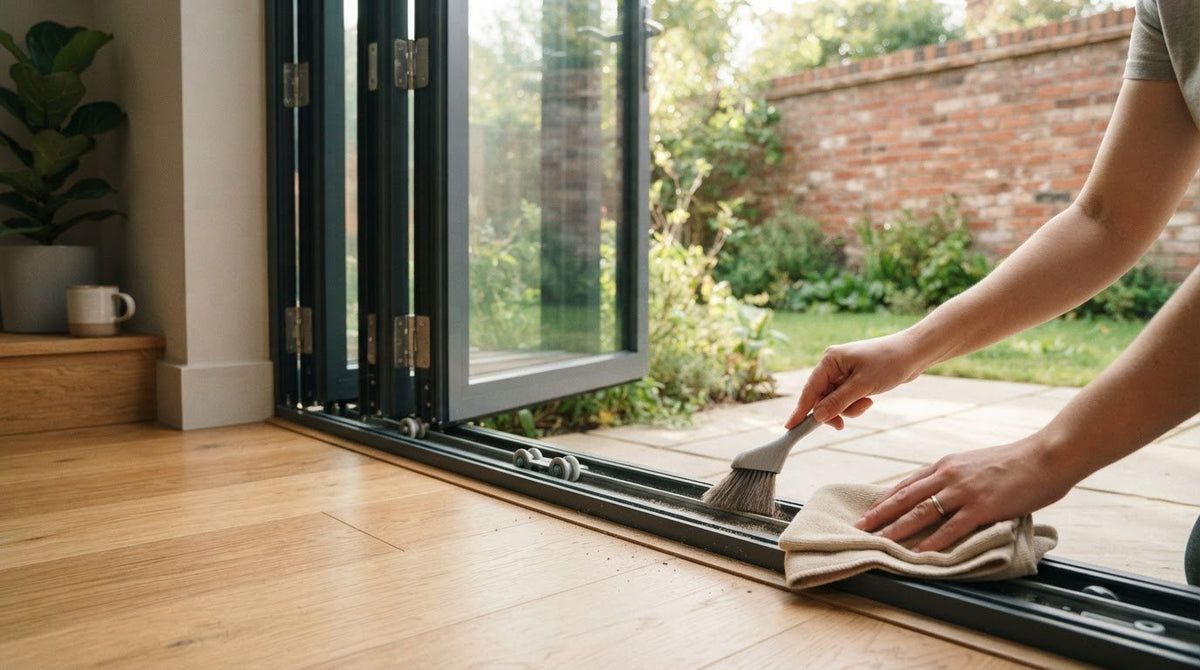
A sticking bifold door doesn’t always need a major repair. How to stop bifold doors sticking often starts with clearing dirt and debris from the track, wiping it with a damp cloth and drying it fully. Apply silicone-based lubricant sparingly to ease movement, and make only careful alignment adjustments if the panels sit unevenly. If the door suddenly becomes difficult to move, don’t force it. Stop and look for the cause.
A door that catches, scrapes or resists can be frustrating, especially when a small obstruction or loose hinge may be behind the change. Learn how to inspect the track and panels, make straightforward adjustments carefully, and recognise when the problem needs more than routine upkeep. Seasonal movement, blocked drainage holes and damaged tracks can all affect smooth operation. Regular cleaning and suitable lubrication help maintain the folding action. Identify the cause before reaching for tools, so you can choose sensible next steps.
Key Takeaways
- If a bifold door suddenly becomes difficult to move, stop and inspect it rather than forcing it; check panel alignment before making careful adjustments.
- Clear track debris with a vacuum or soft brush, then wipe the track and dry it completely.
- Use a light application of silicone-based lubricant on moving parts, and avoid WD-40, grease and heavy oils on tracks.
- Look for seasonal frame movement, blocked drainage holes or track damage to identify causes that simple cleaning may not resolve.
Can I adjust bifold doors myself?
Yes, you may be able to correct minor alignment issues at home. To stop bifold doors sticking, check the cause first and never force the panels.
-
Check the door alignment
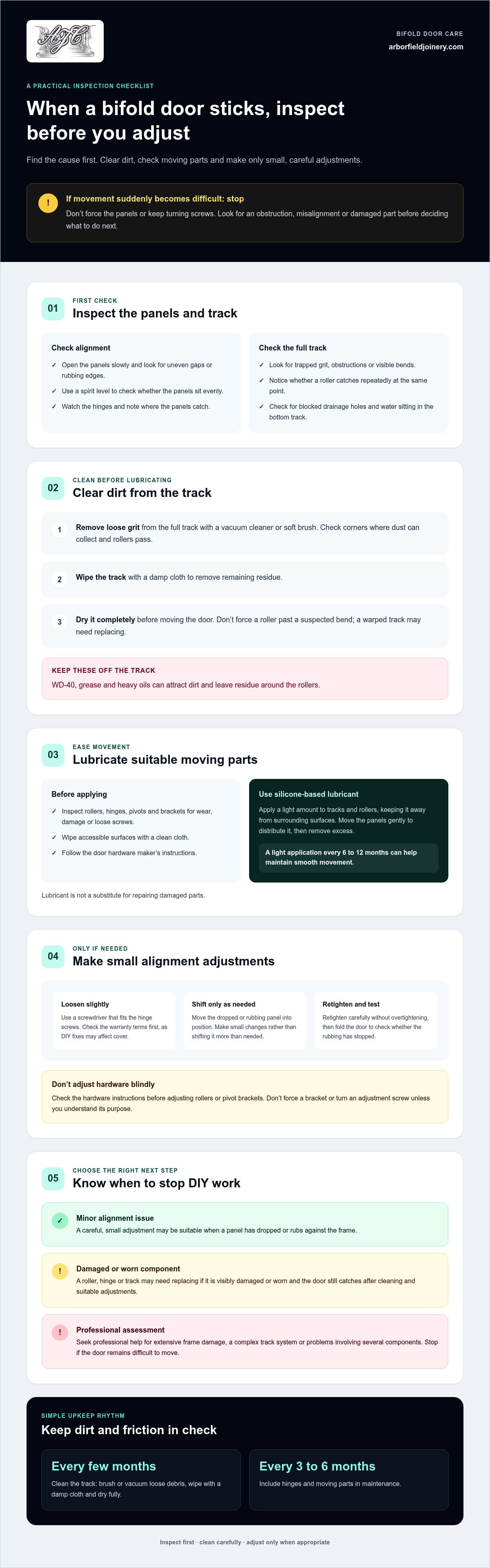
Open the panels slowly and look for uneven gaps, rubbing edges or a panel sitting out of line with the frame. Hold a spirit level against the panels to check whether they sit evenly. Watch the hinges as you move the door and note where the panels catch. This inspection is a sensible first step to stop bifold doors sticking without making unnecessary adjustments.
-
Adjust dropped or rubbing doors
If a panel has dropped or rubs against the frame, slightly loosen the relevant hinge screws with a screwdriver. Shift the panel into position, then retighten the screws carefully without overtightening. Fold the door to check whether the rubbing has stopped. If the hinge screws are loose, tighten them gently. Make small adjustments rather than shifting the panel more than needed.
-
Gather tools and materials
-
Decide when to call a professional
Cleaning dirt and debris from tracks
Before cleaning, inspect the full track for trapped grit, obstructions or visible bends. Use a vacuum or soft brush to remove loose debris, then wipe the track with a damp cloth and dry it completely.
-
Remove grit from the tracks
Open the panels and use a vacuum cleaner or soft brush to clear loose grit from the full length of the track. Check the corners, where dust can collect and rollers pass. Wipe away remaining residue with a damp cloth, then dry the channel completely before moving the door. Avoid grease or heavy oil, which can trap dirt.
-
Check for a bent or blocked track
Look along the track from one end, checking for debris left after cleaning and any visible distortion. Move the panels slowly and note whether a roller repeatedly catches at the same point. This may indicate a local obstruction or damaged section. Don’t force the roller past a suspected bend. A warped track may need replacing.
-
Keep the tracks clean
Make track cleaning part of your routine every few months to limit dirt build-up. Use a soft brush or vacuum first, then wipe away remaining marks with a damp cloth and dry the surface fully. Include the hinges and moving parts in maintenance every three to six months. Keep the track free of WD-40, grease and heavy oils, which attract dirt and can leave residue around the rollers.
Lubricating rollers, hinges and pivots
Lubrication can reduce friction once you’ve checked moving parts for dirt or damage. Apply silicone-based lubricant sparingly, following the door hardware maker’s instructions.
-
Inspect rollers and hinges
Open and close the panels slowly, watching each roller as it travels and each hinge as it folds. Look for visible wear, damage, loose screws or a catch at one point. Check the pivots and brackets too, as problems there can affect panel movement. Don’t use lubricant as a substitute for repairing damaged parts.
-
Clean and lubricate moving parts
Wipe accessible roller, hinge and pivot surfaces with a clean cloth before applying lubricant. Use a light application of silicone-based lubricant on tracks and rollers to reduce friction, keeping it away from surrounding surfaces. Work the panels gently to distribute it, then remove excess. A light application every 6 to 12 months can help maintain smooth movement.
-
Adjust rollers, hinges and pivot brackets
Check the door hardware instructions before adjusting rollers or pivot brackets, as the design determines how each part moves. If a hinge is loose, slightly loosen its screws, shift the panel only as needed, then retighten carefully without overtightening. Make small changes and test the folding action after each one. Don’t force a bracket or turn an adjustment screw unless you understand its purpose.
Common causes of stiff or sticking bifold doors
Sticking can point to moisture, seasonal movement, blocked drainage or damaged components. Note when the problem occurs and where the panels catch.
-
Check for humidity-related sticking
Notice whether the door becomes harder to move in damp conditions, then check for rubbing along its edges. Moisture-related movement can affect timber, while worn or damaged seals may allow draughts around the panels and reduce energy efficiency. Inspect seals for splits, gaps or sections pulling away. A blocked drainage hole can also leave water sitting in the bottom track, making movement stiffer.
Repair costs depend on the cause, the components involved and the work required. A simple adjustment differs from replacing a damaged track or addressing several interacting faults. The parts needed and complexity of the repair affect the cost.
-
Consider seasonal changes
Compare how the door moves in warm and cold weather, and note any changes in the gaps. Aluminium frames expand in warm conditions and contract when it’s colder, which can alter panel clearance and affect movement. Check whether the door catches at the frame or along the track instead of assuming lubrication will solve the problem.
Look for a persistent catch in the same place. A damaged or warped track may need replacement, while standing water points towards blocked drainage. These clues help distinguish seasonal movement from a fault that needs repair. If cleaning and careful adjustments don’t resolve the sticking, consider replacement door options when the existing door is damaged beyond repair.
Arborfield Joinery: Oak Doors
If a damaged door needs replacing rather than adjusting, Arborfield Joinery offers Oak Doors for your home. When choosing a replacement, consider the finish and style you want as well as the practical needs of the doorway.
For a different look, Arborfield Joinery also offers Walnut Doors, White Primed Doors and Urban Doors. Compare their finishes with the room and consider how you use the space, so the new door suits your home. If a door sticks, checking the cause before choosing a replacement can help ensure you address the problem.
Explore the door options or contact Arborfield Joinery to discuss your choice.
Choose a considered next step
If your bifold door still catches after careful maintenance, note where it sticks and whether the problem changes with the weather. This pattern can help distinguish an adjustment issue from damage that may call for replacement. Avoid forcing the panels in the meantime, as resistance can make the door harder to use.
Knowing how to stop bifold doors sticking also means recognising when further adjustments won’t address the underlying problem. If you’re considering a new door, choose a style that suits the room and its practical needs. Arborfield Joinery offers Oak Doors, Walnut Doors and White Primed Doors in different finishes to consider alongside your existing interior.
For guidance on choosing a suitable replacement, contact Arborfield Joinery for help. A thoughtful choice can bring a fresh, cohesive finish to your home.
Frequently Asked Questions
How Do I Keep My Bifold Doors Running Smoothly?
Keep the panels moving freely by checking the full opening regularly and responding to small changes early. Open and fold the door through its full range, watching each joint for hesitation or uneven movement. Keep furniture, mats and stored items clear of the panels’ path. If movement changes, note which panel or point catches. That detail helps guide your inspection and avoid unnecessary adjustments.
Why Do Bifold Doors Become Stiff or Hard to Slide?
Bifold doors become stiff when something obstructs their movement or the panels no longer travel cleanly through the opening. Where resistance occurs can offer a useful clue: a repeated catch at one point differs from drag throughout the movement. Check whether the panels meet the frame evenly and whether anything blocks their path. A change after damp or warm weather may also suggest movement linked to conditions.
Why does my bifold door scrape the floor?
A bifold door scrapes the floor when its lower edge loses clearance, often because a panel has dropped or shifted. Check whether it rubs along the whole edge or at one corner, then compare the panel’s position with the adjacent door. Look for a mat or object beneath the folding path, too. Check the hinges and alignment before considering trimming, as movement may be causing the contact.
Why is my bifold door suddenly harder to close?
A sudden change usually means something has shifted in the door’s path or hardware. Look for a small obstruction, a panel sitting out of line or a loose hinge. Note whether the door resists at the start, middle or end of closing. Stop if it catches sharply. Forcing it can strain connected panels and make the cause harder to identify.
What causes bifold doors to stick?
Bifold doors stick when friction or misalignment interrupts the panels’ movement. A door that catches at the same point each time, for example, may have a local obstruction or track issue, while rubbing at the frame points to panel alignment. Weather-related changes can also affect clearance. Note where the resistance occurs and whether it varies with conditions to help distinguish routine maintenance from damage.
How do you fix a bifold door that is rubbing against the frame or floor?
First find the exact contact point, then check the panel’s position and hinge screws. If the panel has shifted, loosen the relevant screws slightly, make a small adjustment and retighten carefully. Test the folding movement before changing anything else. If the door touches the floor, check for an obstruction beneath it and compare the panel’s lower edge with its neighbour. Stop if the frame or hardware is damaged.
Share:
How to Choose the Best Weatherstripping for Exterior Timber Doors
Winder timber staircase kits for different floor heights and layouts