
Last Updated: October 28, 2026
Quick Summary
Sustainable timber doors are renewable, need less energy to produce than metal or plastic, and store carbon for as long as they stay in service. They also offer long service life with proper maintenance, reusability across lifecycles, and a natural grain that ages well.
- Timber can regrow, so responsibly managed forest stock is a renewable resource.
- Timber doors have lower embodied energy than metal or plastic alternatives.
- Specify FSC-certified stock where you can and ask for chain-of-custody evidence.
- Our Pamplona Prefinished Oak FSC FD30 Internal Fire Door carries a 10 Year Manufacturer's Guarantee.
Table of Contents
- Ten Advantages of Sustainable Timber Doors at a Glance
- Advantages One to Three: Renewability, Lower Embodied Energy and Carbon Storage
- Advantages Four to Six: Durability, Thermal Performance and Indoor Air Quality
- Advantages Seven to Ten: Reusability, Recyclability, Aesthetics and Warranty Cover
- Choosing the Best Timber for Exterior Doors
- Verifying Sourcing and Certification Before You Buy
- Timber Door Maintenance and Honest Performance Limits
- Frequently Asked Questions
Sustainable timber doors earn their place in a home for reasons that go well beyond looks. This guide sets out ten advantages, explains what each one means in practice, and flags where the case is weaker. Timber is renewable, it stores carbon, and it needs less energy to produce than metal or plastic (Wood Products). Study on designing for reuse in timber buildings found that keeping timber's structural function across multiple lifecycles significantly reduces environmental impacts compared with downcycling.
Below, we cover each advantage in turn, then move on to choosing exterior timber, checking sourcing, and the honest limits of timber over time.
Ten Advantages of Sustainable Timber Doors at a Glance
- Renewable and responsibly sourced material
- Lower embodied energy than metal or plastic
- Carbon storage in the timber itself
- Long service life when properly maintained
- Thermal performance that helps retain heat
- Low-emission materials for better indoor air quality
- Reusability across multiple lifecycles
- Recyclability and eventual biodegradability
- Natural aesthetic appeal that ages well
- Warranty cover on quality-controlled products
Advantages One to Three: Renewability, Lower Embodied Energy and Carbon Storage
Timber is renewable. Trees regrow, so a door made from responsibly managed forest stock draws on a resource that can be replenished. Designing for reuse in timber buildings describes timber as more abundant, renewable, and with higher reuse and recycling potential than fossil-based materials like concrete and steel.
Timber needs less energy to produce. Timber requires far less energy to produce and process than materials like metal or plastic. Embodied energy, the energy spent making a product before it reaches your home, is lower for timber doors, which is one reason they appeal to specifiers focused on whole-life impact. Choosing materials with minimal carbon footprints extends this commitment to sustainability beyond structural elements and into the broader selection of eco friendly home decor.
Timber stores carbon. Wood keeps the carbon it absorbed while growing. A timber door locks that carbon away for as long as it stays in service, which matters more the longer the door lasts.
Why timber's renewability matters for specification
Renewability is only as good as the forest it comes from. Specify FSC-certified stock where you can, and ask your supplier for chain-of-custody evidence.
Advantages Four to Six: Durability, Thermal Performance and Indoor Air Quality
Durability. Our Pamplona Prefinished Oak FSC FD30 Internal Fire Door carries a 10 Year Manufacturer's Guarantee, which gives a concrete benchmark for how long the maker expects the product to perform.
Thermal performance.
Indoor air quality.
Lifecycle comparison: timber versus common alternatives
A door that stores carbon but is replaced every ten years may still compare poorly with a longer-lasting alternative, which is why durability and sourcing belong in the same conversation as thermal performance and indoor air quality.
Advantages Seven to Ten: Reusability, Recyclability, Aesthetics and Warranty Cover
Reusability.
Recyclability and biodegradability.
Aesthetics. Timber has a natural grain that no moulded alternative replicates. The Pamplona range's contrasting veneers show the grain to its best advantage.
Pamplona Prefinished Walnut Glazed FSC FD30 Internal Fire Door →
Warranty cover.
Choosing the Best Timber for Exterior Doors
Browse the Monza External Doors range to compare external options, or view the Arta Unfinished Oak External Door as a concrete example of an oak entrance door. For a fuller comparison of premium entrance options, our Premium Timber Entrance Doors: A 2026 Buyer's Guide covers the trade-offs in more depth.
For internal rooms, the same logic applies at lower stakes. Our Pamplona Prefinished Oak FSC FD30 Internal Fire Door is £259.50 and combines FSC certification with a 10 Year Manufacturer's Guarantee.

Verifying Sourcing and Certification Before You Buy
Before buying, ask for:
- FSC chain-of-custody certification covering the specific product
- The timber species and origin of the stock
- Finish data sheets showing low-emission credentials
- The manufacturer's warranty terms in writing
Check that certificates name the product or range you are buying, not just the company.
Timber Door Maintenance and Honest Performance Limits
For a deeper look at the trade-offs, read our guide on Solid Wood Vs Hollow Core Doors Pros Cons And How To Choose.
A practical maintenance routine
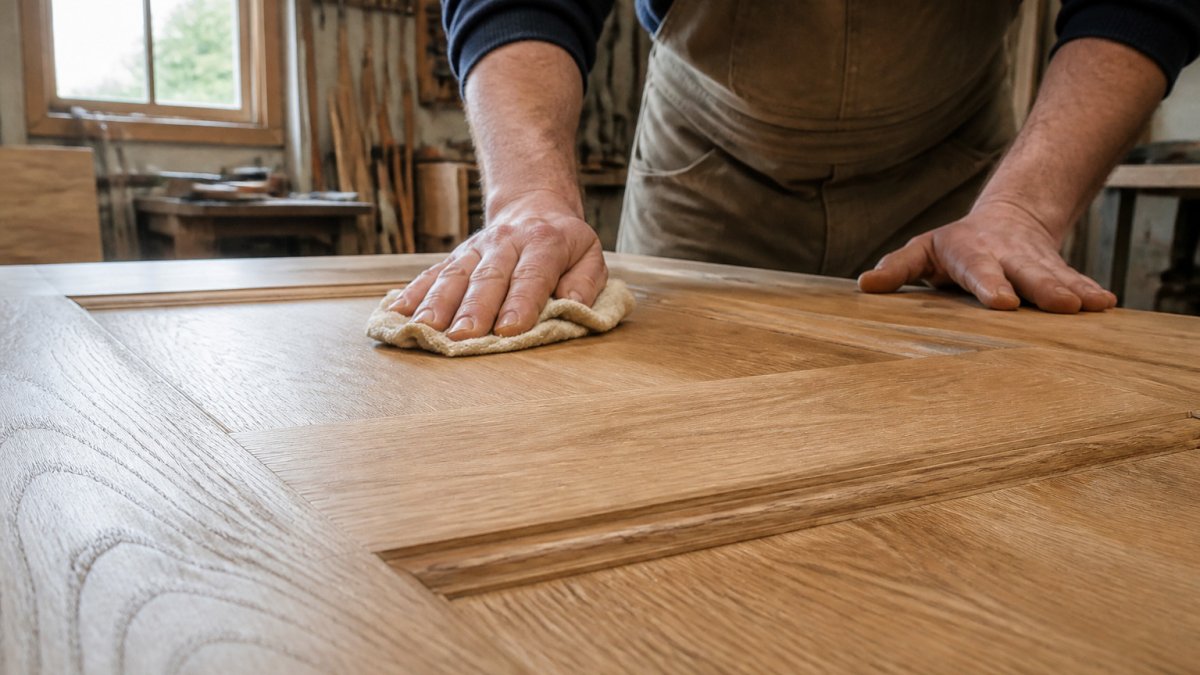
Timber door maintenance is manageable with a simple routine: inspect seals and finish each season, clean gently, and refinish when the surface starts to dull or moisture gets in. Done consistently, the door keeps performing for decades. A more specific routine looks like this:
- Seasonal inspection. Check the finish, seals and frame for signs of cracking, lifting or water ingress at the start of spring and autumn, when temperature and humidity swings are greatest.
- Cleaning. Wipe with a damp cloth and a mild, pH-neutral cleaner; avoid abrasive pads and harsh detergents that strip the finish.
- Refinishing. Recoat when water stops beading on the surface or when the finish looks dull. Factory-finished doors often need their first recoat sooner than the maker's headline figure suggests, so check the finish warranty terms.
- Hardware and fit. Lubricate hinges and locks annually, and check that the door still closes squarely; swelling or sticking is an early sign of moisture ingress.
Where timber performance has limits
Timber moves with humidity, and that movement is the root of most performance issues. In damp locations or on exposed elevations, a door may need more frequent attention than one in a sheltered porch. South-facing doors take more UV and heat, which can break down finishes faster, while north-facing doors stay damper for longer. Species and construction matter here: engineered cores and stable hardwoods move less than solid softwood, and a well-designed weather seal does more for performance than a thicker coat of finish.
Frequently Asked Questions
What are the advantages of sustainable timber doors?
Sustainable timber doors are renewable when sourced from responsibly managed forests, and they need far less energy to produce and process than metal or plastic alternatives. Research published in 2026 on designing for reuse in timber buildings found that keeping timber's structural function across multiple lifecycles significantly reduces environmental impacts compared with downcycling. Timber also stores carbon for the life of the door, and well-made examples are built to last for decades, which reduces replacement waste over time.
Are timber doors energy efficient?
Arborfield Joinery offers expert advice on suitability before you order.
How do you maintain an exterior timber door?
Exterior timber doors need periodic maintenance to perform well. Inspect seals, hinges and the finish at least once a year, clean the surface gently, and recoat with a suitable exterior finish when the existing coating starts to wear or lose water resistance. Keep the door away from prolonged standing water and check for swelling or gaps after wet seasons. Regular upkeep protects the timber and preserves the door's warranty conditions.
How can I tell if timber for a door is responsibly sourced?
Arborfield Joinery stocks FSC-certified products, including the Pamplona Prefinished Oak FSC FD30 Internal Fire Door.
Arborfield Joinery has been a family-run business since 1953, and we are the largest independent stockist in the south. If you are weighing up sustainable timber doors for a renovation, we can talk through species, finishes and sourcing for your project. Our team offers expert advice on property suitability, and we can source premium stock from leading brands alongside full bespoke manufacturing. Get in touch to discuss your timber door options.

Share:
Hardwood bay window frames for custom angles and glazing
Oak Pyramid Newel Cap Dimensions and Fitting Options