
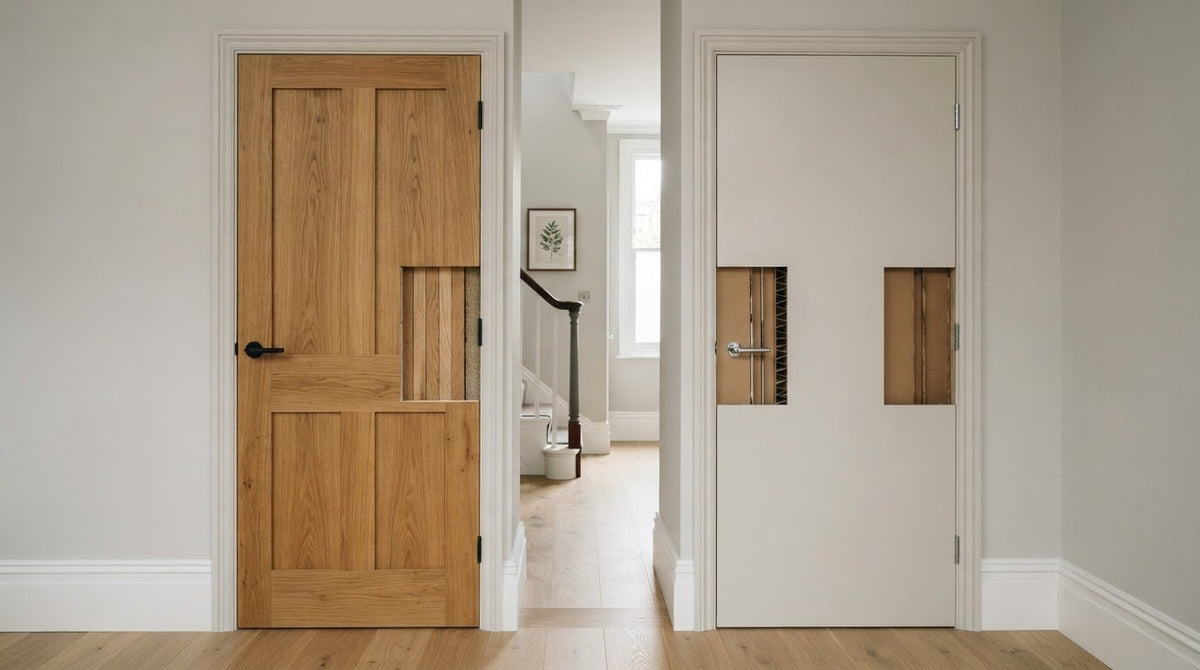
The best internal door isn’t always the most solid one. If you’re weighing the solid wood vs hollow core doors pros and cons, start by looking beyond the label: solid wood and solid core aren’t the same construction, and each has different qualities. Hollow-core doors have a lightweight internal structure, whilst solid-core doors use a denser composite centre. Solid wood doors are made from natural timber, bringing their own distinctive feel and appearance.
It’s understandable to wonder whether a lighter option will stand up to daily use, or whether a heavier door will make a noticeable difference in your home. The right choice depends on where the door will go and what matters most, from sound and privacy to appearance, handling and value. This guide explains the differences, compares everyday trade-offs and helps you match each type to your rooms and priorities. You’ll also find practical points to check before replacing an internal door. Arborfield Joinery has been supplying joinery products since 1953, and its showroom features more than 120 doors to view in person.
Key Takeaways
- Learn how solid wood, solid core and hollow-core construction differ, even when door faces look alike.
- Explore the solid wood vs hollow core doors pros and cons to weigh appearance, feel, sound considerations and value.
- Use room purpose and household priorities to guide your choice, rather than assuming one construction suits every door.
- Consider the whole doorway, including gaps and fitting, when thinking about privacy and sound transfer.
- Find out what to check before replacing a door, then explore internal door styles and finishes that suit your home.
Solid Wood vs Hollow Core Doors: What Are You Really Comparing?
Choosing an internal door isn’t simply a decision between a substantial option and a lightweight one. Construction influences how a door feels as it opens and closes, how it sits within a room’s design and whether it suits the way that space is used. The useful question is not “Which is best?” but “Which construction fits this room and my priorities?”
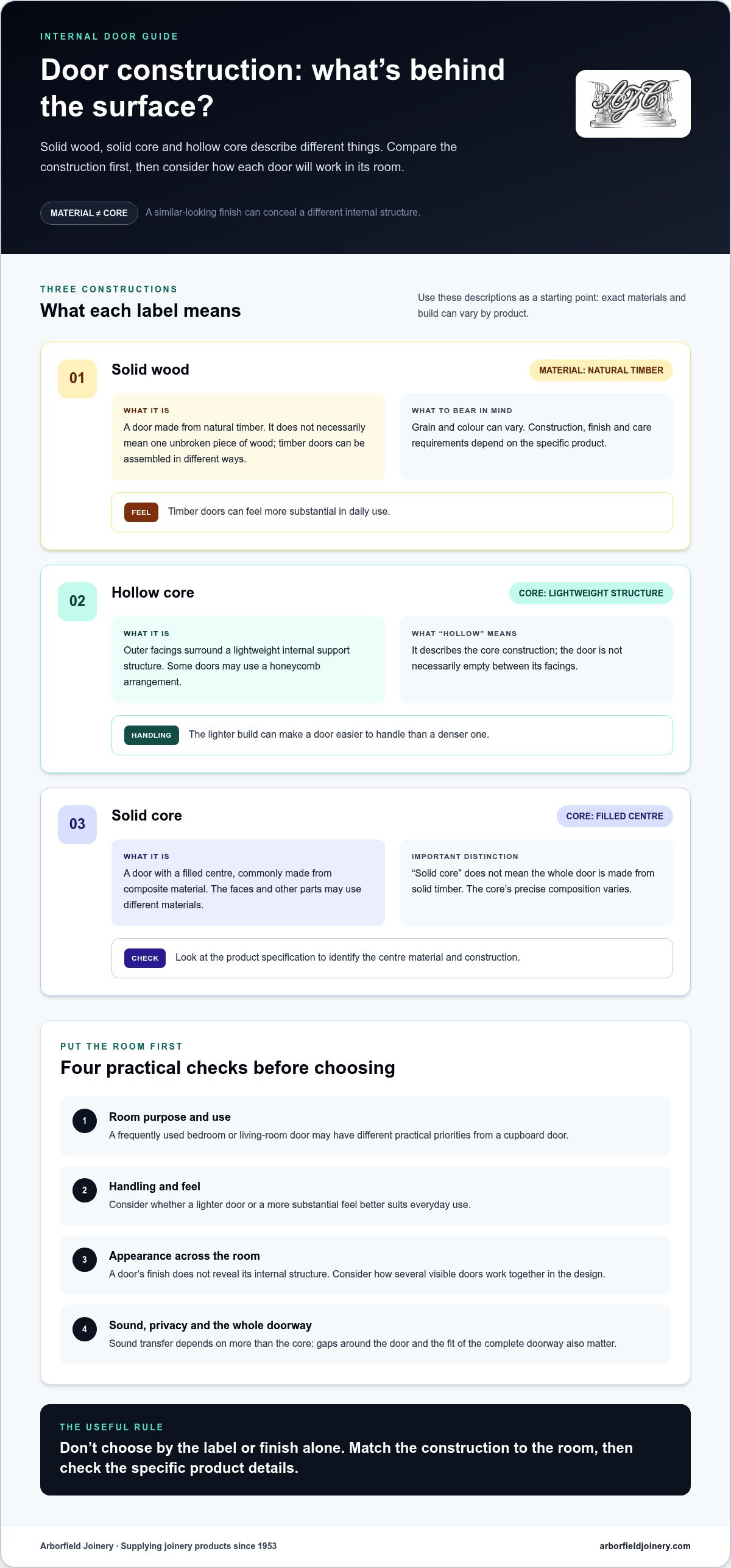
A solid wood door is made from timber, whilst a hollow-core door has outer facings around a lightweight internal structure. Between these terms sits “solid core”, which describes a filled centre but doesn’t mean the door is made entirely from solid timber. Understanding that distinction is essential to comparing the solid wood vs hollow core doors pros and cons fairly.
This guide is about internal doors. External doors face different demands, including exposure to the weather and the need to protect the home, so the same comparison doesn’t automatically apply. For a broad introduction to types of doors and their construction, you can explore the general overview on Wikipedia.
Why door construction matters in everyday use
Construction can affect perceived weight and handling. A lighter door may be easier to move, whilst a denser or timber door can feel more substantial in daily use. The visible finish matters too, but it doesn’t tell you everything about what lies beneath the surface. Two doors with a similar design can have different internal structures and therefore a different feel when opened and closed.
Think about the room as well as the door. A frequently used bedroom or living-room door may have different practical priorities from a cupboard door. Appearance may be especially important where several doors are visible together. Sound reduction also depends on more than the core: gaps around the door and the fit of the complete doorway affect how sound travels. No construction is automatically right for every room.
Keep solid wood, solid core and hollow core distinct
These labels describe different things, so don’t treat them as interchangeable:
- Solid wood: Made from natural timber. The way the timber is assembled can vary by product, so the label alone won’t tell you every detail about the door’s construction, finish or care.
- Hollow core: Built with outer facings and a lightweight internal structure. “Hollow” describes the core construction, not an empty space throughout the entire door.
- Solid core: Has a filled centre, commonly made from a composite material. It isn’t necessarily solid timber, even if the word “solid” suggests otherwise.
This distinction helps avoid a common source of confusion: solid wood describes the material, while solid core describes the centre’s construction. A door’s appearance alone may not reveal which type it is. Look at the product information for the specific door rather than relying only on its finish or the wording used in a casual description.
How Solid Wood, Solid Core and Hollow-Core Doors Are Constructed
A door’s face gives only part of the picture. A painted, veneered or patterned surface can conceal very different structures, so appearance alone isn’t a reliable guide to what a door is made from. Understanding the layers inside gives the solid wood vs hollow core doors pros and cons comparison a clearer starting point.
Solid-core and solid-wood doors are not synonyms: one describes a filled centre, whilst the other describes a door made from timber. A solid core may use engineered or composite materials rather than natural timber throughout. The exact construction varies by model, so use the individual product specification to understand what you’re considering.
What is inside a hollow-core door?
Picture a cross-section: outer facings form the two broad faces, with a lightweight internal structure between them. That support may use a honeycomb arrangement, although materials and designs differ between doors. The space between the facings is not necessarily empty; the internal structure helps support the surface whilst keeping the construction light.
This lighter build can make a door easier to handle than a denser one, but don’t assume every hollow-core model has the same core, facings or other components. For an accurate picture, look up the specific door’s construction details rather than relying on the general label. The same care is useful when comparing two doors with similar painted or decorative finishes.
What makes a solid wood door different from a solid-core door?
A solid wood door is made from natural timber, but that doesn’t mean every model is formed from one unbroken piece of wood. Timber doors can be assembled in different ways, and their construction, finish and care requirements depend on the product. Natural grain and colour can also vary, so a sample or display may help you appreciate the material’s character.
A solid-core door, by contrast, is defined by its filled centre. That core may use engineered wood or other composite material, with the door’s faces and other parts made from different materials. The term alone doesn’t specify the precise composition or construction method. Manufacturers such as Jeld-Wen, which shows different interior door options, illustrate why product details matter when comparing categories.
Use this simple cross-section guide as a starting point, not a substitute for a product specification:
- Hollow core: outer facings, with a lightweight internal support structure between them.
- Solid core: outer faces around a filled centre; the core material depends on the model.
- Solid wood: timber construction, with the way the components are put together varying by product.
Check the specification for the core and facing materials, especially if you’re comparing doors that look alike. To explore timber, glazed, primed and other internal door styles and finishes, Arborfield Joinery’s showroom displays more than 120 doors, making it possible to view designs and finishes in person.
Solid Wood vs Hollow Core Doors: Pros and Cons Compared
The solid wood vs hollow core doors pros and cons depend on what you want each door to do. Natural timber may bring warmth and character; a hollow-core door can offer lighter handling and a practical choice for areas with simpler priorities. Solid core adds a useful middle category, with a filled centre that may feel more substantial without being solid timber throughout.
No door construction guarantees soundproofing on its own; sound transfer also depends on the complete doorway, including its fit and any gaps. For a meaningful comparison, use the manufacturer’s product information rather than assuming that a broad construction label guarantees a particular result.
Where solid wood doors can make sense
Natural timber can appeal if you want visible grain, distinctive colour variation and a door that feels substantial in the hand. It may complement a room where the material itself is part of the design, rather than simply a surface to paint. But timber character is individual, and construction, finish and care needs vary by product. Compare the specification with the look and upkeep you want.
Where hollow-core doors can make sense
A lighter door may be easier to handle in some situations, and its simpler construction can suit a project prioritising functional value. That doesn’t make it the right choice for every room. Consider how it feels in regular use and what you expect from privacy and sound. If neither option quite fits, compare solid-core doors too, then weigh each specific model against your needs.
How to Choose the Right Door Construction for Each Room
A useful choice starts with the room, not the door label. Separate what the door needs to do from how you want it to look, then compare the specific models that meet both priorities. This makes the solid wood vs hollow core doors pros and cons easier to apply to your home, without assuming one construction is right everywhere.
Match the door to use and household priorities
Bedrooms, living spaces and cupboards can call for different balances of feel, appearance and everyday function. Treat these as prompts, not fixed rules: the right choice depends on your household and the particular door’s specification.
- Room use: Consider how often the door will be opened and closed, and what you expect from it in that space.
- Desired feel: Decide whether you prefer a more substantial feel, lighter handling or a consistent feel across several doors.
- Appearance: Note whether you want natural timber character, a painted finish, glazing or a design that complements nearby doors.
- Sound expectations: Be realistic about privacy and noise. Sound transfer depends on the whole doorway, including gaps, the frame and how the door is fitted, not just its core.
- Project priorities: Balance your preferred look and feel against practical requirements and the value you want from the project.
For example, you might prioritise a calm, coordinated appearance in a bedroom, whilst choosing a lighter door for a cupboard where handling and visual simplicity matter more. Neither example dictates a construction. Check the intended use and exact product specification before deciding.
Check appearance, opening and replacement requirements
Once the functional priorities are clear, consider how the door will sit within the interior. Panel design, glazing and finish can change the character of a room, while a consistent finish across adjoining spaces can help the home feel cohesive. If natural timber is central to your choice, explore this guide to choosing internal oak doors for more on its style and character.
For a replacement, establish the existing door’s size, which way it opens and whether its handing suits the room. Check the frame too: a new door needs to be compatible with the opening and frame, and the specification should explain any relevant limitations. The complete guide to internal doors and door frames offers further context for considering them together.
Before choosing, write down your practical requirements separately from your style preferences. Then compare the door details against both lists. Explore internal door designs and finishes in Arborfield Joinery’s showroom, where more than 120 doors can be viewed in person.
Choose an Internal Door That Balances Quality, Style and Use
There’s no universal winner in the solid wood vs hollow core doors pros and cons debate. Your shortlist should reflect the room’s purpose, the feel and appearance you prefer, and the specific construction of each door. Consider solid wood if natural timber character is a priority, solid core if you’re weighing a filled-centre option, or hollow core if lighter handling and functional value matter more. These are starting points, not guarantees of performance: check each door’s specification and finish before deciding.
Turn your priorities into a shortlist
Begin with the qualities you’d notice every day. Is the door in a prominent part of the home, or does practical simplicity matter most? Would a substantial feel suit the room, or would a lighter door be easier for your household to handle? If appearance is the main consideration, compare the finish and design alongside the construction rather than assuming one determines the other.
Then match the shortlist to the room. A bedroom, living space and cupboard may have different priorities, but none automatically dictates a particular core. Consider sound and privacy expectations as part of the complete doorway, and keep in mind that fit and gaps also matter. Compare the product details for the exact door you’re considering, including its construction, finish and intended use.
Explore door styles with experienced joinery guidance
Once you know what matters most, bring your practical and visual preferences together. Oak and walnut doors can suit a preference for natural timber; glazed doors may be worth considering when you want light to pass between spaces; white-primed styles offer a different starting point for a painted interior. These are style options, not a substitute for checking the construction and product details of each door.
Replacing a door also means considering how it will work with the existing frame and opening. For broader guidance on comparing door designs and frames together, read the complete guide to internal doors and door frames. It can help you look beyond the door face to the wider selection decision.
Arborfield Joinery is a family-run business that has supplied joinery products since 1953. Its internal-door range includes oak, walnut, glazed and white-primed styles, with more than 120 doors displayed in the showroom. Seeing designs and finishes in person can help you judge how they relate to your home and narrow your choices.
Ready to compare styles against your room’s needs? Explore Arborfield Joinery’s internal doors and use your shortlist to guide the next step.
Take the Next Step Towards the Right Door
Let your shortlist reflect the way you want each room to look and feel. Before settling on a style, picture it in the space, consider how it will be used each day and check the specification for the particular door. That practical pause can turn the solid wood vs hollow core doors pros and cons into a choice that feels personal, rather than a decision based on a label alone.
If you’re still weighing up finishes or materials, seeing different designs in person can help you decide what feels right for your home. Arborfield Joinery’s selection of internal doors gives you a range of styles and finishes to compare as you refine your choice.
Explore Arborfield Joinery’s internal door range and find a style that feels at home in your space. The right choice is the one that suits your rooms and the way you live in them.
Frequently Asked Questions
Can you paint a hollow-core door?
Yes, you can paint many hollow-core doors, provided the surface is suitable and the manufacturer’s instructions allow it. Clean the door, prepare the facing as directed and use a compatible primer and paint. Take care not to leave paint pooled around the edges or hardware recesses. If the door has a laminate or other specialised facing, check the product guidance first, as it may need a different preparation method.
Do hollow-core doors need special hinges?
Usually, a hollow-core door doesn’t need a special hinge simply because it has a lightweight core. The important thing is to choose hinges suited to the door’s size, weight and intended use, and to position them to match the frame and door preparation. Replacing an existing leaf? Compare the hinge dimensions and locations before buying, since mismatched positions can mean extra work. Always follow the door manufacturer’s fitting instructions.
Can you trim a hollow-core door to fit?
Sometimes, but only within the limits stated for that specific door. Hollow-core doors have outer facings and internal supports, so cutting too much from an edge can expose or weaken the core. Check the manufacturer’s permitted trimming measurements before making any cuts, and measure the opening carefully first. If the required adjustment exceeds the stated allowance, choose a door that fits rather than assuming further trimming will be safe.
Are solid wood doors suitable for bathrooms?
They can be suitable, but the particular door’s construction, finish and care instructions matter. Bathrooms expose doors to changing humidity and occasional splashes, so wipe away moisture and keep the room well ventilated. Avoid letting water sit on the door or collect around its lower edge. Check the manufacturer’s guidance for the chosen timber door, especially if it will be close to a shower or bath.
Do solid wood doors need more maintenance than hollow-core doors?
Not always; the finish and the product’s care instructions are key. A timber door may need attention to preserve its finish, whilst a painted hollow-core door may need occasional cleaning or touch-ups if its surface gets marked. For example, a scuff in a busy hallway may call for different care from a mark on an infrequently used cupboard door. Follow the specified cleaning and refinishing guidance for your door.
Can I replace a door leaf without replacing its frame?
Yes, you can often replace just the door leaf if the existing frame is in good condition and the new door is compatible. Check the opening measurements, door thickness, opening direction, hinge positions and latch alignment before choosing a replacement. A frame that’s damaged, out of square or poorly matched may make fitting difficult. Taking accurate measurements helps you identify compatibility issues before you purchase a new leaf.
Share:
7 Affordable Bespoke Internal Doors for Small Spaces