
Table of Contents
- What Makes a Premium Timber Entrance Door Worth the Investment
- Engineered Timber vs Solid Wood Doors: Which Performs Better
- Thermal Efficiency and Energy Performance in Timber Doors
- Timber Door Security Standards and PAS 24 Certification
- Design Styles and Architectural Aesthetics for Timber Entrance Doors
- Maintenance, Durability and Long-Term Cost Analysis
- How to Select and Order Your Premium Timber Entrance Door
- Conclusion
Last Updated: August 16, 2026
What Makes a Premium Timber Entrance Door Worth the Investment
A premium timber entrance door is an investment in your home's character, security, and thermal performance. Unlike mass-produced alternatives, premium timber entrance doors combine engineered durability with authentic craftsmanship, delivering long-term value that extends far beyond the initial purchase.
Your front door faces the harshest elements: temperature swings, moisture exposure, UV radiation, and daily mechanical stress. Budget doors warp, stick, and fade within years. Premium timber entrance doors, built with proper material selection and construction methods, perform reliably for 30 years or more with basic maintenance.
At Arborfield Joinery, we've worked with homeowners, architects, and builders for over 70 years. The homes that stand out are those where the entrance door reflects genuine investment. This guide covers what separates premium timber entrance doors from standard alternatives, and how to choose one that matches your property's character and performance requirements.
Engineered Timber vs Solid Wood Doors: Which Performs Better
The choice between engineered timber and solid wood doors fundamentally affects how your door responds to moisture, temperature changes, and structural stress over time.
Solid wood doors are built from a single timber species, typically hardwood like oak or softwood like pine. They offer authentic grain patterns and can be refinished repeatedly throughout their lifespan. However, solid timber expands and contracts with humidity changes, causing sticking in winter and gaps in summer. This dimensional instability requires careful installation tolerances and ongoing maintenance.
Engineered timber doors use laminated timber construction: a real timber veneer bonded to a stable engineered core. Cross-grain lamination prevents the warping that affects solid wood. This makes engineered doors more dimensionally stable across seasons and climates. The trade-off is that the veneer cannot be stripped and refinished; once the surface finish degrades, you're limited to repainting rather than sanding back to bare timber.
For most UK properties, engineered timber offers superior long-term performance. The dimensional stability means fewer drafts, better weatherproofing, and less maintenance. Solid wood doors suit heritage properties where authenticity and refinishing capability are priorities, or where you're willing to invest in regular maintenance.
| Aspect | Solid Wood | Engineered Timber |
|---|---|---|
| Dimensional Stability | Moves with humidity | Stable across seasons |
| Refinishing Options | Can sand and refinish multiple times | Paint or stain only |
| Maintenance Frequency | Annual or biennial | Every 3-5 years |
| Cost | Typically higher | Mid-range |
| Best For | Heritage properties, frequent refinishing | Modern stability, low maintenance |
| Moisture Resistance | Requires careful sealing | Factory-sealed core resists moisture |
Thermal Efficiency and Energy Performance in Timber Doors
Your entrance door is a thermal weak point. Even a well-insulated door loses more heat than surrounding walls, making thermal efficiency a practical concern that affects both comfort and running costs.
Thermal performance is measured by U-value, the rate of heat transfer through the door assembly. A lower U-value means better insulation. Modern premium timber entrance doors typically achieve U-values between 1.4 and 1.8 W/m²K, depending on glazing and frame thickness.
Three factors drive thermal performance:
Frame depth and insulation: Thicker frames accommodate more insulation material. A 70mm frame with polyurethane foam core outperforms a 50mm frame with no core. Premium doors typically use 70-90mm frames with factory-injected insulation.
Glazing specification: Double glazing with low-emissivity coatings reduces heat transfer substantially. Triple glazing offers marginal additional benefit in most UK climates unless your door is north-facing or in a very exposed location.
Thermal breaks: Where the frame meets the door leaf, metal hardware creates a thermal bridge. Premium doors use nylon or composite thermal breaks to interrupt this pathway, improving overall door U-value by 0.2-0.3 W/m²K.
A premium timber entrance door with proper thermal specification reduces draughts, eliminates cold spots around the frame, and lowers heating demand. For a typical home, upgrading from a standard door to a thermally efficient premium door reduces heating costs by 2-4%, depending on exposure and existing insulation.
Look for doors tested to EN 14351-1, which provides comparable U-value data across manufacturers.
Timber Door Security Standards and PAS 24 Certification
Security is essential on an entrance door. Your front door is the primary target for forced entry, and the difference between a standard door and one meeting proper security standards is substantial.
PAS 24 certification is the UK's recognised standard for enhanced security in doors and windows. PAS 24 specifies requirements for:
- Multi-point locking systems: Locks at top, middle, and bottom of the frame distribute load across three points, making forced entry significantly harder.
- High-security cylinders: Locks must resist picking and bumping attacks with specific anti-manipulation features.
- Reinforced frame and leaf: The door and frame must withstand sustained force equivalent to a forced entry attempt.
- Glazing standards: Glass must meet impact resistance requirements so it cannot be easily broken to reach internal locks.
A PAS 24-certified timber entrance door costs 15-25% more than standard alternatives, but the security benefit is real. A standard door can be forced in seconds; a PAS 24 door resists forced entry for several minutes, which deters most opportunistic burglary attempts.
Insurance companies recognise this. Many policies offer discounts for PAS 24-certified external doors, often recovering the certification premium within 3-5 years.
When specifying a premium timber entrance door, confirm PAS 24 certification and ask for documentation. Verify that the multi-point locking system includes locks at all three positions.
Design Styles and Architectural Aesthetics for Timber Entrance Doors
Your entrance door communicates your home's character before anyone steps inside. Premium timber entrance doors offer design flexibility that mass-produced alternatives cannot match.
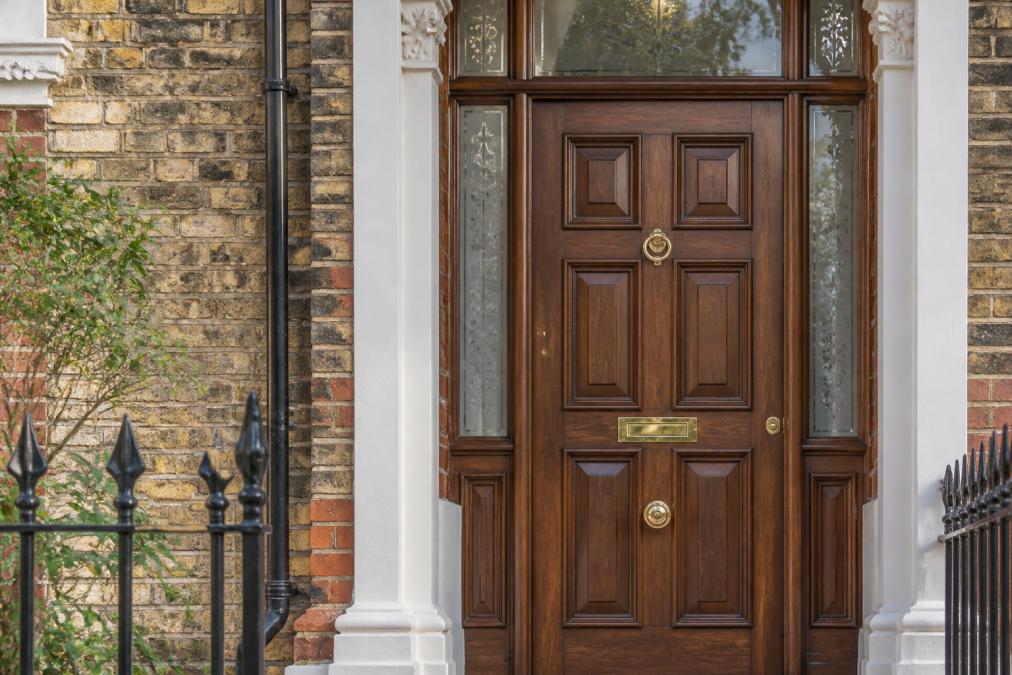
Traditional styles draw on heritage detailing: Georgian panels with six-over-six glazing, Victorian four-panel configurations, or Edwardian cross-braced designs. These suit period properties and complement original architectural features. Arborfield Joinery stocks traditional hardware like the Victorian Door Knocker 200mm Aged Bronze (£29.97) and Georgian Letter Plate 250mm Polished Brass (£42.07), which add authentic detailing without compromising thermal or security performance.


Contemporary styles favour clean lines, minimal glazing, and flush surfaces. These suit modern extensions and new-build properties. Specification flexibility allows for full-height glazing, side panels, or solid timber with integrated hardware. Contemporary doors often benefit from engineered timber construction, which delivers clean aesthetics without the maintenance demands of solid wood.
Bespoke joinery accommodates non-standard openings and custom dimensions. Victorian terraces often have oddly-sized doorways, slightly out of square, or narrower than modern standards. Bespoke manufacture ensures the door sits perfectly in the opening with proper weatherproofing and security performance.
The aesthetic choice affects practical considerations. Glazing adds light but reduces thermal performance and privacy. Panel configurations influence structural rigidity and cost. Timber species affect colour, grain pattern, and maintenance requirements.
Maintenance, Durability and Long-Term Cost Analysis
The true cost of a premium timber entrance door emerges over its lifespan. Initial purchase price matters, but maintenance requirements, longevity, and replacement cycles determine actual cost-per-year.
A budget timber door costs less upfront but typically requires replacement within 8-12 years. Environmental exposure causes paint to fail, joints to weaken, and hardware to corrode. A premium timber entrance door, maintained properly, performs reliably for 25-30 years.
Maintenance schedule for premium timber doors:
- Annual: Visual inspection for paint or stain failure, particularly on exposed faces. Clean hardware and check for corrosion.
- Every 2-3 years: Refresh exterior finish if wear is visible. This prevents water ingress into the timber.
- Every 5 years: Deep clean, check weatherproofing seals, lubricate locks and hinges.
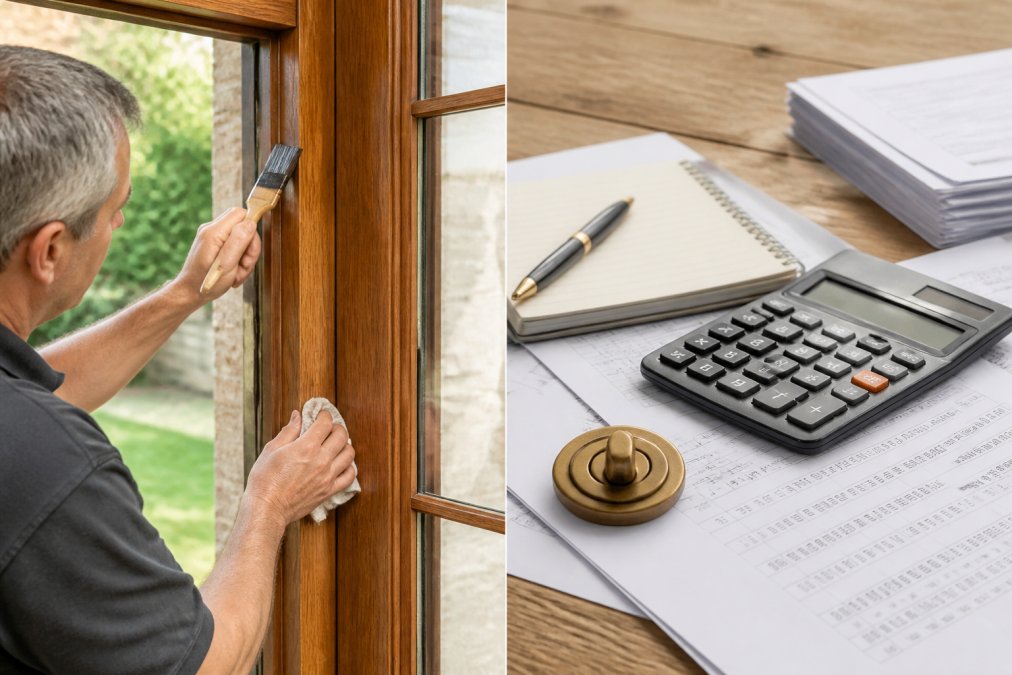
The cost of this maintenance is modest, typically £200-400 annually for materials and labour. Compare this to replacing a budget door every 10 years at £800-1,200 per replacement, plus installation costs of £300-500.
Over 30 years:
- Budget door approach: Three replacements at £1,100 each = £3,300, plus maintenance = approximately £4,500 total
- Premium door approach: One quality door at £1,800-2,500, plus 30 years of maintenance = approximately £3,500-4,200 total
The premium door breaks even within 15 years and costs less over a 30-year period. Beyond cost, a premium door maintains your home's appearance and security performance consistently.
Durability depends on timber species and construction. Hardwoods like oak resist weathering better than softwoods like pine. Engineered timber with factory-applied finishes often outperforms site-finished solid wood because factory conditions ensure proper curing and seal penetration.
How to Select and Order Your Premium Timber Entrance Door
Choosing the right premium timber entrance door involves assessing your property's requirements, specifying performance standards, and ensuring proper installation.
Step 1: Measure your opening accurately
Standard door sizes exist (usually 775mm or 800mm wide, 1,981mm or 2,100mm tall), but many properties have non-standard openings. Measure width at top, middle, and bottom; height at left, centre, and right. Check for out-of-square using a diagonal measurement. If measurements vary by more than 10mm, you'll need a bespoke door or careful shimming during installation.
Step 2: Identify your performance priorities
List what matters most: thermal efficiency (U-value target), security (PAS 24 required?), aesthetic style (traditional, contemporary, bespoke?), maintenance preference (solid wood requiring refinishing vs. engineered timber with paint/stain?).
Step 3: Specify timber species and finish
Decide on timber type (hardwood vs. softwood, solid vs. engineered), colour, and surface finish. Consider your climate; exposed coastal properties benefit from hardwood and marine-grade finishes. Urban properties may prioritise aesthetic match with surrounding architecture.
Step 4: Select glazing and hardware
Specify glazing area (full-height, panels, or solid), glass type (double or triple glazing), and hardware (locks, handles, letter plates, knockers). Arborfield Joinery offers options like the Octagonal Centre Door Knob Polished Brass (£64.27) and Georgian Finger Plate 300mm Polished Brass (£33.19) to complement period properties.

Step 5: Confirm security and thermal certification
Request confirmation of PAS 24 certification if security is a priority. Verify U-value and thermal break specification. Ask for test certificates or technical datasheets.
Step 6: Arrange professional installation
Installation quality directly affects performance. Doors must be installed plumb and square, with proper shimming and sealing. Poor installation compromises thermal efficiency, weatherproofing, and security. Use installers familiar with timber doors and BS 8213 standards.
Step 7: Plan delivery and timescale
Standard doors typically ship within 2-4 weeks. Bespoke doors require longer lead times, usually 6-10 weeks depending on complexity.
Arborfield Joinery, as the largest independent stockist in the south with full bespoke manufacturing, can accommodate both standard and custom orders. Our team provides expert advice on specification, handles non-standard openings, and ensures fast availability for most requirements.
Choosing a premium timber entrance door is an investment in your home's durability, security, and character. The difference between a standard door and a premium alternative becomes apparent within the first year: better weatherproofing, tighter security, and authentic aesthetics that enhance your property's value. The long-term cost analysis favours premium doors decisively: lower maintenance burden, longer lifespan, and consistent performance over 25-30 years.
When you're ready to specify your premium timber entrance door, Arborfield Joinery combines heritage craftsmanship with modern performance standards. We stock a vast range of premium doors from leading brands and manufacture bespoke solutions for non-standard openings. Our expert team provides free advice on specification, handles measurement and installation coordination, and offers free UK mainland shipping on orders over £900. Shop now and transform your entrance with a door that performs as beautifully as it looks.
Frequently Asked Questions
What is the best wood for a premium timber entrance door?
Hardwoods like oak, walnut, and mahogany offer superior durability and dimensional stability for entrance doors. Softwoods such as pine are more affordable but require more frequent maintenance. Engineered timber combines a hardwood veneer with a stable core, providing the aesthetics of solid wood with better resistance to warping. Your choice depends on climate exposure, maintenance commitment, and budget. For high-traffic entrances, hardwood or engineered options with proper draught sealing outperform softwood alternatives.
Are premium timber entrance doors better than composite alternatives?
Timber doors offer superior aesthetics, bespoke customisation, and the character of natural wood that composite doors cannot replicate. However, composites require less maintenance and resist weathering more consistently. Premium timber doors excel if you value kerb appeal, architectural authenticity, and the ability to refinish or repair them over decades. Composites suit busy households prioritising durability over appearance. A solid timber or engineered timber door with proper factory-finished protection and draught sealing performs comparably to composites in energy efficiency and longevity.
What security standards should a premium timber entrance door meet?
Premium timber entrance doors should meet PAS 24 certification, the standard for enhanced security in doors and windows. This covers multi-point locking systems, high-security cylinders, and structural integrity testing. Look for doors tested to PAS 24 to ensure they resist forced entry and meet insurer requirements. Additional features include mortise and tenon joinery for structural strength and quality ironmongery. Bespoke timber doors can be manufactured to PAS 24 standards, providing both security and customisation for non-standard openings.
How do I maintain a premium timber entrance door to ensure longevity?
Establish a maintenance schedule: inspect draught seals and weatherproofing annually, reapply protective finish (stain or paint) every 3-5 years depending on exposure, and check multi-point locking mechanisms twice yearly. Keep the door clean and dry, address moisture immediately to prevent warping, and ensure proper threshold design to shed water. Factory-finished doors arrive pre-treated but still need regular care. Hardwood and engineered timber doors with sustained maintenance last 30+ years. Softwood doors require more frequent refinishing. Climate-specific timber selection (e.g., moisture content matched to your region) reduces maintenance demands significantly.
Can bespoke timber doors fit non-standard openings without gaps or draughts?
Yes. Bespoke joinery manufacturers measure to precise tolerances and manufacture custom doors for odd-sized Victorian terraces, listed properties, and modern extensions. Proper installation standards and quality draught sealing prevent gaps. Engineered timber offers dimensional stability superior to solid timber in variable climates, reducing the risk of warping that creates draughts. Experienced joiners account for threshold design, glazing beads, and seasonal timber movement when crafting bespoke doors. Bespoke doors cost more upfront but eliminate the compromise of forcing a standard door into a non-standard space.
This article was written using GrandRanker
Share:
The Complete Guide to the Four Panel Door: Timeless British Style and Quality
The Homeowner's Guide to Unfinished Oak Doors: Customise Your Interior in 2026