
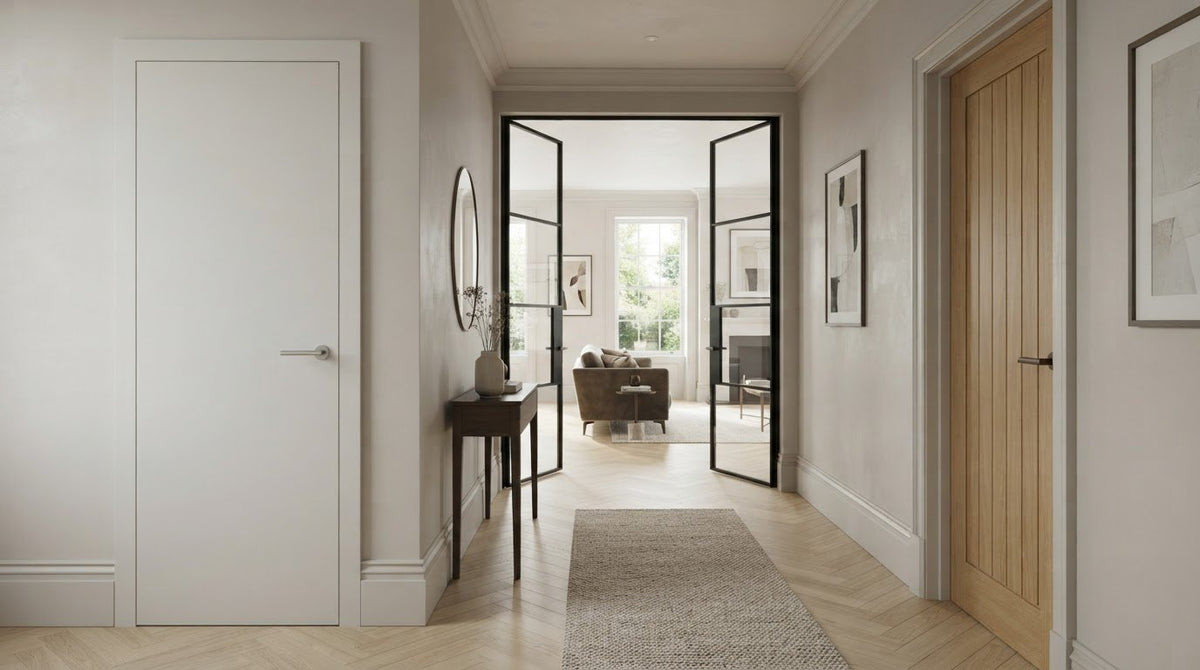
The most modern internal door isn’t always the plainest one. If you’re asking what style of internal door suits a modern home, look beyond minimalism: proportion, material and the way light moves between rooms all affect the result. You might be choosing between a sleek flush design, a panelled door with more character or glazing that opens up a space. The best fit feels current without relying on a passing trend.
A well-chosen door complements your home’s architecture and works for the room it serves. A bedroom may call for more privacy, while a glazed door can help share daylight between adjoining spaces. Bi-fold and pocket doors can be useful where a hinged door’s swing would get in the way. The finish, from oak or walnut to white primed or laminate, also shapes the overall scheme. This guide compares styles, finishes and practical considerations to help you shortlist doors that feel at home in your interior.
Key Takeaways
- Modern style can feel warm and characterful. Consider a door’s proportions, details and relationship to the wider home, not just whether it looks minimalist.
- To decide what style of internal door suits a modern home, compare the visual effect of flush, panelled, glazed and urban designs.
- Look at natural wood, painted and laminate finishes alongside nearby flooring, walls and woodwork.
- Shortlist doors by each room’s privacy, light and space needs, then compare your favourites in context.
What makes an internal door suit a modern home?
A modern interior doesn’t have to feel stark or stripped back. Natural wood grain, gentle texture, glazing and considered panel details can all work with clean lines. The key is balance: a door should feel at home in the room, rather than looking like a separate choice made purely because a style is fashionable.
Proportion matters as much as decoration. A simple profile can create a calm, uncluttered impression, while a more structured design can echo architectural details already present. Compare the door’s colour and finish with your flooring, walls and furnishings. Oak or walnut can bring visible grain and warmth; a white primed finish can keep the overall effect light or provide a starting point for a chosen colour.
Modern door style is a considered balance of proportion, material and detail, shaped to complement the architecture around it. If you’re weighing up what style of internal door suits a modern home, start with that relationship rather than assuming every room needs the same design. For an introduction to different types of doors and their terminology, see Wikipedia’s overview.
Does a modern interior have to look minimalist?
Not at all. Simple lines can sit alongside natural grain, textured surfaces, glazed sections or subtle panel detail. A pared-back design doesn’t have to feel cold: warm wood, a considered colour palette and tactile finishes can soften clean lines without making the scheme feel busy. Aim for restraint, not the removal of every feature that gives a room personality.
How do internal doors shape the feeling of a room?
A door profile influences the mood as well as the appearance. Flat, uncomplicated lines can help a space feel calm; more defined panels may lend a room a formal, established quality; glazing can make adjoining areas feel visually open. The effect depends on what surrounds the door, so consider it alongside skirting, architraves and flooring, not against a blank sample alone.
Consistency helps rooms feel connected, but it doesn’t require identical doors throughout the home. You could carry a shared colour or material between adjoining spaces, then choose glazing where borrowed light is welcome and a more private-looking style elsewhere. This creates a coherent scheme while allowing each room to suit its own purpose.
Which modern internal door style suits your home: flush, panelled, glazed or urban?
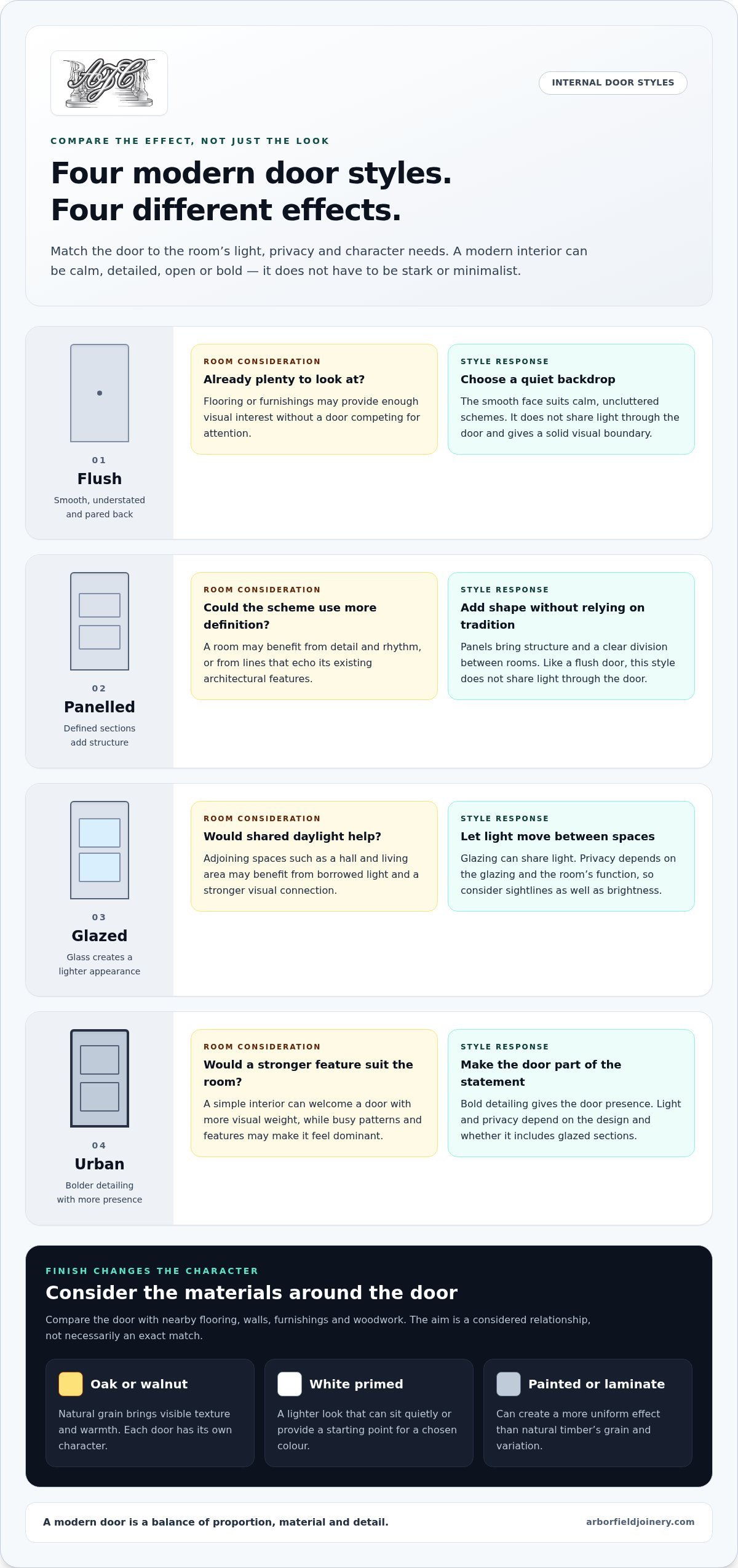
Each style creates a different balance of simplicity, definition and openness. A flush door has a smooth, pared-back face that suits a restrained scheme. Panelled designs introduce shape and rhythm, while glazed doors can connect spaces through shared light. Urban-style doors have a more pronounced look, making the door a feature rather than a quiet backdrop.
To decide what style of internal door suits a modern home, consider how much visual presence you want and what each room needs. Use this comparison as a starting point:
| Style | Appearance | Light | Privacy | Interior character |
|---|---|---|---|---|
| Flush | Smooth and understated | Doesn’t share light through the door | Suited to rooms where a solid visual boundary is preferred | Calm, uncluttered schemes |
| Panelled | Defined sections add structure | Doesn’t share light through the door | Offers a clear visual division between rooms | Interiors that benefit from detail and rhythm |
| Glazed | Glass brings a lighter, more open appearance | Can share light between adjoining spaces | Depends on the glazing and room function | Spaces where connection and daylight matter |
| Urban | Bolder detailing gives the door more presence | Depends on whether the design includes glazing | Depends on the design and any glazed sections | Interiors that welcome a strong visual feature |
When does a flush or panelled door feel most at home?
Choose flush for a quiet, continuous look, particularly where nearby finishes already provide plenty of interest. Its simple profile can help a room feel composed without competing with flooring or furnishings. Panel layouts offer a different kind of restraint: their lines add definition without requiring a traditional interior. Repeated vertical or horizontal divisions can bring order to a scheme, especially when they echo other architectural details.
Can glazed or urban doors work in a modern home?
Glazing can share light between suitable adjoining spaces, such as a hall and living area. Consider sightlines and privacy as well as brightness: the glazing and the room beyond it affect how connected the spaces feel. Urban-style doors suit homes where a stronger contrast is welcome. Their visual weight can anchor a simple room, but may feel dominant alongside busy patterns or features.
Compare door designs with your room’s finishes before settling on a style. Arborfield Joinery’s showroom displays more than 120 doors, giving you the opportunity to view different designs in person. You can also browse internal door styles online.
How do material, colour and finish change a modern door style?
Material and finish can change a door’s character, even when its shape stays the same. Natural timber brings visible grain and variation, while painted or laminate finishes can create a more uniform effect. Think about how the door will sit alongside your flooring, wall colour, furniture and nearby woodwork. You don’t have to match everything; look for tones and textures that feel intentional together.
Should you choose natural timber or a painted finish?
Oak and walnut have distinct natural-wood appearances, so they’re not interchangeable choices. Their grain and colour bring texture to a room, with each door showing its own character. White primed doors offer a lighter, painted look that can sit quietly within a pale scheme or provide a flexible starting point for a chosen colour. For more detail on oak’s appearance and character, read our internal oak doors guide.
Laminate offers another finished look and can contribute a consistent appearance across a scheme. Consider it alongside the door’s shape: a simple profile and even finish may feel particularly composed, while a more detailed design can add definition. Focus on the appearance you want and how it works with the rest of the room.
How can colour and finish keep a scheme cohesive?
Before choosing a colour, view it against the flooring, wall tones and nearby wood finishes. A door that looks subtle on its own may feel more prominent beside contrasting skirting or architraves. For continuity, carry a related colour across doors and trim to help adjoining spaces feel connected. For more definition, contrast the door with its surroundings, while checking that the contrast complements the room’s existing details.
There’s no single answer to what style of internal door suits a modern home: a coordinated palette can create a quieter flow, while deliberate contrast gives a doorway more presence. Compare colours and finishes in the light and setting where they’ll be seen, rather than relying on memory alone. For a closer look at surface options, explore our laminate internal doors buying guide.
How do you choose a modern internal door for each room?
Start with how the space needs to work, then consider its appearance. Follow this sequence:
- Identify the room’s needs. Decide how much separation and privacy matter in everyday use.
- Assess the light. Consider whether the room would benefit from a visual connection to a brighter adjoining space.
- Check the available space. Look at where a hinged door would swing and whether it might interrupt movement or furniture placement.
- Choose the style and format. Once you’ve set the practical priorities, select a design that sits comfortably with the rest of your interior.
Let each room’s purpose guide the door style, then use finish and detailing to keep the whole home visually connected. Privacy and borrowed light are separate considerations: a glazed door may share light, but the amount of visual connection depends on the glazing and what lies beyond it.
Which door details matter in bedrooms, living spaces and studies?
In a bedroom, consider whether a more private, defined boundary best suits the room. Between shared spaces, glazing may be welcome if you want light to pass between them while keeping a clear division. A study often calls for a balance: glazing can preserve some visual connection with the rest of the home, while a more enclosed style can create a stronger sense of separation. Think about how you use the room, not just how it looks with the door open.
When are bi-fold or pocket doors worth considering?
A hinged door needs room to swing, which can affect furniture placement or movement through a compact area. A bi-fold format is worth considering where that swing would be inconvenient. A pocket door slides into the wall, keeping the doorway clear when open, if the wall layout allows for it. Consider how each format affects the opening and the way people move between spaces.
For more background on door formats and frames, read our internal doors and frames guide. Then explore internal door options with your room’s function, light and available space in mind.
How can you confidently shortlist modern internal doors?
Once you’ve considered style, material and room use, turn your preferences into a practical shortlist. Comparing the same details for each option makes it easier to see which doors suit the room and the wider scheme, rather than choosing one that looks appealing on its own.
What should be on your internal-door shortlist?
For each room, note the details that matter most. This checklist can help keep decisions clear:
- Profile: Do you prefer a flush face, visible panel detail, glazing or a more distinctive urban look?
- Material and colour: Compare natural timber, a painted finish or laminate with your flooring and wall tones.
- Room function: Record whether privacy, borrowed light or an open visual connection is the priority.
- Door and frame: Look at their proportions together, as the frame and surrounding trim contribute to the finished appearance.
- Nearby details: Compare your choices with skirting, architraves, furnishings and other finishes you plan to keep.
Keep photographs of the rooms you’re updating and compare them with door images in similar light. If you have colour or flooring samples, view them together rather than relying on memory. Seeing doors in person can also help you compare their appearance. Arborfield Joinery is a family-run joinery supplier established in 1953, with a showroom displaying more than 120 doors.
Where can you explore styles for a modern home?
Compare a few distinct categories before settling on a whole-home direction. Oak and walnut have different natural-wood appearances; white primed and laminate doors offer alternative finished looks. Urban and glazed styles can create a more pronounced design statement or visual openness. You don’t have to choose one style for every room, but a shared colour, material or profile can help the scheme feel considered.
If you’re still weighing up what style of internal door suits a modern home, revisit your shortlist against the rooms themselves. Which options meet each room’s needs and sit comfortably beside the details you’re keeping? Comparing styles in context can make the answer clearer. Take a look at Arborfield Joinery’s door range to explore styles and finishes.
Choose a door style that feels at home
The right modern internal door isn’t defined by minimalism alone. Clean lines can sit beautifully alongside natural grain, subtle panel detail or glazing. The best choice balances your home’s character with each room’s need for privacy, light and space.
As you shortlist, compare the door’s profile, material and finish with nearby flooring, walls and woodwork. A cohesive scheme doesn’t mean every room must have the same door. Shared details can tie spaces together while allowing each one to work in its own way.
Comparing options in person can bring the details into focus. Arborfield Joinery is a family-run joinery business supplying doors, windows and stairs since 1953, with a showroom displaying more than 120 doors.
Explore Arborfield Joinery’s internal door range and compare styles and finishes for your home.
Frequently Asked Questions
What style of internal door is most popular in modern homes?
There isn’t one style that suits every modern home. The answer to what style of internal door suits a modern home depends on the interior and how each room is used. Flush doors offer clean, simple lines; restrained panel details add definition; glazed designs can share light; and bolder urban looks make a stronger visual statement. Compare options in context rather than assuming one look suits every home.
Are flush doors a good choice for a modern home?
Yes, flush doors can suit modern interiors particularly well if you want a simple, uncluttered appearance. Their pared-back profile can complement clean lines without drawing attention away from other features. A plain door needn’t feel cold: balance it with warm materials, considered colour or inviting furnishings. Before choosing, look at how its finish relates to the walls, flooring and nearby details such as skirting and architraves.
Can glazed internal doors suit a modern home?
Yes, glazed internal doors can suit modern homes and help share light between adjoining spaces where that connection is welcome. They can also add visual interest, with the glazing forming part of the door’s overall design. Consider the room’s purpose and the level of privacy you want. A door between shared living areas may call for a different balance of openness and separation from one leading to a more private room.
Should modern internal doors match throughout the house?
No, every door needn’t be identical. Repeating a related finish, colour or design detail can connect rooms and give the home a coherent feel. You can still vary the glazing or format to suit different spaces, such as choosing a more private style in one room and a glazed option where sharing light is useful. Aim for a consistent design language rather than a uniform set of doors.
Are oak internal doors suitable for a modern interior?
Yes, oak’s natural grain can bring warmth and texture to a clean-lined interior. The overall effect depends on the door’s profile and finish, as well as the colours and materials around it. Oak doors can have varied appearances, so consider the individual design rather than assuming they will all look alike. For more detail on oak’s character and style, explore our internal oak doors guide.
Are pocket doors a good option for contemporary homes?
Pocket doors can be a space-conscious option because they slide into the wall rather than swinging into the room. That can help where a hinged door would interrupt movement or furniture placement. Their suitability depends on the wall layout and how you intend to use the doorway. Consider how the room needs to connect with adjoining spaces, alongside privacy and everyday movement, before choosing between a pocket and conventional hinged door.
How do I choose the right internal door colour?
Compare the door colour with your flooring, walls, skirting, architraves and nearby furniture as one scheme. A related tone can create a quiet, cohesive flow, while a deliberate contrast gives the doorway more definition. View the colour or finish in the room’s own light and alongside the materials it will sit with. This gives you a clearer sense of its effect than judging it on its own.
Share:
Oak Door Architrave: A Buyer’s Guide to Profiles and Finishes
Timber vs Aluminium Windows 2026: A Complete Comparison Guide