
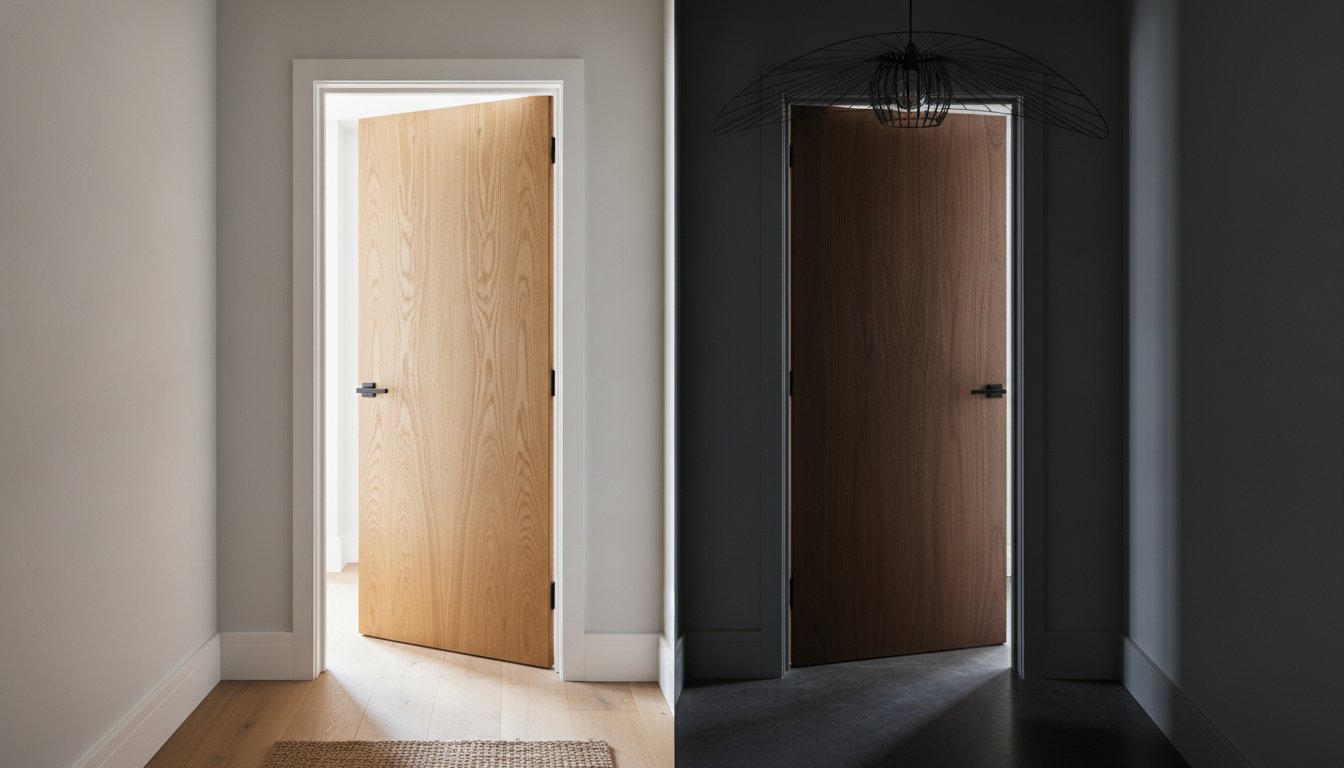
Could the deep, chocolate tones of walnut actually make your small hallway feel more like a boutique hotel than a cramped corridor? When homeowners weigh up walnut vs oak doors, the decision often feels like a high-stakes choice between timeless tradition and modern luxury. You might worry that a darker wood will date quickly or overwhelm a modest room, whilst others fear that the lighter oak might lack that special character you're looking for.
It's completely natural to feel hesitant when investing in your home's interior, especially when you're balancing aesthetic dreams with a practical budget. We understand that you want a finish that stands the test of time, both in terms of durability and style. In this definitive guide, we'll help you find the perfect match for your British home by comparing the visual impact, long-term resilience, and relative costs of each species. We'll even explore how modern laminate technology offers a clever, cost-effective way to achieve that premium walnut look without the high-end investment. From grain patterns to light reflection, you'll gain the confidence to choose a door that truly organises your space with elegance.
Key Takeaways
- Understand the visual impact of each species, from the honey-toned warmth of traditional oak to the sophisticated, deep coffee hues of walnut.
- Compare the structural resilience of both hardwoods to ensure your chosen door can withstand the daily rigours of a busy British household.
- Evaluate the cost and style implications of walnut vs oak doors to determine which material best aligns with your home’s architectural character.
- Discover how high-performance laminate finishes offer a durable and budget-friendly alternative for those seeking the premium walnut aesthetic.
- Identify which wood type complements your specific interior theme, whether you are aiming for a rustic farmhouse look or a sleek, contemporary apartment.
Choosing Between Walnut vs Oak Doors: A Homeowner’s Dilemma
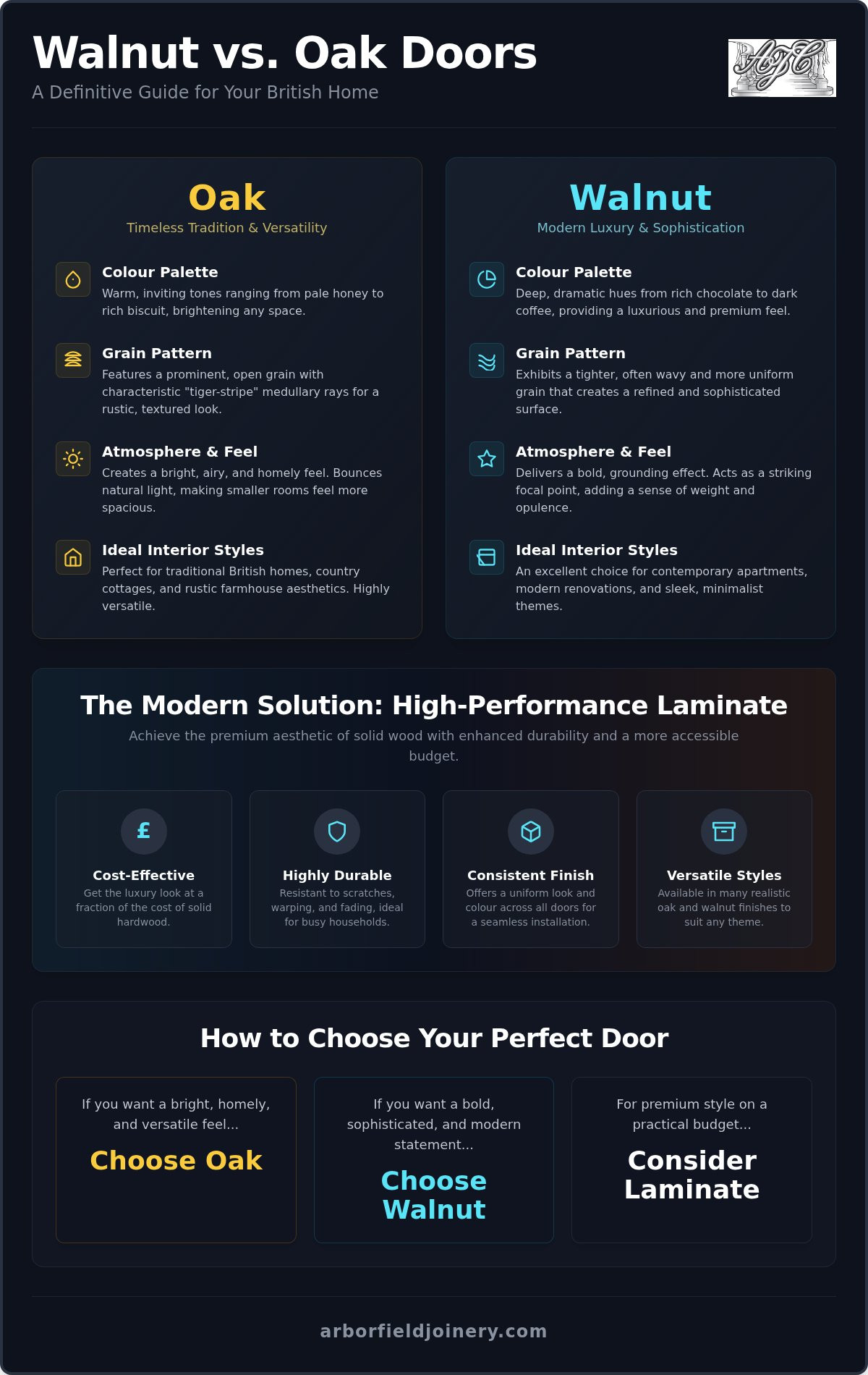
Selecting internal doors is rarely just a functional task. It's an architectural decision that defines the atmosphere of your entire living space. When debating walnut vs oak doors, you're choosing between two distinct personalities. Oak offers a golden, inviting warmth that feels deeply rooted in British heritage. Walnut, by contrast, provides a darker, more dramatic aesthetic that leans towards modern luxury and bespoke design. Both materials share essential hardwood characteristics like density and resilience, but their visual impact on a room couldn't be more different.
Whilst the decision between walnut vs oak doors often feels like a choice between trend and tradition, both have earned their place as timeless staples. Some homeowners worry that dark wood might eventually feel dated, yet walnut has been a hallmark of sophisticated interiors for centuries. The real dilemma isn't about what's "in fashion", but about how a material interacts with your home's unique light levels and your personal lifestyle. Before committing, it's vital to look at your space through a consultative lens, considering how your doors will frame your rooms for years to come.
The Enduring Popularity of Oak in British Homes
Oak has been the favourite amongst UK homeowners for generations, and for good reason. It possesses a natural "homeliness" that instantly makes a space feel established and secure. Because it's a lighter wood, it bounces natural light around a corridor, making it ideal for the often-grey British climate. Whether you live in a draughty Victorian terrace or a cosy country cottage, oak doors provide a neutral yet textured backdrop that complements almost any colour palette. It's a reliable choice that offers:
- Versatility: It pairs as easily with rustic ironmongery as it does with sleek chrome.
- Brightness: The honey-to-biscuit tones help small rooms feel more spacious.
- Heritage: It aligns perfectly with traditional British architectural styles.
The Rise of Walnut: Contemporary Sophistication
In recent years, walnut has seen a surge in popularity as the "interior designer's choice". It's frequently specified for high-end luxury apartments and modern renovations where the door needs to be more than just a partition. Its deep coffee tones and tighter grain create a striking focal point in any room. If you're looking to add a sense of weight and opulence to your interior, walnut is the perfect material. It pairs beautifully with cool greys, crisp whites, and metallic accents, making it a staple for those curating a sophisticated, modern aesthetic that feels truly bespoke.
Before you decide, consider your daily routine. A busy household with pets might appreciate the forgiving grain of oak, whilst a sleek, minimalist flat might be the perfect stage for the bold elegance of walnut. Both choices represent a commitment to quality that will enhance your home's value and your daily enjoyment of the space.
Aesthetic Appeal: Comparing Grain Patterns and Colour Tones
When you examine the raw beauty of timber, the differences between walnut vs oak doors become immediately apparent through their distinct grain architectures. Oak is celebrated for its open, prominent grain and characteristic "tiger-stripe" medullary rays that add a rustic, textured depth to the wood. Its colour palette typically ranges from pale honey to warm biscuit tones. Walnut, however, offers a more refined and uniform appearance. Its grain is tighter and often wavy, presenting a sophisticated chocolate-to-coffee hue that feels inherently luxurious. Because timber is a natural product, you should expect slight variations in tone across a full house installation; these subtle differences are the hallmark of genuine quality rather than a defect.
Whilst walnut doors possess a commanding visual weight that anchors a room, oak doors provide a breezy, airy feel that lifts the surrounding space. If you're unsure which grain suits your hallway, visiting our showroom with over 120 door designs allows you to see these patterns under different lighting conditions before you commit.
Lighting and Room Orientation
The specific orientation of your rooms plays a massive role in how these woods appear. North-facing rooms in the UK often receive a cool, blue-tinted natural light, which can make the dark tones of walnut feel quite heavy or even cold if not balanced correctly. In these darker spaces, oak is often the superior choice to "lift" the environment. Conversely, south-facing rooms with warm, yellow light can make oak appear very golden. You must also consider your artificial lighting. Cool-white LED bulbs can make walnut look clinical, whilst warm-toned bulbs enhance the rich, reddish-brown undertones of the wood, creating a much more inviting atmosphere.
Co-ordinating with Flooring and Furniture
Matching your doors to your existing interior elements requires a careful eye for contrast. If you already have oak flooring, don't feel pressured to install matching oak doors; sometimes, a "near-miss" match can look accidental. Instead, many designers use walnut doors to create a "hotel-luxe" feel in bedrooms and dining areas, providing a sharp, intentional contrast against lighter floors. Oak remains the more versatile option for furniture pairing, as its neutral tones sit comfortably alongside both antique pieces and modern, colourful upholstery. Walnut tends to demand a more curated approach, acting as a statement piece that organises the room's aesthetic around its dark, sophisticated presence.
Durability and Maintenance: Which Wood Withstands Daily Life?
When comparing walnut vs oak doors for long-term durability, the Janka hardness scale provides an objective starting point. Oak generally sits higher on this scale, making it slightly more resilient to the accidental knocks and scrapes of a busy household. Walnut remains a robust hardwood, but its surface is marginally softer. This means it might show indentations from sharp objects or heavy impacts more readily than its oak counterpart. For high-traffic areas like kitchens or playrooms, oak's natural toughness often makes it the more forgiving choice.
You must also consider how sunlight interacts with your timber over the years. This is known as the "UV Factor". Whilst most materials fade, walnut is unique because it tends to lighten or "mellow" when exposed to direct sunlight, shifting from a deep chocolate to a more golden brown. Oak behaves differently, typically "ambering" or deepening in colour to a richer, warmer gold. In centrally heated UK homes, the construction of the door is just as vital as the wood species. Most premium doors now utilise an engineered core with a real wood veneer. This design is actually superior to solid wood for internal use, as it resists the warping and bowing caused by fluctuating temperatures and humidity.
Maintenance Realities for Busy Households
To keep your doors looking their best, a regular maintenance schedule is essential. Natural wood requires occasional oiling or waxing to prevent the grain from drying out and to maintain that deep lustre. For deep maintenance tips and a closer look at wood preservation, see The Ultimate Guide to Internal Oak Doors. Cleaning should be done with a barely damp, lint-free cloth. Don't use harsh chemicals, especially on walnut, as they can strip the natural oils and dull the sophisticated finish.
Common Mistakes to Avoid
One frequent error is underestimating the weight of quality doors. Whether you choose walnut or oak, solid-core doors are heavy and require sturdy frames and high-quality hinges to prevent sagging. Another mistake is mixing grains in the same line of sight. If your eye can see two different wood types at once, the "clashing grains" can feel visually cluttered. Finally, don't be tempted by ultra-thin veneers. Cheap versions are prone to delamination, where the wood layer peels away from the core, particularly in humid areas like bathrooms or laundry rooms. Investing in a thicker, high-quality veneer ensures your doors remain a permanent feature of your home.
The Modern Solution: High-Performance Laminate Doors in Oak and Walnut Finishes
Whilst natural timber remains a prestigious choice, the 2026 interior market has seen a significant shift toward high-performance laminate. Laminate doors have emerged as the definitive solution for homeowners who demand the beauty of timber without its inherent maintenance challenges. Modern technology now allows for synchronous embossing, a process that perfectly replicates the tactile texture and deep colour of real wood. Deciding between walnut vs oak doors often involves a compromise on price, but laminate changes that dynamic by offering a premium look on a much more realistic budget.
The durability benefits of this material are substantial for a busy British home. These surfaces are engineered to be scratch-resistant and moisture-resilient, making them far superior to traditional veneers in high-traffic areas like kitchens and hallways. Unlike natural wood, these doors don't fade or amber when exposed to direct sunlight. For a full-home renovation, choosing high-quality laminate is a cost-effective way to achieve a high-end aesthetic without the high-end price tag.
Why Laminate is Overtaking Veneer
The primary advantage of laminate is consistency. When you're comparing walnut vs oak doors in their natural form, grain patterns vary wildly from one tree to the next. With laminate, every door in your order will look identical, creating a clean and organised aesthetic throughout your landing. Modern families also appreciate that these doors require no oiling or sanding ever. They are incredibly low maintenance and stand up to the rigours of pets and children. From a sustainability perspective, using advanced composites reduces the demand for slow-growing hardwoods, making it a responsible choice for the eco-conscious renovator.
Standout Products from the Arborfield Collection
Our Walnut Finish Laminate Door is a particular favourite amongst designers, offering that coveted hotel-luxe appearance for a fraction of the cost of real veneer. For those seeking a traditional or Scandi-inspired vibe, our Oak Style Laminate range provides a bright, airy feel with total grain uniformity. The Laminate Doors collection at Arborfield includes over 60 designs, ensuring there's a texture and tone to suit every interior theme. Because we offer free UK mainland shipping on orders over £900, it's never been easier to upgrade your entire home with a consistent, durable finish.
If you're ready to see the quality of these modern finishes for yourself, we encourage you to view our full internal door range online or visit our showroom.
Final Verdict: How to Select the Perfect Door for Your Interior Theme
Deciding between walnut vs oak doors isn't just about following the latest interior trends; it's about selecting a material that enhances your home's unique character for years to come. At Arborfield Joinery, we've been helping UK homeowners make these vital decisions since 1953. Our long heritage has taught us that whilst oak is the undisputed champion for creating bright, traditional, and welcoming spaces, walnut remains the premier choice for those seeking a modern, high-contrast statement. If you're looking for a "middle way", high-performance laminate is a fantastic alternative. It allows you to achieve the rich, sophisticated appearance of walnut with the exceptional durability and lower maintenance typically associated with oak.
Your choice ultimately depends on the specific requirements of your project. If you're working on a budget-conscious renovation for a cottage or a period property, oak's versatility is unmatched. However, if you're curating a luxury apartment or a contemporary extension, the dramatic aesthetic of walnut will provide that bespoke, high-end finish. Before you commit, we always recommend viewing these materials in person to appreciate how the grain interacts with light.
The Arborfield Selection Framework
To help you navigate this choice, we recommend a simple three-step approach rooted in decades of joinery expertise:
- Step 1: Assess your natural light levels. If your hallway is small or lacks windows, oak's lighter tones will help open the space and keep it feeling airy. If you have large, south-facing rooms with plenty of light, walnut can add a stunning sense of depth without making the room feel enclosed.
- Step 2: Define your traffic level. In a busy household with pets and children, our laminate collection is often the smarter investment due to its superior scratch and moisture resistance. For low-traffic areas like a home office or master suite, the natural texture of a real wood veneer adds a tactile luxury that's hard to beat.
- Step 3: Budget for the full project. Remember to account for more than just the door leaf. Ensure your project budget includes matching architraves, quality hinges, and handles that complement your chosen wood type to create a cohesive look.
Next Steps for Your Renovation
Seeing timber in person is the only way to truly appreciate its texture and weight. We invite you to visit our Berkshire showroom, where you can explore over 120 door designs and feel the difference between various grain types for yourself. It's the best way to gain total confidence in your selection before you buy. If you can't make it to us, our national shipping service ensures your doors arrive safely at your site, with free UK mainland delivery on all orders over £900. Ready to transform your interior? Browse our full range of Oak and Walnut Laminate Doors to find the perfect match for your home today.
Transform Your Interior with Confidence
Choosing between walnut vs oak doors is a significant step in defining your home's unique personality. Whether you favour the inviting, honey-toned warmth of traditional oak or the sophisticated, architectural weight of dark walnut, your decision will shape your living environment for decades. We've explored how modern laminate technology has revolutionised this choice, providing a robust and consistent alternative for busy households that don't want to compromise on style.
As a family-run business since 1953, Arborfield Joinery is here to ensure you find a solution that balances aesthetic ambition with practical longevity. With over 60 laminate designs available and free UK mainland shipping on orders over £900, upgrading your space has never been more attainable. Take the next step in your renovation journey and explore our full collection of durable Laminate Doors in Oak and Walnut finishes. We look forward to helping you curate a space you'll be proud to call home.
Frequently Asked Questions
Is walnut more expensive than oak for internal doors?
Walnut is typically positioned as a premium material and generally commands a higher price point than oak. This is due to the slower growth rate of walnut trees and its relative scarcity compared to the more abundant oak. Whilst the initial investment for walnut is greater, many homeowners find the sophisticated, high-end aesthetic justifies the cost. If you're comparing walnut vs oak doors on a budget, oak offers exceptional value without sacrificing quality.
Which wood is more durable for a family home with pets?
Oak is naturally more durable than walnut because it's a harder wood that resists scratches and dents more effectively. However, for households with large pets or active children, we often recommend our high-performance laminate doors. These provide a timber-like appearance with significantly higher scratch resistance than any natural veneer. They don't require the same level of maintenance to keep them looking pristine in high-traffic areas of a busy British home.
Can I mix oak and walnut doors in the same house?
You can certainly mix different wood species, provided you do so with a clear design strategy. A popular approach is to use walnut for statement rooms, such as a master suite or dining room, whilst using oak for communal hallways and secondary bedrooms. The key is to avoid clashing grains within the same line of sight. Using a consistent handle style across both wood types can help tie the different aesthetics together successfully.
Do walnut doors make a small room look smaller?
Walnut doors don't inherently shrink a room, but they do add significant visual weight. In a small space with poor lighting, a dark door can feel dominant. To prevent this, ensure you have adequate artificial lighting and consider pairing walnut with lighter wall colours to create a crisp contrast. If your hallway is particularly cramped and dark, oak is generally the safer choice to help lift the space and reflect natural light.
Are laminate doors better than real wood veneers?
Laminate doors are often better for modern families who prioritise durability and consistency over natural variation. Unlike real wood veneers, laminate won't fade in the sun or require regular oiling. It also offers a perfectly uniform grain, which is ideal if you want every door in your house to look identical. However, if you value the unique character and tactile feel of genuine timber, real wood veneers remain the traditional choice for luxury interiors.
How do I maintain the colour of my oak or walnut doors?
Maintaining the colour involves protecting the wood from excessive UV exposure and keeping the grain hydrated. Walnut naturally lightens over time, whilst oak tends to take on a deeper, amber hue. You should apply a high-quality wax or oil specifically designed for internal timber every few years to prevent the wood from drying out. Avoid using harsh household cleaners, as these can strip the natural oils and dull the finish of your doors.
Which door style is best for a modern industrial look?
For a modern industrial aesthetic, our Urban Doors collection is the perfect fit. These designs often feature slim profiles and recessed panels that complement exposed brickwork and metallic accents beautifully. Whilst walnut provides a moody, sophisticated base for industrial themes, oak can also work well if you're aiming for a loft-style warmth. Pairing these doors with matt black ironmongery will instantly cement the contemporary, industrial feel you're looking to achieve in your renovation.
What is the lead time for national UK delivery on doors?
Lead times vary depending on the specific door design and whether it's currently in stock at our showroom. As a national UK supplier, we strive to move your order from interest to action as efficiently as possible. We recommend checking the individual product pages for the most accurate availability or contacting our team directly for a bespoke quote. Don't forget that we offer free UK mainland shipping on all orders over £900.
Share:
Bespoke Timber Window Durability: A 2026 Guide
White Primed Doors: The Complete Homeowner’s Guide to Style and Selection