
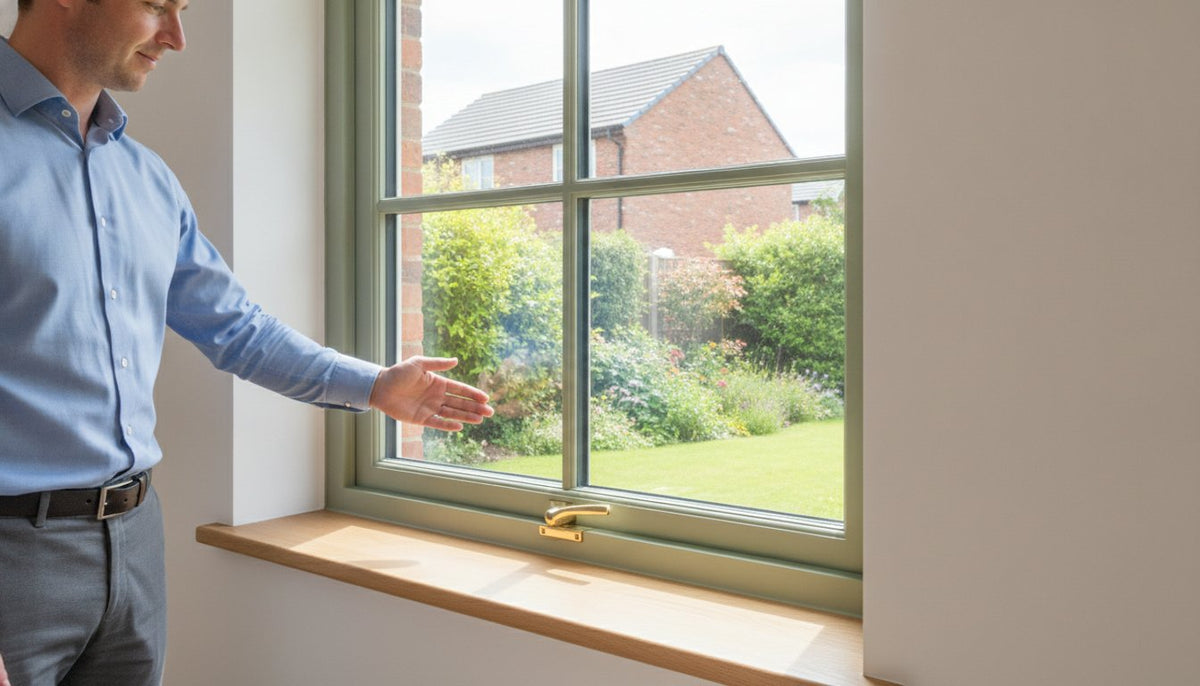
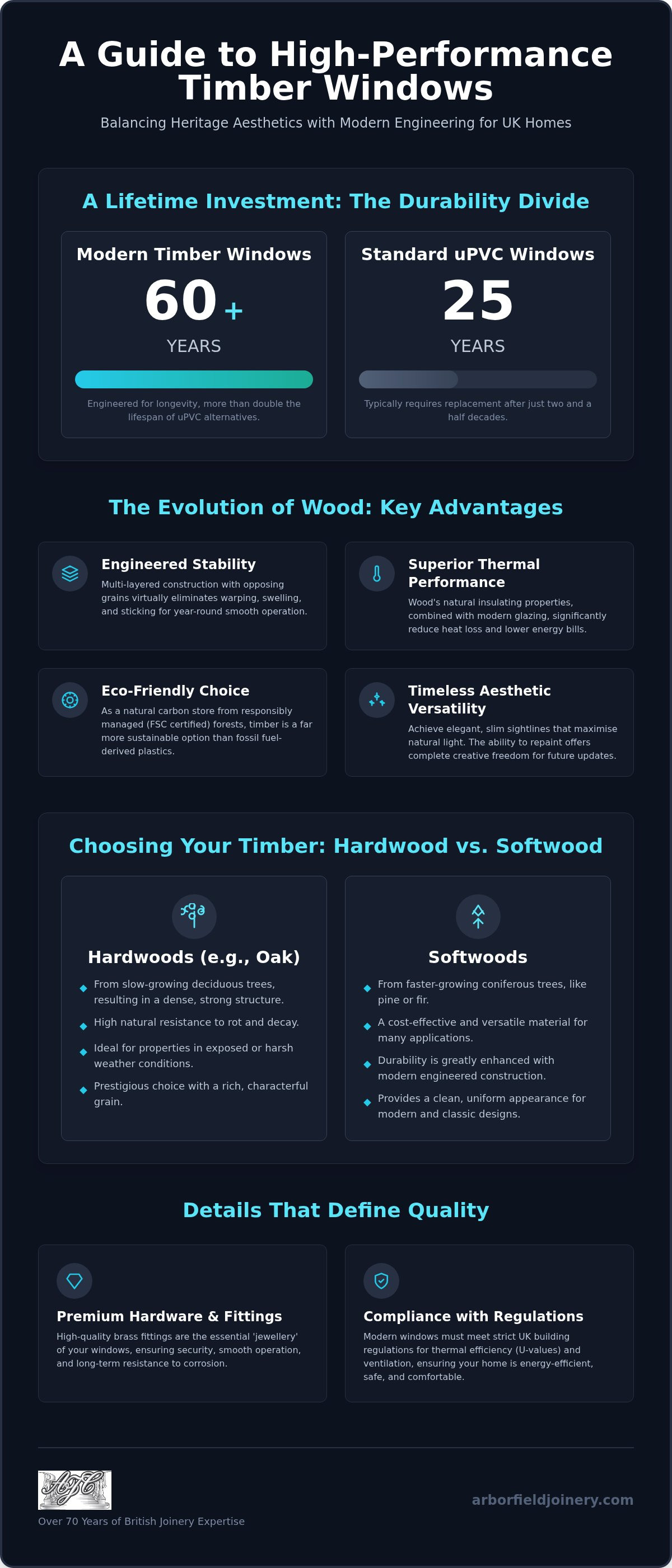
A modern, factory-finished timber window can last upwards of 60 years, which is more than double the typical lifespan of standard uPVC alternatives. Whilst many homeowners worry that wood is a high-maintenance burden, the reality of modern engineering tells a far more impressive story of durability and thermal performance. Choosing the right timber casement windows UK residents can rely on isn't just about aesthetics; it's about investing in the long-term value and comfort of your property.
We understand the hesitation that comes with such a significant investment. You likely want the timeless character of natural wood but fear the prospect of rot or the confusion of choosing between different species. This guide provides the clarity you need to select windows that enhance your home's efficiency while standing the test of time. We'll explore the latest 2026 building regulations, the benefits of engineered timber, and why premium brass fittings are essential for a functional finish. By the end, you'll be equipped to curate a living space that feels both heritage-rich and perfectly modern.
Key Takeaways
- Learn why timber casement windows UK are the ideal choice for balancing traditional aesthetics with high-performance thermal efficiency.
- Understand the structural differences between softwoods and hardwoods to select the most durable and cost-effective material for your specific environment.
- Discover why high-quality brass fittings are the essential 'jewellery' that ensures your windows remain secure and free from corrosion.
- Get up to speed with the latest building regulations regarding U-values and ventilation to ensure your home improvement project is fully compliant.
- See how over 70 years of joinery expertise can help you curate a beautiful, bespoke home that adds significant long-term value to your property.
Why Timber Casement Windows Remain the UK’s Favourite Choice
The casement window is a quintessential feature of the British architectural landscape. Defined by its side-hung or top-hung opening mechanism, this design has evolved significantly since its early origins. Exploring the history of casement windows reveals a style that was once the primary choice for every home before the rise of sliding sashes. Today, timber casement windows UK homeowners select represent a perfect marriage of that historic charm and cutting-edge performance.
Modern manufacturing has solved the frustrations often associated with older wooden frames. By using engineered timber, which involves bonding layers of wood with opposing grains, we've effectively eliminated the risk of warping or sticking. This stability, combined with factory-applied microporous coatings, means your windows stay beautiful and functional for decades whilst requiring minimal upkeep. Choosing timber isn't just an aesthetic preference; it's a sustainable choice. Wood acts as a natural carbon store, making it a far more environmentally responsible option than synthetic alternatives derived from fossil fuels.
The Aesthetic Versatility of Casement Designs
One of the greatest strengths of timber is its adaptability. Whether you're restoring a traditional cottage with leaded lights or designing a contemporary self-build with flush casements, timber provides a level of detail that other materials simply can't match. Because wood is naturally strong, frames can be designed with much slimmer sightlines than bulky uPVC equivalents. This allows more natural light to flood your living spaces and creates a more elegant exterior profile. Additionally, the ability to repaint or re-stain your windows in the future offers total creative freedom, allowing you to update your home's colour palette without replacing the entire unit.
Longevity and Value Retention
Investing in quality joinery is a proven way to increase a property's market value. Whilst the initial outlay for timber is higher than plastic, the long-term economics are undeniable. A well-maintained timber window has an expected service life of 60 years, whereas uPVC typically requires replacement after just 25 years. This longevity makes timber a superior investment for those viewing their home as a long-term asset. For a deeper look at how to protect your investment, the homeowner’s guide to timber windows offers expert advice on maintenance and quality standards. By choosing durable materials, you're ensuring your home remains thermally efficient and visually stunning for generations.
Softwood vs. Hardwood: Choosing the Right Timber for Your Windows
Selecting the ideal material for your timber casement windows UK project requires a balance of aesthetics, budget, and environmental performance. The fundamental choice often starts with the botanical classification of the wood. Hardwoods originate from slow-growing deciduous trees, which results in a dense, complex cellular structure. In contrast, softwoods come from faster-growing conifers. Whilst the names suggest physical density, the real-world difference for a homeowner lies in the wood's natural resistance to decay and its visual character. To ensure your investment supports global conservation, always verify that your timber carries FSC certification, confirming it was harvested from responsibly managed forests.
The cost-to-benefit ratio is a vital consideration in the British climate. Whilst hardwoods often command a higher initial price, their longevity in damp or exposed conditions can offer better value over several decades. However, the modern industry standard has shifted towards engineered timber. This process involves bonding multiple layers of wood together with the grains running in opposing directions. This clever construction cancels out the natural internal stresses of the wood, virtually eliminating the "movement" that traditionally caused wooden windows to swell in winter or shrink in summer.
Popular Hardwood Options: Oak and Beyond
Oak remains the most prestigious choice for many UK homeowners. Its striking, open grain and rich golden tones provide a level of character that is difficult to replicate with other species. Because oak is exceptionally dense and naturally durable, it's the preferred option for properties in exposed locations, such as coastal regions or high-altitude hilly areas where wind-driven rain is a constant factor. If you're aiming for a consistent architectural look, you can easily match your window frames with high-quality external oak doors to create a unified, premium aesthetic for your home's exterior.
Softwood and Engineered Timber
You shouldn't dismiss softwoods as a "budget" choice. When treated with modern, high-performance preservatives, species like European Redwood become incredibly resilient. According to Timber Development UK, the stability of these woods is further enhanced when they are used in an engineered format. This laminated approach is particularly effective for factory-painted windows. Because the engineered sections are so stable, they provide a perfectly smooth, uniform surface that won't "check" or crack over time. This ensures that the microporous paint finish remains intact for much longer, extending your maintenance cycles and keeping the frames looking fresh. If you're ready to see how these materials look in practice, browsing a specialist collection of timber windows is an excellent way to compare the different textures and finishes available for your project.
Essential Window Fittings: Enhancing Functionality and Style
Hardware often feels like an afterthought, but it's the "jewellery" of your home. Beyond the visual appeal, these components are critical for the security and operational integrity of your windows. When you invest in the high-quality timber casement windows UK properties require, the fittings must match the standard of the joinery. A beautiful oak frame is let down by flimsy, plated handles that corrode after a single British winter. Choosing the right hardware ensures your windows remain easy to operate, weather-tight, and secure against intruders.
Must-Have Hardware for Casement Windows
Every casement window requires a specific set of components to function effectively. The fasteners are your first line of defence and the primary way you interact with the window. Fitch fasteners and Brighton fasteners are popular choices for those seeking a traditional aesthetic; they provide a satisfying mechanical action that pulls the sash firmly into the frame. For a truly weather-proof seal, quadrant arm fasteners are often preferred, as they apply consistent pressure to the gaskets.
Opening the window safely also requires reliable casement stays. These bars allow you to fix the window at various angles, providing controlled ventilation without the risk of the sash catching the wind and slamming shut. In 2026, many homeowners are opting for matching sets to create a cohesive interior look. Whether you prefer the sleek lines of contemporary handles or the ornate detailing of period-correct stays, the hardware defines the final character of the room.
Selecting Quality Materials for Longevity
The damp UK climate is unforgiving to cheap metalwork. We always recommend solid brass over plated alternatives. Whilst plated hardware looks identical on the shelf, the thin coating eventually pits and peels when exposed to moisture. Solid brass is naturally corrosion-resistant and incredibly durable. It's often described as a "living finish" because it develops a beautiful patina over time, though it can be polished back to a high shine if you prefer a pristine look.
- Polished Brass: Offers a classic, warm glow that suits heritage cottages.
- Antique Bronze: Provides a darker, more understated finish that hides fingerprints well.
- Satin Chrome: A modern, silver-toned option that works perfectly in contemporary self-builds.
The right hardware doesn't just look better; it feels better in the hand, offering a weight and smooth action that signifies true craftsmanship. When selecting timber casement windows UK homes will benefit from for decades, these finishing touches are what elevate a standard installation into a bespoke feature. To find the perfect match for your project, you can browse our full collection of premium window fittings here. Investing in these details today prevents the frustration of replacing corroded parts in the future.
Thermal Performance and Security Standards for British Homes
Modern standards have transformed what we expect from our windows. Whilst earlier generations might have accepted a slight draught as the price of a period aesthetic, today's timber casement windows UK homeowners choose must perform to rigorous technical specifications. Timber is a natural champion of insulation. Unlike aluminium or uPVC, which require complex thermal breaks to prevent heat loss, wood's cellular structure naturally traps air. This provides an inherent barrier against the British winter, ensuring your home stays warm whilst your energy bills remain manageable.
Understanding U-Values and Energy Ratings
Achieving the required thermal efficiency is largely measured through U-values, which calculate the rate of heat loss through a window. Under current Building Regulations (Part L), replacement windows in England and Wales must achieve a U-value of 1.4 W/m²K or better. High-performance timber units can easily exceed these requirements, with some triple-glazed options reaching as low as 0.8 W/m²K. This performance is further enhanced by "warm edge" spacer bars. These small components sit between the glass panes, using low-conductivity materials to eliminate the "cold bridge" that often causes condensation at the edge of the glass.
Effective ventilation is equally vital for a healthy home. To comply with Part F of the Building Regulations, most replacement windows now include trickle vents. these ensure a constant supply of fresh air to habitable rooms, reducing the risk of dampness without compromising the home's overall security or temperature.
Security Features for Peace of Mind
Thermal efficiency is only half the story; your windows are also your home's primary line of defence. Modern joinery integrates sophisticated multi-point locking systems that secure the sash into the frame at several different intervals. This is a significant upgrade from traditional single-point fasteners, making it much harder for an intruder to force the window open. Many insurance providers now require these enhanced security measures as a standard condition of coverage.
- Multi-point locks: Engage several bolts with a single turn of the handle.
- Key-locking handles: Provide an extra layer of safety, particularly for ground-floor openings.
- Toughened glass: Used in critical locations to meet BS 6206 safety standards.
- Internal glazing: Prevents the glass from being removed from the outside.
The smallest details often make the biggest difference. High-quality weather-stripping and compression seals ensure that when the window is closed, it's truly airtight. This prevents the whistling draughts that plague older properties and ensures the locking mechanisms can engage smoothly. If you're looking to upgrade your home's protection and efficiency, investing in quality timber casement windows is a decision that pays dividends in both comfort and security.
Investing in Quality: The Arborfield Joinery Difference
Selecting a supplier for your home improvement project is a decision that carries significant weight. When you invest in timber casement windows UK homeowners expect a level of durability and aesthetic precision that only decades of experience can provide. Since 1953, Arborfield Joinery has operated as a family-run business, bridging the gap between traditional craftsmanship and modern performance. We don't just see ourselves as retailers; we act as a steady hand for our customers, offering the expert guidance of a trustworthy veteran who has seen the industry evolve over seven decades.
Our approach is rooted in the belief that quality should be attainable without compromising on heritage. Whilst many national chains focus on volume, we prioritise a personalised service that respects the unique character of your property. Whether you're visiting our flagship showroom to feel the tactile quality of our timber first-hand or taking advantage of our national UK shipping, you'll receive the same dedicated attention to detail. We understand that your home is your most valuable asset, and every component we supply is chosen to enhance its long-term value and comfort.
Craftsmanship and Heritage
Our history isn't just a date on a letterhead; it's a testament to our commitment to excellence. Having supplied quality joinery since 1953, we've developed a discerning eye for the finest materials. We understand the nuances of how different timbers behave in the British climate, ensuring that the timber casement windows UK residents receive from us are built to last. This heritage allows us to offer a consultative experience that larger, impersonal retailers simply cannot match. We take palpable pride in our work, helping you curate a living space that feels bespoke and authentically yours.
Complete Your Project with Ease
One of the primary advantages of working with a specialist like Arborfield Joinery is our holistic understanding of the home environment. We don't just understand the window frame; we understand the hardware that makes it function and the doors that complement it. This expertise allows you to create a unified look across your entire property. From internal oak doors to bespoke stairs, we provide the components needed for a seamless finish.
Ordering your windows and fittings from a single, knowledgeable source eliminates the frustration of mismatched styles or poor-quality hardware. We've curated a specialist collection of brass fittings that are designed to work in perfect harmony with our timber sections, ensuring a smooth installation and a beautiful end result. If you're ready to add those final, elegant touches to your home, you can explore our 2026 window fittings collection today. By choosing a partner who understands the relationship between joinery and jewellery, you're ensuring your home remains a sanctuary of style and stability for years to come.
Curate Your Ideal Living Space
Investing in your home's exterior is about more than just immediate kerb appeal; it's about securing comfort and value for decades to come. We've explored how modern engineering has solved the traditional issues of warping and how high-performance glazing meets the latest 2026 energy standards. By selecting the right timber casement windows UK residents can enjoy a unique blend of heritage aesthetics and 21st-century thermal efficiency. It's clear that the combination of sustainably sourced wood and precision craftsmanship remains the gold standard for British properties.
The final character of your home often lies in the smallest details. High-quality brass fittings don't just provide security; they offer a classic beauty that grows with time. Whether you're restoring a period cottage or finishing a modern self-build, these finishing touches define the space. With national UK delivery on all orders, it's never been easier to access the specialist knowledge of a family-run business established in 1953. Upgrade your home with our premium collection of window fittings and experience the difference that high-quality brass construction makes to your daily life. Your journey toward a more beautiful, efficient home starts with quality you can feel.
Frequently Asked Questions
Are timber casement windows high maintenance in the UK climate?
Modern timber windows are far less demanding than older versions thanks to factory-applied microporous coatings. These advanced finishes allow the wood to breathe whilst repelling liquid water; this prevents the rot and peeling seen in the past. Typically, you'll only need to consider repainting every 8 to 12 years. Regular cleaning with a damp cloth and an annual check of the seals is usually sufficient to keep them in top condition.
What is the average lifespan of a well-maintained timber window?
A high-quality, engineered timber window can last 60 years or more, significantly outperforming synthetic materials. Whilst uPVC windows often require replacement after 25 to 35 years, timber remains a long-term investment for your property. This longevity is achieved through the use of laminated wood sections that resist warping and the application of modern preservatives that protect against fungal decay throughout the entire life of the frame.
Do timber casement windows meet modern UK building regulations for energy efficiency?
Yes, modern timber casement windows UK homeowners install easily exceed the requirements of Part L Building Regulations. Current standards require a U-value of 1.4 W/m²K or better for replacement windows. Because wood is a natural insulator, it provides a much more effective thermal barrier than metal frames. When combined with high-performance double or triple glazing, timber frames can achieve exceptionally low U-values, helping to reduce your annual heating costs.
Which is better for casement windows: hardwood or softwood?
The choice depends on your budget and desired finish. Hardwoods like oak are naturally denser and offer a beautiful grain that's perfect for a stained finish. However, modern engineered softwood is an excellent, cost-effective alternative. It's incredibly stable and provides a perfectly smooth surface for factory-painted windows. Both options are highly durable when properly treated, though hardwood is often preferred for homes in particularly exposed or coastal environments.
What type of hardware do I need for a standard timber casement window?
A standard setup requires three main components: fasteners, stays, and hinges. The fasteners secure the window shut, whilst casement stays allow you to fix the window open at various angles for safe ventilation. You might also consider quadrant arm fasteners for a tighter weather seal. Choosing high-quality brass hardware ensures these moving parts don't corrode and continue to operate smoothly for the entire lifespan of the window.
Can I install timber windows myself or do I need a specialist?
Window installation in England and Wales must be certified for compliance with Building Regulations. If you aren't a registered installer with a scheme like FENSA or Certass, you'll need to pay for a local authority Building Control inspection to receive a compliance certificate. Whilst some experienced DIY enthusiasts may attempt the physical fitting, we recommend using a qualified professional to ensure the thermal and safety standards are fully met.
How do I choose the right finish for my window fittings?
Your choice should reflect the architectural style and age of your home. Polished brass is a timeless choice for period cottages and traditional properties, developing a rich character over time. If you prefer a more contemporary aesthetic, satin chrome or polished nickel offer a sleek, silver-toned finish. For those seeking a rustic or heritage look, antique bronze provides an understated, dark finish that complements darker wood stains perfectly.
Are timber windows more secure than uPVC or aluminium options?
Timber is naturally strong and provides a robust foundation for modern security features. When fitted with multi-point locking systems and key-locking handles, timber casement windows UK properties use are exceptionally difficult to breach. The natural rigidity of the frames prevents the flexing that can sometimes occur with thinner plastic profiles. This structural integrity, combined with toughened safety glass, ensures your home remains secure against forced entry attempts.
Share:
Is Bespoke Joinery Worth It for Home Renovations?
Contemporary Internal Oak Doors: The Homeowner’s Guide to Modern Joinery in 2026