
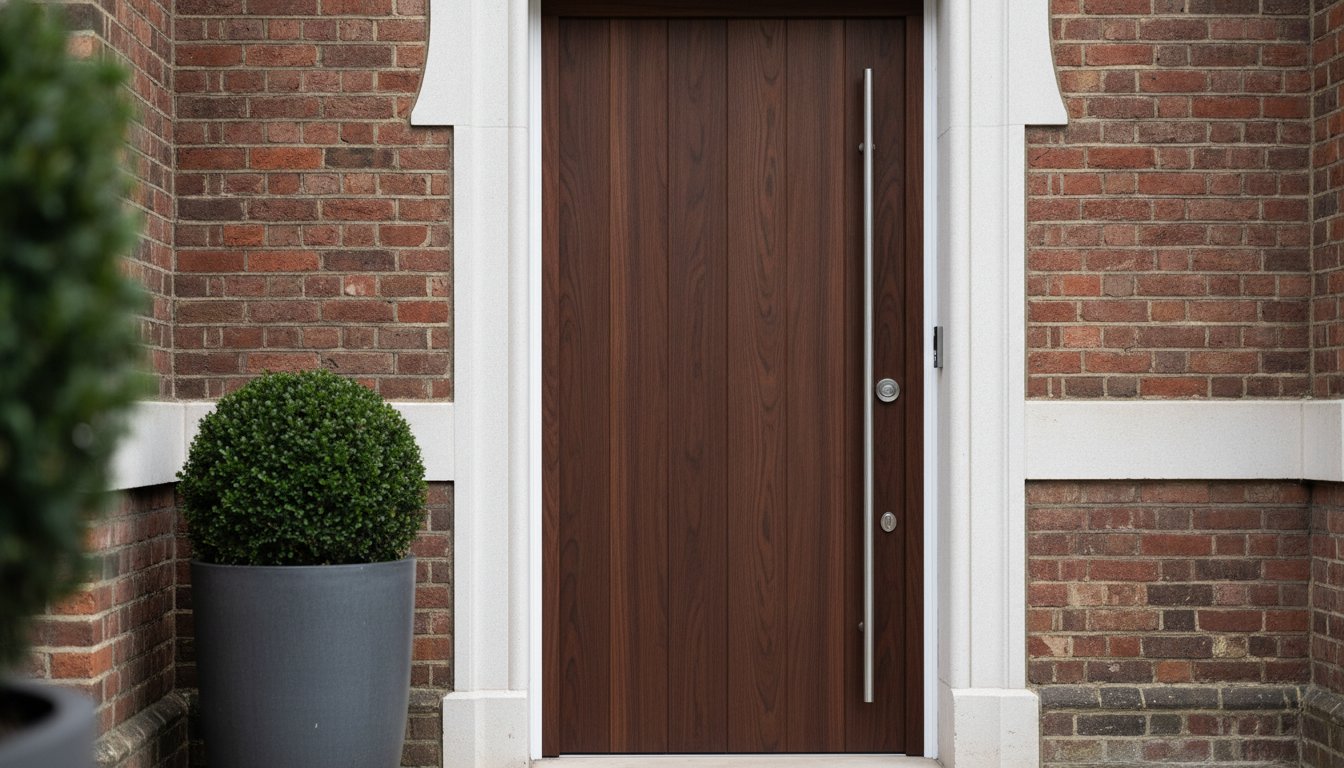
Could a traditional material like timber actually outperform modern synthetic composites in the unpredictable British weather? While advanced composite options from Grabex Windows Ltd offer impressive performance, many homeowners assume that choosing wooden front doors means sacrificing security or spending every weekend with a sander in hand. It's a natural worry when you want your home to make a grand first impression without creating a future maintenance headache or compromising on your family's safety.
We believe that a front door is much more than just a barrier; it's a piece of bespoke furniture that defines your home's character. This guide will show you exactly how to select a timber entrance that balances timeless British aesthetics with high-end thermal performance and modern security. We will explore how to achieve vital U-values of 1.4 W/m²K whilst meeting PAS 24 standards for total peace of mind. You'll gain the expertise needed to invest in a stunning entrance that increases your property value and remains a durable, elegant focal point for decades to come.
Key Takeaways
- Learn why natural timber remains the premier choice for British homeowners seeking to balance aesthetic elegance with long-term property value.
- Compare the structural density and grain patterns of oak against the rich, sophisticated tones of walnut to find your ideal material.
- Discover how to match wooden front doors to your home's unique architecture, whether you live in a Victorian terrace or a modern minimalist space.
- Understand the essential technical specifications for 2026, including how to achieve optimal U-values and PAS 24 security standards.
- See how seventy years of family-run joinery expertise can help you navigate the selection process with confidence and precision.
Why Wooden Front Doors Remain the Premier Choice for UK Homes
Choosing a front door is one of the most significant decisions a homeowner can make. Whilst modern materials like uPVC or composite have their place, they often struggle to match the tactile warmth and organic beauty of wooden front doors. Since our family-run business was established in 1953, Arborfield Joinery has seen countless trends come and go, yet the demand for natural timber remains constant. This isn't just about nostalgia; it's about the unique grain patterns and structural integrity that only nature can provide. When we look at the history of wooden doors, it's clear that timber has always been the material of choice for those who value both form and function. It offers a depth of character that synthetic alternatives simply cannot replicate.
From an environmental perspective, timber is a standout winner. Responsibly sourced wood acts as a carbon store, making it a far more sustainable choice than plastic doors derived from fossil fuels. Beyond the green credentials, a high-quality timber entrance serves as a savvy long-term investment. It's a feature that ages gracefully, adding a sense of permanent quality to your property that can significantly enhance its market value.
The Longevity of Natural Timber
One common worry amongst homeowners is that wood might warp or rot in the damp British climate. Thankfully, modern joinery has changed the game. Today's timber is treated with advanced preservatives and high-performance finishes that protect the core from moisture. Unlike synthetic doors that must be entirely replaced if they become scratched or faded, timber is remarkably repairable. You can sand it, fill it, or repaint it to look brand new even decades after installation. Engineered timber is the secret to modern door stability, using multiple layers of wood bonded together with the grain running in different directions to resist the natural movement caused by temperature changes.
First Impressions and Kerb Appeal
Your entrance sets the tone for the entire property. A solid oak or walnut door doesn't just look premium; it feels substantial. This physical weight contributes to a perceived sense of security that lightweight alternatives can't match. When a visitor approaches, the visual harmony between a well-finished door and traditional British brickwork or stonework creates an immediate sense of prestige. For homeowners looking to extend this high-quality timber aesthetic to their garden boundaries, resources like clevelandfencing.co.uk offer professional fencing and improvement services. We often suggest choosing a finish that complements your home's existing masonry, whether that's a clear oil to highlight the honeyed tones of oak or a bold paint colour that makes a statement. It's this level of customisation that ensures your home stands out for all the right reasons.
Selecting the Right Timber: Oak, Walnut, and Hardwood Performance
Choosing the material for your entrance is a decision that affects both the longevity and the daily feel of your home. Whilst many retailers use "hardwood" as a catch-all term, the reality is that wood density and grain structure vary wildly between species. Oak remains a perennial favourite for its robust nature and distinctive grain, whereas walnut offers a darker, more sophisticated palette that suits modern architecture. For any external application, you should look for Grade A timber. This ensures your door is free from large, structural knots that can weaken the frame or weep resin over time, providing a smooth, premium finish that lasts.
Modern engineering has transformed how we manufacture wooden front doors. Instead of using a single solid slab, which is prone to twisting as it absorbs moisture, we utilise an engineered core. This process involves bonding multiple layers of timber together with the grain running in opposing directions. The result is a stable foundation that resists the warping and bowing common in older joinery. This structural stability is also a key component in meeting UK door security standards, ensuring the frame remains rigid and dependable against forced entry.
External Oak Doors: The Gold Standard
Oak is often considered the gold standard for British homes due to its natural tannin content, which provides inherent resistance to decay. In our ultimate guide to external oak doors, we detail how this timber handles the elements whilst maintaining its structural integrity. You can choose unfinished oak to apply your own bespoke stain, or select a pre-finished option for immediate protection against the British weather. Primed options are also available if you intend to finish the door in a specific paint colour to match your windows.
Walnut and Premium Hardwood Aesthetics
Walnut provides a striking alternative for those seeking a distinct point of difference amongst traditional oak-lined streets. Its rich, chocolatey tones are particularly effective for contemporary architectural styles, lending an "Urban" edge to the property. Because darker woods absorb more heat from the sun, they require high-quality UV-resistant finishes to prevent fading over time. Regular maintenance ensures the deep lustre remains vibrant. If you're unsure which grain suits your masonry best, browsing the full range at Arborfield Joinery can help you visualise the final look for your home.
Matching Door Styles to Your Property Architecture
How do you ensure your new entrance feels like an extension of your home's history rather than a modern afterthought? Matching wooden front doors to the specific era of your property is the most effective way to preserve its architectural integrity. Whether you live in a bay-fronted Victorian terrace or a sleek new-build, the door style acts as a visual bridge between the street and your interior design. Getting this relationship right is what separates a standard renovation from a truly bespoke home improvement.
We've noticed a significant resurgence in the "Stable Door" trend. These doors offer a perfect blend of functional heritage, allowing for ventilation and natural light whilst keeping pets or small children safely inside. This style is particularly effective for cottages or side utility entrances where a traditional full-leaf door might feel too formal. It's about finding a balance between the practical needs of your household and the aesthetic demands of the building itself.
Traditional and Period Entrance Styles
Georgian and Victorian properties typically demand the grandeur of 4-panel or 6-panel designs. These deep-moulded panels create shadows that suggest substance and history. Moving into the 20th century, the 1930s Suffolk and Mexicano styles became staples of British suburban architecture. Their clean, vertical lines offer a slightly more relaxed aesthetic that remains a favourite amongst homeowners today. To achieve a truly polished look, consider matching your entrance with high-quality timber windows. This creates a cohesive exterior that suggests the house has been curated with a single, expert vision.
Contemporary and Modern Urban Designs
The rise of the "Urban Door" has redefined the modern British entrance. These designs often favour horizontal grain patterns and slim, vertical glazed strips that allow light to flood into narrow hallways without sacrificing privacy. By using frosted or sandblasted glass, you can maintain a bright interior whilst keeping the street view obscured. It's a clever way to use glazing to solve common architectural pains.
Modern designs also embrace industrial-inspired hardware, such as long pull handles in brushed steel or matt black. These sleek additions work beautifully with darker walnut finishes or grey-toned oak. Importantly, choosing a modern style doesn't mean compromising on protection. All our contemporary designs are built to exceed UK security standards for front doors. You can even integrate smart locks and biometric entry systems into the timber frame, blending 21st-century convenience with the timeless appeal of natural wood.

Performance and Protection: Security, Insulation, and Glazing
Performance isn't just about how a door looks in the showroom; it's about how it behaves at 2 AM in a January gale. Modern wooden front doors have evolved significantly from the draughty slabs of the past. Today, they are high-performance components designed to keep heat in and intruders out. Understanding the technical side of your purchase ensures that your investment provides comfort and safety for the long term.
In 2026, the benchmark for thermal efficiency is the U-value. This measurement tells you exactly how much heat escapes through the door. For replacement installations, aiming for a U-value of 1.4 W/m²K or better is essential to meet building regulations and reduce your energy bills. Timber's cellular structure makes it a natural insulator, providing a thermal break that hollow synthetic alternatives often struggle to match without complex internal chambers. This natural density is your first line of defence against the British winter.
Thermal Efficiency and Weatherproofing
A door is only as good as its seal. High-quality weather-stripping and a correctly fitted external door frame are vital for preventing those whistling draughts. If the frame isn't perfectly square or the seals are poor, even the thickest oak slab will lose heat. To maintain this performance, we recommend re-coating your door every few years. This protects the wood from moisture ingress, ensuring the timber doesn't swell and compromise the weather seals. It's a simple bit of maintenance that keeps your home's thermal envelope intact and your hallway warm.
Security Hardware and Ironmongery
Security is often the primary concern for homeowners. Whilst traditional mortise locks offer a classic aesthetic, modern insurance policies frequently require multi-point locking systems. These systems engage the frame at several heights with a single turn of the key, making it much harder to force the door. If you're working on a new-build project, you'll need to comply with Part Q building regulations, which mandate enhanced security standards. This often involves the use of toughened or laminated safety glass. This glazing is designed to resist impact, ensuring that even if the glass is struck, it remains a formidable barrier. To see these security features in person, you can view our high-performance external door range at our showroom.
Choosing Your Door with Arborfield Joinery
Selecting a front door is a decision that defines your home for decades. At Arborfield Joinery, we've spent over seventy years refining our expertise as a family-run business. Established in 1953, we have seen the industry evolve from basic timber frames to the high-performance engineered systems we supply today. This longevity means we aren't just retailers; we're consultants who understand the structural nuances of wooden front doors. We take palpable pride in our craftsmanship, ensuring that every homeowner receives a product that balances quiet elegance with proven reliability.
Our role is to act as a steady hand for the consumer. Whether you are matching a new entrance to existing timber windows or looking for expert advice on stairs to complement your hallway, our team provides a bespoke service. We believe in a quality-first narrative, where the focus remains on material integrity rather than high-pressure sales tactics. It is this commitment to service that has allowed us to build long-term relationships with homeowners across the country.
The Showroom Experience
Digital images can only tell part of the story. To truly appreciate the difference between the honeyed tones of oak, the rich depth of walnut, or the clean lines of white primed finishes, we encourage you to visit our showroom. With over 120 doors on display, you can feel the physical weight and tactile quality of the timber for yourself. It is the best way to visualise how our "Urban" collection might look in a real-world setting or to compare the grain patterns of different hardwoods. Our knowledgeable staff are always on hand to help you navigate measurements and technical specifications, ensuring your chosen door fits perfectly within your architectural vision.
Ordering and Delivery Logistics
We've streamlined our logistics to make the purchasing journey as efficient as possible. We offer national UK shipping, with free mainland delivery on orders over £900. Every premium door is packaged with extreme care to ensure it arrives at your site in pristine condition. Upon delivery, we recommend a quick initial inspection to ensure everything meets your expectations. From our digital storefront to your front garden, we maintain a purposeful rhythm that moves you efficiently from interest to action. Ready to transform your home's entrance? Browse our full range of wooden front doors today and discover the perfect blend of heritage and modern performance.
Invest in a Grand Entrance for Your Future
Choosing the right entrance is about more than just aesthetics; it's about securing a legacy for your home. By selecting high-quality wooden front doors, you're investing in a material that offers superior thermal performance and natural durability that synthetic alternatives cannot match. Whether you've decided on the robust character of oak or the contemporary allure of walnut, the right timber will increase your property's value whilst providing modern security that meets the latest building regulations.
Our family-run team has been specialising in joinery since 1953. We're here to help you navigate every technical detail, from precise measurements to selecting the perfect hardware. If you'd like to feel the quality for yourself, visit our showroom to view over 120 doors on display. For those ordering from further afield, we provide free mainland UK delivery on orders over £900. Your home deserves an entrance that reflects your style and stands the test of time. Explore our premium collection of wooden front doors today and take the first step towards a stunning, secure, and energy-efficient home.
Frequently Asked Questions
Are wooden front doors more secure than composite or uPVC doors?
Wooden front doors are exceptionally secure because of their natural density and solid structure. Unlike hollow uPVC or composite shells, a solid timber core provides a formidable barrier against forced entry. When paired with modern multi-point locking systems and toughened safety glass, they easily meet the highest security standards. This structural integrity ensures that your entrance remains a robust and dependable deterrent for decades.
How often do I need to paint or varnish my wooden front door?
You should expect to re-coat your door every two to five years depending on its exposure to the elements. South-facing doors that receive direct sunlight may require more frequent attention to prevent the finish from cracking or fading. Regularly maintaining the varnish or paint prevents moisture from entering the timber, which is the most effective way to avoid warping or rot in the unpredictable British weather.
What is the best wood for an external door in the UK climate?
Oak is widely considered the best wood for the UK climate due to its high tannin content and natural resistance to decay. It handles moisture better than most softwoods and provides a sturdy, reliable foundation for external use. Whilst walnut is a premium choice for its rich aesthetics, it requires a higher level of UV protection to maintain its deep chocolatey colour against the sun.
Can I install a new wooden front door into an existing frame?
You can install a new door into an existing frame if the original structure is square and free from rot. However, for the best thermal performance and security, we often recommend replacing the frame simultaneously. A new frame ensures that modern weather-stripping can create an airtight seal, preventing the draughts that often occur when a new leaf is fitted into an older, settled frame.
Do wooden front doors warp in the sun or rain?
Modern engineered timber significantly reduces the risk of warping compared to traditional solid slabs. By bonding layers of wood with the grain running in opposing directions, we create a core that resists the natural movement caused by humidity and temperature changes. As long as the door is correctly finished and sealed on all six sides, it will remain stable through the wettest winters and hottest summers.
What are U-values, and why do they matter for my front door?
U-values measure the rate of heat transfer through a material; the lower the number, the better the insulation. For external doors in 2026, achieving a U-value of 1.4 W/m²K or lower is the standard for energy efficiency. High-quality timber acts as a natural thermal break, keeping your hallway warm and helping to reduce your overall household heating costs whilst meeting current building regulations.
Are your wooden front doors supplied pre-hung or as a leaf only?
We supply our doors as individual leaves to allow for the most precise, bespoke fit on your property. This approach gives you the flexibility to choose your own hardware, hinges, and frames that match your home's unique character. If you're unsure about the technical requirements for your project, our showroom team can provide expert guidance on selecting the compatible components for a seamless installation.
Is oak better than walnut for an external entrance?
Oak is often preferred for its rugged durability and classic grain, making it a reliable choice for traditional British homes. Walnut offers a more sophisticated, darker aesthetic that is ideal for contemporary "Urban" designs. Both are premium hardwoods with excellent longevity, so your choice should ultimately depend on the architectural style of your property and whether you prefer a honeyed or chocolatey timber tone.
Share:
The Benefits of Timber Windows: A Homeowner’s Guide to Quality and Style
Laminate Internal Doors: The Definitive Homeowner’s Buying Guide for 2026