
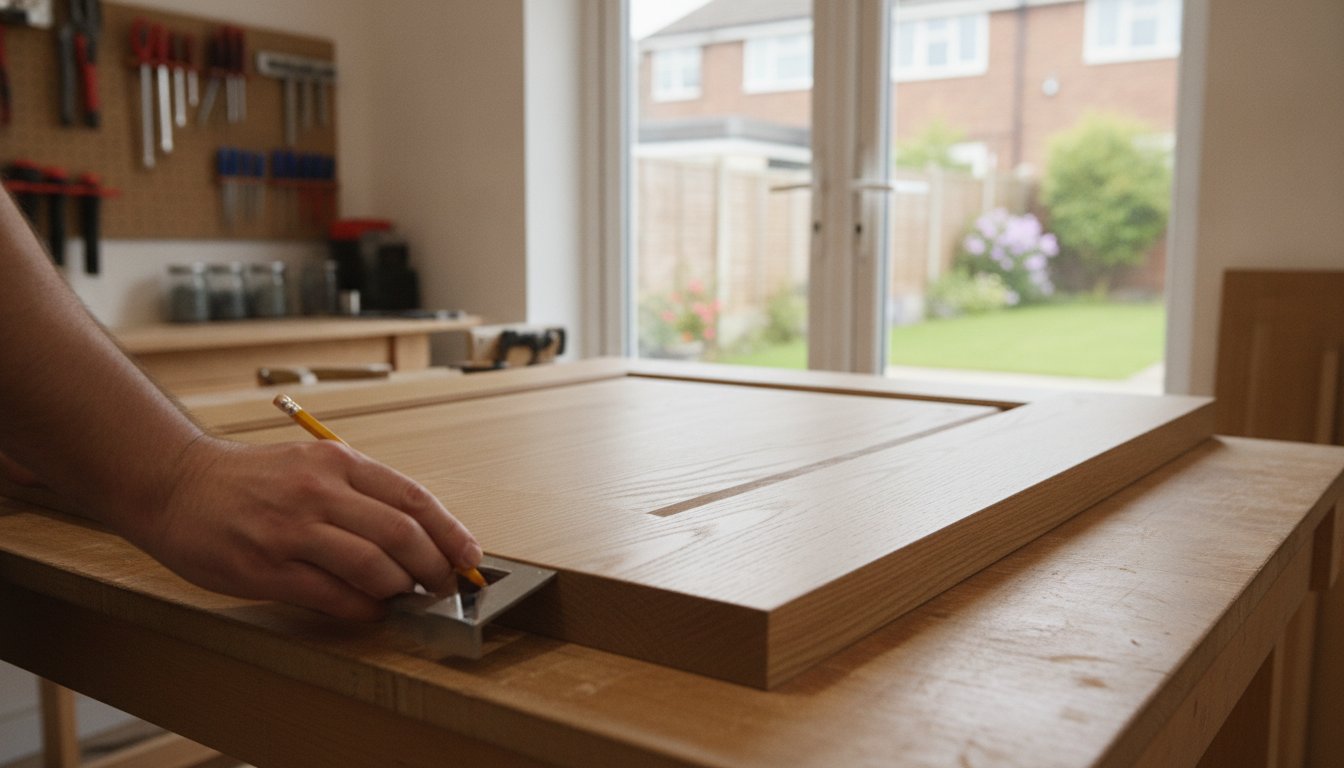
A single millimetre of over-zealous sawing is often all it takes to turn a premium oak fixture into an expensive piece of firewood. It's a common anxiety for any renovator; you've found the perfect trimmable door, but your frame is a fraction too narrow or the floor is slightly uneven. You want that factory-perfect finish, yet the fear of hitting a hollow core or instantly voiding a manufacturer's warranty is enough to make any homeowner hesitate.
We believe that precision is the hallmark of a beautiful home, and you shouldn't have to guess when it comes to structural safety. This guide will help you master the art of resizing without compromise, giving you the confidence to adjust your doors correctly or know exactly when it's time to hire a professional. We'll explore the generous trimming margins offered by brands like Deanta, compare the 2026 limits for XL Joinery and JELD-WEN, and provide essential clarity on the strict regulations governing fire doors whilst ensuring your home remains safe and stylish.
Key Takeaways
- Understand the fundamental construction of a trimmable door and why respecting factory-set margins is vital for preserving the manufacturer's warranty.
- Learn how to identify and measure door lippings to ensure you never cut into the sensitive internal core of your new timber fixture.
- Compare the trimming allowances of leading brands to find the most flexible options, such as the generous margins provided by Deanta and XL Joinery.
- Discover the professional techniques and essential tools required to achieve a clean, splinter-free edge on any oak, walnut, or primed surface.
- Recognise the critical safety limitations of fire doors to ensure your modifications remain fully compliant with UK building regulations.
What is a trimmable door and why does the limit matter?
A trimmable door is a factory-engineered unit specifically designed with a dedicated perimeter of solid material, typically known as the lipping. This margin allows for precise adjustments during installation to ensure the door fits perfectly within its frame. Whilst almost all modern doors offer some degree of flexibility, a designated trimmable option is built to withstand resizing without sacrificing its structural integrity or aesthetic charm. It's a vital solution for the realities of home renovation, where perfection is rarely found in a straight line.
The necessity for these doors often stems from the unique character of UK housing. Whether you live in a Victorian terrace or a mid-century semi-detached, properties naturally settle over time. Walls shift, floors become slightly uneven, and door frames rarely remain perfectly square. Understanding the fundamentals of door construction is essential before you pick up a saw. If you cut past the reinforced solid edge, you risk exposing the engineered core, which can lead to warping or total failure of the fixture.
There is a significant difference between a standard adjustment and a full resize. A "standard" trim usually involves removing 3mm to 5mm from an edge to ensure a smooth, catch-free swing. A "significant" trim might involve taking 10mm or more from a single side. Every millimetre is critical because the glue line, which bonds the decorative veneer to the solid lipping, is under constant tension. Thinning this lipping too much weakens that bond, especially when subjected to the natural humidity changes found in British homes.
The risk of "over-trimming" your door
Exceeding the recommended limits is a recipe for structural failure. Once you breach the solid timber lipping, you'll likely hit the hollow or chipboard core. This doesn't just look unsightly; it compromises the door's ability to hold hinges and handle weight. Furthermore, manufacturers are incredibly strict regarding these limits. If you resize a door beyond their stated allowances, you'll instantly void the warranty, leaving you without recourse if the timber splits or bows later. There is also the visual balance to consider. Excessive cutting can leave panelled or shaker styles looking lopsided, as the vertical stiles become noticeably narrower than the rest of the design, ruining the architectural proportions of the room.
When to choose a high-trim door over a standard one
Older UK properties are notorious for "problem" frames that have warped amongst shifting foundations. If your measurements reveal a variance of more than 10mm across the width or height of the opening, a standard door likely won't provide enough material to work with. In these scenarios, opting for a high-trim door is a savvy choice. It's often more cost-effective than commissioning bespoke joinery, allowing you to tailor the fit on-site whilst retaining a premium, factory-finished appearance. If you're unsure how to accurately assess your current opening, you can find expert advice on measuring in our guide to internal doors and door frames.
Understanding lippings and cores: The science of trimming
To understand the limits of a trimmable door, one must first look beneath the surface at the lipping. This is the solid timber perimeter that acts as a protective buffer for the door's internal core. Think of it as the sacrificial wood that allows for planers and saws to do their work without compromising the structural heart of the unit. The depth of this lipping is the single most important factor in determining how much material you can safely remove. Whilst a standard door might only offer a 6mm lipping, premium options are engineered with much deeper edges to accommodate more significant adjustments.
The relationship between lipping depth and your maximum trimming allowance is absolute. If a door has a 10mm lipping, you cannot remove 10mm of material; doing so would leave the core completely exposed to moisture and temperature fluctuations. We recommend leaving at least 3mm of the original lipping intact to maintain the bond between the surface veneer and the frame. This is particularly important for white primed doors, where a clean, stable edge is required to ensure the paint finish doesn't crack or peel at the margins over time.
Internal door anatomy 101
The flexibility of your project depends heavily on what sits inside the door. Solid timber doors, often found in heritage properties, offer the most freedom because they are consistent material throughout. In contrast, engineered cores use a composite of timber sections to provide stability and prevent warping. These require stricter adherence to cutting boundaries to keep the internal tension balanced. Hollow core doors are the most restrictive. These contain a honeycomb cardboard interior held together by a narrow timber frame. If you cut too deep into a hollow core, you'll literally fall through the frame into the empty space, rendering the door useless. If you're unsure which core suits your project, our team at Arborfield Joinery can guide you through the technical specifications of each range.
Veneers and edge banding
Most modern doors feature a decorative veneer that provides the beautiful grain pattern you see on an internal oak door. These veneers are typically between 0.6mm and 3mm thick. When trimming, the goal is to maintain a seamless look where the veneer meets the lipping. A significant cut can sometimes reveal the join between these two components. Whilst trimming involves removing existing material, "re-lipping" is a professional technique where a new strip of solid wood is glued onto a heavily cut edge. This is a complex task usually reserved for master joiners, but it's the best way to ensure a bespoke fit whilst preserving the high-end aesthetic of your home.
How much can you trim? A guide by door type and brand
Industry standards provide a baseline, but the reality of a trimmable door varies wildly between manufacturers. Whilst the default UK allowance is typically 6mm in total (allowing for a 3mm trim on each side), this is often insufficient for older properties with significant structural settling. When you're faced with a frame that has "dropped" or is noticeably out of square, relying on these narrow margins can lead to frustration. For these challenging installations, we often point our clients towards premium brands that engineer their products with much larger solid timber lippings.
Gravity and structural shifts often dictate where the saw meets the timber. As a general rule, you can often trim more from the bottom rail than the top. The top edge of a door is critical for structural balance and, in many cases, contains the manufacturer's identification stamps or fire certification tags. Removing too much from the top can weaken the joint where the vertical stiles meet the horizontal rail. Material choice also plays a significant role in your approach. Whilst natural oak and walnut are forgiving, laminate internal doors require a more delicate touch. Their factory-sealed surfaces are designed for durability, but once the protective edge is breached, they are difficult to reseal to a factory-standard finish.
Trimming fire doors (FD30 and FD60)
Safety is paramount when dealing with fire-rated joinery. UK building regulations are incredibly strict; over-trimming a fire door doesn't just void a warranty, it's a safety violation that could compromise the door's ability to resist smoke and flames. For projects requiring professional oversight, National Fire Ltd provides specialist passive fire protection and fire door installation services across the UK. Most FD30 doors allow for a maximum of 3mm to 6mm off the bottom and sides, but you should never trim the top edge. This is where the intumescent strips and certification labels are located. If you find yourself needing to trim more than 6mm to fit a fire door into an opening, the safest and only compliant solution is to order a bespoke fire door or use a fire door blank designed for significant resizing.
Brand comparison: Who offers the most leeway?
Deanta remains a favourite amongst professional joiners and renovators for one simple reason: flexibility. Their internal doors often feature a massive 16mm solid lipping on all four edges, allowing for up to 32mm of total reduction in both width and height. This makes them the gold standard for "problem" frames. XL Joinery also offers reliable margins, typically allowing for 6mm of trimming from any edge on internal models, whilst their external range can sometimes accommodate up to 12mm per side. In contrast, modern "urban" or industrial-style designs from brands like LPD Doors often have much slimmer stiles, sometimes limiting you to just 3mm of adjustment. Always check the specific 2026 technical data sheet for your chosen model before making the first cut.

The DIY vs. Professional approach to trimming
Successfully resizing a trimmable door is less about brute force and more about the precision of your equipment. Whilst a simple hand saw might suffice for a rough timber gate, internal joinery requires a more sophisticated touch to avoid splintering expensive veneers. Professionals almost exclusively use a track saw for the primary cut. This tool provides a perfectly straight edge and minimises vibration. If you're working manually, a block plane is essential for those final, micro-adjustments that ensure a snug fit without catching.
The secret to a factory-standard finish lies in the preparation. Before the blade even touches the wood, use a sharp marking knife to score the veneer along your cut line. This severs the wood fibres cleanly, preventing the "break-out" or splintering that often occurs when a high-speed blade exits the material. Always measure twice from multiple points on the frame to account for any bowing. If your measurements suggest you'll need to remove more material than the lipping allows, it's time to admit defeat. In such cases, attempting to force a fit will only ruin the door. You might be better served by a pre hung door set, which comes factory-fitted to its own frame for a guaranteed result.
Finishing the raw edge
Once the cut is executed, the work isn't finished. The newly exposed edge will be rough and porous. Start with a medium-grit sandpaper and work your way up to a fine 240-grit finish to restore that factory-smooth feel. It's vital to re-seal this edge immediately. Every cut breaches the protective barrier of the door, making it vulnerable to moisture. Whether you're using oil, paint, or varnish, ensure the product is an exact colour match to the rest of the unit. This attention to detail ensures the trimmed edge blends seamlessly amongst the original surfaces, maintaining the aesthetic value of your home.
Common mistakes to avoid
A frequent error amongst novices is trimming only one side of the door. If you need to remove 10mm, you must take 5mm from each side to keep the lock block and handle centred. Taking it all from one side can leave your hardware looking awkwardly offset. Blade choice is equally critical. Using a coarse rip-cut blade on a delicate walnut veneer will almost certainly cause irreparable damage; always opt for a high-count, fine-tooth blade. Finally, don't forget to account for floor clearance. A trimmable door that fits perfectly in the frame might still catch on a thick pile carpet or a new threshold strip once hung.
If you'd prefer to see our premium ranges in person before committing to a purchase, visit our Arborfield showroom to speak with our expert consultants.
Finding your perfect fit with Arborfield Joinery
Since 1953, Arborfield Joinery has served as a steady hand for homeowners navigating the complexities of UK property renovation. We understand that finding a trimmable door that meets your aesthetic vision whilst accommodating a non-standard opening is a significant challenge. Our heritage as a family-run enterprise means we prioritise long-term reliability over quick transactions. We don't just sell timber; we curate solutions that ensure your home improvement project is a success from the first measurement to the final coat of oil.
There is no substitute for tactile quality. Whilst digital images provide inspiration, our showroom features over 120 doors, allowing you to inspect the depth of the lippings and the precision of the grain in person. This physical experience is invaluable when you're deciding how much material you can safely remove. By seeing the construction of our oak, walnut, and primed ranges up close, you gain a deeper appreciation for the craftsmanship that goes into every unit we stock. We only partner with manufacturers like Deanta and XL Joinery because their commitment to generous trimming margins aligns with our own quality-first philosophy.
Consult with the experts
A single measurement error can be a costly mistake, especially when working with premium timber. Our joinery experts act as knowledgeable consultants, offering guidance that is both technically precise and empathetic to your specific needs. Whether you're a trade professional or a homeowner embarking on a first-time renovation, we provide a personalised service that removes the guesswork from the process. We can help you identify which trimmable door amongst our extensive collection offers the flexibility required for a warped frame. Beyond our internal range, we also invite you to explore our selection of external oak doors, which are engineered to provide the same blend of performance and timeless style.
Ordering your trimmable doors today
Choosing Arborfield Joinery means investing in peace of mind. Every product in our collection is selected for its durability and adherence to proven manufacturing standards, ensuring your doors remain stable for years to come. We offer national delivery across the mainland UK, with free shipping on all orders over £900. This combination of heritage expertise and modern service makes us the ideal partner for your next project. Don't leave your home's aesthetic to chance; browse our full range of trimmable internal doors today and find the perfect fit for your space.
Achieving a Precision Fit for Your Home
Choosing the right trimmable door is about more than just aesthetics; it's about ensuring your home remains functional and safe for decades to come. By respecting manufacturer lipping limits and employing the professional techniques we've discussed, you can achieve a bespoke fit that looks effortless. Whether you're navigating the strict requirements of fire safety or accounting for a shifting heritage frame, the right preparation ensures your investment is protected and your warranty remains intact.
Arborfield Joinery has been supplying quality joinery since 1953, and as a family-run business with expert knowledge, we're here to support you at every stage. We invite you to visit us and view over 120 doors on display in our showroom, where you can experience the craftsmanship of our timber ranges first-hand. Our team is ready to help you navigate technical specifications and find the most reliable solutions for your project.
Explore our collection of high-quality trimmable doors and find your perfect fit. Your ideal living space is within reach, and with the right approach, your new doors will provide a lifetime of elegance and performance.
Frequently Asked Questions
How much can I safely trim off a standard internal door?
Most standard internal doors allow for a total trim of 6mm, which usually equates to a 3mm reduction from each vertical edge. This industry-standard limit is designed to preserve the solid timber lipping that protects the internal core from moisture. If your frame requires a more substantial adjustment, it's safer to select a high-specification trimmable door that features deeper solid edges to prevent the core from being exposed.
Can you trim the top of a fire door?
You must never trim the top edge of a fire door under any circumstances. This critical area houses the fire certification stamps and the intumescent strips required to meet UK safety regulations. Trimming the top will immediately void the door's FD30 or FD60 rating, potentially putting your home at risk. If the height needs adjustment, focus exclusively on the bottom rail within the manufacturer's stated limits.
What happens if I cut into the hollow core of a door?
Cutting into the hollow core of a door exposes the honeycomb cardboard interior and effectively destroys the unit's structural integrity. Without the solid timber frame to provide support, the door loses its rigidity and won't securely hold hinges or hardware. If you accidentally breach this internal void, the door will likely become unstable and will almost certainly need to be replaced with a new unit.
Do I need to re-seal the door after trimming?
You must re-seal every trimmed edge immediately to protect the timber from environmental damage and moisture ingress. Once the factory seal is broken, the exposed wood becomes a gateway for humidity, which can lead to warping, swelling, or the veneer peeling away. Applying a matching oil, paint, or varnish ensures the door remains stable and retains its elegant appearance for years to come.
Is it better to trim the top or the bottom of a door?
It is significantly better to trim the bottom of a door rather than the top rail. The bottom of the door is typically constructed with more material to allow for floor clearance adjustments and doesn't contain vital identification or certification marks. Trimming the top can weaken the structural joints where the stiles meet the rails and remove the manufacturer's stamps, which are often required for warranty claims.
Can I trim a glazed door with glass panels?
You can trim a glazed door, but you must be extremely cautious not to disturb the glazing beads that secure the glass panels. Most glazed units have stricter trimming limits than solid panels to ensure the glass remains safely seated within the timber frame. If you remove too much material, the vibration from the door closing could eventually cause the glass panels to loosen or rattle within the opening.
Which door brands allow for the most trimming?
Deanta is the leading brand for those requiring maximum flexibility, as they engineer their products with exceptionally deep lippings. A Deanta trimmable door often allows for up to 16mm to be removed from each edge, providing a total potential reduction of 32mm. XL Joinery also offers competitive margins, making both brands favourites amongst renovators dealing with awkward or out-of-square UK door frames.
Should I use a hand saw or a circular saw to trim my door?
A circular saw, specifically a track saw with a fine-tooth blade, is the superior choice for achieving a professional, splinter-free result. Hand saws are prone to wandering and often produce uneven cuts that can ruin expensive oak or walnut veneers. Using a track saw allows you to execute a perfectly straight line whilst maintaining the smooth, factory-quality finish that your home renovation project deserves.
Share:
The Complete Buyer’s Guide to White Primed Doors: Style, Quality, and Customisation for 2026
Black Door Handles: The 2026 Guide to Styles, Finishes, and Pairings