
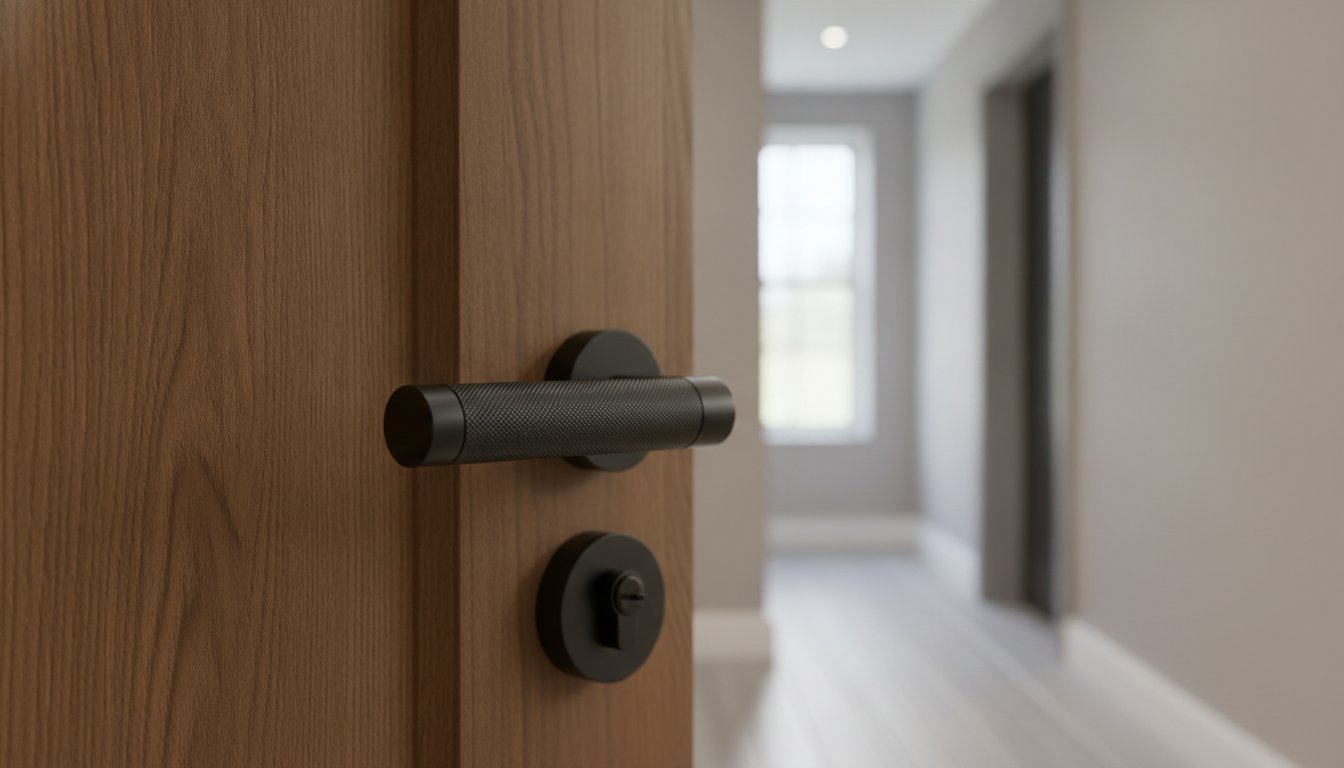
Black door handles are no longer just a passing trend; they have become the essential "punctuation marks" of modern joinery, providing the vital contrast needed to breathe new life into traditional timber. You likely appreciate the striking, contemporary look of a dark finish, but perhaps you're hesitant about whether black door handles are truly practical for a busy family home. It's a common worry that these sleek surfaces might attract unsightly fingerprints or lose their lustre when paired with the deep grain of a classic oak door.
This guide will help you transform your home's interior by choosing the perfect hardware for every timber style, from our heritage oak ranges to the sharp lines of urban laminate. We will demystify the technical jargon surrounding roses and backplates, whilst exploring the tactile, knurled textures that are defining the 2026 aesthetic. You'll gain the confidence to select durable, premium hardware that feels substantial to the touch, ensuring a cohesive design that respects both craftsmanship and modern innovation. We will explore how to match hardware to specific timber species, providing you with a clear path to a sophisticated and high-end finish.
Key Takeaways
- Understand how the "Urban Industrial" trend has evolved for 2026 to suit both contemporary and heritage British interiors.
- Learn the technical differences between electroplated and powder-coated finishes to ensure your black door handles remain durable and resistant to fingerprints.
- Master the terminology of roses versus backplates to confidently select the hardware configuration that best suits your door's aesthetic.
- Discover how to successfully pair dark hardware with different timber species, from high-contrast oak to sophisticated walnut.
- Gain practical insights into measuring for replacements and the vital importance of matching hinges and latches for a cohesive finish.
The Rise of Black Door Handles in British Interior Design
British homeowners are increasingly turning to black door handles as a definitive style statement. Once reserved for industrial lofts and converted warehouses, these fixtures now grace everything from Victorian terraces to minimalist new builds. The versatility of black hardware lies in its ability to bridge the gap between heritage charm and contemporary edge. Unlike the clinical coldness of polished chrome or the sometimes dated feel of traditional brass, black offers a sophisticated, architectural silhouette that complements almost any colour palette.
The "Urban Industrial" trend has undergone a significant evolution as we move into 2026. It's no longer about raw, unfinished surfaces; instead, it has matured into a "Soft Industrial" aesthetic. This refined approach focuses on slim profiles, tactile finishes, and high-quality craftsmanship. The psychological impact of introducing black into a room shouldn't be underestimated. On a white primed door, a black handle provides a crisp, graphic contrast that draws the eye. On timber, it highlights the natural warmth of the grain by providing a dark, grounding counterpoint. This visual weight helps a room feel more structured and intentional, acting as a focal point that ties disparate design elements together.
Why Black Hardware is a Timeless Choice
One of the greatest strengths of black is its neutral nature. It doesn't clash with colourful decor or bold wallpaper; rather, it acts as a silent partner that allows other design elements to shine. For homes with high ceilings or large glazed doors, black handles help "ground" the space, preventing the interior from feeling too airy or disconnected. We've seen a clear shift towards matte and satin textures in premium British joinery. These finishes are favoured for their understated elegance and their ability to withstand the daily rigours of a busy household. Understanding the door handle mechanism is essential when selecting hardware that feels as good as it looks, ensuring the internal components match the external quality of the finish.
The "Urban" Aesthetic and Timber Doors
This dark ironmongery is the perfect companion for internal oak doors, where the black lines mimic the iconic look of Crittall-style steel frames. This pairing creates a look that's both rustic and modern, offering a nod to traditional craftsmanship whilst embracing current trends. The "Urban look" is defined as a curated blend of slim timber profiles and dark ironmongery, prioritising clean lines over ornate carvings. It is a design language that values simplicity and strength, making black door handles the natural choice for those looking to modernise their home without losing the timeless appeal of natural wood.
Matte Black vs Satin Black: Understanding Finishes and Durability
Choosing the right finish for your black door handles is a decision that balances aesthetic impact with the realities of a busy home. Whilst the visual appeal is immediate, the way the hardware is manufactured dictates how well it will age. Most premium hardware is either powder-coated or electroplated. Powder coating involves applying a dry powder that is baked to create a thick, protective layer. It's incredibly robust, though lower-quality versions can occasionally chip. Electroplating, on the other hand, uses an electric current to bond a thin layer of metal to the handle. This process often results in a harder surface that better resists the daily "clink" of rings and keys.
Fingerprints remain a common concern for homeowners opting for darker hardware. Flat matte surfaces, because they lack reflection, tend to highlight the natural oils from your skin more clearly than their glossier counterparts. If you're installing hardware in a high-traffic kitchen or a hallway, you'll find that a satin finish is far more forgiving. It offers enough of a sheen to diffuse the appearance of smudges whilst maintaining that sophisticated, dark look you desire. It's these small details in finish selection that ensure your joinery remains a source of pride rather than a maintenance chore.
Matte Black: The Contemporary Favourite
Matte black has become the go-to choice for minimalist and Scandinavian-inspired interiors. Its non-reflective, velvety appearance provides a clean, graphic look that doesn't compete with other textures in the room. It’s particularly effective when you want a handle to disappear into a dark door or stand out sharply against a white primed surface. To keep these handles looking their best, avoid harsh chemical cleaners which can strip the delicate coating. A simple damp microfibre cloth is usually all that’s required to maintain that premium, soft-touch feel.
Satin and Forged Finishes
For those seeking a more traditional or tactile experience, forged ironmongery offers a depth that modern alloys cannot replicate. These finishes often have a slight texture, making them the ideal partner for ledge and brace doors in heritage properties. Satin black, with its gentle lustre, sits comfortably between modern and classic styles. It feels substantial to the touch and provides a subtle glimmer that adds a sense of luxury to your joinery. You may find that viewing our showroom collection helps you distinguish between the cool precision of a zinc alloy and the warm, artisanal feel of forged iron.
Essential Styles: Round Rose, Square Rose, and Backplates
Selecting the right silhouette for your hardware is as vital as choosing the finish itself. To make an informed choice, it's helpful to understand the basic anatomy of a handle. The lever is the part you interact with daily; the rose or backplate is the mounting plate that sits against the door; and the spindle is the metal bar that passes through the door to connect the two handles. Whilst the lever provides the function, the mounting style defines the aesthetic. Modern black door handles are typically divided into two categories: the minimalist "lever on rose" and the more traditional "lever on backplate".
Your choice should be guided by the architectural features of your home. If your doors feature intricate panelling or ornate mouldings, a larger backplate can provide the visual weight needed to balance the design. Conversely, for flush doors or those with simple recessed panels, a rose offers a cleaner, more understated look. Beyond the handle itself, never overlook the supporting hardware. To achieve a truly professional result, your hinges, latches, and even the screws must match your chosen black finish. Introducing a mismatched satin chrome hinge alongside a premium black lever will immediately break the visual flow and diminish the high-end feel of your joinery.
Lever on Round Rose: The Versatile All-Rounder
The round rose has become the standard for most modern UK internal doors for good reason. Its circular shape provides a gentle visual "stop" that softens the sharp, vertical lines of a rectangular door. This style is particularly effective in homes where you want the hardware to feel integrated rather than dominant. A round rose hides the fixings for a cleaner finish, using a screw-on cover that conceals the mounting plate underneath. This ensures that no unsightly screw heads distract from the sleek, dark profile of the handle.
Knurled Textures and Square Roses
If you're seeking a more architectural or industrial aesthetic, square roses and knurled textures are the defining trends for 2026. Knurling involves a precision diamond-cut pattern etched into the metal, providing a superior grip and a tactile, high-end sensation every time you open a door. This textured finish is an excellent way to add a layer of "quiet luxury" to your home, as it feels far more substantial than a standard smooth lever. For a cohesive interior, consider pairing these tactile black door handles with matching hardware on your timber stairs, such as black glass clamps or handrail brackets. This repetition of texture and colour creates a deliberate design thread that pulls different areas of the house together into one polished, intentional space.

Pairing Black Handles with Timber: Oak, Walnut, and Urban Doors
Selecting the right hardware is about more than just aesthetics; it's about understanding how the finish interacts with the organic character of the wood. The pairing of black door handles with specific timber species can either create a bold, graphic statement or a subtle, layered look of luxury. For our Urban door range, black hardware isn't just an option; it's the defining component that completes the architectural vision. These doors, often featuring slim stiles and large glass panes, rely on the dark lines of the ironmongery to ground the design and provide that sought-after industrial edge.
Before you commit to a specific handle, consider the physical weight of the hardware in relation to the door’s construction. A lightweight, hollow handle can feel unsubstantial on a solid oak door, whilst an oversized backplate might overwhelm a slim Urban profile. Use this quick checklist to ensure a perfect match:
- Standard Internal Doors (35mm): Opt for handles with a standard spindle length; a 50mm rose is typically well-proportioned.
- Solid Timber or Fire Doors (44mm+): Choose "heavyweight" levers with a solid zinc or brass core to match the door's physical presence.
- Slim Profile Urban Doors: Look for "micro-roses" or slimline backplates to respect the narrow stiles.
The Classic Oak and Black Combination
There is a reason why black ironmongery is considered the natural partner for wooden doors, particularly light oak. The deep, non-reflective finish of the handle provides a sharp contrast that makes the honey-coloured tones of the wood pop. It effectively highlights the natural grain, turning a functional door into a piece of art. To further complement this curated look with high-quality wall displays, you can discover First4Frames Gallery for expert guidance on selecting the perfect frames for your home. For traditional 4-panel or cottage-style doors, consider "D-shape" levers or those with a slight curve. These shapes echo the softer lines of heritage joinery whilst the black finish adds a necessary modern update.
Modern Pairings: Walnut and Painted Doors
Whilst oak offers high contrast, pairing black with dark walnut creates a sophisticated, tonal look. In these instances, black hardware often works better than chrome or nickel, which can feel too clinical against the rich, chocolatey hues of walnut veneers. To ensure the finish doesn't get "lost" on very dark timbers, we often recommend a satin black finish over a flat matte. The slight lustre of satin catches the light just enough to define the handle's silhouette against the dark background. This same principle applies to "moody" interiors featuring navy or charcoal painted doors. The black-on-dark pairing feels intentional and expensive, especially when used with the tactile, knurled textures that define premium 2026 designs.
Practical Considerations for Selection and Maintenance
Investing in black door handles is a decision that requires both an eye for design and a commitment to technical precision. To ensure your hardware performs as beautifully as it looks, you must consider the internal components that support it. A common mistake is focusing solely on the lever whilst ignoring the hinges and latches. In the world of dark ironmongery, "mixing metals" rarely works. A satin chrome hinge peeking out from a black door set disrupts the visual continuity and can make even the most premium handle look like an afterthought. For a truly professional finish, ensure every component, including the latch faceplate and the strike plate, shares the same deep, uniform finish.
Safety and compliance are equally paramount. If you're installing hardware on a fire-rated door, typically an FD30 or FD60, you must verify that your chosen black door handles are certified for use on such sets. This isn't just a matter of aesthetics; it's a regulatory requirement. Fire-rated hardware is tested to ensure that the metal won't fail prematurely in high temperatures, maintaining the door's integrity when it's needed most. Always check the manufacturer's certification to confirm that the handle, latch, and hinges are part of a compliant system that meets current UK safety standards.
Measuring and Installation Tips
When replacing existing hardware, accuracy is your best friend. You'll need to measure the "backset" of your mortice latch, which is the distance from the edge of the door to the centre of the spindle hole. Standard UK backsets are usually 44mm or 57mm. Getting this wrong means your new handle won't align with the existing hole, leading to unnecessary timber repairs. To avoid the frustration of "drooping" handles, always choose levers with high-quality internal springs. These ensure the handle returns to a crisp, horizontal position every time. Arborfield Joinery provides expert advice on hardware compatibility to ensure your installation is as seamless as it is durable.
Long-term Care for Black Hardware
Maintaining the velvety finish of your hardware is simpler than you might think, provided you avoid the wrong products. You should never use abrasive chemical cleaners or solvent-based polishes on powder-coated or electroplated black surfaces. These harsh substances can strip the finish or cause it to peel over time. Instead, the best approach is the most gentle one. Use a soft microfibre cloth dampened with mild soapy water to wipe away fingerprints and dust. This simple routine preserves the integrity of the coating and keeps your joinery looking showroom-fresh for years to come.
Ready to find the perfect finishing touch for your home? Explore our full range of doors and hardware at Arborfield Joinery.
Elevate Your Interior Joinery for 2026
Choosing the right hardware is the final, vital step in curating a home that feels both intentional and timeless. We've explored how the subtle shift between matte and satin finishes can define your daily maintenance routine, and why matching your roses or backplates to the door's architecture is essential for a cohesive look. By selecting high-quality black door handles, you're doing more than just picking a fixture; you're creating an architectural signature that grounds your oak or walnut doors in modern design. It's these tactile details that transform a simple entrance into a statement of craftsmanship, much like the precision you find when you explore Retail sales of designer watches from Designer Watch Store UK to complement your personal style.
As family-run joinery experts since 1953, we understand that the smallest details often make the biggest impact on a room's atmosphere. Our Berkshire showroom features over 120 door styles on display to help you visualise these pairings in person, and we offer national UK delivery on all orders for your convenience. We're committed to helping you find hardware that feels substantial and performs reliably for years to come. Browse our premium internal door collections today to find the perfect match for your home. Your doors are the gateway to every room; give them the premium finish they deserve.
Frequently Asked Questions
Do black door handles scratch easily?
High-quality black door handles are remarkably resilient, particularly those finished via electroplating or premium powder coating. Whilst no finish is entirely indestructible, these processes create a hard-wearing surface that resists the daily impact of rings and keys. Choosing hardware with a solid zinc or brass core ensures the finish adheres correctly, preventing the chipping often seen in cheaper, mass-produced alternatives.
What is the best finish for black door handles in a kitchen?
Satin black is generally the superior choice for kitchen environments. Its subtle lustre is far more effective at diffusing the appearance of grease and smudges than a flat matte finish. Kitchens are high-traffic areas where handles are frequently touched with damp or oily hands; a satin finish provides the necessary durability whilst maintaining a sophisticated, dark aesthetic that complements modern cabinetry.
Can I put black handles on traditional oak doors?
You can absolutely pair black hardware with traditional oak doors to create a striking, high-contrast look. The dark finish acts as a visual anchor, highlighting the natural honey tones and intricate grain patterns of the timber. This combination works exceptionally well for cottage-style or four-panel doors, providing a contemporary update that respects the heritage of the joinery.
Do black door handles show fingerprints?
Matte black finishes can show fingerprints more readily because their non-reflective surface doesn't diffuse the natural oils from your skin. If this is a concern for your household, opting for a satin finish or a handle with a knurled texture can significantly reduce the visibility of marks. Regular maintenance with a soft cloth will keep even the flattest matte surfaces looking pristine.
Should hinges match the colour of the door handles?
Hinges should always match the colour of your door handles to ensure a cohesive and professional interior design. Introducing a mismatched metal, such as satin chrome or brass, alongside black hardware creates a jarring visual break that can diminish the premium feel of your doors. For the best result, coordinate your latches, hinges, and even the screws to create a uniform look.
Are black door handles still in style for 2026?
Black hardware remains a dominant trend for 2026, though the style has evolved towards "Soft Minimalism" and tactile surfaces. Rather than the stark industrial looks of previous years, current trends favour handles with organic shapes and textured, knurled grips. These black door handles provide a timeless appeal that bridges the gap between traditional craftsmanship and modern architectural requirements.
What is the difference between matte black and oil-rubbed bronze?
Matte black is a consistent, flat finish with no undertones, whereas oil-rubbed bronze typically features warm copper or chocolate highlights. Oil-rubbed bronze is often a "living finish" designed to age and change over time, revealing more of the base metal. In contrast, matte black is intended to remain uniform and deep throughout its lifespan, offering a more modern and graphic appearance.
How do I clean matte black door hardware without ruining the finish?
Clean your hardware using only a soft microfibre cloth and mild soapy water to preserve the integrity of the finish. You must avoid abrasive chemical cleaners, solvent-based polishes, or wax, as these can strip the coating or cause unsightly peeling. This simple, gentle routine is the most effective way to maintain the velvety texture of your black door handles without risking long-term damage.
Share:
The Homeowner’s FAQ Guide to Trimmable Doors: How Much Can You Safely Cut?
The Comprehensive Guide to Pre-finished Oak Doors: Quality, Style, and Performance