
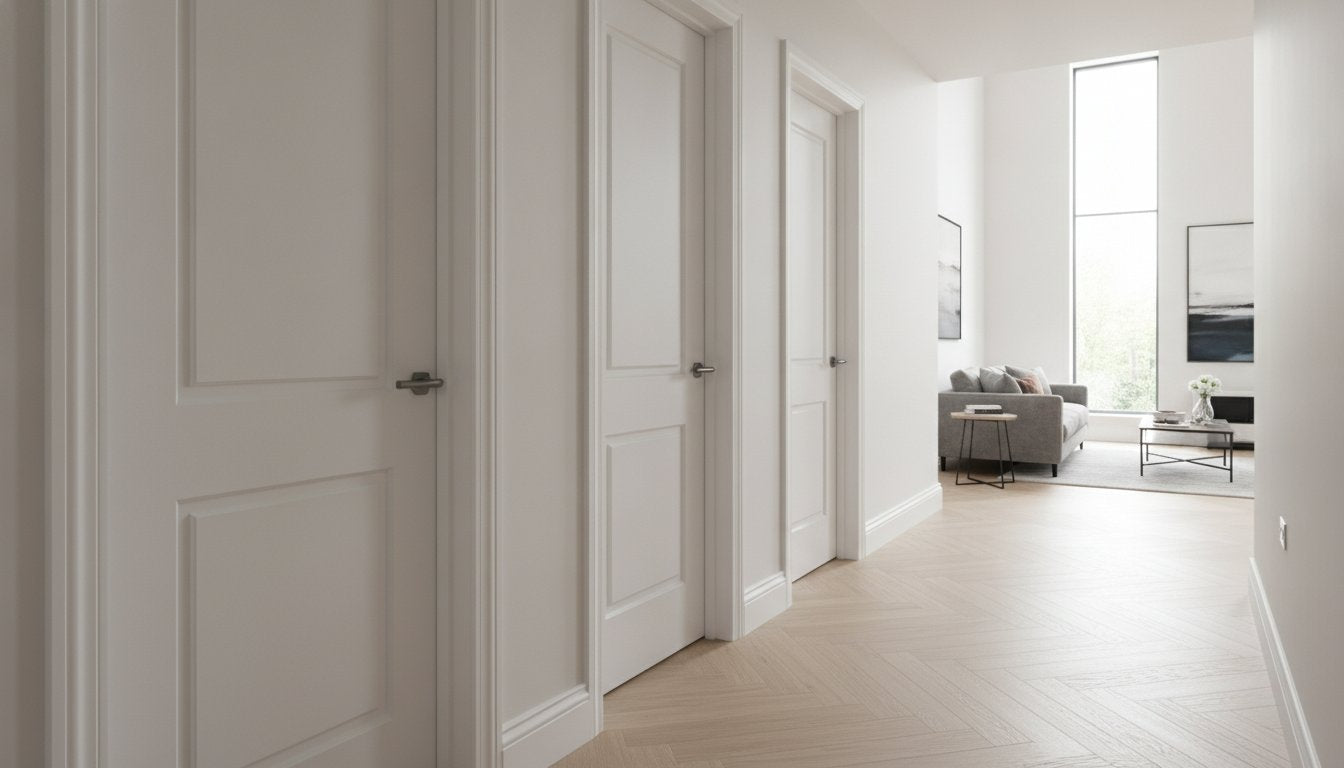
Could a simple coat of white paint be the most sophisticated design choice you make for your home this year? You likely appreciate that a bright, cohesive interior starts with the right foundations, yet the fear of choosing a product that looks "cheap" or lacks durability often stalls the most exciting renovations. Choosing white primed doors shouldn't be a gamble on quality; it is an opportunity to secure a professional-grade finish that rivals expensive hardwoods at a fraction of the cost.
We understand that the technical side of joinery, from the latest BS 8214:2026 fire safety standards to trimmability limits, can feel daunting whilst you are trying to manage a project. This guide promises to clear the confusion surrounding "Primer Plus" options and structural integrity, giving you the confidence to select doors that are as safe as they are stylish. We will explore the latest 2026 design trends, explain the importance of certified fire door systems, and provide the essential advice you need to transform your living space into a light-filled sanctuary.
Key Takeaways
- Understand the practical differences between standard priming and 'Primer Plus' to achieve a professional finish with minimal effort.
- Navigate the 2026 fire safety landscape with clarity on the latest BS 8214:2026 standards for total peace of mind.
- Identify which architectural designs, from the modern Mexicano to heritage styles, will best complement your home’s unique character.
- Learn how to assess technical specifications like trimmability and standard sizing to ensure a seamless installation process.
- Discover why white primed doors provide the ideal blank canvas for both timeless aesthetics and 2026’s trend for bold, custom colours.
Why White Primed Doors are the Perfect Choice for Modern UK Interiors
Choosing the right internal doors is a pivotal decision for any renovation. White primed doors are essentially a professional-grade blank canvas for your home. By definition, these doors arrive factory-prepared with a smooth, high-quality base coat. This means the time-consuming task of sealing the timber is already complete, leaving the surface ready for a final topcoat of your choice. It's a practical solution that bridges the gap between raw timber and a finished product, offering a level of convenience that big-box retailers often struggle to match.
In 2026, interior design trends are leaning heavily into bespoke expression. Whilst white remains a timeless favourite for its ability to reflect light and brighten narrow UK hallways, many homeowners are now using the "blank canvas" advantage to experiment. We are seeing a rise in high-contrast palettes, where these doors are finished in deep navy, charcoal, or even soft black to create a dramatic focal point. Opting for a primed door allows you to achieve this high-end, custom look without the significant expense of solid hardwood, which many feel is a waste to cover with paint.
The Aesthetic Versatility of White Finishes
White finishes offer a unique "clean" factor that remains the gold standard for new builds and rental properties alike. They provide a seamless transition when matched with white skirting boards and architraves, making rooms feel larger and more cohesive. Alternatively, you can use them to create a sharp contrast against bold wall colours. Because they don't compete with other wood grains in a room, such as oak flooring or walnut furniture, they act as a neutral anchor for your entire design scheme. At Arborfield Joinery, our collection of 183 designs ensures there is a profile to suit every architectural era.
Durability and Stability in the UK Climate
The UK's damp climate can be notoriously difficult for traditional timber. Many of our white primed doors utilise an engineered core, which provides superior resistance to warping and twisting compared to some solid wood alternatives. This stability is often enhanced by Frame and Panel Construction, a traditional joinery method that allows the door to breathe and adjust to temperature fluctuations without compromising its structural integrity.
The factory primer does more than just save you time; it acts as a protective barrier during the installation phase. It shields the door from moisture and handling marks whilst it is being hung. When you choose a door from our range, you are investing in a product that combines our heritage of craftsmanship, dating back to 1953, with modern material science. This ensures your doors don't just look beautiful on day one but remain functional and sturdy for decades to come.
Understanding Door Construction: Primed vs. Primer Plus Finishes
The quality of a door is often hidden beneath its surface. Whilst many homeowners focus on the final colour, the underlying construction determines how that paint will look and how the door will perform over time. Not all white primed doors are created equal. The industry generally splits these products into two categories: standard primed and Primer Plus. Understanding the difference is the key to avoiding a "cheap" look and ensuring your home feels substantial and well-crafted.
Standard primed doors are the versatile workhorse of the industry. These arrive with a base coat that requires a light sanding followed by two topcoats to achieve a professional finish. If you are on a strict budget and doing the painting yourself, these are an excellent choice. However, for those seeking a showroom-standard result with less labour, Primer Plus is the superior alternative. These doors feature a much smoother, heavier base coat that is often so dense it requires only a single final topcoat. This reduces the risk of "grain show-through" and provides a consistent colour depth that budget alternatives simply cannot match.
Core Types and Sound Insulation
The core of your door dictates its soul. Lightweight honeycomb cores are a budget-friendly option often found in high-volume retail stores, but they lack the "heavier" premium feel that defines a high-quality home. At Arborfield Joinery, we typically recommend solid core constructions for areas where privacy is paramount. A solid core door provides significant sound insulation, making it the essential choice for bedrooms and bathrooms. When planning your renovation, remember that the Building Regulations for Doors also provide guidance on accessibility and clear opening widths, which should be considered alongside the door's physical weight and swing.
The 'Primer Plus' Advantage
Choosing a Primer Plus finish is a strategic investment in both time and quality. Because the factory application is so uniform, it eliminates the patchy absorption often seen on lower-quality timber-faced doors. This is particularly important if you are using light or pastel paint shades, where any inconsistency in the primer will be immediately visible. It effectively slashes your decorating timeline and reduces professional labour costs. You can explore our full range of white primed doors to find the right core and finish level for your specific project requirements.
Surface texture also plays a role. Moulded doors use a high-density fibreboard (HDF) skin that can be smooth or wood-grained, whilst timber-faced doors offer a more traditional feel. The smoother the surface, the more contemporary the final look will be. By selecting a solid core with a Primer Plus finish, you ensure a door that doesn't just look the part but closes with a reassuring, high-end thud.
Navigating Styles: From Shaker Simplicity to Classic Panel Designs
Selecting a door style is more than a decorative choice; it is an act of architectural preservation or transformation. The aesthetic flexibility of white primed doors makes them the most popular choice for homeowners looking to unify disparate rooms. Whilst trends evolve, the Shaker revolution remains dominant in 2026. The clean, recessed lines of 1-panel and 4-panel Shaker designs offer a crispness that suits both minimalist apartments and busy family homes. Their lack of ornate detailing makes them incredibly easy to maintain and paint, providing a sharp finish that stays relevant as your interior decor changes.
Traditional elegance, however, is far from obsolete. For heritage properties, the 6-panel and Victorian 4-panel designs remain the gold standard. These styles use raised mouldings to create depth and shadow, echoing the craftsmanship of the 19th century. As experts in the specialist timber door industry often observe, the longevity of a door's appeal is rooted in its proportions and the quality of its assembly. Choosing a traditional profile in a white primed finish allows you to respect the history of your home whilst keeping the atmosphere light and airy.
For those living in contemporary spaces, flush doors and 'Urban' grooved styles provide a sleek, minimalist alternative. These designs often feature subtle horizontal or vertical lines routed into the surface, adding architectural interest to a plain room without overwhelming the senses. They are particularly effective in modern apartments where space is at a premium and a "busy" door design might feel intrusive.
Matching Your Door to Your Home's Era
Architecture dictates the "rules" of your interior. Victorian and Edwardian homes typically require doors with substantial raised mouldings to match high ceilings and deep skirting boards. If you own a 1930s property, the iconic 3-panel design, often featuring a larger top panel, is the essential choice to maintain the home’s character. Conversely, for new builds that often lack built-in features, our 'Urban' grooved collection provides an instant focal point, giving a standard room a bespoke, architect-designed feel.
Incorporating Glazed White Primed Doors
Glazed doors are a strategic tool for sharing natural light between rooms, particularly in darker UK floor plans. Opting for pre-glazed white primed doors is a sensible choice, as it removes the risk and hassle of fitting glass on-site. All our glazed options use toughened safety glass that meets current UK building regulations, ensuring your home remains safe for children and pets. Using a glazed door to link a kitchen and dining area creates a sense of flow and openness, making your living space feel significantly larger than its footprint suggests.

The Essential Checklist: Sizing, Fire Ratings, and Technical Specifications
Style may capture the eye, but technical specifications ensure the longevity and safety of your home improvement project. Understanding the dimensions and ratings of white primed doors is vital before you commit to a purchase. In the UK, the standard height for internal doors is 1981mm, whilst widths vary to accommodate different room sizes. Most standard doors are 35mm thick, but you might consider 40mm or 44mm options for a more substantial feel and improved stability. These thicker profiles offer better resistance to warping, which is a key consideration for high-traffic family homes.
Measuring for Success
Accuracy is the antidote to installation frustration. When you measure your internal doors and door frames, always employ the "three-point check" method. This involves measuring the width at the top, middle, and bottom of the frame, as few openings are perfectly square. Use the largest measurement to select your door, but be prepared to trim the edges for a bespoke fit. Don't forget to account for floor clearance; if you are planning to install thick new carpets or underfloor heating, you must ensure there is enough space for the door to swing freely without catching.
Understanding Fire Door Requirements
Safety is a non-negotiable aspect of modern joinery. Under current UK regulations, FD30-rated fire doors are legally required in specific areas, such as between an integral garage and the main house, or in loft conversions. As of March 2026, the updated BS 8214:2026 standard emphasizes that a fire door must be treated as a complete, coordinated system. This means the door leaf, frame, seals, and hardware must all be tested together to guarantee thirty minutes of fire resistance.
Trimmability is another area where quality makes a difference. Whilst budget doors often have very narrow internal "lips," an Arborfield door typically allows for more generous adjustments. Most of our white primed doors can be safely trimmed by up to 6mm on each side, though you should always check the specific manufacturer guidelines for your chosen model. Cutting beyond these limits can compromise the structural integrity of the door and, in the case of fire doors, invalidate their safety certification.
If you are unsure which technical specification meets your building's requirements, our expert team is here to help. You can browse our full collection of white primed doors to find the perfect balance of safety and style for your project. By choosing a solid core, fire-rated door, you are investing in peace of mind without sacrificing the elegant aesthetic of a professional finish.
Selecting Your Ideal Door: Standout Designs from the Arborfield Joinery Collection
Selecting the right door is the final piece of your interior design puzzle. Whilst high-street DIY chains offer convenience, they often lack the discerning eye and technical rigour of a specialist joinery business. Our collection of white primed doors is curated with a focus on both aesthetic longevity and structural performance. Each of our 183 designs has been selected to provide a premium alternative to mass-produced options, ensuring your home feels bespoke and intentional. Buying from a joinery specialist like Arborfield means you aren't just purchasing a commodity; you are benefiting from over seven decades of experience in the trade. We understand the nuances of timber behaviour and finish quality in a way that generic stores simply cannot.
The 'Mexicano' remains a standout favourite for those seeking a modern-rustic aesthetic. Its deep vertical grooves add texture and character to a room, making it a versatile choice for both country cottages and contemporary urban renovations. For a more refined look, the 'Toledo' 3-panel offers a sophisticated twist on the classic Shaker style. Its clean lines and recessed panels provide a sense of architectural structure without the visual heaviness of more traditional profiles, making it ideal for smaller rooms that require a touch of elegance. If your project leans toward industrial-chic, our Urban Collection features minimalist grooved designs. These doors use subtle routing to create a sleek, gallery-like feel, proving that white primed doors can be just as cutting-edge as their timber counterparts.
The Arborfield Difference
Since 1953, we have built our reputation on reliability and expert craftsmanship. Each door in our collection is vetted for finish quality before it reaches your home. Unlike big-box retailers, our Berkshire showroom team possesses the deep technical knowledge required to guide you through complex installations or fire safety queries. We manage the safe and secure national delivery of everything from our specialist internal oak doors to our extensive white primed range. This ensures your products arrive in pristine condition, ready for the final stage of your renovation.
Next Steps: Finishing Your Doors
To achieve a professional-grade result, the choice of paint is critical. We recommend using polyurethane or acrylic-based paints for their durability and smooth application. One often overlooked step is the importance of sealing all four edges of the door, including the top and bottom. Moisture ingress usually begins at these unseen edges where the timber is exposed; sealing them is essential to prevent warping and ensure the door's stability over time. Are you ready to transform your living space with a bright, cohesive new look? You can Browse our full White Primed Doors collection here. to find the ideal design that matches your home’s era and your personal style.
Secure the Perfect Finish for Your Next Renovation
Choosing internal joinery is a definitive step in your home's transformation. You now have the technical insights needed to distinguish between standard finishes and the labour-saving benefits of Primer Plus. Whether you are matching a Victorian heritage profile or an Urban minimalist design, selecting high-quality white primed doors ensures a cohesive, light-filled environment that stands up to the rigours of modern life. By following the updated BS 8214:2026 safety standards and technical measuring guides discussed, you can move forward with your renovation with total peace of mind.
At Arborfield Joinery, we combine over 70 years of heritage with a discerning eye for contemporary trends. As a family-run business established in 1953, we offer a collection of 183 distinct white primed doors vetted for their superior finish and structural integrity. Our team is dedicated to providing the professional guidance and national delivery service you need to complete your project with confidence. We look forward to helping you curate a home that reflects your personal style and appreciation for quality craftsmanship.
Shop our extensive range of white primed doors
Frequently Asked Questions
Do white primed doors need painting?
Yes, white primed doors require a final topcoat of paint to ensure long-term protection and a professional aesthetic. Whilst the factory-applied primer provides an excellent base, it is not designed as a finished surface. Applying a high-quality topcoat seals the timber against moisture and prevents handling marks from becoming permanent. This final layer also allows you to customise the sheen level, whether you prefer a modern matt or a traditional gloss finish.
What is the difference between primed and pre-finished white doors?
The primary difference lies in the level of completion upon delivery to your home. A primed door has been prepared with a base coat and requires painting after installation to achieve its final look. In contrast, a pre-finished door arrives fully painted and lacquered from the factory, meaning it is ready to hang immediately. Choosing a primed option offers greater flexibility for those who wish to match their doors to a specific skirting board colour.
Can you trim white primed internal doors?
Yes, you can trim most white primed internal doors to fit your specific frame, though the allowable amount depends on the door's construction. Typically, our designs allow for a reduction of up to 6mm from each vertical side and the bottom rail. It is vital to check the manufacturer's specific guidelines, as over-trimming can expose the internal core and compromise structural integrity. Always ensure any planed edges are re-primed and sealed to prevent moisture ingress.
How many coats of paint does a white primed door need?
Most standard primed doors will require two topcoats of paint to achieve a solid, uniform colour. If you have selected a "Primer Plus" product, you may find that a single high-quality coat is sufficient due to the superior density of the factory base. Always allow the first coat to dry completely and give it a very light sand with fine-grade paper before applying the final layer. This ensures the smoothest possible results for your interior.
Are white primed doors made of solid wood?
These doors are typically manufactured using engineered timber components rather than a single slab of solid wood. This construction method is preferred because it offers significantly better stability and resistance to warping in the variable UK climate. The surface is usually finished with a smooth HDF or MDF skin, which provides the perfect, knot-free foundation for a painted finish. This approach ensures a premium feel whilst maintaining the door's shape over many years of use.
What kind of paint should I use on a primed door?
We recommend using high-quality polyurethane or acrylic-based paints for the best results on a primed surface. These paints provide a durable finish that stands up well to the daily rigours of a busy household. Solvent-based paints are also an option for a traditional look, but many modern water-based alternatives now offer comparable durability with faster drying times and lower odour. Always ensure the surface is clean and dust-free before you begin your decorating project.
Are white primed doors suitable for bathrooms?
Yes, white primed doors are perfectly suitable for bathrooms, provided all four edges are thoroughly sealed with paint. Bathrooms are high-moisture environments, so it is essential to paint the top and bottom rails, which are often overlooked during installation. This prevents steam and humidity from penetrating the timber core. Choosing a solid core design for your bathroom also provides the added benefit of superior sound insulation for increased privacy and a more substantial feel.
What is an FD30 white primed door?
An FD30 white primed door is a fire-rated product certified to resist the passage of fire and smoke for a minimum of thirty minutes. Under the latest BS 8214:2026 standards, these must be installed as part of a complete, tested system including the correct frame and intumescent strips. These doors are a legal requirement in many UK residential settings, such as loft conversions or between a house and an integral garage, providing vital safety.
Share:
Hardwood Front Door Trends 2026: The Homeowner’s Guide to Timeless Entrances
Hardwood Front Door Trends 2026: The Homeowner’s Guide to Timeless Entrances